
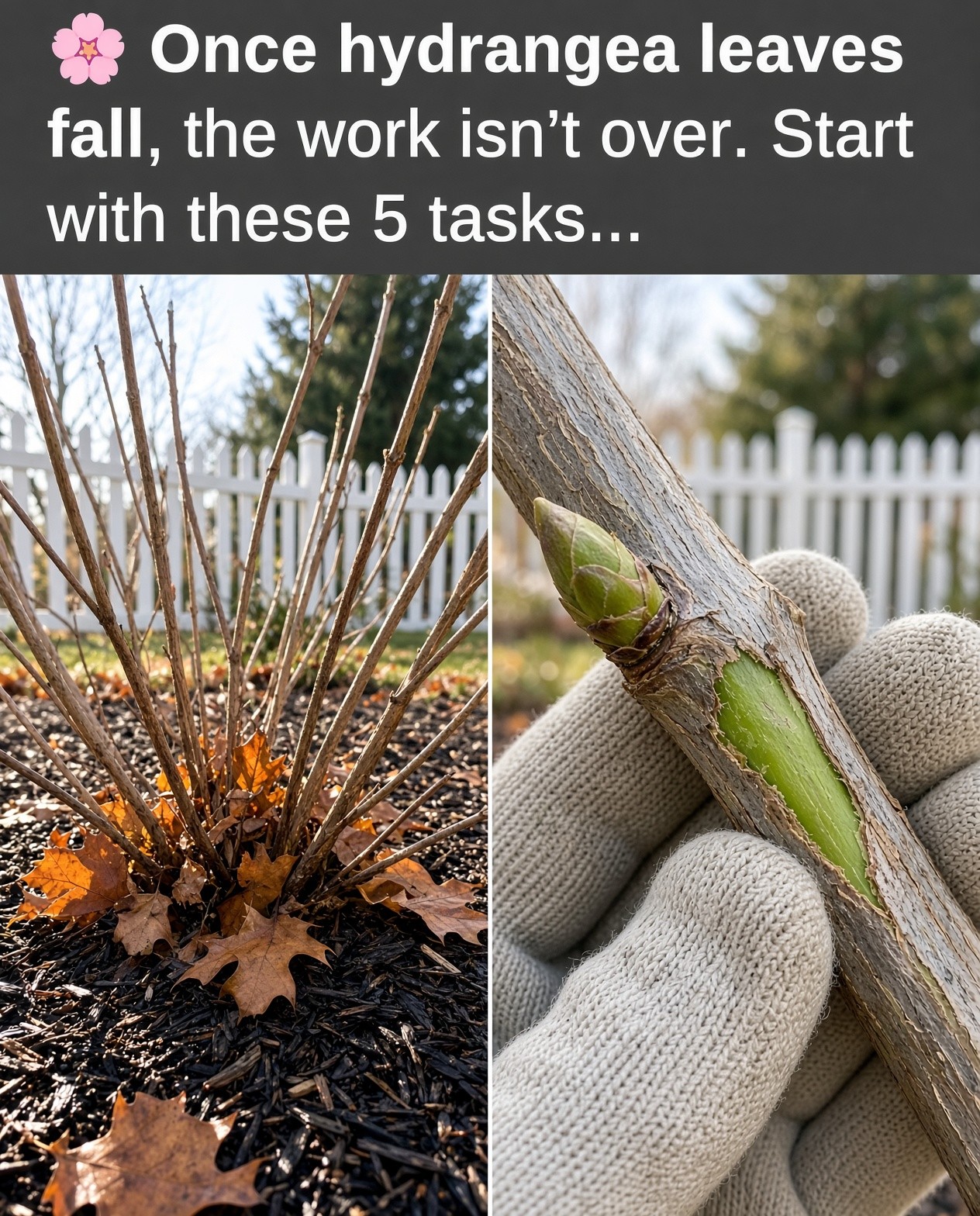
A little autumn cleanup can help hydrangeas enter winter in better shape—and protect next season’s blooms. Focus on the roots, remove diseased debris, and be cautious with pruning.
- Remove leaves that show clear signs of disease.
- Refresh mulch after the soil cools.
- Protect vulnerable flower buds where winters are harsh.
- Prune only what you can safely identify as dead, diseased, or damaged.
- Water during dry spells before the ground freezes.


1. Clear away diseased fallen foliage
Not every fallen leaf needs to be removed. Healthy leaves can be shredded and reused as a light mulch, but leaves with persistent spotting, powdery growth, or unusual lesions should be collected and discarded with household waste where local guidance recommends it. Avoid putting heavily diseased material into a home compost pile that may not heat sufficiently to destroy pathogens.
Clear debris from around the base without scraping or disturbing the shallow roots. Clean up again in spring if old leaves have collected over winter.
2. Mulch the root zone
Once the soil has cooled, spread roughly 2–3 inches (5–8 cm) of organic mulch—such as shredded leaves, bark, or finished leaf compost—over the root area. Extend it toward the shrub’s drip line where practical, but leave a few inches of space around the stems and crown. Piling mulch against the plant can trap moisture against the bark and encourage problems.
Mulch moderates temperature swings, reduces moisture loss, and helps protect shallow roots from repeated freezing and thawing. If your bed already has a thick layer, simply top it up where needed rather than adding more automatically.
3. Protect old-wood flower buds when needed
Some hydrangeas form next year’s flower buds on stems grown during the previous season. Bigleaf, mountain, and oakleaf hydrangeas commonly fall into this group, so exposed buds may be damaged by severe cold, drying wind, or late freezes. In colder or windy sites, a loose cage filled with clean, dry leaves and wrapped in breathable burlap can provide some protection. Avoid sealing the shrub in plastic, which can trap moisture and heat.
Panicle and smooth hydrangeas generally flower on new growth made in spring, so protecting last year’s stem tips is usually less important for flowering. Reblooming cultivars may flower on both old and new wood, but winter injury can still reduce the first flush.
4. Be careful with fall pruning
A leafless hydrangea can look lifeless even when its stems are healthy and carrying dormant flower buds. For old-wood types, avoid routine fall trimming because cutting the stem tips may remove next year’s flowers. Remove only clearly dead, diseased, or broken branches. If you are unsure whether a stem is alive, wait until spring growth begins and the difference is easier to see.
Panicle and smooth hydrangeas bloom on new wood and can generally be pruned in late winter or early spring before new growth starts. Even for these types, heavy pruning is not always necessary. Use clean, sharp tools and make cuts just above a healthy bud when shortening stems.
5. Water before freeze-up if autumn is dry
Hydrangeas prefer evenly moist—not waterlogged—soil. If rain has been scarce, check the soil a few inches below the surface. If it is dry, water slowly around the root zone so moisture can soak in rather than run off. Do this before the ground freezes. If autumn has been wet and the soil is already moist, extra watering is unnecessary.
In climates with dry winters, check established plants during prolonged mild spells. Water only when the soil is unfrozen and dry; do not water frozen ground or leave the root zone saturated.
Hydrangea pruning at a glance
| Hydrangea group | Where flowers form | General pruning timing |
|---|---|---|
| Bigleaf and mountain | Usually old wood; some cultivars rebloom | Usually after flowering; avoid autumn pruning |
| Oakleaf | Old wood | Soon after flowering if pruning is needed |
| Panicle | New wood | Late winter or early spring |
| Smooth | New wood | Late winter or early spring |
Common questions
Should I cut hydrangeas down after the leaves fall?
Usually not. The right timing depends on the type, and cutting old-wood hydrangeas in fall can remove dormant flower buds. Leave healthy stems until you know how your plant blooms.
Should I remove all the dried flower heads?
No. Spent blooms can remain through winter for visual interest and may offer a little protection to buds below. Remove them if you prefer, but make shallow cuts and avoid cutting into healthy stem tips on old-wood varieties.
Can fallen hydrangea leaves be used as mulch?
Yes, if they look healthy. Shred them so they settle into a loose layer, and keep mulch away from the stems. Discard leaves that show signs of disease.
Final thoughts
After hydrangea leaves fall, the goal is preparation rather than a major makeover. Tidy up diseased debris, keep roots insulated, water when needed, and resist pruning until you know whether the shrub flowers on old or new wood. These small steps help reduce avoidable winter stress while giving next season’s blooms the best chance possible.