
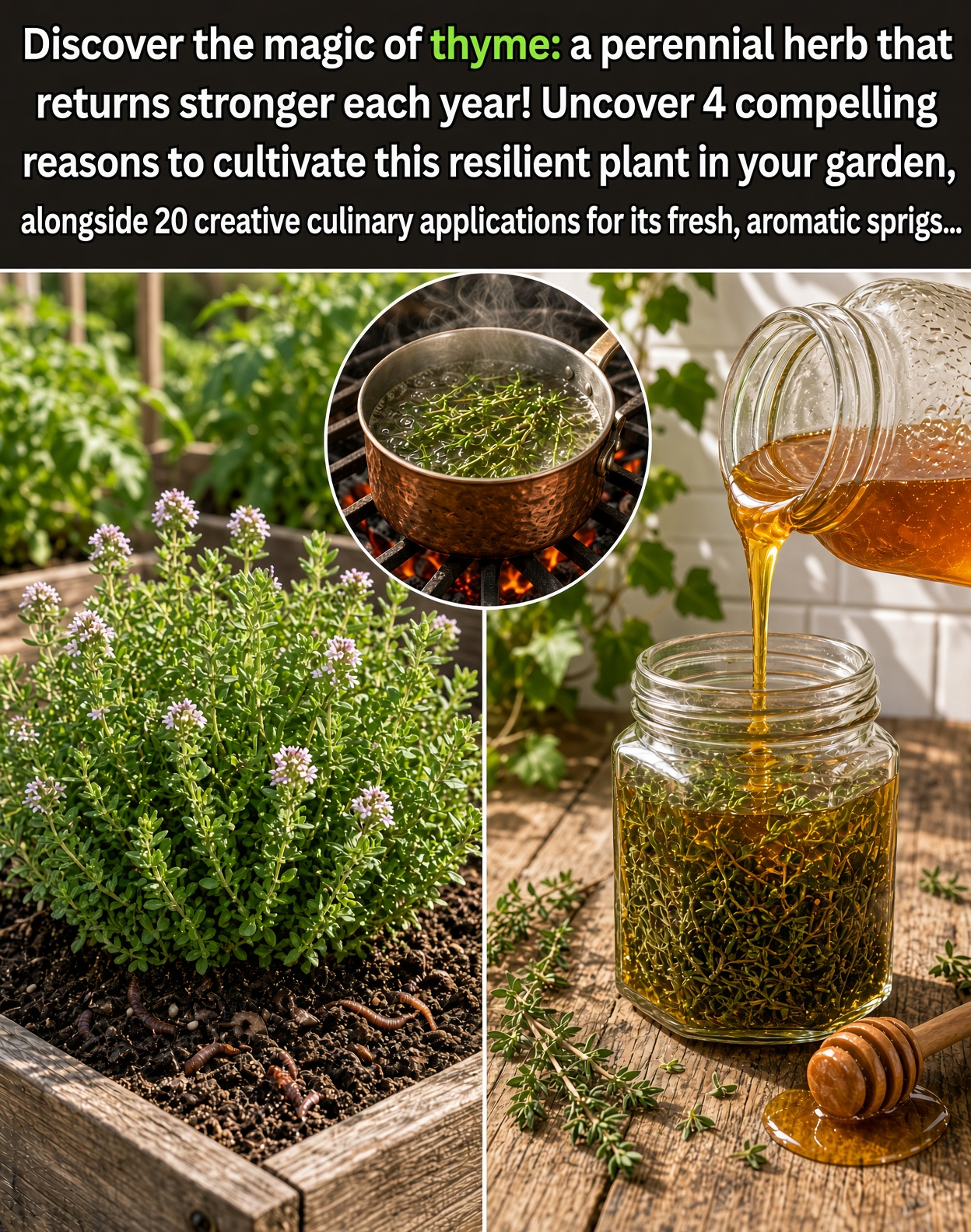
Thyme is one of those small garden plants that offers much more than its size suggests. Its tiny leaves contain a wonderfully savory aroma, its flowers can attract visiting pollinators, and its compact growth makes it useful in everything from kitchen gardens to sunny borders.
And growing thyme is only the beginning. Fresh sprigs can season meals, dried leaves can be stored for later, and the plant can inspire simple decorative projects around the home.
4 Reasons to Grow Thyme
1. It Is a Useful, Low-Maintenance Plant
Thyme evolved in regions where sunshine and well-drained, sometimes rocky soil are common. These conditions explain why established plants often cope better with dry spells than herbs that prefer consistently moist soil.
Some creeping thyme varieties also form low mats that can soften the edges of paths, fill spaces between suitable stepping stones, or cover small areas of ground. Their foliage releases a pleasant herbal fragrance when brushed.
Thyme still needs appropriate care. Heavy, waterlogged soil and poor drainage can cause problems, and newly planted thyme needs attention while its roots establish.
2. Its Flowers Attract Pollinators
When thyme flowers, its small blossoms can attract bees and other insects looking for nectar. The flowers may be white, pink, or pale purple, depending on the variety.
Planting thyme near vegetables and other flowering plants can help create a more welcoming garden for pollinators. It is especially useful in a herb border where you can enjoy both the foliage and the blooms.
For the best display, give thyme plenty of light and avoid keeping the soil continually soggy. Letting some plants flower also gives pollinators an additional source of food.
3. Its Strong Aroma Adds Variety to the Garden
Thyme has a distinctive scent because its leaves contain aromatic plant compounds, including thymol. This fragrance makes the herb appealing for culinary gardens, borders, and containers placed near seating areas.
Some gardeners grow thyme alongside vegetables because a diverse planting can support a wider range of beneficial insects. However, thyme should not be treated as a guaranteed pest barrier. Its presence alone will not reliably prevent aphids, caterpillars, or other garden pests from reaching nearby plants.
For a practical approach, combine aromatic herbs with regular plant inspections, appropriate spacing, and other integrated pest-management methods.
4. You Can Harvest It Over a Long Season
Thyme is a woody perennial, so it can provide repeated harvests rather than needing to be replanted every year. In mild climates, its foliage may remain available through much of the winter.
Snip a few leafy stems whenever you need them for cooking. Regular light harvesting can help maintain a useful supply, but avoid cutting deeply into old, bare wood because thyme may not regrow well from those sections.
In colder regions, growth may slow or suffer during severe winter weather. A sunny, sheltered location with excellent drainage gives the plant a better chance of returning in spring.
20 Practical Ways to Use Thyme
Once your plant is established, thyme can become a regular part of your kitchen routine. It also works well in simple crafts and decorative projects. Below are 20 ideas, with food uses first and household ideas afterward.
In the Kitchen
1. Make a Classic Bouquet Garni
Tie several thyme sprigs together with parsley stems and a bay leaf using kitchen twine. Add the bundle to soups, vegetable stock, stews, or slow-cooked sauces, then remove it before serving.
This traditional French-style herb bundle adds savory depth while keeping loose stems out of the finished dish.
2. Prepare a Homemade Za’atar-Inspired Seasoning
Combine dried thyme with toasted sesame seeds, sumac, and a little salt to create a simple za’atar-style blend. Sprinkle it over flatbread brushed with olive oil, roasted chickpeas, or vegetables.
Recipes differ by region and household, so adjust the proportions to suit your taste.
3. Add Thyme to Cooking Oil for Flavor
Fresh thyme is delicious with olive oil, especially when used to season roasted vegetables, bread, or warm beans. For a simple option, add thyme to a dish while cooking or stir finely chopped leaves into a little oil immediately before serving.
Food safety note: Do not leave fresh herbs submerged in homemade oil at room temperature. Fresh herbs can introduce bacteria, including the organism that causes botulism. For longer storage, use a tested food-safety method and follow its refrigeration and storage limits, or simply add thyme to oil shortly before cooking.
4. Make Lemon-Thyme Butter
Mix softened butter with finely chopped thyme leaves, a little lemon zest, and a pinch of salt. Shape it into a small log, wrap it, and refrigerate or freeze it for later use.
A slice can be melted over roasted vegetables, grilled fish, corn, or warm bread. Lemon thyme works particularly well, but common thyme is also suitable.
5. Season Roasted Root Vegetables
Cut carrots, potatoes, parsnips, onions, or sweet potatoes into evenly sized pieces. Toss them with olive oil, thyme leaves, salt, and pepper, then roast until tender and lightly browned.
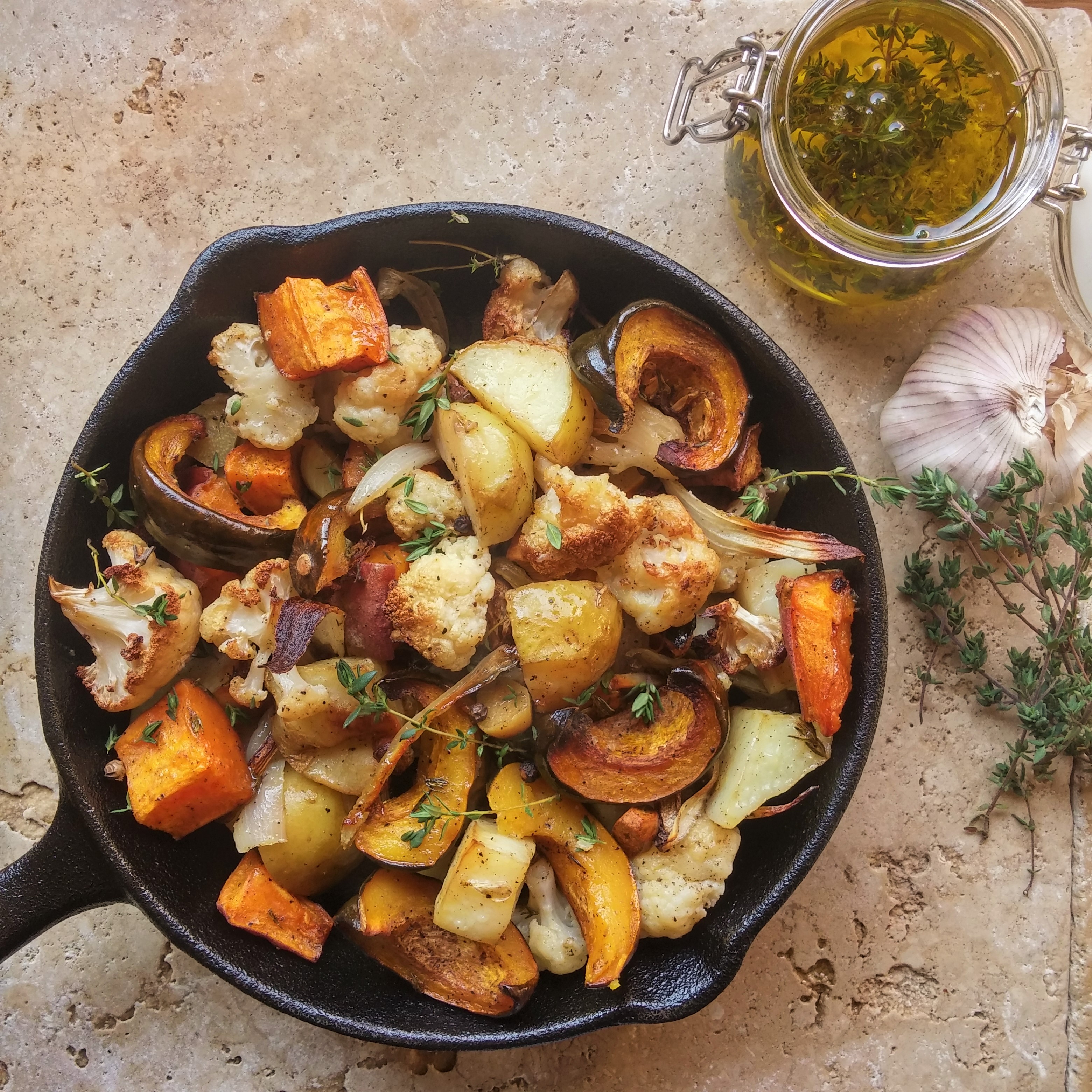
Adding the leaves before roasting allows their flavor to blend with the vegetables as they cook.
6. Freeze Thyme for Later Meals
If you have more thyme than you can use fresh, strip the leaves from the stems and chop them. Freeze small portions in an ice cube tray with a little water or oil, then transfer the frozen portions to a labeled freezer-safe container.
Use the cubes in cooked dishes such as soups, stews, and sautés. If using oil, freeze promptly and keep the portions frozen until needed.
7. Create a Thyme-Flavored Drink Syrup
For a special drink, gently warm equal parts water and sugar until the sugar dissolves. Add a few thyme sprigs, remove the mixture from the heat, and allow it to steep before straining and cooling.
Use a small amount in sparkling water with grapefruit, lemon, or lime. Keep the finished syrup refrigerated and use it within a reasonable period, following food-safety guidance for homemade syrups.
For Everyday Personal Care
8. Enjoy the Aroma of Thyme Tea
Thyme can be steeped in hot water to make a fragrant herbal infusion. Place a small amount of clean fresh thyme or dried culinary thyme in a cup, pour over hot water, and let it steep for several minutes before straining.
Enjoy it as a warm, flavorful drink if it suits you. Herbal tea should not be considered a substitute for medical treatment, and concentrated thyme products may not be appropriate for everyone.
9. Combine Thyme with Honey for a Food-Style Infusion
Thyme and honey make a flavorful combination for tea, toast, or a simple kitchen gift. The safest straightforward option is to add thyme to a warm drink and sweeten it with honey just before serving.
For storage, avoid improvising a long-lasting homemade herbal syrup without a tested recipe. Keep prepared mixtures refrigerated and discard them if their appearance, smell, or texture changes.
10. Make a Mild Thyme Mouth Rinse Only If Appropriate
Some traditional practices use cooled herbal infusions as mouth rinses, but a thyme infusion should not be assumed to treat gum disease, infection, or persistent bad breath.
For everyday oral care, brushing with fluoride toothpaste, cleaning between teeth, and routine dental care are more dependable. Do not swallow a homemade rinse, and stop using it if it causes irritation.
11. Keep Skin Care Simple
Thyme contains aromatic compounds, but that does not mean concentrated thyme preparations are automatically suitable for skin. Essential oils can irritate skin, and homemade herbal toners may not be preserved safely.
If you enjoy thyme, keep its use culinary rather than applying concentrated oils or improvised infusions to your face. For acne or persistent skin irritation, use products intended for skin care and seek appropriate professional advice if needed.
12. Use a Gentle Herbal Rinse for Hair Fragrance
A cooled thyme infusion may appeal to people who enjoy botanical scents, but there is not strong evidence that a homemade thyme rinse reliably stimulates hair growth or treats dandruff.
If you try a mild infusion for its fragrance, keep it away from the eyes and discontinue it if your scalp becomes itchy or irritated. For persistent scalp symptoms, a proven hair-care treatment is a better choice.
13. Add Dried Thyme to a Decorative Bath Sachet
Fill a small fabric pouch with dried thyme and other pleasantly scented dried herbs, then place it near the bath as a decorative aromatic sachet.
Keeping the herbs in a pouch prevents loose pieces from spreading around the tub. Avoid adding concentrated essential oils directly to bathwater, where they can irritate skin.
14. Make a Botanical Display Instead of a Skin Salve
Dried thyme sprigs can be arranged in a small bowl or bundled with other dried herbs for a rustic display. This is a simple way to enjoy the plant’s appearance and fragrance without preparing an untested homemade ointment.
Do not assume that a thyme-infused oil or salve is a safe treatment for cuts, insect bites, or skin infections. For minor injuries, use appropriate first aid and seek medical help when necessary.
Around the Home and Garden
15. Make a Thyme-Scented Cleaning Vinegar for Suitable Surfaces
Place thyme sprigs in a jar of plain white vinegar and allow the scent to infuse for a short period, then strain. The result can be used as a fragrant ingredient in some household cleaning routines, but it is not a validated disinfectant.
Never mix vinegar with bleach or other cleaning products. Avoid using acidic vinegar on natural stone, marble, limestone, or other surfaces that can be damaged by acid. Test an inconspicuous area first.
16. Create a Fragrant Sachet for a Drawer
Allow thyme sprigs to dry completely, then place the leaves in a breathable cotton or linen pouch. Combine them with lavender or rosemary if you like the scent.
Place the pouch in a drawer or linen cupboard for a light herbal fragrance. These sachets are decorative and should not be relied on to prevent a moth infestation.
17. Use Thyme in Potpourri
Combine thoroughly dried thyme with dried citrus peel, lavender, and other aromatic plant material in a decorative bowl. Keep the mixture dry and replace it when its fragrance fades.
Place potpourri where small children and pets cannot eat it, especially if it contains essential-oil-treated materials.
18. Weave a Small Dried-Herb Wreath
Flexible thyme stems can be incorporated into small rustic wreaths while they are still pliable. Add other suitable dried herbs or flowers for a natural look, then hang the wreath in a dry indoor location.
As the leaves dry, the wreath becomes decorative rather than a reliable source of fresh culinary herbs. Keep it away from open flames and hot cooking surfaces.
19. Add Thyme to an Outdoor Table Display
Place a pot of thyme near an outdoor dining area or arrange fresh sprigs in a small vase alongside other garden herbs. The plant adds greenery and a pleasant aroma while keeping fresh seasoning close to the kitchen.
Thyme’s fragrance should not be relied on as a dependable mosquito repellent. For protection from biting insects, use established preventive measures appropriate to your location.
20. Garnish Meals with Fresh Thyme
Finish roasted vegetables, soups, savory tarts, and cheese boards with a few clean thyme leaves or a small sprig. Flowering thyme can also make an attractive garnish when the flowers are correctly identified and grown without unsuitable chemical treatments.
Remove woody stems before serving if they would be unpleasant to eat. This simple use is one of the easiest ways to enjoy thyme regularly without preparing complicated recipes or household mixtures.
How to Harvest and Store Thyme
For the best flavor, harvest thyme when the plant has plenty of healthy leafy growth. Snip the green tips with clean scissors or pruning shears, preferably after the morning dew has dried.
Take only a portion of the plant at a time and leave enough foliage for continued growth. Avoid cutting deeply into old woody stems, particularly late in the growing season when the plant needs to prepare for colder weather.
Drying Thyme
Gather small bunches, tie the stems loosely, and hang them in a dry, well-ventilated place away from direct sunlight. You can also use a suitable food dehydrator according to its instructions.
When the leaves are fully dry and crisp, remove them from the stems and store them in a clean, airtight container. Keep the container away from heat, moisture, and direct sunlight.
Keeping Fresh Thyme Fresh
For short-term use, wrap fresh thyme loosely in a slightly damp paper towel, place it in a suitable container or bag, and refrigerate it. Check it regularly and discard any sprigs that become slimy or moldy.
Simple Thyme Growing Tips
- Sunlight: Choose a sunny location where the plant receives several hours of direct light.
- Soil: Use well-drained soil; avoid spots that stay soggy after rain.
- Water: Water newly planted thyme as needed while it establishes. Established plants generally tolerate some drying between waterings.
- Pruning: Trim leafy growth lightly to encourage a compact shape, but avoid cutting into bare old wood.
- Containers: Use a pot with drainage holes and a free-draining potting mix.
- Winter: Protect plants according to your climate, especially where winter conditions are severe or soil remains wet.
Final Thoughts
Thyme earns its place in the garden through its compact growth, savory fragrance, useful leaves, and small flowers that can attract pollinators. It can thrive with relatively little attention when planted in a sunny spot with good drainage.
From bouquet garni and roasted vegetables to dried-herb sachets and simple decorations, there are plenty of practical ways to use a harvest. Start with the culinary ideas, preserve extra leaves safely, and experiment with decorative projects as the plant grows.
A small patch or container of thyme can become one of the most useful parts of a home garden—beautiful to look at, easy to harvest, and ready to bring fresh flavor to everyday meals.