
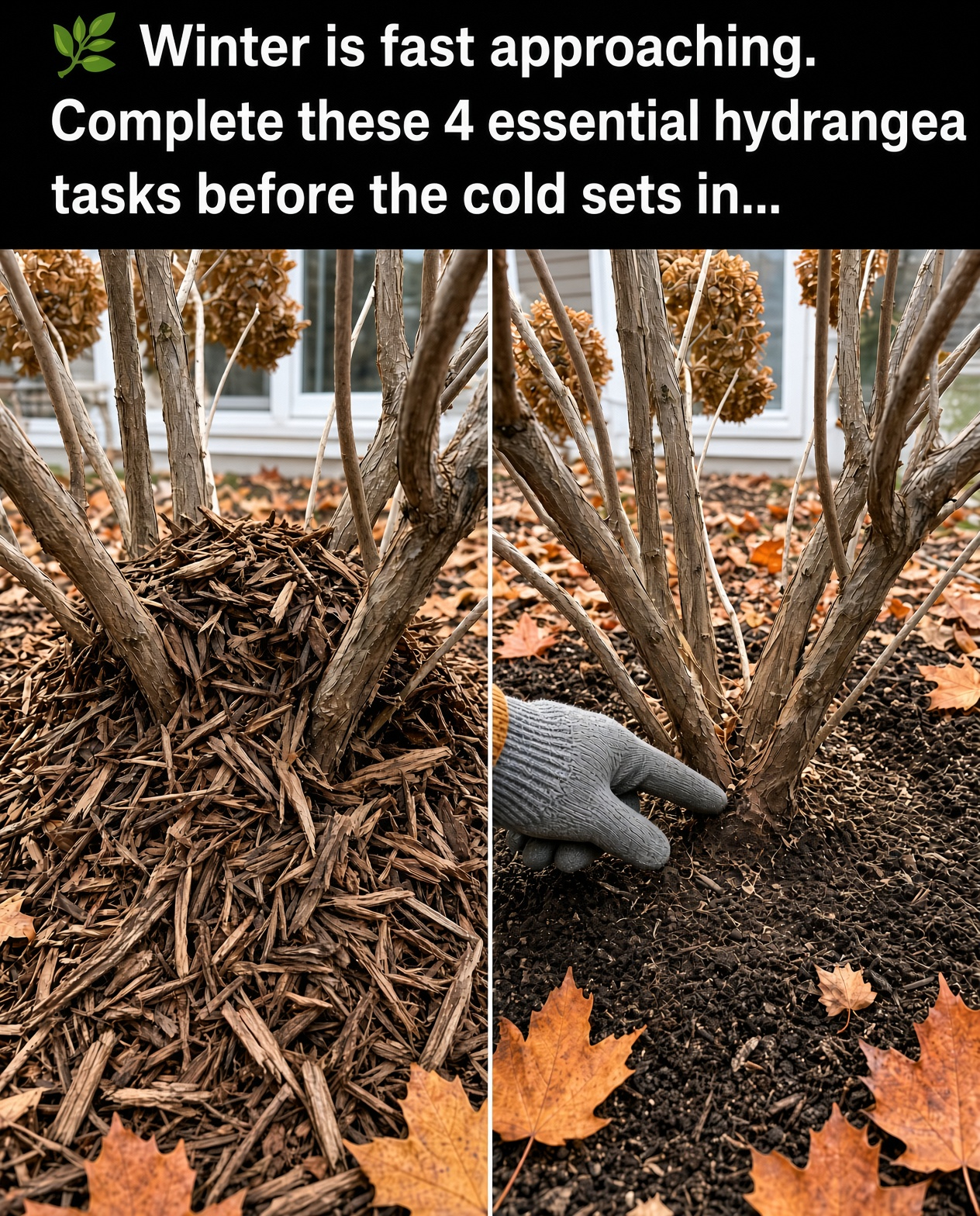
Hydrangeas may be finishing their colorful summer display, but autumn is an important season for their care. A little preparation before winter arrives can help protect their roots, preserve next year’s flower buds, and keep established shrubs in good condition.
The most important thing to remember is that fall hydrangea care is not about cutting everything back. In fact, pruning at the wrong time can remove the flower buds that have already formed for next season.
Instead, focus on protecting the plant, improving the soil, refreshing its mulch, and making sure it has enough moisture before the ground freezes.

First, Avoid This Common Fall Mistake: Heavy Pruning
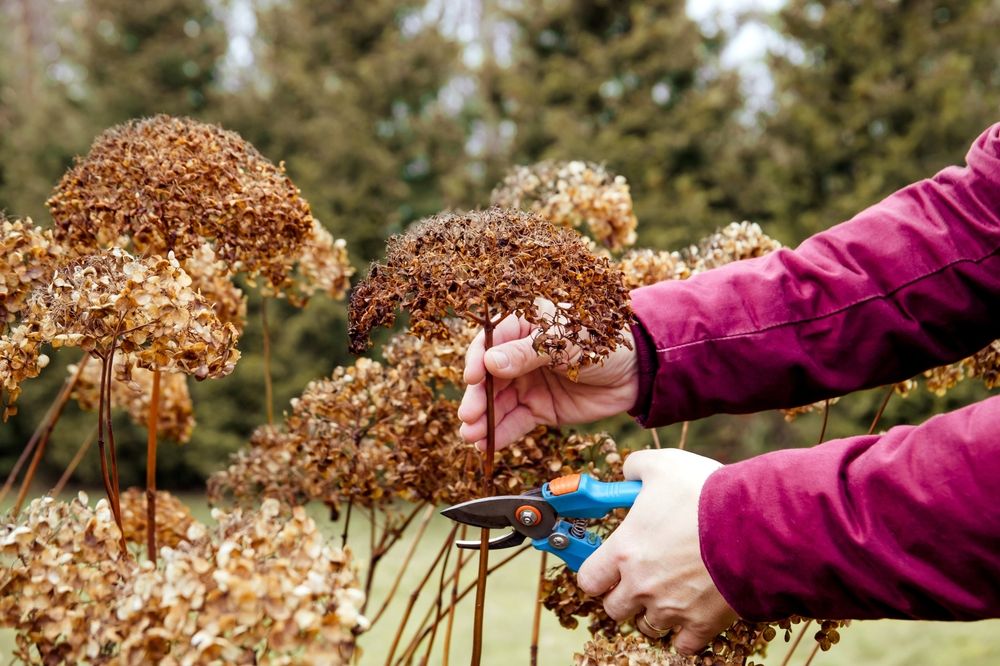
One of the easiest ways to reduce next summer’s hydrangea flowers is to prune the shrub without knowing which type you have.
Many popular hydrangeas develop their next season’s flower buds on older stems. These are known as old-wood bloomers. Cutting those stems back in autumn can remove the buds before they have a chance to open.
Be especially careful with:
- Bigleaf hydrangeas: Including mophead and lacecap varieties.
- Oakleaf hydrangeas: Recognized by their distinctive leaves and cone-shaped flower clusters.
- Mountain hydrangeas: Often grown for their delicate lacecap-style blooms.
These varieties are generally best pruned lightly after flowering, rather than cut back in fall. Remove only clearly dead, damaged, or diseased branches when necessary.

Panicle hydrangeas and smooth hydrangeas are different because they flower on new growth produced during the current season. They can be pruned in late winter or early spring before active growth begins.
If you are unsure which variety you have, the safest choice is to leave the healthy stems alone until you can identify it.
1. Protect Hydrangeas From Frost
Frost protection is particularly important for bigleaf and other hydrangeas that flower on old wood. Their developing buds remain on the stems during winter, where they can be damaged by severe cold, drying winds, and sudden temperature changes.
A plant may survive a cold winter but produce very few flowers if its flower buds are injured.
Gardeners in colder regions, especially USDA Zones 3–6 and exposed parts of Zone 7, should pay particular attention to vulnerable shrubs.
Here are a few practical ways to provide protection:
- Use frost cloth: Cover the shrub during particularly cold nights with breathable horticultural fleece or burlap.
- Protect exposed plants: A sheltered position can reduce damage from strong winter winds.
- Insulate the root zone: Apply a suitable layer of mulch around the base.
- Remove temporary covers: When conditions improve, uncover the shrub to allow normal airflow and light.
You do not need to keep a hydrangea wrapped continuously throughout winter. Temporary protection during severe cold spells is often more practical.

2. Stop Fertilizing, but Improve the Soil
It may seem natural to feed a hydrangea when its flowers fade and its foliage starts looking tired. However, late-season fertilizing is usually unnecessary and can encourage tender new growth just when the plant should be preparing for dormancy.
In many climates, regular feeding should stop by midsummer. Avoid applying high-nitrogen fertilizer in autumn, as it can encourage leafy growth that may not have enough time to harden before freezing weather arrives.
Instead, concentrate on improving the soil around the plant. A light layer of mature compost can add organic matter and gradually improve soil structure.
To apply it:
- Remove weeds and loose debris from around the shrub.
- Spread approximately 1–2 inches of finished compost over the surrounding soil.
- Keep the compost a few inches away from the main stems and crown.
- Avoid digging deeply, since hydrangeas have relatively shallow roots.
Compost is a soil amendment, not a quick flowering treatment. Its benefits develop gradually as organic matter breaks down.

3. Refresh the Mulch Around the Base
Mulching is one of the simplest fall jobs for hydrangeas. A protective layer helps reduce moisture loss, insulates the roots, and limits the repeated freezing and thawing that can disturb the soil during winter.
It is especially helpful for young shrubs and plants growing in locations exposed to cold winds.
Suitable materials include:
- Shredded bark or hardwood mulch.
- Shredded, healthy fallen leaves.
- Well-rotted leaf mould.
- Mature garden compost.
Spread approximately 2–3 inches of mulch over the root zone. Extend it around the shrub, but leave a small clear space around the stems to prevent excessive moisture from collecting against the plant’s base.
Before adding a fresh layer, check how much mulch is already present. There is no need to pile more material on top if the existing layer is still thick enough.
4. Give Hydrangeas a Deep Watering Before Winter
Hydrangeas appreciate consistent soil moisture, and they should not enter winter with an excessively dry root zone. This is particularly important for recently planted shrubs and hydrangeas growing in exposed locations.
If autumn has been rainy, additional watering may not be necessary. Check the soil first rather than following a fixed schedule.
If the soil is dry several inches below the surface, water slowly and thoroughly around the root zone. Allow the moisture to soak into the ground instead of creating puddles.
A few reminders:
- Water newly planted hydrangeas more carefully because their roots are still establishing.
- Pay attention to plants growing in sandy or fast-draining soil.
- Avoid watering when the ground is already saturated.
- Do not water frozen soil.
- During prolonged mild, dry winter weather, check whether the soil needs moisture again.
The goal is to maintain suitable soil moisture, not to keep the ground constantly wet. Hydrangeas need water, but their roots also need oxygen and good drainage.

What About Hydrangeas Growing in Containers?
Container-grown hydrangeas often need extra attention because their roots are less insulated than those growing directly in the ground.
Before winter, check that the container has drainage holes and that excess water can escape. Move pots to a more sheltered position if severe cold is expected, and consider insulating the outside of the container in particularly cold regions.
Continue checking the potting mix occasionally. Containers can dry out even when outdoor temperatures are low, but they should never remain waterlogged.
Fall Hydrangea Care Checklist
- Identify whether your hydrangea flowers on old wood or new wood.
- Avoid heavy autumn pruning.
- Protect vulnerable varieties during severe frost.
- Stop routine fertilizing after the appropriate growing-season feeding period.
- Add a light layer of finished compost if the soil needs organic matter.
- Refresh mulch around the root zone.
- Check soil moisture and water if the ground is dry before freezing.
Final Thoughts
Fall hydrangea care is mostly about protecting what the plant has already developed. The flower buds for next year may be sitting quietly on the stems, while the roots benefit from suitable moisture and a protective layer of mulch.
Skip unnecessary pruning and late fertilizer, protect vulnerable shrubs from harsh frost, improve the soil gently, and check moisture before winter arrives.
These simple jobs can help your hydrangeas enter dormancy in better condition and give them a stronger start when spring returns.
“`