
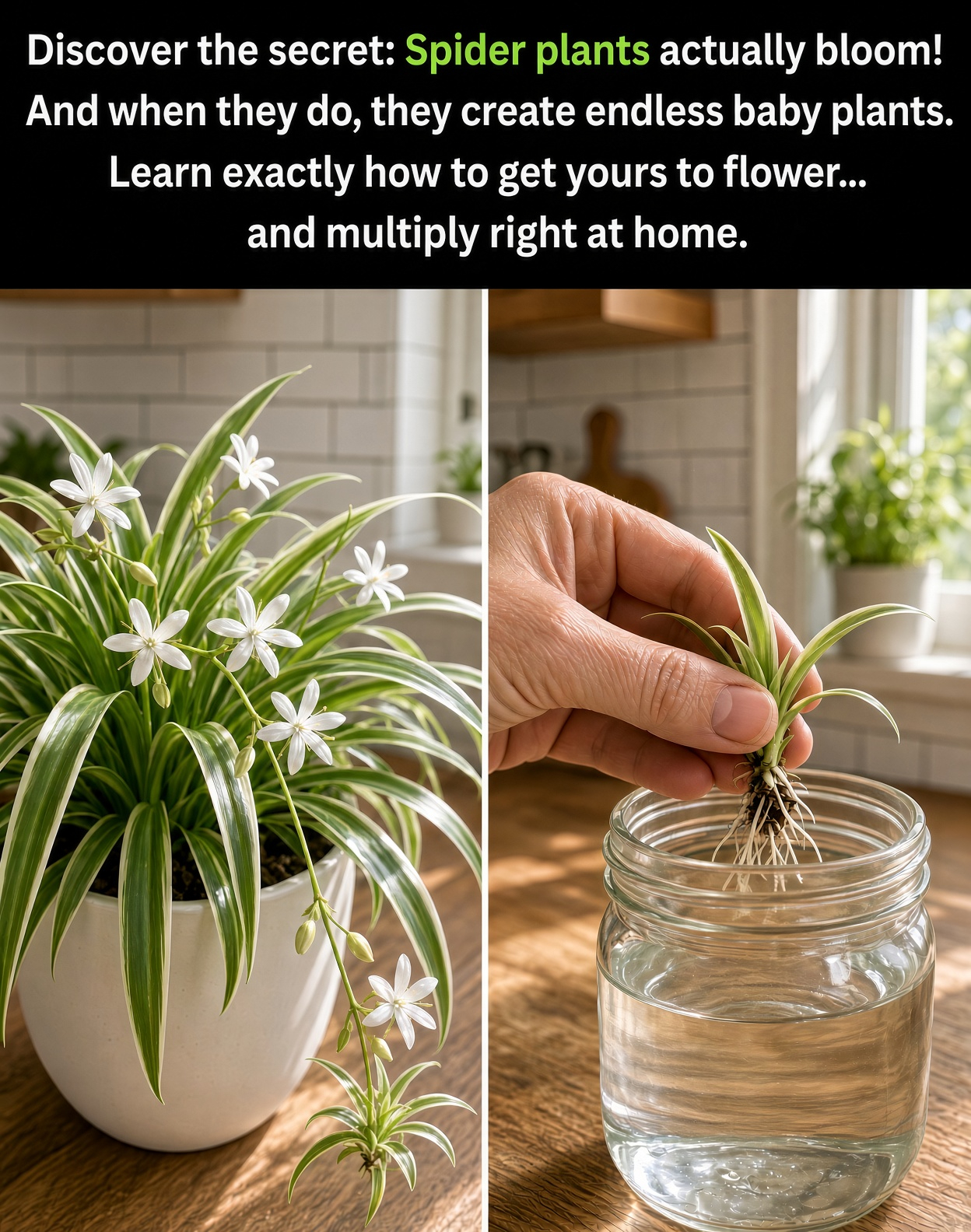
Spider plants are among the easiest houseplants to grow, but their dangling baby plants make them even more special. Those tiny green rosettes develop along long, arching stems after the plant produces small white flowers.
If your spider plant has plenty of leaves but never seems to produce flowers or babies, its growing conditions may need a little adjustment. Light, watering, temperature, plant maturity, and pot size can all influence flowering.
The good news is that you don’t need complicated tricks. By providing the conditions spider plants naturally prefer, you can encourage healthy growth and give a mature plant a better chance of producing new plantlets.

Understanding How Spider Plants Flower
Spider plants, botanically known as Chlorophytum comosum, reproduce naturally by producing long, slender stems called runners or stolons. Small white, star-shaped flowers appear along these stems. After flowering, miniature versions of the parent plant begin forming at the nodes.
These baby plants are commonly called spiderettes or offsets. Once they develop small roots, they can be rooted in their own containers to create new plants.
Flowering is influenced by the plant’s maturity and its environment. Shorter days and longer, uninterrupted nights can encourage the development of flowering stems. Some plants may also flower at other times indoors.

1. Provide Bright, Indirect Light
Light is one of the most important factors in keeping spider plants healthy and encouraging them to produce runners. Although these plants can survive in lower-light rooms, their growth may become slower and flowering less likely.
Place your plant near an east- or west-facing window where it receives plenty of bright, filtered light. A position slightly away from a sunny south-facing window can also work well.
Avoid leaving the leaves exposed to intense midday sunlight for long periods. Strong direct sun can scorch the foliage and create brown or bleached patches.
If your home does not receive enough natural light, a suitable indoor grow light can supplement it. Keep the lighting routine consistent rather than constantly changing the plant’s location.
Helpful tip: A bright room with indirect sunlight is generally a better choice than a dark corner. Healthy, active growth gives a mature spider plant a better opportunity to produce flower stalks.

2. Adjust Watering to Keep Roots Healthy
Spider plants have thick, fleshy roots that store water, so they can tolerate occasional missed watering. However, constantly wet soil can create problems and damage the roots.
Water thoroughly when the upper layer of potting mix has started to dry. Allow excess water to drain away completely, and never leave the container sitting in a saucer full of water.
During winter, growth usually slows, so the plant may need less frequent watering. Check the soil before adding more rather than following a rigid watering schedule.
On the other hand, allowing the entire root ball to become extremely dry for long periods can also stress the plant. Aim for consistent care without keeping the soil saturated.
Helpful tip: Always use a container with drainage holes. A well-draining houseplant mix helps prevent excess moisture from collecting around the roots.
3. Avoid Excessive Fertilizer
Spider plants do not need heavy feeding to grow well. Too much fertilizer, particularly when applied frequently, can encourage excessive leaf growth and reduce the production of plantlets.
During active growth in spring and summer, an ordinary balanced houseplant fertilizer can be used sparingly according to its label. If the plant has recently been repotted into fresh potting mix, additional feeding may not be necessary right away.
Avoid applying concentrated fertilizer or repeatedly adding products in the hope of forcing flowers. Excess nutrients can accumulate in the soil and contribute to brown leaf tips or root stress.
Helpful tip: Focus on maintaining healthy growing conditions rather than using high-phosphorus fertilizer as a flowering shortcut. Spider plants generally respond better to balanced care than aggressive feeding.
4. Allow Natural Seasonal Changes
One interesting feature of spider plants is their response to day length. Research and extension guidance indicate that shorter days and longer uninterrupted nights can encourage flowering stems and the plantlets that follow.
This means that keeping bright room lights switched on late into the evening may interfere with the natural darkness the plant needs to receive seasonal signals.
Try placing your spider plant in a room where it experiences a regular day-and-night cycle. During the evening, allow the room to become naturally dark instead of keeping artificial lights on for extended periods.
Do not put the plant in complete darkness during the day. It still needs suitable light for healthy photosynthesis and foliage growth.
Helpful tip: Consistency matters. Give the plant several weeks of stable conditions rather than expecting flowers to appear immediately.

5. Maintain Comfortable Indoor Temperatures
Spider plants prefer comfortable indoor conditions rather than extreme temperature changes. A warm room during the day and slightly cooler conditions at night can provide a suitable environment for steady growth.
Keep the plant away from cold drafts, air-conditioning outlets, radiators, and other sources of sudden temperature changes.
Very cold conditions can slow growth, while excessive heat and dry air may cause leaf tips to turn brown. A stable indoor location is usually best.
Helpful tip: Avoid moving the plant repeatedly between very different environments. Give it time to adjust when changing its location.
6. Keep the Plant Slightly Snug in Its Pot
Spider plants are known for their thick roots, which can fill a container surprisingly quickly. A mature plant that is slightly snug in its pot may produce more flowering stems and offsets than one recently moved into a much larger container.
However, there is a difference between a comfortably full pot and a severely overcrowded root system. If roots are densely circling, pushing out of drainage holes, or lifting the plant above the soil, it may be time to repot.
When repotting is necessary, choose a container only one size larger. Use fresh, well-draining potting mix and avoid disturbing the roots more than necessary.
Helpful tip: Do not repot simply because a certain amount of time has passed. Check the roots and the plant’s overall condition first.
How to Turn Spider Plant Babies Into New Plants
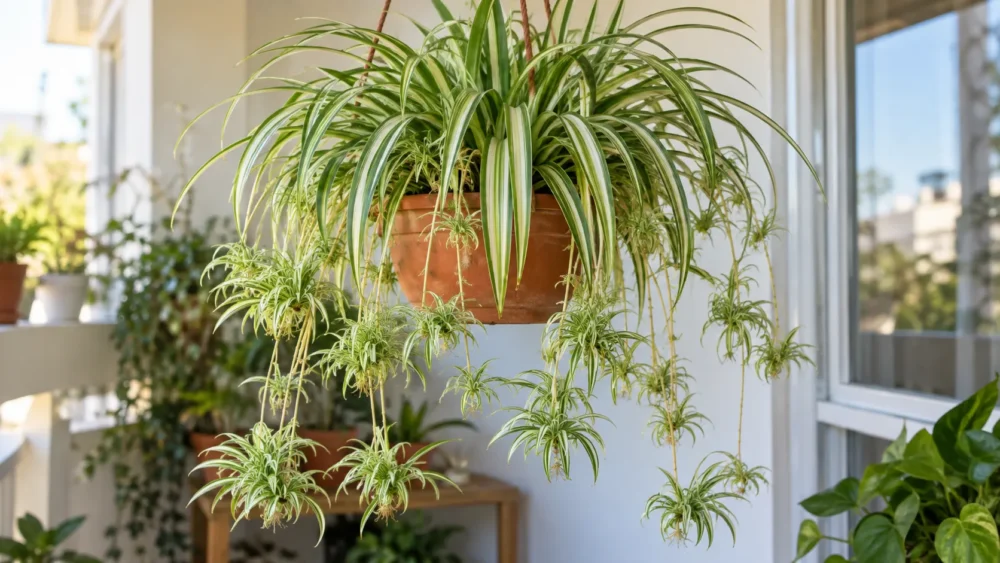
Once your plant produces baby spiderettes, you can use them to grow an entire collection. Wait until an offset has developed a few leaves and small visible roots before separating it from the parent.
Method 1: Root the Baby While It Is Still Attached
- Fill a small pot with moist, well-draining houseplant compost.
- Place the pot beside the parent plant.
- Set the baby plantlet on the surface of the compost.
- Use a small bent piece of wire to hold it gently in place if necessary.
- Keep the compost lightly moist while roots develop.
- Once the plantlet is established, cut the connecting runner.
This approach allows the baby plant to receive support from the parent while it develops its own roots.
Method 2: Root the Offset in Water
- Choose a healthy plantlet with several leaves.
- Cut it from the parent plant using clean scissors.
- Place the base in a small glass of water, keeping the leaves above the waterline.
- Position the glass in bright, indirect light.
- Refresh the water regularly.
- Once the roots have developed, transfer the young plant into a small pot with suitable potting mix.
Avoid leaving the leaves submerged. Only the base of the plantlet needs to sit in the water.

Why Your Spider Plant May Not Be Producing Flowers
If your plant looks healthy but has not produced any flower stalks, consider these common reasons:
- The plant is too young: Young spider plants may need time to mature before producing runners.
- Insufficient light: A very dim location can limit growth and flowering.
- Long artificial evenings: Lights left on late at night can interfere with the plant’s response to shorter days.
- Excessive fertilizer: Too much feeding can encourage foliage at the expense of plantlet production.
- Watering problems: Constantly wet soil or prolonged drought can stress the plant.
- Recent repotting: A newly repotted plant may need time to settle into its new container.
- Plant variety: Some Chlorophytum varieties do not produce the familiar hanging plantlets.
Remember that flowering is not something you can guarantee on a particular schedule. A mature, healthy plant with suitable conditions has a better chance of producing runners, but patience is important.
Final Thoughts
Getting a spider plant to flower is mostly about understanding its natural growing habits. Provide bright, indirect light, water carefully, avoid excessive fertilizer, and allow a consistent period of darkness each night.
Give mature plants time to settle into their pots, and avoid unnecessary changes to their growing environment. When the small white flowers appear, baby spider plants may soon follow.
With a little patience, one healthy parent plant can eventually provide plenty of new offsets to grow in separate pots, share with friends, or display in hanging baskets around your home .