
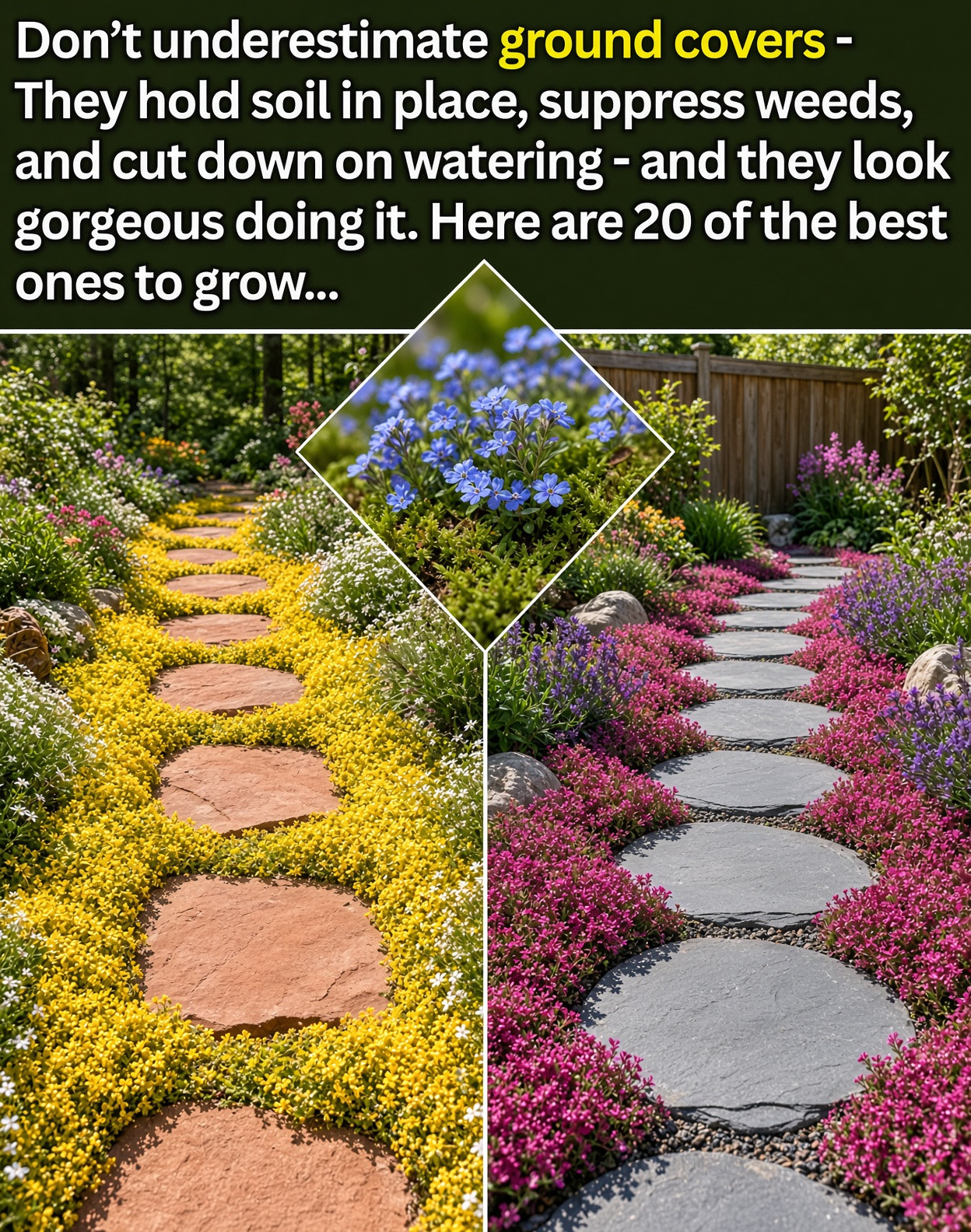

Shady corners can be some of the most challenging areas to landscape. Under mature trees, beside fences, along north-facing walls, and around woodland paths, the soil may receive very little direct sunlight. Many traditional flowering plants simply struggle in those conditions.
That does not mean a shady garden has to look empty. There are many attractive ground covers that naturally tolerate low light while bringing texture, color, flowers, or evergreen foliage to the landscape.
Ground covers can also help reduce the amount of exposed soil, soften hard edges, and create a finished appearance beneath taller shrubs and trees. The trick is choosing plants according to the exact type of shade, moisture level, and soil in your garden.
Why Use Ground Covers in Shady Areas?
A good ground cover can solve several landscaping problems at once. Once established, dense foliage can shade the soil surface, helping reduce opportunities for some weeds to become established. Plants can also help hold soil in place on gentle slopes and make large beds easier to maintain.
They are also valuable from a design perspective. Combining large leaves, fine foliage, flowers, and different shades of green creates depth even when the garden receives little sunlight.
20 Decorative Shade-Loving Ground Covers
1. Blue Lily Turf (Liriope muscari)
Blue lily turf forms clumps of narrow, arching leaves that create a grass-like texture in shaded borders. In summer, purple flower spikes rise above the foliage, adding a welcome burst of color.
Use it along pathways, beneath shrubs, around trees, or at the front of a woodland-style bed. It is particularly useful when you want foliage that stays attractive even when the plant is not flowering.
.jpg)
2. Spotted Dead-Nettle (Lamium maculatum)
Spotted dead-nettle is an excellent choice when you want foliage that actually brightens a dark corner. Many varieties have silver markings running through their green leaves, creating a strong contrast with darker plants.
Small flowers appear above the foliage in shades of pink, purple, or white. Its low, spreading habit makes it useful beneath taller plants and along shaded borders.

3. Common Periwinkle (Vinca minor)
Common periwinkle is a classic low-growing evergreen with glossy leaves and violet-blue flowers. Its trailing stems can spread across the soil and eventually create a dense carpet.
It can be useful for large shaded areas where you want relatively continuous coverage. However, because it can spread vigorously, check local invasive-plant guidance before introducing it.

4. Creeping Saxifrage (Saxifraga stolonifera)
Creeping saxifrage has rounded leaves and delicate flower stems topped with small white blooms. Its unusual foliage gives it a softer appearance than many dense ground covers.
It is particularly attractive in moist, shaded beds, rock gardens, and woodland-style plantings where delicate details can be appreciated up close.
5. Wild Ginger (Asarum canadense)
Wild ginger is made for a natural woodland look. Its large, heart-shaped leaves overlap to create a lush carpet beneath trees.
The flowers are small and hidden close to the soil, so this plant is mainly grown for its foliage and its ability to blend naturally into shady landscapes.

6. Impatiens (Impatiens walleriana)
If flowers are more important to you than evergreen foliage, impatiens can bring intense seasonal color to shady spaces.
Mass plantings can create a striking display beneath trees or along shaded borders. They prefer consistently moist soil, so they are better suited to beds that do not dry out quickly.
7. Variegated Ground Ivy (Glechoma hederacea)
Ground ivy produces trailing stems and rounded leaves, with some forms showing attractive cream-colored margins. Small purple flowers appear during the growing season.
Its ability to spread quickly can make it useful for filling bare ground, but that same characteristic can create maintenance problems. Check local recommendations before planting it.
8. Creeping Jenny (Lysimachia nummularia)
Creeping Jenny is easy to recognize by its bright yellow-green or chartreuse foliage. The trailing stems spread along the soil and can also spill beautifully over walls and containers.
It performs particularly well where the soil remains moist. Because it can spread aggressively, keep an eye on its boundaries.

9. Blue Star Creeper (Isotoma fluviatilis)
Blue star creeper forms a very low carpet of tiny leaves covered with small blue, star-shaped flowers. Its delicate appearance makes it especially useful around stepping stones and the edges of paths.
It can soften hard landscaping without becoming visually bulky, making it a good choice for small garden spaces.
10. Hosta (Hosta spp.)
Hostas are among the most dependable foliage plants for shade. Their leaves range from tiny and narrow to very large and heavily textured, while colors include green, blue-green, gold, and numerous variegated combinations.
Although hostas are taller than many traditional ground covers, mass plantings can cover substantial areas and create a strong visual carpet.
11. Bunchberry (Cornus canadensis)
Bunchberry is a low-growing woodland plant related to dogwoods. It produces white flowers followed by bright red berries, giving it more than one season of interest.
It prefers cool, moist conditions and works especially well beneath trees or in naturalistic woodland gardens.
12. Pachysandra (Pachysandra terminalis)
Pachysandra is valued for its glossy green foliage and ability to form dense evergreen-looking coverage in shade.
It is particularly useful beneath trees and along large shaded borders where a consistent green ground layer is more important than showy flowers.

13. Yellow Archangel (Lamium galeobdolon)
Yellow archangel combines variegated foliage with yellow flowers. It can fill difficult shady spaces quickly and tolerate conditions where some ornamental plants struggle.
Its vigorous spreading behavior deserves careful consideration. Check local invasive-plant recommendations before planting it outdoors.
14. Christmas Fern (Polystichum acrostichoides)
Christmas fern brings a completely different texture to a ground-cover planting. Its long evergreen fronds create height and movement while still fitting naturally into woodland gardens.
It is especially effective when planted among lower ground covers, rocks, and tree trunks to create a layered forest-floor effect.

15. Mint (Mentha spp.)
Mint is fragrant, fast-growing, and capable of producing dense foliage. It can fill spaces quickly, but its vigorous spreading habit means it is often easier to manage when contained.
Use it where you can control its growth rather than allowing it to spread freely through a mixed ornamental bed.
16. Wandering Jew (Tradescantia zebrina)
Tradescantia zebrina is grown primarily for its dramatic purple-and-silver striped leaves. Its trailing stems can form a colorful ground layer in warm climates.
In colder regions, it is generally better suited to containers or seasonal outdoor displays because it does not tolerate frost well.
17. Barrenwort (Epimedium spp.)
Barrenwort is especially valuable for difficult dry shade. It produces attractive heart-shaped foliage and small, delicate flowers in spring.
This makes it a useful candidate beneath established trees, where roots can compete heavily with other plants for available moisture.
18. Bugleweed (Ajuga reptans)
Bugleweed forms a low carpet of green, bronze, or purple-tinged foliage. Upright blue-purple flower spikes provide additional seasonal interest.
Its quick-spreading habit makes it effective for covering bare soil, but it should be monitored so it does not move into areas where it is unwanted.

19. Golden Star Grass (Chrysogonum virginianum)
Golden star grass produces cheerful yellow, star-shaped flowers above low-growing foliage. It works especially well in naturalistic woodland borders and shaded slopes.
Its softer appearance makes it useful when you want a ground cover that blends rather than dominates the planting.
20. Purple Heart (Tradescantia pallida)
Purple heart provides some of the strongest foliage color on this list. Its deep purple leaves create dramatic contrast against green plants and can be especially effective along warm, sheltered borders.
It grows best in warm climates. In colder regions, it can be treated as a seasonal plant or grown in containers.
How to Choose the Best Ground Cover for Your Shade
Not every shady area is the same. Before buying plants, spend a few days observing how much light the location receives and whether the soil stays moist or dries quickly.
For deep shade
Look for plants that genuinely tolerate very low light, such as wild ginger, Christmas fern, hostas, and suitable barrenworts.
For dappled shade
Areas beneath trees that receive moving patches of sunlight offer more possibilities. Liriope, dead-nettle, pachysandra, and several flowering ground covers can work well depending on soil conditions.
For dry shade
Dry shade is often difficult because mature tree roots compete aggressively for water. Barrenwort and other plants adapted to dry woodland conditions are worth considering.
For moist shade
If the soil remains consistently damp, plants such as creeping saxifrage and bunchberry may be more appropriate than drought-tolerant choices.
Be Careful With Aggressive Ground Covers
Fast growth can be useful when your goal is to cover bare soil, but it can also create a new maintenance problem.
Periwinkle, creeping Jenny, ground ivy, yellow archangel, mint, and bugleweed can spread vigorously under favorable conditions. Their behavior also varies by climate and region.
Before planting any vigorous species, check local invasive-plant guidance and consider whether you can easily contain the plant within its intended area.
Tips for Establishing a Shady Ground-Cover Bed
- Remove established weeds first. New ground covers have a much easier start when they are not competing with mature weeds.
- Prepare the soil carefully. Improve drainage where necessary, but do not make moisture-loving plants too dry.
- Water new plants regularly. Even tough ground covers need consistent moisture while their roots become established.
- Use mulch around young plants. A modest layer can protect the soil while the plants spread, but keep mulch away from plant crowns.
- Give the bed time. A new planting may look sparse during its first season. Allow compatible plants to fill the space rather than overcrowding them immediately.
Final Thoughts
A shady garden can be every bit as attractive as a sunny one when you choose plants that are naturally suited to low light.
Hostas provide bold foliage, dead-nettle adds silver highlights, lily turf brings purple flower spikes, ferns create woodland texture, and wild ginger gives shady spaces a natural forest-floor appearance.
The most important thing is to match the ground cover to your actual conditions. Consider light, moisture, soil, climate, and how aggressively the plant spreads before making your choice.
With the right combination of plants, even the difficult space beneath a mature tree can become a lush, layered, and inviting part of your garden.