
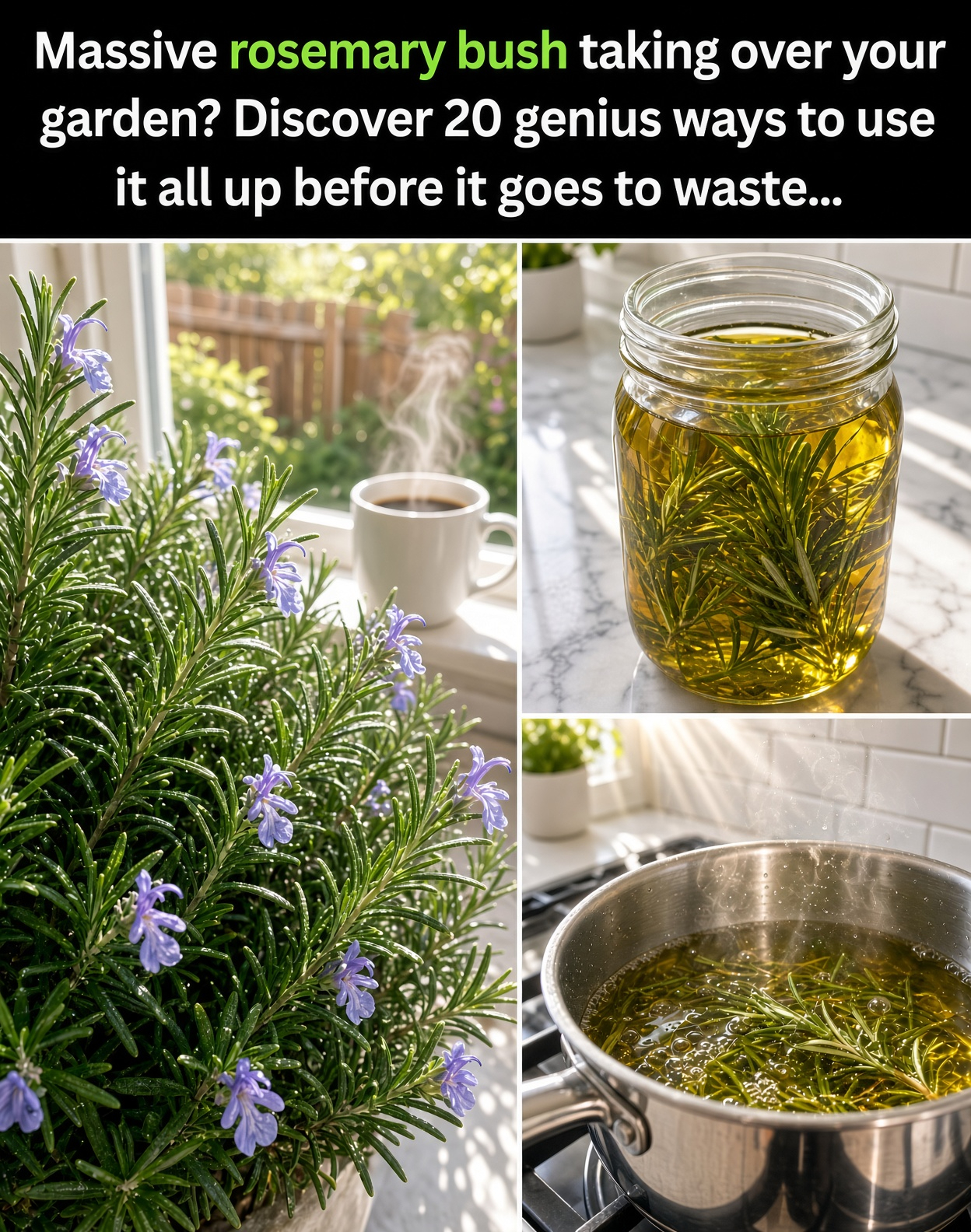
A healthy rosemary bush can produce an impressive amount of fragrant greenery. If yours is growing faster than you can use it in everyday meals, there are plenty of creative ways to put those fresh sprigs to work.
Rosemary is much more than a seasoning for roasted potatoes and chicken. Its distinctive aroma makes it useful in homemade kitchen ingredients, simple beauty projects, household crafts, and garden activities.
Before you throw away another handful of clippings, try these 20 practical ideas for making the most of your rosemary harvest.
Why Rosemary Is Such a Useful Garden Herb
Rosemary (Salvia rosmarinus) is a Mediterranean evergreen shrub known for its narrow leaves, woody stems, and strong fragrance. It is relatively drought-tolerant once established and grows especially well in sunny locations with well-draining soil.
A few reasons gardeners love keeping rosemary close by include:
- Long-lasting growth: In suitable climates, rosemary returns year after year.
- Low watering needs: Established plants prefer soil that dries slightly between waterings.
- Kitchen versatility: Fresh and dried leaves add flavor to many savory recipes.
- Pollinator appeal: Its flowers can attract bees and other beneficial insects.
- Attractive appearance: Rosemary can grow into a beautiful shrub, border plant, or informal hedge.
20 Brilliant Ways to Use Fresh Rosemary
1. Make Your Own Rosemary Salt

Rosemary salt is a simple seasoning that brings extra flavor to everyday meals. It works particularly well with roasted vegetables, potatoes, grilled dishes, and homemade bread.
How to make it:
- Wash the rosemary and dry it thoroughly.
- Remove the leaves from the woody stems and chop them finely.
- Combine one part chopped rosemary with approximately two parts coarse salt.
- Spread the mixture on a tray and allow the fresh herbs to dry completely.
- Store the finished seasoning in a clean, dry, airtight jar.
Make sure the rosemary is completely dry before storing it to help prevent moisture and spoilage.
2. Prepare Rosemary-Infused Olive Oil

The combination of rosemary and olive oil is wonderful for cooking. However, homemade oils containing fresh herbs can support the growth of dangerous bacteria if stored improperly.
For a safer everyday option, make a small quantity for immediate use.
How to prepare it:
- Warm a small amount of olive oil gently in a saucepan.
- Add a few clean rosemary sprigs.
- Allow the herb to flavor the oil briefly over low heat.
- Strain out the rosemary.
- Use the flavored oil immediately rather than storing fresh-herb oil at room temperature.
Try it over roasted vegetables, pasta, or warm bread.
3. Make Rosemary Butter

Softened butter and finely chopped rosemary make a delicious combination. Add a little garlic, black pepper, or lemon zest for extra flavor.
How to make it:
- Place softened butter in a small bowl.
- Mix in finely chopped rosemary.
- Add garlic, pepper, or lemon zest if desired.
- Stir until everything is evenly combined.
- Refrigerate in a covered container and use within a few days, or freeze in small portions.
Spread it over toast, baked potatoes, or freshly cooked vegetables.
4. Brew a Simple Rosemary Herbal Tea
Rosemary has a distinctive herbal flavor that makes an interesting caffeine-free infusion.
How to prepare it:
- Rinse a small rosemary sprig.
- Place it in a cup.
- Pour freshly boiled water over the herb.
- Let it steep for several minutes.
- Remove the sprig and add lemon or honey if desired.
Start with a mild infusion because rosemary has a strong taste. Herbal preparations are not a substitute for medical treatment, and concentrated rosemary products should not be consumed casually.
5. Add Rosemary to Homemade Lemonade

A little rosemary can transform ordinary lemonade into something special.
Try this simple idea:
- Prepare your favorite homemade lemonade.
- Lightly bruise one clean rosemary sprig to release its aroma.
- Add it to the pitcher.
- Refrigerate briefly to let the flavors mingle.
- Remove the sprig before serving if the flavor becomes too strong.
You can also use a rosemary-flavored syrup in sparkling water or other nonalcoholic drinks.
Rosemary Ideas for Homemade Beauty Projects
6. Prepare a Rosemary Hair Rinse

A cooled rosemary infusion can be used as a simple final hair rinse if you enjoy its herbal scent.
How to prepare it:
- Add two clean rosemary sprigs to two cups of water.
- Simmer gently for several minutes.
- Allow the liquid to cool completely.
- Strain out the leaves.
- Apply a small amount to clean hair and rinse if desired.
Try a small patch first and stop using it if your scalp becomes irritated. This homemade rinse should not be treated as a proven hair-growth treatment.
7. Create a Rosemary and Lavender Room Mist

Combine the scents of rosemary and lavender in a simple room fragrance.
How to make it:
- Prepare a mild rosemary infusion using clean water.
- Allow it to cool and strain it thoroughly.
- Pour it into a clean spray bottle.
- Keep it refrigerated and prepare small batches.
- Use it as a light room fragrance, not as a disinfectant.
Avoid spraying it directly onto delicate fabrics, pets, or sensitive skin. Discard the mixture if its appearance or smell changes.
8. Make a Rosemary Sugar Scrub

A sugar scrub is an easy craft to prepare with ingredients commonly found at home.
Ingredients:
- 1 cup granulated sugar
- ¼ cup olive oil
- A small amount of finely chopped, completely dry rosemary
Instructions:
- Combine the sugar and olive oil in a bowl.
- Add a small amount of dried rosemary.
- Mix until the texture is evenly distributed.
- Transfer to a clean container.
Use gently on hands or feet, avoiding the face, irritated skin, and sensitive areas. Do not use it on broken skin.
9. Experiment With Rosemary-Scented Drawer Sachets
Instead of throwing away dried rosemary leaves, use them to make small aromatic sachets.
How to make them:
- Dry rosemary sprigs completely.
- Remove the leaves and crumble them gently.
- Mix with dried orange peel if desired.
- Fill small breathable fabric bags.
- Place them in drawers or on closet shelves.
These sachets provide a pleasant herbal scent, although they should not be relied upon to protect clothing from insects.
Creative Ways to Use Rosemary Around the Home
10. Make Decorative Rosemary Candles
Rosemary’s earthy appearance makes it a lovely inspiration for handmade candles.
For a safer decorative approach, keep fresh or dried rosemary outside the candle’s burning area. You can decorate the outside of a candle container instead, ensuring that nothing flammable can fall into the melted wax or come close to the flame.
11. Simmer Rosemary With Lemon and Cinnamon

This is one of the easiest ways to make your home smell fresh without purchasing a room fragrance.
What you need:
- A few rosemary sprigs
- One sliced lemon
- One cinnamon stick
- A small saucepan of water
Add everything to the saucepan and warm it gently. Keep the water from boiling away, never leave the pan unattended, and switch off the heat when finished.
12. Save Dry Rosemary Stems for Garden Crafts

Rosemary branches become woody as the plant matures. Rather than discarding every trimmed stem, save clean, dry pieces for decorative arrangements.
You can bundle them with other dried herbs, use them in rustic wreaths, or add them to seasonal botanical displays.
Keep dried plant material away from candles, fireplaces, and other sources of heat.
Rosemary Uses in the Garden
13. Add Rosemary to Your Compost

If you have more rosemary than you can use, composting the extra leaves and small stems is a practical option.
How to do it:
- Chop the rosemary into smaller pieces.
- Mix it with other green and brown compost materials.
- Avoid adding large quantities of one type of plant material at once.
- Turn the compost periodically to encourage decomposition.
Rosemary is an organic material, not a complete fertilizer. Finished compost provides a broader mix of nutrients and organic matter.
14. Grow Rosemary as a Small Garden Hedge

A rosemary bush can become a beautiful landscape feature when several plants are grown together.
Choose a sunny location with excellent drainage. Space plants according to the mature width of the variety rather than using one fixed distance for every cultivar.
Prune lightly to encourage a dense shape, but avoid cutting deeply into old, leafless wood.
15. Use Rosemary as a Fragrant Garden Companion

Rosemary is a useful addition to mixed herb and ornamental gardens. Its flowers can provide a source of nectar for visiting pollinators, while its evergreen foliage adds structure throughout the year.
Plant it near other herbs that enjoy sunny conditions and well-drained soil. Avoid placing it beside plants that require consistently damp soil.
16. Make a Rosemary Vinegar for Household Cleaning

Rosemary-infused vinegar can be used for some household cleaning jobs, although it is not a registered disinfectant.
How to prepare it:
- Place clean, dry rosemary sprigs in a glass jar.
- Cover them with white vinegar.
- Close the jar and leave it for about one to two weeks.
- Strain the liquid into a clean container.
- Dilute with water for suitable household cleaning tasks.
Do not use vinegar on natural stone, marble, or surfaces that can be damaged by acids. Never mix vinegar with bleach or other cleaning chemicals.
17. Prepare Rosemary-Infused Honey

Rosemary and honey make a delicious combination for toast, pancakes, and homemade dressings.
For a simple version, prepare a small amount of rosemary-flavored honey just before using it.
How to make it:
- Warm a small quantity of honey gently.
- Add a clean rosemary sprig.
- Let the flavor infuse briefly.
- Remove the rosemary.
- Serve the flavored honey fresh.
For storage, follow a tested food-preservation recipe rather than leaving fresh herbs submerged in honey at room temperature.
18. Use Thick Rosemary Stems as Grilling Skewers
Thick, straight rosemary stems can be used as aromatic skewers for certain grilling recipes.
How to prepare them:
- Select sturdy, healthy stems.
- Remove most of the leaves.
- Rinse the stems and use them promptly.
- Thread suitable food onto them carefully.
- Cook food thoroughly and discard the used stems afterward.
Use only untreated rosemary grown for culinary purposes. Choose stems that are thick enough to hold the food securely.
19. Make Rosemary Melt-and-Pour Soap
If you enjoy handmade crafts, rosemary makes an attractive addition to a simple melt-and-pour soap project.
What you need:
- A commercially prepared melt-and-pour soap base
- A suitable soap mold
- A small amount of finely ground, dry rosemary
- Optional soap-safe fragrance
Instructions:
- Cut the soap base into small cubes.
- Melt it according to the manufacturer’s instructions.
- Stir in a small amount of dried rosemary.
- Pour into the mold.
- Allow it to cool and harden completely.
Use only cosmetic-grade ingredients and follow the soap base instructions. Avoid homemade cold-process soap recipes involving lye unless you have appropriate adult supervision and proper safety training.
20. Add Rosemary to a Homemade Cleaning Routine

The rosemary vinegar described earlier can also be used as a fragrant addition to a simple household cleaning routine.
Use it on vinegar-safe surfaces such as certain glass and ceramic finishes. Test a small hidden area first, and remember that a pleasant herbal smell does not mean a product kills germs.
How to Keep Your Rosemary Bush Producing Plenty of Fresh Growth

If you want a steady supply of rosemary for cooking and household projects, give the plant the conditions it prefers.
Choose a sunny location. Rosemary grows best with plenty of direct sunlight. Aim for around six hours or more whenever possible.
Use well-draining soil. Heavy, waterlogged soil can cause root problems. A gritty potting mix and a container with drainage holes are useful choices.
Water carefully. Water thoroughly when needed, then allow the upper soil to dry before watering again. Established plants are more tolerant of dry conditions than constantly wet soil.
Prune regularly. Light trimming encourages a fuller shape and gives you fresh leaves to harvest. Avoid removing too much growth at once or cutting far back into old, bare stems.
Harvest thoughtfully. Take small amounts from several branches rather than stripping one section completely. This helps the plant maintain healthy growth.
Final Thoughts
A productive rosemary bush can provide much more than a handful of seasoning for dinner. From homemade rosemary salt and herb butter to fragrant sachets, garden compost, and simple household projects, there are plenty of ways to enjoy every harvest.
The best approach is to start with a few ideas you will actually use. Save the tender leaves for cooking, dry some for sachets, and add suitable leftover trimmings to your compost.
With a little creativity, that abundant rosemary bush can become one of the most useful plants in your garden.