
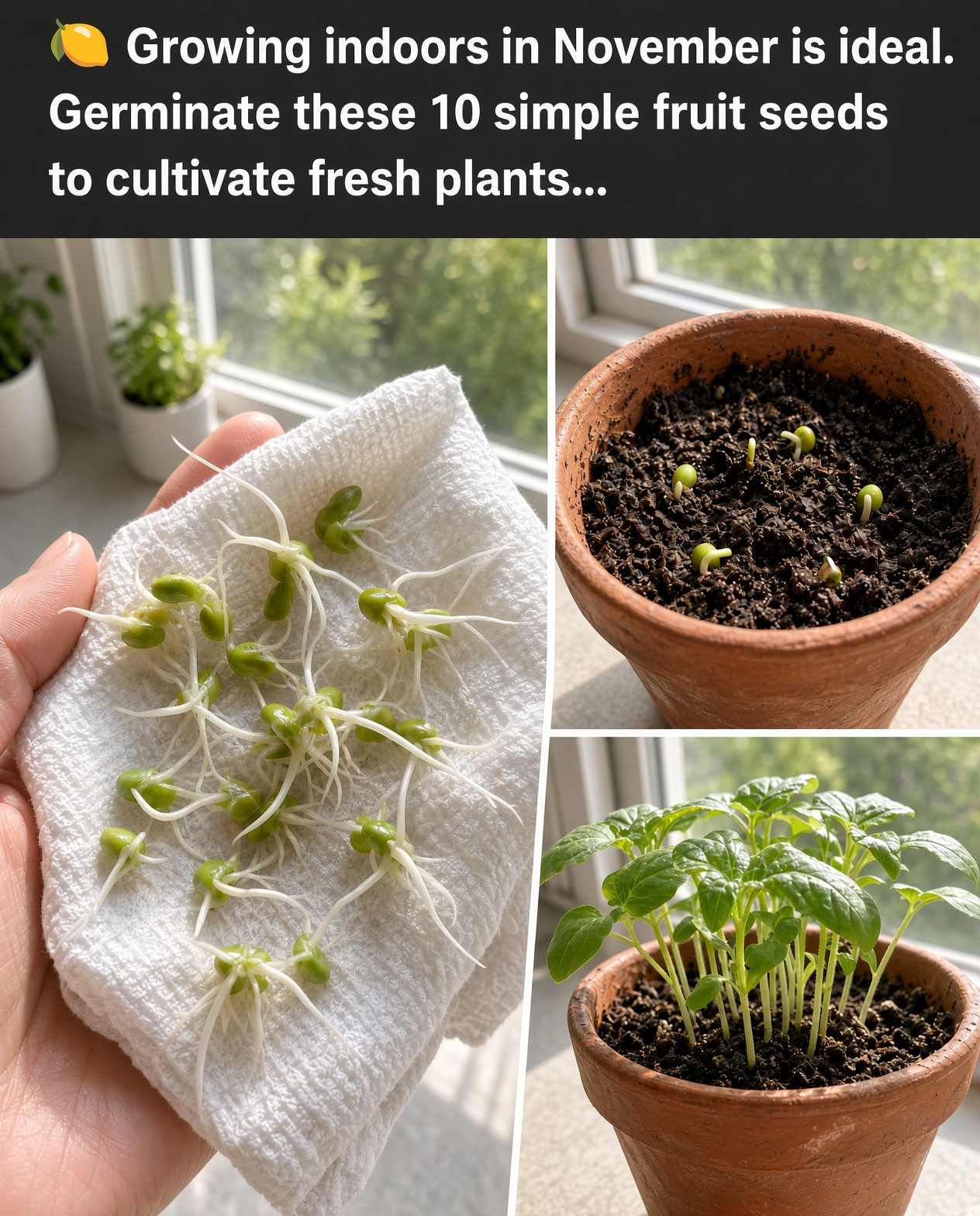
Growing plants from fruit seeds is a fun way to turn everyday kitchen leftovers into a new gardening project. Instead of throwing every seed away, you can save a few, clean them, and see whether they will sprout.
Some fruit seeds can begin germinating in a small amount of water, while others need a moist paper towel, warmth, or even a period of cold treatment before they are ready to grow.
Not every seed will be successful, and a tree grown from a supermarket fruit seed may produce fruit that is different from the original. Still, experimenting with fruit seeds is an inexpensive way to learn about plant growth and enjoy a little greenery at home.

What Kind of Water Should You Use?
Fresh, clean water is important when germinating seeds in jars or small containers. Filtered water or rainwater can be useful, although ordinary tap water is suitable in many areas.
The most important habit is replacing the water regularly. Old, cloudy water can encourage unwanted microbial growth and reduce the amount of oxygen available around the seed.
Also remember that not every fruit seed should remain submerged. Some are better started in a damp paper towel or directly in a suitable growing medium.
1. Avocado Seeds
Avocados have one of the largest seeds found in common fruits, making them an interesting choice for home germination. With a little patience, the pit can develop a root and eventually produce a leafy shoot.
Start by removing the seed from a ripe avocado and washing away any remaining fruit flesh. Identify the broader, flatter end, which is the bottom where the roots will emerge.
One familiar method is to suspend the seed over a glass using three toothpicks. Position the bottom portion in the water while keeping the upper part exposed. Check the water level regularly and replace it when needed.
What to expect: Germination can take approximately 2–6 weeks, although some seeds take longer. Once a healthy root and shoot have developed, transfer the seedling into a pot with drainage holes.

2. Mango Seeds
Mango seeds are hidden inside a tough, fibrous husk. The seed itself is the flatter, pale kernel found inside that outer covering.
After enjoying a ripe mango, clean the large stone and carefully separate the outer husk to reveal the inner seed. The kernel can then be wrapped in a damp paper towel and placed inside a loosely closed container or bag in a warm location.
Check it regularly to make sure the towel remains moist rather than soaked. Directly submerging the kernel in water for long periods is not ideal because it can encourage rot.
What to expect: A fresh mango seed may begin showing growth within approximately 1–3 weeks under warm conditions.

3. Dragon Fruit Seeds
Dragon fruit contains numerous tiny black seeds scattered throughout its flesh. These are relatively easy to collect and can germinate quickly when given warmth and consistent moisture.
Scoop out a small amount of fruit flesh and rinse the seeds thoroughly to remove the sticky pulp. Spread them over the surface of a moist seed-starting mix or damp paper towel.
Keep the seeds warm and provide bright, indirect light. A loose humidity cover can help prevent the surface from drying out, but allow some airflow to reduce the risk of mold.
Unlike avocado pits, dragon fruit seeds should not be left sitting in a glass of water. They need a moist surface rather than continuous submersion.
What to expect: Tiny seedlings may appear in about 5–10 days when conditions are warm and consistently moist.

4. Apple Seeds
Apple seeds are a little more demanding than some other fruit seeds because they generally need a period of cold, moist conditions before germinating. This process is called cold stratification.
Remove several seeds from a fresh apple and wash away the surrounding pulp. Wrap them in a slightly damp paper towel, place the towel in a sealed bag or container, and keep it in the refrigerator.
Check occasionally to make sure the towel remains slightly moist and that no mold is developing. After approximately 6–8 weeks, inspect the seeds for signs of root growth.
Seeds that have completed their cold treatment can be planted in small pots filled with seed-starting mix.
What to expect: Once moved into suitable growing conditions, some apple seeds may germinate within 1–3 weeks. The resulting tree may not produce apples identical to the fruit from which the seeds came.

5. Cherry Seeds
Cherry seeds are protected by hard pits, and they generally need cold stratification before they can germinate. This makes them a longer-term project than seeds such as dragon fruit or citrus.
Remove the pits from ripe cherries and clean away all remaining fruit material. Keep the seeds in a moist growing medium inside a sealed container in the refrigerator for approximately three months.
Check them occasionally for mold and make sure the medium does not dry out. After the cold period, plant the seeds in suitable potting mix and keep the soil lightly moist.
What to expect: Germination may take several weeks after stratification, and results can vary. Some seeds may take longer or fail to sprout.

6. Lemon Seeds
Lemon seeds are among the easiest citrus seeds to experiment with at home. Fresh seeds usually have a better chance of germinating than seeds that have been left to dry for a long time.
Remove several seeds from a fresh lemon and rinse them thoroughly to eliminate all traces of pulp. You can place them between layers of a damp paper towel or in a shallow container with a small amount of water.
If using water, change it regularly and avoid keeping the seeds completely submerged for extended periods. The paper-towel method is often easier to manage because it provides moisture while allowing access to air.
Once a small root appears, transfer the seed carefully into a pot of well-draining potting mix.
What to expect: Lemon seeds may germinate within approximately 1–3 weeks, depending on freshness and warmth.

7. Lime Seeds
Lime seeds can be started in much the same way as lemon seeds. The key is to use fresh seeds and avoid allowing them to dry out before germination.
Remove the seeds from a ripe lime and rinse away the surrounding pulp. Place them in a damp paper towel or a shallow dish with a little clean water.
Keep them somewhere warm and check the moisture regularly. If you notice the water becoming cloudy, replace it with fresh water.
Once the seeds begin developing roots, move them into small pots with drainage holes. Handle the new roots gently because they can be easily damaged.
What to expect: Fresh lime seeds may begin sprouting in approximately 1–3 weeks, although timing varies.

8. Orange Seeds
Orange seeds are another enjoyable option for anyone interested in growing citrus plants from kitchen scraps. A fresh orange can provide several seeds, allowing you to try more than one.
Wash the seeds thoroughly after removing them from the fruit. You can start them in a damp paper towel or plant them directly into a small container filled with moist seed-starting mix.
Keep the container warm and provide bright, indirect light once the seedlings emerge. Avoid leaving the growing medium saturated, as excess moisture can cause seeds to rot.
Growing an orange tree from seed is a long-term project. The resulting plant may take years to mature, and its fruit may not have the same characteristics as the original orange.
What to expect: Germination commonly takes around 2–4 weeks under suitable conditions.

9. Grapefruit Seeds
Grapefruit seeds can also be used to grow young citrus plants. Like other citrus seeds, they are best planted while fresh rather than stored until they become completely dry.
Remove the seeds from the fruit and rinse them carefully. Start them in a damp paper towel or place them in a small pot of lightly moistened seed-starting mix.
Keep the container warm and check it regularly. Once the seedlings appear, provide plenty of bright light and gradually allow them to grow into their own small pots.
Remember that a grapefruit tree grown from seed may not produce fruit identical to the parent. It can also take several years before the tree reaches fruiting maturity.
What to expect: Germination may occur in approximately 2–3 weeks, depending on seed freshness and growing conditions.

10. Pineapple Seeds
Pineapples are a more unusual choice for seed propagation. The tiny seeds are found just beneath the fruit’s outer skin and can be difficult to collect.
If you find seeds, remove them carefully and rinse away any remaining fruit material. Rather than placing them in standing water, sow them in a lightly moist, well-draining seed-starting medium.
Keep the container warm and maintain gentle, consistent moisture. Pineapple seeds can be slow and unpredictable, so this is best treated as a small gardening experiment.
If your main goal is to grow a pineapple plant at home, using the leafy crown of a pineapple is generally a much more practical method than starting from seed.
What to expect: Germination can be slow and may take weeks or even months. Patience is essential.

Simple Tips for Better Seed Germination
Regardless of which fruit you choose, a few basic habits can make your germination project easier to manage.
- Clean the seeds: Remove sticky fruit pulp before starting to reduce the risk of mold.
- Use fresh seeds: Many fruit seeds germinate more successfully when they have not been allowed to dry out.
- Replace old water: If you are using a water method, refresh it regularly, especially when it becomes cloudy.
- Maintain suitable warmth: Most tropical fruit seeds prefer warm conditions for germination.
- Keep the medium moist: Seeds need moisture, but they should not sit in waterlogged conditions.
- Allow airflow: Humidity can help prevent drying, but completely stagnant conditions can encourage mold.
- Plant more than one: Not every seed is viable, so starting several gives you a better chance of success.
- Transfer carefully: Once roots or shoots appear, move the seedling into a suitable growing medium without damaging its delicate new growth.
When Should You Move Germinated Seeds Into Soil?
Water is useful for starting certain seeds, but it is not a permanent growing environment for most fruit trees. Once a seed has developed a healthy root or a small shoot, it is generally time to move it into a suitable potting mix.
Choose a small container with drainage holes and fill it with a loose, well-draining growing medium. Make a small hole for the seedling and position the root carefully so it is not bent or crushed.
After planting, water gently and place the container somewhere with suitable light for the particular plant. Avoid strong direct sunlight while a very young seedling is adjusting.
Final Thoughts
Growing fruit seeds at home is a simple way to explore plant propagation using materials you might otherwise throw away. Avocados, mangoes, dragon fruit, apples, cherries, lemons, limes, oranges, grapefruits, and pineapples all offer different germination experiences.
Some seeds respond well to a little water, while others need a damp paper towel, warm conditions, or a cold period before they will sprout. The trick is to understand what each type needs rather than treating every seed in exactly the same way.
Start with a few fresh seeds, keep an eye on moisture, and give them time. Even if not every seed grows, the process is a rewarding way to learn more about gardening.