
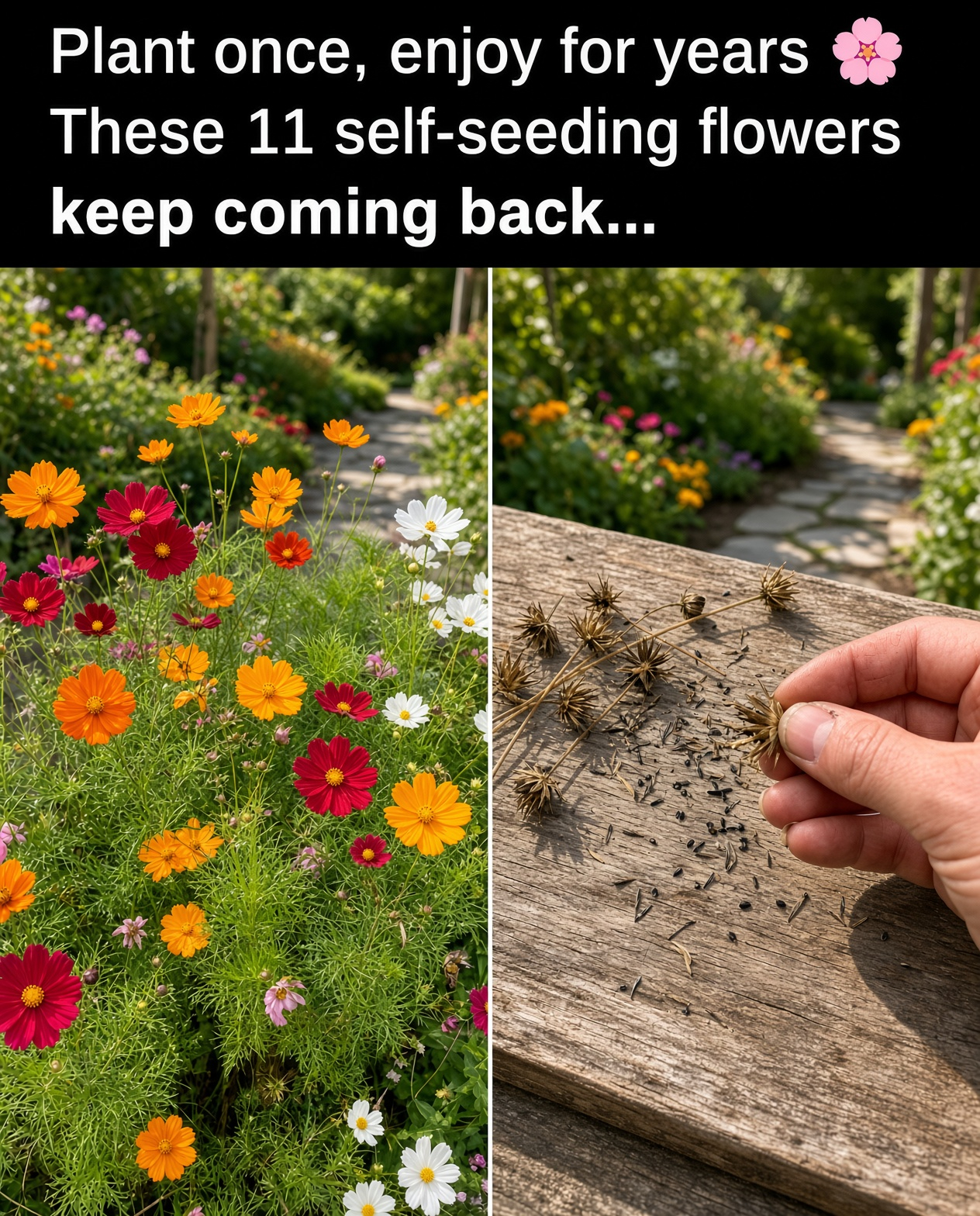
Some of the most charming gardens aren’t planted perfectly every spring. Instead, they slowly develop their own rhythm as flowers drop seeds, new seedlings appear, and familiar blooms return in unexpected places.
Self-seeding flowers make this possible. Rather than depending entirely on fresh plants every season, these flowers can mature, produce seed, and create new plants naturally.
That means less replanting, fewer empty spaces, and a garden that can become increasingly full and colorful over time.
The trick is knowing which flowers are good at reseeding and giving them the right conditions to complete their natural cycle.
What Are Self-Seeding Flowers?

Self-seeding flowers are plants that produce viable seeds which fall into the surrounding soil and eventually germinate without the gardener having to collect and sow them manually.
Some self-seeders are annuals, meaning the original plant may disappear after one growing season while its seedlings take over the following year. Others can behave as short-lived perennials or return through a mixture of reseeding and surviving plants.
The exact amount of reseeding depends on the plant, climate, soil, moisture, and how much cleanup you do at the end of the season.
How to Encourage Self-Seeding in Your Garden

If you want your flowers to reseed, the most important thing is to avoid removing every spent flower.
- Leave some seed heads: Allow selected flowers to finish developing their seeds.
- Don’t deadhead everything: Regular deadheading encourages neatness and often more flowers, but it also removes potential seeds.
- Avoid excessive mulch: Thick mulch can make it harder for fallen seeds to reach suitable soil.
- Limit unnecessary digging: Frequent soil disturbance can bury or relocate seeds.
- Thin young seedlings: If too many volunteers appear in one place, remove some so the remaining plants have room.
The original article specifically recommends allowing seed heads to mature, limiting mulch around reseeding areas, and avoiding unnecessary soil disturbance. :contentReference[oaicite:1]{index=1}
1. Calendula
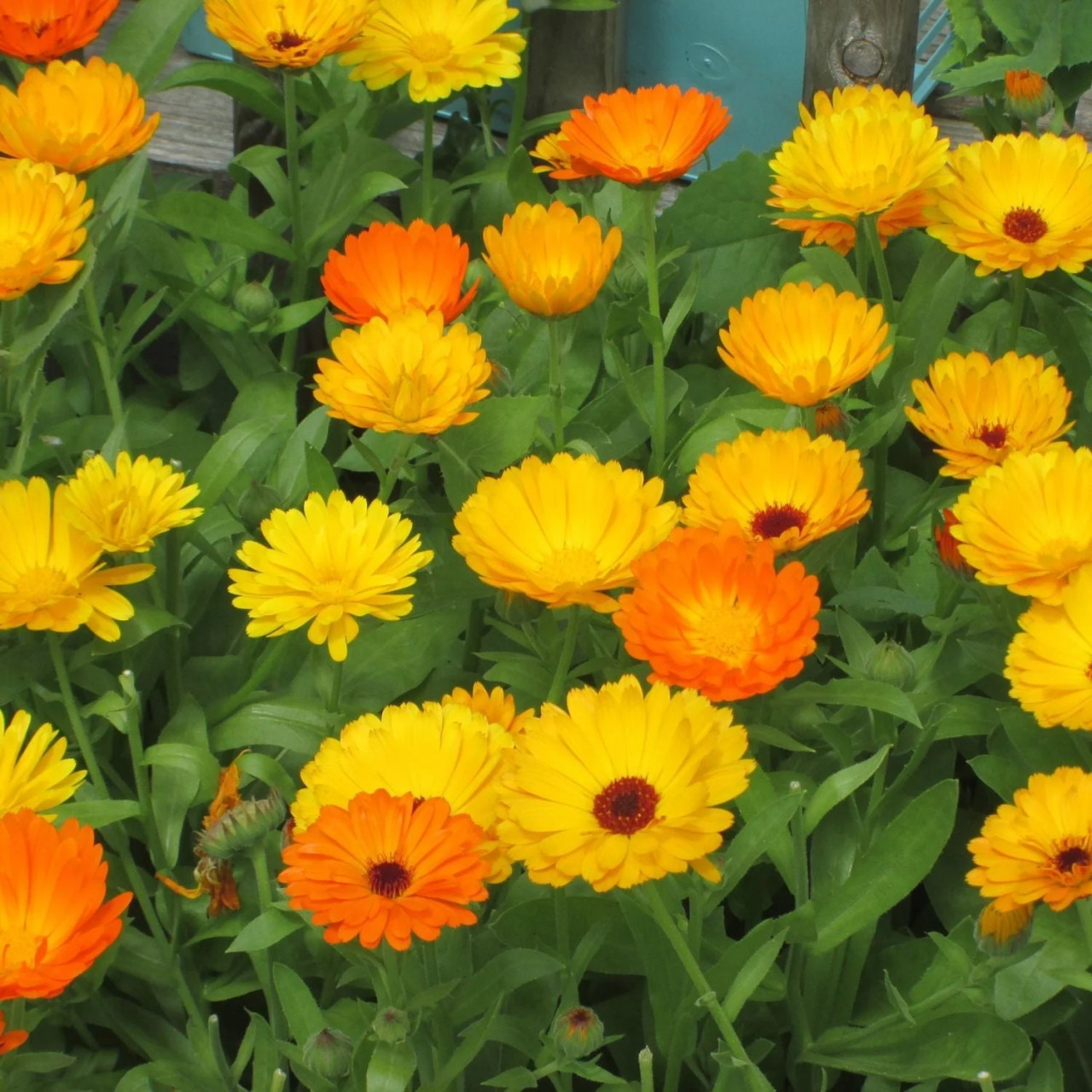
Calendula is an excellent flower for gardeners who want reliable color without constantly buying new plants.
Its bright orange and yellow daisy-like blooms can continue flowering for a long period, especially when growing conditions are favorable.
Instead of removing every fading bloom, leave some flowers on the plant long enough for seeds to mature. Those seeds can drop around the parent plant and produce volunteers later.
Calendula generally prefers sunny conditions and well-drained soil. The RHS also notes that calendula often self-seeds from year to year. :contentReference[oaicite:2]{index=2}
Self-seeding range listed by the source: USDA Zones 6–10.
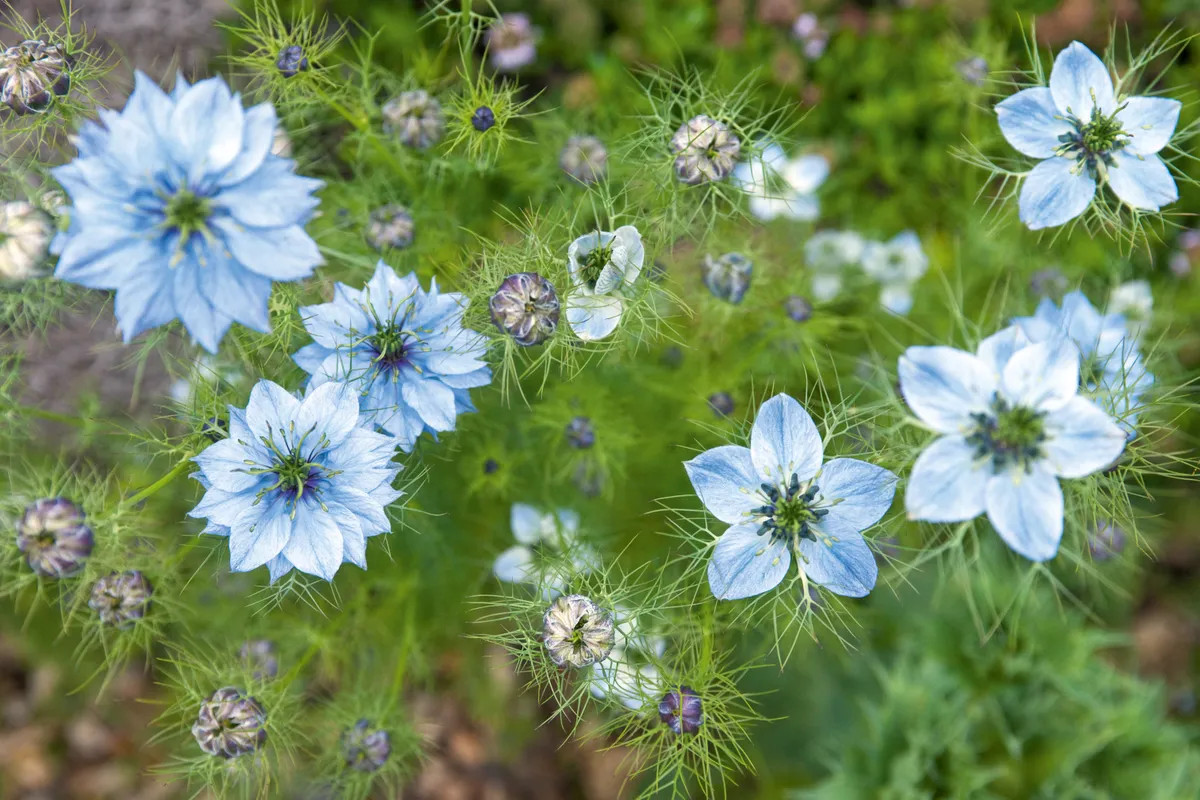
2. Nigella — Love-in-a-Mist
Nigella, often called love-in-a-mist, brings an airy quality to flower beds that few other annuals can match.
The blue or white flowers are surrounded by fine, thread-like foliage, giving the entire plant a soft and almost floating appearance.
Its decorative seed pods are particularly useful in a self-seeding garden. Let several flowers remain on the plant after blooming so those pods can mature.
Nigella is especially attractive in cottage gardens and informal borders where its seedlings can appear naturally among other plants.
Self-seeding range listed by the source: USDA Zones 5–9.
3. Larkspur

Larkspur is ideal when you want self-seeding flowers that also provide height.
The slender flower spikes rise above shorter plants and create vertical interest in borders. Depending on the variety, flowers can appear in blue, purple, white, pink, or reddish tones.
Allow the flowers to finish their cycle rather than cutting everything down immediately after flowering. Mature seeds can fall into the surrounding soil and produce new plants.
Larkspur is particularly useful toward the middle or back of informal flower borders.
Self-seeding range listed by the source: USDA Zones 4–8.
4. Poppies
Poppies are one of the easiest ways to bring a relaxed, natural look to a garden.
The delicate flowers can appear in striking shades of red, orange, pink, and white. After the petals disappear, the distinctive seed capsules remain.
Instead of removing those capsules immediately, allow some to dry naturally. Once mature, they can distribute seeds around the original planting area.
This is particularly useful in informal borders where you don’t mind flowers appearing in slightly different locations from one year to the next.
Self-seeding range listed by the source: USDA Zones 3–8.
5. Sweet Alyssum
Sweet alyssum may be small, but it can have a major impact when planted along pathways and flower-bed edges.
Its tiny flowers form dense cushions close to the ground and are known for their sweet fragrance.
Because the plants stay relatively short, they are excellent for filling gaps beneath taller flowers or creating a soft edge along a garden path.
Allow some flowers to mature and produce seed if you want volunteers to appear the following season.
Self-seeding range listed by the source: USDA Zones 7–11.
6. Cosmos
Cosmos are wonderfully suited to informal gardens. Their tall stems and finely divided foliage create an airy effect, while the flowers bring shades of pink, white, and other colors.
One of the reasons gardeners love cosmos is their ability to perform even when the soil isn’t perfect.
Leave some mature flowers at the end of the season instead of removing every spent bloom. The seeds can fall naturally and create another generation.
Because cosmos can become quite tall, plant them where their height won’t hide shorter flowers.
Self-seeding range listed by the source: USDA Zones 7–10.
7. Coreopsis
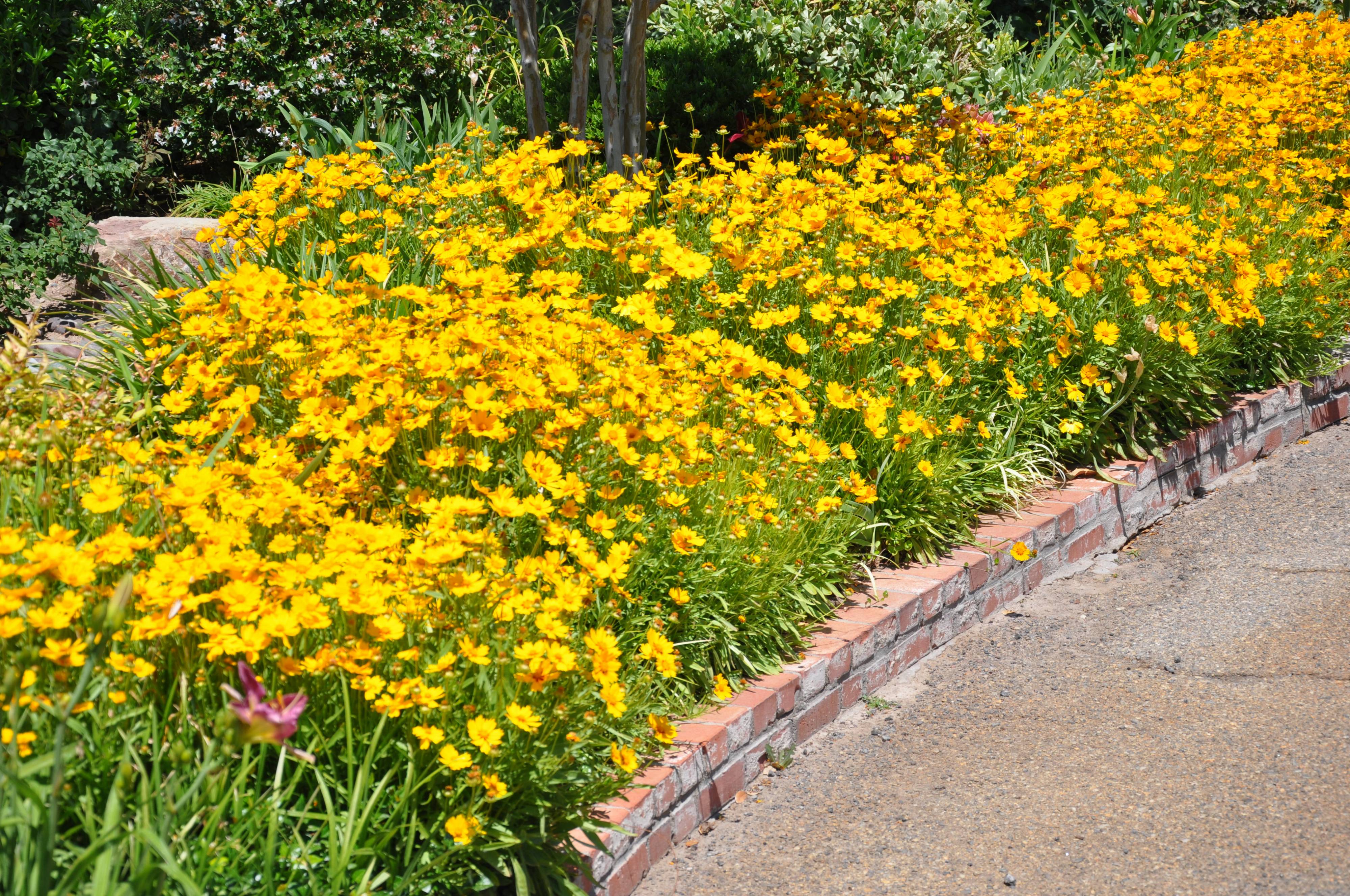
Coreopsis is usually grown for its bright yellow flowers, but certain varieties can also reseed freely.
The daisy-like blooms bring a sunny appearance to borders and naturalistic plantings, while the foliage provides a fine-textured backdrop.
If you want to encourage natural reseeding, allow a portion of the flowers to remain after their best display has passed.
Not every coreopsis variety behaves identically, so the amount of volunteer growth can vary considerably.
Self-seeding range listed by the source: USDA Zones 5–9.
8. Cornflowers

Cornflowers, also known as bachelor’s buttons, are classic blue flowers that fit beautifully into naturalistic gardens.
Their intense blue blooms create a wonderful contrast against yellow calendula, orange flowers, and soft pink cosmos.
Cornflowers can reseed readily when mature flower heads are allowed to remain. North Carolina Extension notes that they naturalize easily and that limiting deadheading allows more seed to remain available for birds and future plants. :contentReference[oaicite:3]{index=3}
They are also attractive to pollinators and work particularly well in meadow-style and cottage-garden plantings.
Self-seeding range listed by the source: USDA Zones 3–8.
9. Black-Eyed Susan
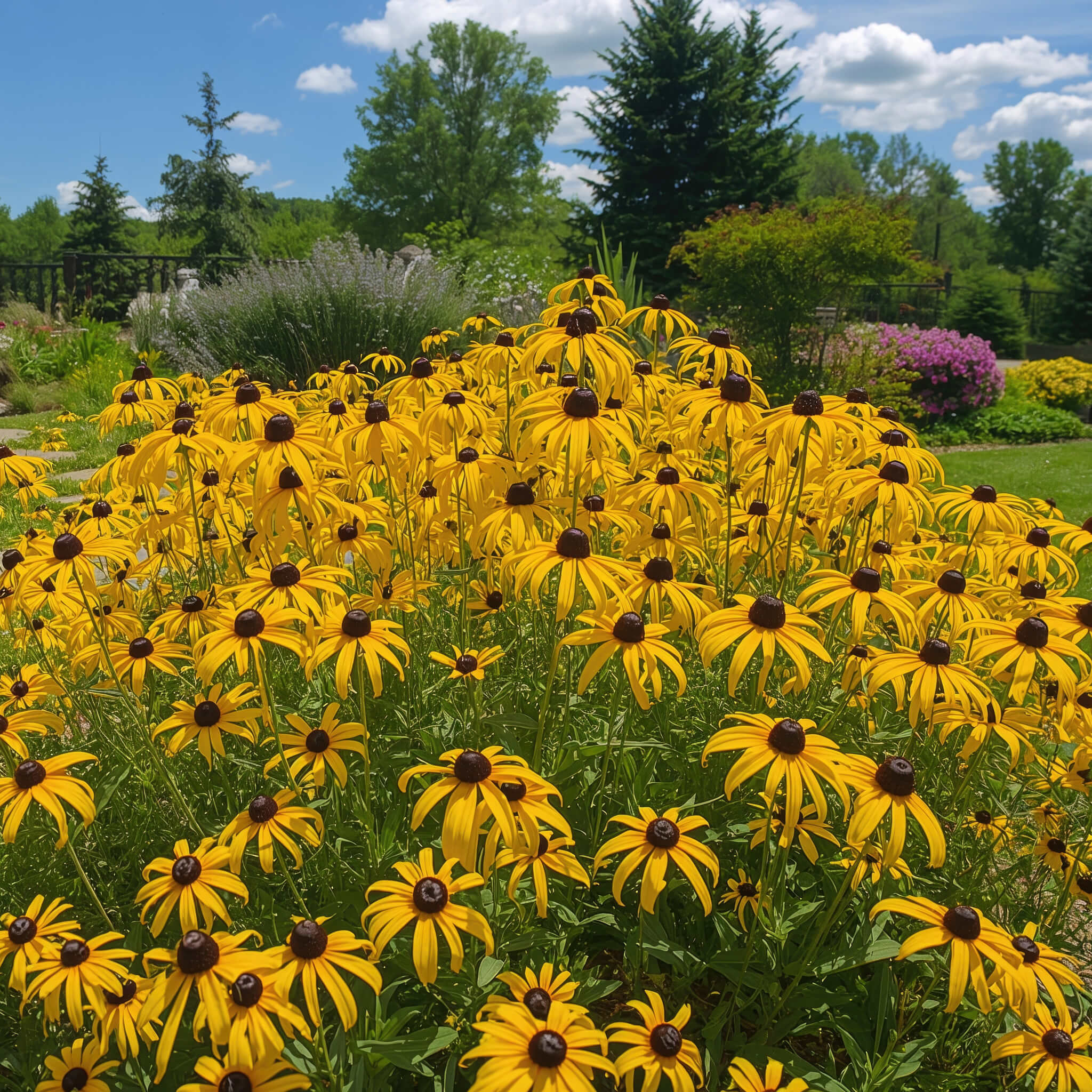
Black-Eyed Susan brings one of the most recognizable combinations of colors to a summer garden: golden-yellow petals surrounding a dark central cone.
These flowers work well in sunny borders, wildlife gardens, and naturalized areas.
Allowing some mature flower heads to remain can encourage reseeding while also leaving seeds available for birds.
If you prefer a tidier garden or want to control where the plants appear, remove some of the seed heads before they mature completely.
Self-seeding range listed by the source: USDA Zones 4–9.
10. Verbena Bonariensis
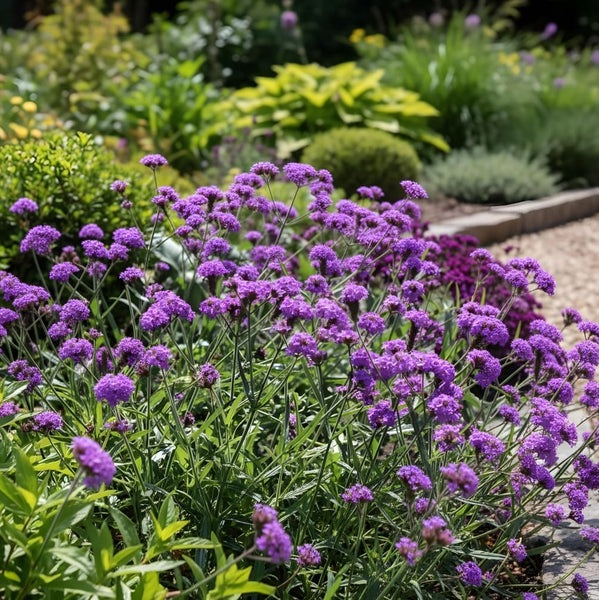
Verbena bonariensis is an excellent choice when you want flowers that add height without blocking the plants behind them.
Its slender stems rise above surrounding foliage and carry clusters of purple or lavender flowers.
When grown in a sufficiently warm climate, it can self-seed effectively. Allowing mature flower heads to remain gives the plant a chance to drop seeds naturally.
Beth Chatto’s Gardens specifically recommends not cutting it down too early because allowing it to set seed can provide new self-sown plants.
Self-seeding range listed by the source: USDA Zones 7–11.
11. Cleome — Spider Flower

Cleome is one of the most dramatic self-seeding annuals on this list.
The plants can grow tall, producing clusters of pink, purple, or white flowers with unusually long stamens that give the blooms their spider-like appearance.
Cleome can self-seed generously when mature seed pods are allowed to dry and release their seeds. University of Wisconsin Extension notes that the plant often self-seeds readily and that removing seed pods or using mulch can help reduce unwanted volunteers. :contentReference[oaicite:5]{index=5}
If you like the look of cleome but don’t want it spreading, simply remove some of the developing seed pods before they mature.
Self-seeding range listed by the source: USDA Zones 7–11.
How to Keep Self-Seeding Flowers Under Control
Self-seeding doesn’t have to mean letting the garden become completely uncontrolled.
In fact, a little management can make the difference between a beautiful naturalized planting and an overcrowded bed.
- Remove seedlings growing directly in pathways.
- Thin dense clusters while the plants are still young.
- Remove unwanted seed heads from particularly vigorous plants.
- Leave the strongest volunteers where they have enough space.
- Allow different flowers to occupy different layers of the garden.
This gives you the benefits of natural reseeding while keeping the overall garden design intentional.
Why Self-Seeding Flowers Are Worth Growing
The biggest advantage is simple: once established, these flowers can help produce their own replacements.
That can reduce the amount of annual replanting you need to do and help fill empty spaces naturally.
Self-seeding flowers can also create a more relaxed appearance because new plants don’t necessarily emerge in perfectly straight rows.
For gardeners who enjoy cottage gardens, wildlife borders, meadow-style plantings, and informal flower beds, that natural variation can be part of the appeal.
Final Thoughts

Self-seeding flowers can make gardening easier while giving your outdoor space a more natural and established appearance.
Calendula, nigella, larkspur, poppies, sweet alyssum, cosmos, coreopsis, cornflowers, black-eyed Susan, verbena bonariensis, and cleome all bring something different to the garden.
The key is simply to let some flowers complete their natural seed cycle. Don’t deadhead every bloom, avoid excessive mulch around reseeding areas, and disturb the soil as little as practical.
At the same time, keep an eye on young volunteers. A few minutes of thinning can prevent overcrowding and keep the garden looking intentional.
With the right balance, your flower beds can become increasingly colorful from one season to the next—with many of the plants doing the reseeding work for you.