
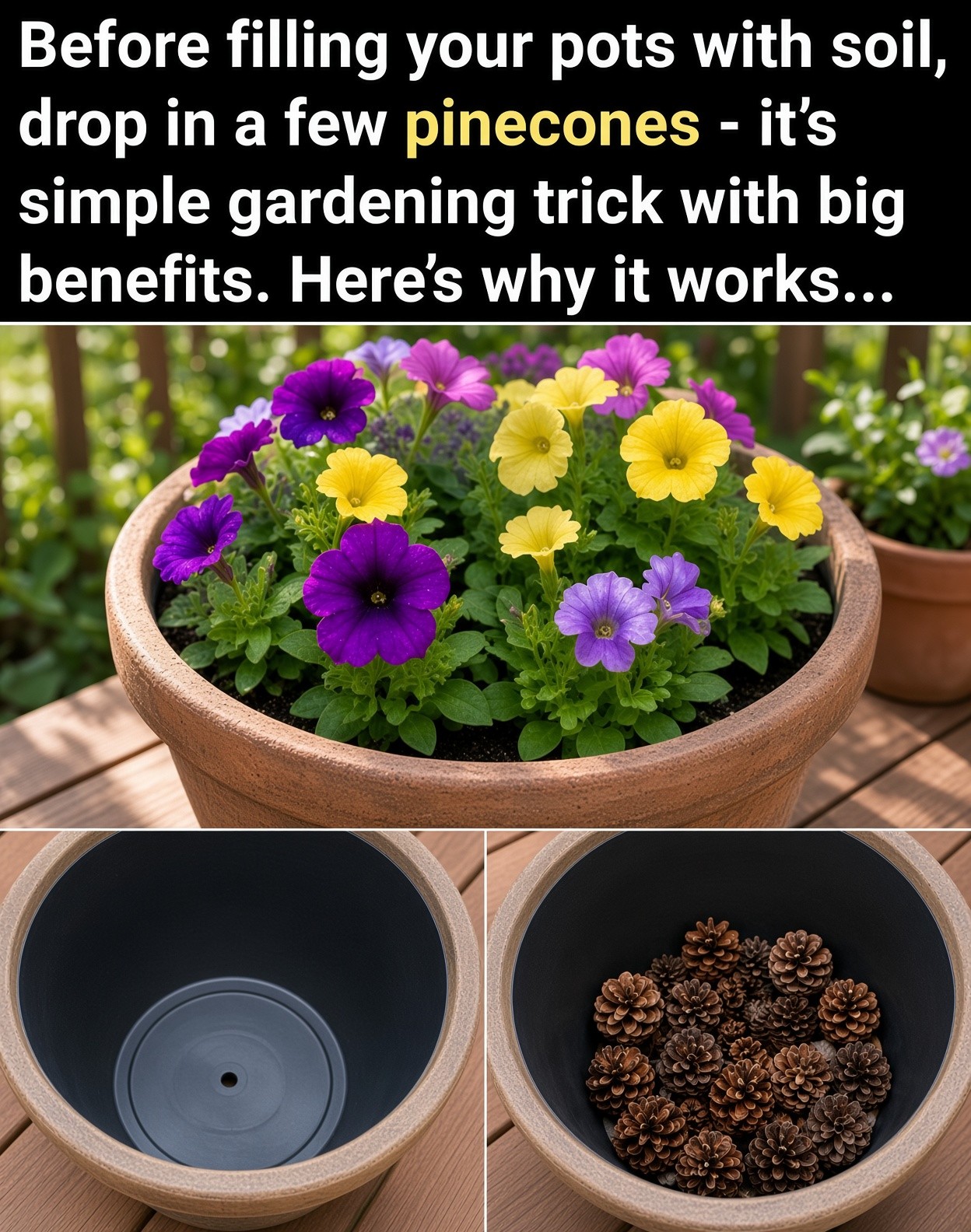
Why Gardeners Put Pinecones in Planters
Pinecones are an easy natural material to notice in late summer and autumn, and it is tempting to treat them as free potting-supply filler. The idea is simple: place a layer of pinecones in the bottom of a deep container, add potting mix above it, and reduce the amount of heavy soil you need. Pinecones are light, reusable for a time, and easy to collect where conifers grow. They can also be useful as a loose structural material in very large decorative containers. But there is an important gardening detail that gets lost in many versions of this tip: pinecones should not be treated as a magic drainage solution. A container drains according to its drainage holes, potting mix, water movement, and the height of the saturated zone. A coarse layer at the bottom does not automatically make water drain faster. Used thoughtfully, however, pinecones can be a practical way to reduce weight and reuse a natural material in a large planter.

The Real Benefit: Less Weight in Large Containers
The strongest reason to consider pinecones is their low weight. A huge planter filled from bottom to top with dense potting mix can become extremely heavy, especially after watering. That can make seasonal rearranging difficult and can put extra stress on balconies, decks, plant stands, and people who need to move the container for cleaning or winter protection. A loose layer of pinecones can occupy some of that lower volume without adding the mass of gravel or broken pottery. This is particularly useful when a container is much deeper than the plant’s root system requires. You should still make sure the remaining soil depth is adequate for the plant you are growing. Shallow-rooted annuals and many herbs need far less root-zone depth than a shrub or small tree. The goal is to match the container’s usable soil volume to the plant rather than simply filling every inch. Another advantage is easier seasonal handling. A large decorative pot may need to be moved into shelter before a frost, shifted into a sunnier position, or turned so the plant grows evenly. Reducing unnecessary weight can make those ordinary jobs much easier. This matters even more for gardeners working with containers on patios, balconies, or raised platforms where lifting and repositioning a heavy pot is awkward.

Pinecones Can Reduce the Amount of Potting Mix You Need
Good-quality potting mix is valuable, and very deep containers can require a surprising amount of it. If the root system of a plant will occupy only the upper portion of a large pot, filling the entire lower section with expensive mix may be unnecessary. Pinecones can occupy some of that unused space while keeping the container relatively light. They work best when the cones are loose rather than packed tightly. Avoid building such a thick layer that the plant is left with only a shallow pocket of soil. Roots need adequate depth, moisture, nutrients, and air, and different plants have very different requirements. Before adding any filler, check the mature size and rooting habit of the plant. A dwarf annual may be comfortable in a shallower root zone, while a tomato, shrub, or small fruit plant may need much more soil. Use pinecones as a volume-saving material, not as a substitute for the root environment your plant needs.

A Better Drainage Rule: Start With the Pot and the Soil
This is where it helps to separate a useful container trick from an old drainage myth. Adding gravel, rocks, or pinecones beneath potting soil does not guarantee better drainage. Water moves through a container according to the texture and moisture level of the growing medium, and a coarse layer underneath finer soil can actually hold a saturated zone above the interface. For that reason, the first drainage step should always be a container with adequate drainage holes and a potting mix appropriate for the plant. If a succulent needs fast drainage, use a mix designed for succulents. If a moisture-loving plant needs more water retention, choose a mix that holds moisture appropriately. Pinecones can still be useful for reducing weight and soil volume in a deep pot, but do not rely on them to rescue a poorly draining container. Good drainage begins with the container and the growing medium. The same principle applies when repotting. If you discover that a plant is sitting in a container with a dense, water-retentive mix, simply adding a coarse material underneath will not correct the problem. Repotting into a suitable container and fresh mix is the more reliable fix. Drainage holes should remain unobstructed, and the pot should stand where excess water can escape rather than collecting beneath it.

Choose Clean, Dry Pinecones
If you decide to use pinecones as planter filler, collect them carefully. Choose cones that are dry, firm, and free from obvious mold, insects, or strong signs of decay. Avoid cones that are green, wet, sticky with fresh sap, or breaking apart. Shake off loose needles and soil outdoors. You can leave clean cones in a dry, airy place for several days before using them. There is no need to turn the process into a complicated sterilization project for ordinary outdoor containers, but drying is useful because you do not want to introduce a damp mass of organic debris into a closed planter. If you are bringing cones indoors for houseplants, be more selective and clean them carefully. Never use material that smells moldy or shows active insect infestation. The best filler is dry, clean, and structurally sound. Pinecones that have been exposed to rain for a long period may also contain decaying material, so inspect them before every reuse. A few minutes of sorting is easier than trying to solve a mold or pest problem after the cones are buried beneath soil. If you collect them from public land, make sure gathering natural material is permitted.

How to Add Pinecones to a Large Planter
Start with a container that has real drainage holes. Place a modest layer of loose pinecones at the bottom, then add enough quality potting mix to provide the root depth your plant requires. If the potting mix is very fine, a piece of breathable mesh over the cones can help keep soil from falling deeply between the gaps during watering and repotting. Do not compress the pinecones into a solid mat. Leave them loose so the material can settle naturally. After adding the soil, plant at the correct depth and water thoroughly. Check the container after the first few waterings to make sure water exits freely through the drainage holes. If the plant remains wet for too long, the solution is not simply adding more pinecones. Reconsider the potting mix, container drainage, watering schedule, and site conditions.

Which Plants Can Work With This Approach?
Pinecone filler is most useful in large containers where a plant does not need the entire depth of the pot for roots. Many seasonal flowers, compact herbs, and shallow-rooted ornamental plants can be grown in containers that are deeper than necessary, provided their required soil depth is maintained. Some patio planters and decorative pots are designed more for appearance than for root space, making lightweight volume reduction especially helpful. On the other hand, be cautious with deep-rooted vegetables, fruiting plants, shrubs, and young trees. These plants may need a substantial volume of soil for stable growth, moisture, and nutrients. Always check the plant’s container recommendations first. The best container is not necessarily the fullest one; it is the one that provides the right combination of root space, drainage, moisture, stability, and weight. Container size should also reflect the plant’s mature root system. A common mistake is to choose a huge decorative pot because it looks impressive, then fill it with a small plant and a large amount of unused soil. Excess wet soil can stay damp for a long time, especially when the plant’s roots occupy only a small portion of the container.

Pinecones Are Useful—Just Use Them for the Right Reason
Pinecones deserve a place in the resourceful gardener’s toolkit, but their biggest advantage is not that they magically improve drainage. Their real strengths are that they are lightweight, naturally available, biodegradable over time, and useful for occupying some unused volume in a large container. They can help make oversized planters easier to move and reduce the amount of potting mix required when a plant does not need the full depth. The most important step is choosing the correct container and soil first. Once those basics are right, a loose layer of clean pinecones can be a sensible way to reuse a natural material instead of hauling heavy gravel into the garden. As the cones eventually break down, inspect them during repotting and replace them if they have compressed substantially. Used with realistic expectations, pinecones can be a simple, inexpensive addition to smart container gardening. It is also worth remembering that natural materials change over time. Pinecones may settle, become brittle, or gradually decompose, so inspect the lower layer whenever you repot. If the material has collapsed and the soil level has dropped, refresh the container rather than simply piling more mix on top. This small check keeps the root zone at the correct depth and prevents the plant from slowly sinking too deeply.
