
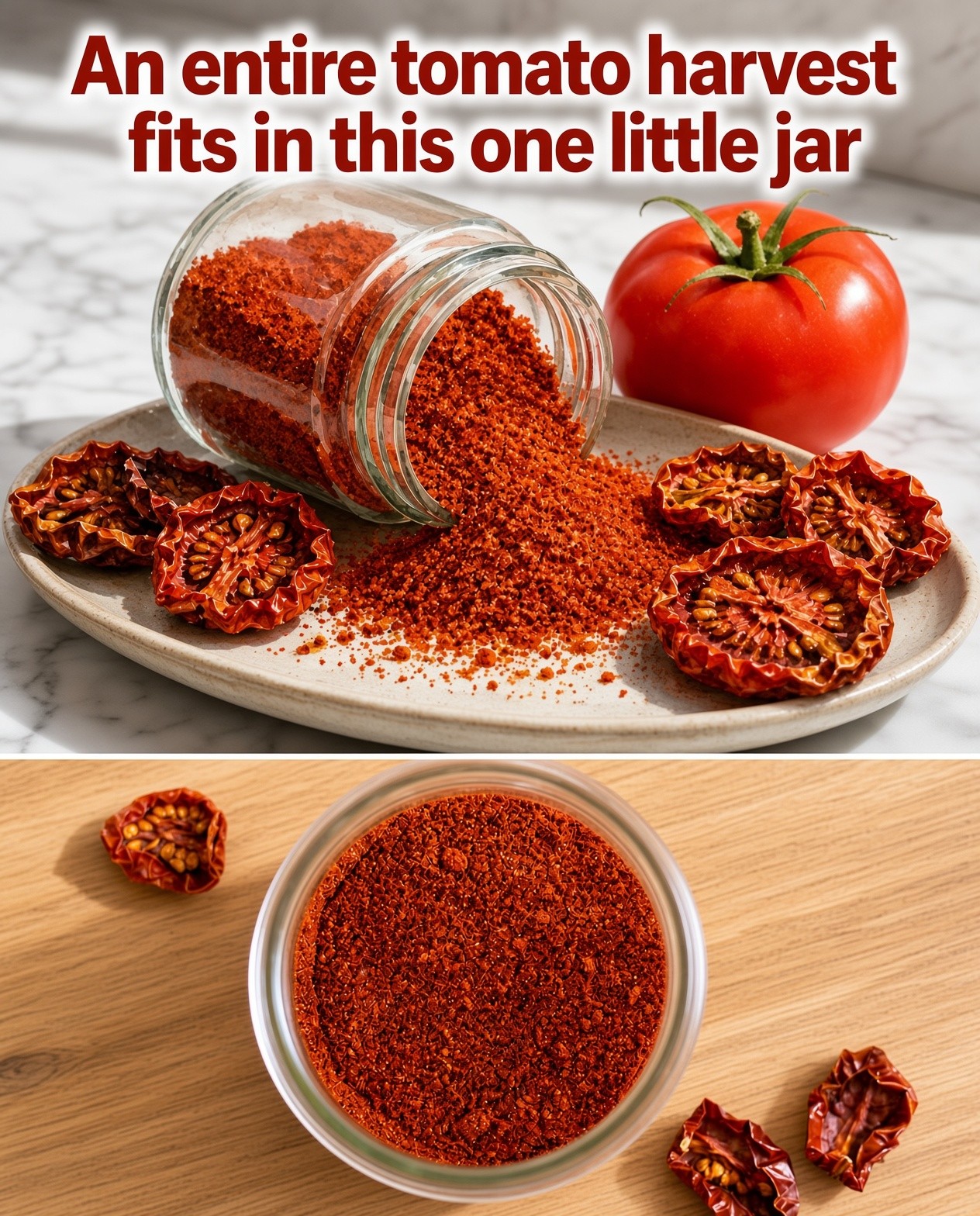

Tomato Powder: A Simple Way to Preserve Summer Flavor
Tomato powder is one of the most useful ways to turn an abundant tomato harvest into a compact pantry ingredient. Instead of letting extra tomatoes become overripe, you can dry them until they contain very little moisture and then grind them into a fine powder. The finished ingredient has an intense tomato flavor, takes up very little space, and can be stirred into recipes whenever you want a quick boost of savory tomato taste. It is especially useful for gardeners who harvest more tomatoes than they can eat fresh. Homemade tomato powder can be made from ripe tomatoes, tomato skins, or other clean tomato trimmings when handled and dried properly. The key is complete drying: any remaining moisture can shorten storage life and encourage spoilage.
Choose Ripe, Flavorful Tomatoes
The quality of the powder starts with the tomatoes. Choose ripe, sound tomatoes with good flavor and remove stems, damaged areas, and any spoiled portions. Roma and other paste-type tomatoes are convenient because they contain relatively less water and produce a concentrated result, but almost any flavorful tomato can be dried. Wash the tomatoes thoroughly and dry their surfaces before slicing. Thin, even pieces dry more consistently than thick chunks. If your tomatoes are especially juicy, removing some of the seeds and excess gel can speed drying, although it is not essential. The more uniform the slices, the easier it is to judge when the entire batch has reached the dry, brittle stage needed for grinding and storage.
Dry the Tomatoes Completely
Arrange the tomato slices in a single layer on dehydrator trays or baking sheets. A food dehydrator is usually the easiest option because it provides controlled, circulating heat. If using an oven, use its lowest suitable temperature and allow plenty of airflow. Drying times vary with tomato variety, slice thickness, humidity, and equipment, so do not rely on the clock alone. The pieces should become thoroughly dry and brittle rather than flexible or leathery in the center. Check several pieces from different parts of the tray because some areas may dry faster than others. If even a small amount of moisture remains, continue drying. Proper dryness is more important for safe storage than achieving a particular number of hours.
Cool Before Grinding
Once the tomato pieces are completely dry, let them cool to room temperature before grinding. Warm dried tomatoes can release condensation if immediately sealed, which is exactly what you want to avoid. A high-powered blender, spice grinder, or food processor can turn the dried pieces into powder, although the texture may vary between machines. Work in small batches if necessary. Stop occasionally and allow the dust to settle before opening the container. For a very fine powder, pass the ground tomatoes through a fine-mesh sieve and return the larger pieces to the grinder. The result should be dry, aromatic, and easy to sprinkle. Do not grind partially dried tomatoes in an attempt to finish the drying process later; complete the drying first.
How to Store Homemade Tomato Powder
Storage is one of the most important parts of making tomato powder successfully. Transfer the cooled powder into a clean, completely dry airtight container. A small glass jar with a tight-fitting lid works well. Keep it in a cool, dark, dry cupboard away from steam, sunlight, and heat. Moisture is the main enemy, so always use a dry spoon and close the container promptly after measuring. For the best flavor and quality, make relatively small batches that you can use within a reasonable period rather than storing one large batch for years. If you notice clumping, an unusual smell, visible moisture, or mold, discard the product rather than trying to rescue it. When in doubt about long-term shelf stability, refrigeration or freezing is a conservative option.
Use It to Enrich Soups and Sauces
Tomato powder is particularly convenient in soups, stews, gravies, pasta sauces, and pan sauces. Because the flavor is concentrated, you can add a small amount and increase it gradually until the dish tastes right. It can deepen tomato flavor without adding the extra liquid that canned or fresh tomatoes would contribute. This makes it useful when you want a sauce to remain thick or when a recipe needs a little more savory depth. Stir the powder into warm liquid, broth, or sauce so it disperses evenly. You can also mix it with a little water first to create a quick tomato paste substitute for small quantities. The exact amount depends on the strength of your powder and the recipe, so start conservatively.
Make Seasoning Blends and Dry Rubs
Tomato powder is an excellent base for homemade seasoning blends. Combine it with dried garlic, onion, oregano, basil, black pepper, smoked paprika, or chili powder to create a savory mix for roasted vegetables, potatoes, eggs, beans, popcorn, or grilled foods. It also works well in dry rubs where you want tomato flavor without adding wet ingredients. Keep salt separate or add it in moderation so you can control the seasoning of individual dishes. Because homemade powders vary in intensity, taste your blend after mixing a small amount rather than preparing a huge batch immediately. A labeled jar with the ingredients and date makes it easier to reproduce a favorite blend later.
Add Tomato Flavor Without Extra Liquid
One of tomato powder’s biggest kitchen advantages is that it adds tomato character without substantially increasing moisture. This is helpful for dry snack mixes, spice blends, bread doughs, savory crackers, compound seasonings, and recipes where additional liquid could change the texture. It can also be whisked into mayonnaise, yogurt, hummus, or salad dressing for a deeper savory flavor. When using it in a dry recipe, distribute the powder evenly so there are no concentrated pockets. If a recipe already contains plenty of salt or strong spices, use tomato powder as a flavor enhancer rather than simply adding more of everything. Its concentrated nature makes a little useful.
A Smart Way to Reduce Tomato Waste
Home gardeners often face the same problem at the height of tomato season: several baskets become ripe at once. Drying is one way to spread that harvest across the year. Instead of preserving every tomato as sauce or canned fruit, you can turn part of the crop into a lightweight powder that occupies only a small amount of shelf space. Clean tomato skins and suitable trimmings may also be useful when thoroughly dried, although they should never contain spoiled material. This approach can make kitchen preservation more flexible because a small jar of powder can season many meals. It is especially valuable when freezer space is limited or when you want a shelf-stable ingredient that is easy to measure.
Tomato Powder Tips for the Best Results
For consistently good tomato powder, focus on five things: flavorful tomatoes, even slices, complete drying, thorough cooling, and dry storage. Do not rush the drying stage simply because the outside looks crisp. Break or cut several pieces to check the center. If the pieces are still pliable, they need more time. Grind only when the tomatoes are fully dry and cool. Label each container with the preparation date so older batches can be used first. Finally, remember that homemade tomato powder is a concentrated ingredient, not a replacement for every tomato product. Use it where its strengths matter most: quick seasoning, concentrated flavor, small-batch sauces, soups, dry blends, and preserving a little of the summer harvest for later.