
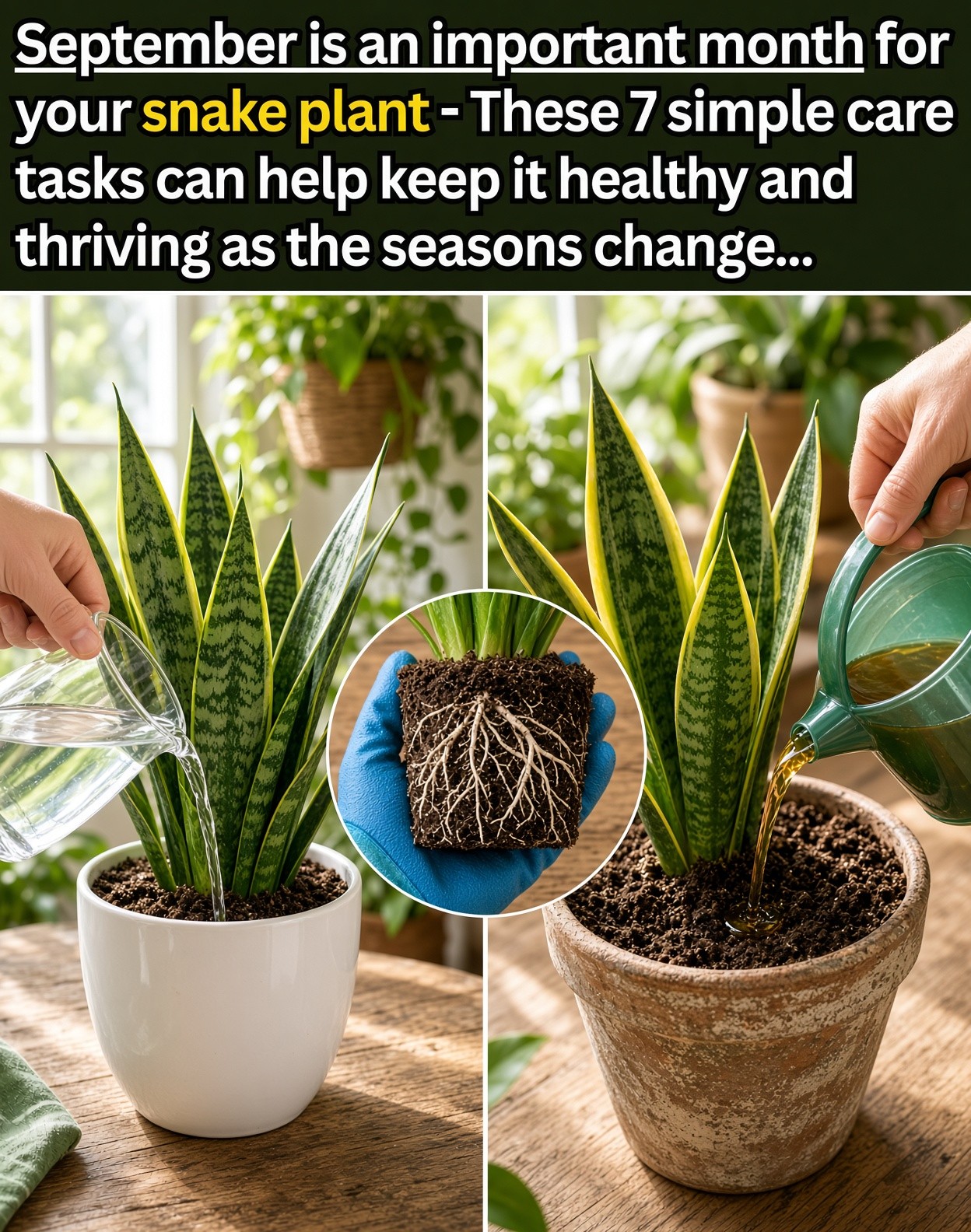
A practical September checklist for watering, light, leaf care, drainage, feeding and cold-weather preparation.

September Snake Plant Care: 7 Things You Should Do Now
September is a useful reset point for a snake plant. As daylight changes and indoor temperatures begin to shift, the plant may use water more slowly and grow at a different pace than it did in summer. The goal is not to pamper it, but to adjust care to the conditions it is actually experiencing.

1. Reduce Watering — But Check the Soil First
Snake plants (Dracaena trifasciata) store water in their thick leaves and rhizomes, so they are much more tolerant of dry conditions than constantly wet roots. In September, do not automatically continue a summer watering schedule. Check the potting mix several inches down before watering. If it is still damp, wait. When it has dried substantially, water thoroughly and allow excess water to escape through the drainage hole. Never leave the pot sitting in collected water.

How to Water a Snake Plant in Fall
A good fall watering is a complete watering followed by a drying period, not a small splash every few days. Pour water slowly until some drains from the bottom, then empty the saucer or cachepot. The exact interval depends on light, temperature, pot size, soil and humidity, so there is no universal seven-day rule. Penn State Extension specifically recommends watering snake plants only when the soil is dry because overwatering is one of the easiest ways to cause problems.

2. Give It Enough Light as Days Get Shorter
Snake plants tolerate low light, but tolerance is not the same as preference. Bright, indirect light generally supports stronger growth. A plant that looked perfectly happy several feet from a window in midsummer may receive considerably less useful light as the sun angle changes in fall. September is a good time to reassess its location and move it closer to a bright window if needed.

Move It Gradually if It Has Been in a Dark Spot
Avoid making a sudden jump from a dim corner to intense direct sun. A plant that has adapted to lower light can be stressed by a dramatic change. Increase exposure gradually, especially if the new location receives strong afternoon sun. Snake plants can tolerate a range of light levels, but sudden changes can damage leaves. Bright filtered or indirect light is an easy default for most indoor plants.

3. Inspect the Leaves for Problems
September is a good time for a close inspection rather than simply looking at the plant from across the room. Healthy snake plant leaves are generally firm and upright. Soft bases, persistent yellowing, mushy tissue, severe wrinkling, brown lesions or leaves that suddenly collapse deserve attention. Do not diagnose the cause from one symptom alone: check the soil moisture, drainage, light and recent watering history together.

4. Clean the Leaves Before the Cooler Season
Dust can accumulate on the broad, upright leaves of snake plants. A soft, slightly damp cloth is usually all you need. Support each leaf with one hand while wiping gently with the other so you do not crease or snap it. Skip oily commercial leaf-shine products. Cleaning also gives you a chance to notice scale, mealybugs, webbing or other abnormalities that might otherwise remain hidden.

Check for Pests, Especially Before Bringing Plants Indoors
If your snake plant spent summer on a balcony, porch or patio, inspect it carefully before bringing it inside. Look along leaf bases, undersides and the pot rim. Outdoor plants can carry pests indoors, where they may spread to other houseplants. University of Minnesota Extension recommends inspecting and, when necessary, isolating plants before they return indoors for the winter.

5. Ease Back on Fertilizer
Snake plants are not heavy feeders. If growth is slowing because light levels are falling, adding more fertilizer will not solve the underlying problem. For plants that naturally slow down in fall and winter, reducing or pausing routine feeding is sensible. Penn State notes that snake plants can be fertilized during the growing season, while overfertilizing can contribute to salt buildup and root or leaf problems. Follow the fertilizer label rather than increasing the dose.

6. Check the Pot, Drainage and Root Space
September is a useful time to inspect the container before winter watering becomes less frequent. Make sure the pot has a real drainage hole and that excess water can escape. A decorative cachepot should not trap water around the nursery pot. If the mix stays wet for a very long time, consider whether the container, soil texture or watering routine needs attention.

When Should You Repot a Snake Plant?
Do not repot simply because the calendar says September. Repot when the plant is genuinely rootbound, the pot is damaged, drainage has become poor, or the growing medium has broken down. Penn State Extension recommends examining the root ball for dense circling roots when deciding whether repotting is necessary. If repotting is needed, choose a container only modestly larger and use a loose, fast-draining houseplant or succulent-style mix.

7. Protect It From Cold Drafts and Sudden Temperature Changes
Snake plants are tropical plants and should not be exposed to freezing conditions. If yours spent summer outdoors, bring it inside before nights become cold enough to threaten it. Avoid placing it directly against a cold window, beside a frequently opened exterior door, or next to a strong heating vent. A stable indoor location with suitable light is usually better than repeated temperature swings.

A Simple September Snake Plant Checklist
Before the month ends, check the soil, adjust watering to actual dryness, reassess light, wipe the leaves, inspect for pests, reduce unnecessary fertilizer, and confirm that the pot drains freely. If the plant lived outdoors, inspect it carefully before bringing it indoors. These small checks are more useful than trying to force growth during a season when the plant may naturally slow down.

Common September Mistakes to Avoid
The biggest mistake is treating snake plants like thirsty tropical foliage plants. Frequent small waterings can keep the root zone wet without giving the plant the drying period it prefers. Other common mistakes include moving a low-light plant abruptly into harsh sun, fertilizing heavily when growth is slowing, hiding a pot without drainage, and bringing an outdoor plant inside without checking for pests.

What Healthy Fall Care Should Look Like
A healthy snake plant does not need constant intervention. Its leaves should remain firm, the soil should have time to dry between waterings, and the container should drain freely. Some plants may produce little visible growth in fall, and that is not necessarily a problem. Focus on maintaining stable conditions rather than chasing new leaves.

Final Thoughts
September is less about doing more and more about doing the right things at the right time. Let the soil tell you when to water, provide adequate light, keep leaves clean, inspect for pests, avoid unnecessary fertilizer, maintain good drainage and protect the plant from cold. With those basics in place, a snake plant can move into the darker months without being pushed into stressful overcare.
Why September Changes Snake Plant Care
Snake plants are remarkably adaptable, but indoor conditions are not static. As autumn approaches, daylight becomes shorter and the sun travels along a different path through windows. Rooms can also become cooler at night, while air conditioning or heating may change humidity. These shifts affect how quickly potting mix dries. That is why a watering routine that worked in July may be too frequent in September.
Instead of trying to predict an exact schedule, watch the combination of soil, light and temperature. A plant in a bright, warm room may dry faster than one several feet from a window. A large ceramic pot may stay moist longer than a small nursery pot. This simple observation-based approach is one of the reasons snake plants are so easy to manage: they do not require complicated seasonal routines when their basic needs are understood.
What About Snake Plant Flowers?
Occasionally, a mature snake plant produces a tall flower stalk with small, fragrant flowers. Flowering is not something you need to force with extra fertilizer or frequent watering. If a plant flowers, continue normal care and avoid changing the routine simply to encourage more blooms. The plant’s energy, light exposure and growing conditions all influence flowering, and a snake plant can remain perfectly healthy without flowering at all.
September Care in One Minute
Look at the plant, touch the soil, inspect the leaves and check the pot. If the soil is dry, water thoroughly and drain it. If it is still moist, wait. If the room is becoming darker, improve the light gradually. If leaves are dusty, wipe them. If you see pests, isolate the plant. If growth is slowing, do not respond with extra fertilizer. And if the plant lived outside, bring it indoors before cold nights become a problem.