
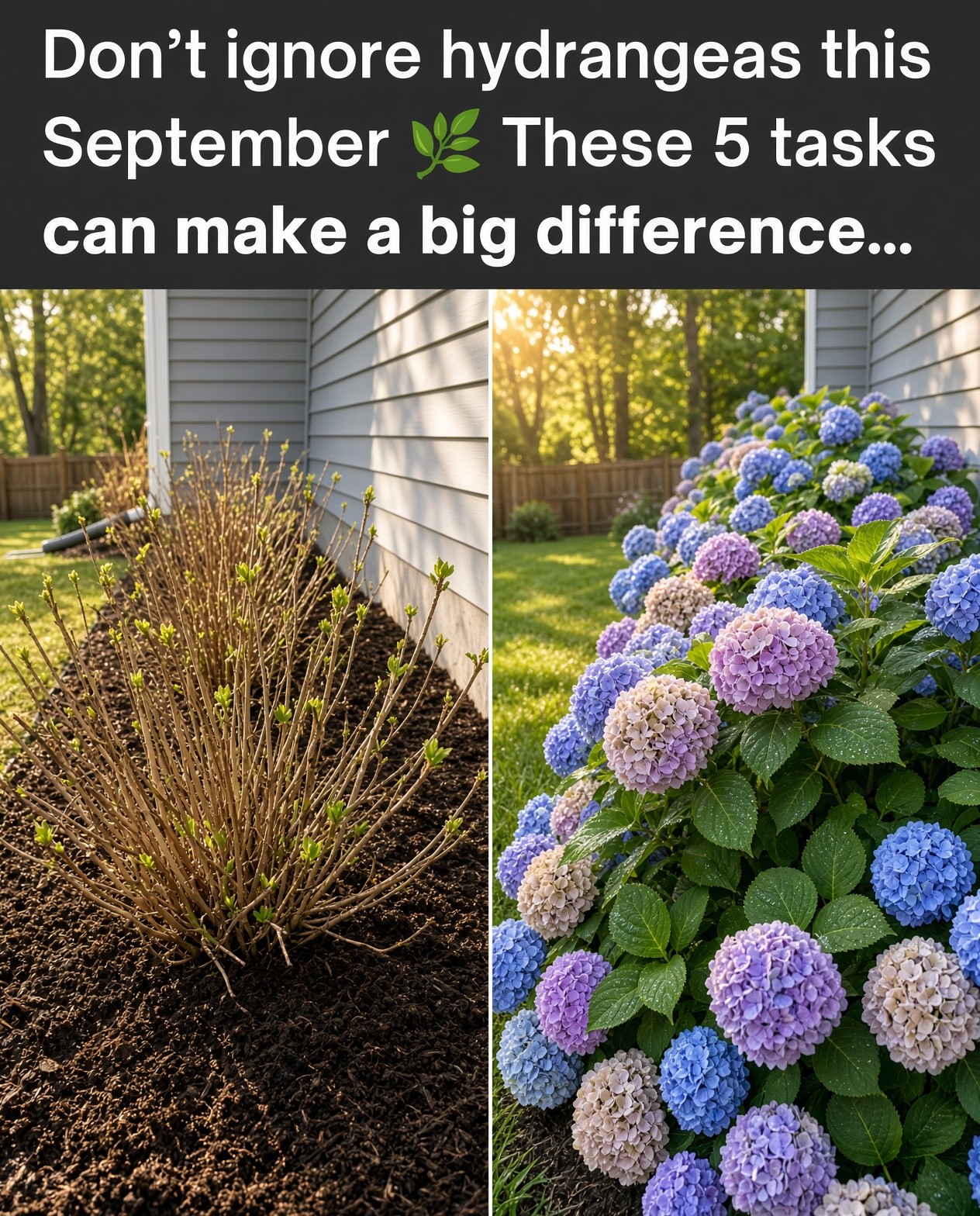
September is a useful transition month for hydrangeas. Summer growth is beginning to slow, flowers may be fading, and the shrub is moving toward dormancy. That does not mean it should be ignored. The right fall routine is mostly about protecting the plant, maintaining healthy roots, cleaning up disease-prone debris, and avoiding actions that remove next year’s flower buds. The exact routine depends on the type of hydrangea you grow, so September care should begin with identification rather than automatic pruning.

1. Identify Your Hydrangea Before Pruning
The first September task is to find out whether your hydrangea flowers on old wood, new wood, or both. Bigleaf and mountain hydrangeas commonly form flower buds on older stems, while panicle and smooth hydrangeas flower on new growth produced during spring. Reblooming cultivars can have a different pattern again. This distinction matters because a fall haircut can remove buds that were already formed for the following season. Check the plant label, cultivar information, or a reliable local nursery before making major cuts. In September, remove only clearly dead, damaged, diseased, or hazardous growth unless you know your particular cultivar should be pruned at this time.

2. Keep Watering During Dry September Weather
Cooler air does not automatically mean a hydrangea has stopped needing water. If September is dry, check the soil several inches below the surface beneath the shrub’s canopy. When the root zone is dry, water slowly and deeply so moisture reaches the roots rather than running away across the surface. Aim the water at the soil, not the leaves, and avoid repeatedly soaking ground that is already wet. Hydrangeas prefer consistent moisture, but waterlogged soil can reduce oxygen around the roots and create additional problems. A slow soak around the drip line is generally more useful than frequent shallow sprays.
.jpg)
3. Remove Diseased Leaves and Plant Debris
Fall cleanup becomes particularly important when a hydrangea has had leaf spots, mildew, or other foliar disease during the growing season. Do not leave heavily infected fallen leaves underneath the shrub simply because autumn leaves can add organic matter to soil. Some plant pathogens can survive in fallen debris and become a source of infection when favorable weather returns. Collect visibly diseased leaves and debris from beneath the canopy and dispose of them appropriately rather than adding them to a home compost pile unless you know your composting system reaches conditions capable of destroying the pathogen. Healthy organic material can be handled differently, but diseased foliage deserves more caution.

4. Refresh the Mulch Without Covering the Stems
A fresh layer of mulch can help stabilize soil moisture and reduce the amount of soil that splashes onto foliage during heavy rain. If the existing mulch has become thin, spread a moderate layer over the root zone rather than creating a tall mound around the base. Keep the immediate area around the stems clear. Mulch touching woody stems keeps the crown damp and can contribute to decay. A flat, even layer is easier to manage and provides the main benefits without creating a wet collar around the plant. Organic materials such as bark, shredded leaves, or finished compost can work when they are appropriate for the garden and applied correctly.

5. Plan Winter Protection Early
Gardeners in cold regions should use September to prepare for winter rather than waiting until a hard freeze is forecast. Bigleaf and mountain hydrangeas can be vulnerable to winter injury because flower buds may already be present on older stems. Useful supplies can include stakes, wire mesh, burlap, and dry insulating leaves. However, protection should not normally be installed too early. The shrub should have time to enter dormancy naturally. Once leaves have dropped and the plant is dormant, a simple cage filled loosely with dry leaves can help buffer severe cold and drying winter winds. The exact method should be adjusted to local climate and the cultivar’s hardiness.

Mistake 1: Pruning Old-Wood Hydrangeas in September
One of the most costly fall mistakes is pruning a hydrangea without knowing where it forms its flower buds. For many bigleaf and mountain hydrangeas, next year’s buds are carried on older stems. Cutting those stems back in September can therefore remove the flowers you were hoping to see next summer. This does not mean every hydrangea must never be pruned in autumn. Panicle and smooth hydrangeas have different flowering habits, and limited removal of dead or damaged wood can be appropriate. The safe approach is to identify the plant first and prune according to its flowering type instead of applying one rule to every hydrangea.

Mistake 2: Pushing Too Much Fertilizer Late in the Season
Late-season feeding can also be poorly timed. A strong nitrogen-rich fertilizer may encourage soft new growth when the shrub should be gradually preparing for colder weather. Tender late growth can be more vulnerable to early frost. For established hydrangeas, the better September strategy is usually to focus on moisture, root-zone care, disease cleanup, and preparation for winter rather than trying to force another flush of leaves. Fertilizer schedules vary with soil, cultivar, climate, and the product being used, so follow a reliable regional recommendation and the fertilizer label instead of assuming that more feeding means more flowers.

What About Faded Hydrangea Flowers?
Faded flower heads can remain attractive well into autumn and may provide winter interest. Whether you remove them depends on the hydrangea type and your goal. With old-wood types, delaying major cuts is often the safer choice because stems can carry next year’s buds. If you simply want to tidy the shrub, make sure you know exactly where the flower buds are before cutting. Some gardeners prefer to leave dried heads in place through winter and remove them when the appropriate pruning window arrives. This also avoids turning fall cleanup into unnecessary pruning.

A Simple September Hydrangea Checklist
Identify the type: know whether the shrub flowers on old wood, new wood, or both. Check moisture: water deeply when the root zone is genuinely dry. Clean disease debris: remove infected leaves and fallen material. Refresh mulch: maintain a moderate layer and keep it away from the stems. Prepare for winter: gather protection materials if your climate regularly threatens flower buds. Avoid unnecessary pruning: especially on old-wood hydrangeas. Do not force late growth: avoid indiscriminate late-season fertilizing, particularly high-nitrogen products.

Final Thoughts
Good September hydrangea care is less about doing more and more about doing the right things at the right time. Identify the shrub before pruning, keep roots adequately hydrated during dry spells, remove diseased debris, maintain sensible mulch, and prepare cold-weather protection where it is genuinely needed. Most importantly, resist the urge to cut everything back simply because summer is ending. Understanding how your hydrangea forms its flower buds is the key to protecting next year’s display while keeping the plant healthy through autumn and winter.
