How to Grow Ginger Indoors Forever (7 Foolproof Methods That Regrow Themselves)

Grow fresh ginger in a container, harvest a little at a time, and save healthy rhizomes to start the next round. These seven methods explain what works—and what to avoid.

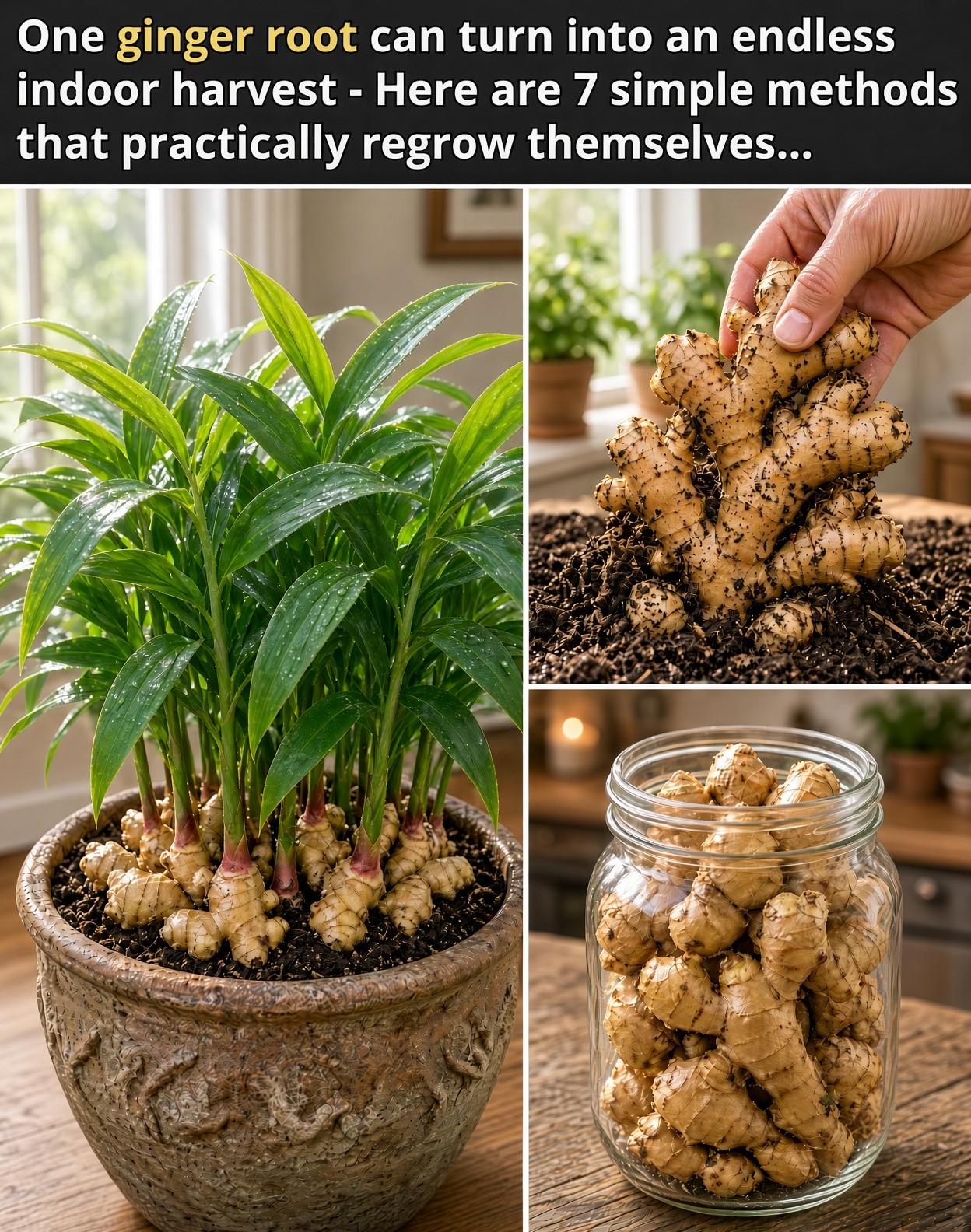
A mature ginger plant growing in a container indoors, with leafy shoots and a healthy rhizome below the soil.

First, a realistic note: ginger is not an endlessly self-renewing plant that needs no attention. It is a tropical perennial grown from an underground stem called a rhizome. If you keep part of that rhizome healthy, provide warmth and moisture, and replant or divide it when needed, you can maintain a repeating indoor crop.

Best overall approach: plant a healthy rhizome directly in a wide pot. The water-start method is optional; it is not necessary for success.

1. Choose fresh ginger with healthy eyes

1. Choose fresh ginger with healthy eyes. Select a firm, plump ginger rhizome with several swollen buds (the small “eyes” where shoots emerge). Organic

Select a firm, plump ginger rhizome with several swollen buds (the small “eyes” where shoots emerge). Organic ginger may be more likely to sprout, but the label is not a guarantee: some commercial rhizomes are treated to slow sprouting. Choose a piece that is not moldy, mushy, or badly shriveled, and avoid any with soft, dark rot.

2. Start shoots in shallow water (optional)

2. Start shoots in shallow water (optional). A shallow-water start can help you observe swelling buds, but it is not essential and should not be treated as

A shallow-water start can help you observe swelling buds, but it is not essential and should not be treated as a permanent hydroponic growing method. Rest the rhizome so only its lower portion touches clean water, keep it warm, and change the water frequently. As soon as buds swell or roots begin to form, transfer the piece to a potting mix that drains freely; leaving it submerged for too long encourages rot.

3. Root it directly in a roomy pot

3. Root it directly in a roomy pot. The most dependable indoor method is to plant the rhizome directly in a wide pot with drainage holes. Use a lo

The most dependable indoor method is to plant the rhizome directly in a wide pot with drainage holes. Use a loose, fertile, well-draining potting mix. Lay the rhizome horizontally with buds facing upward and cover it with about 1 inch (2–3 cm) of mix. A pot around 12 inches (30 cm) wide gives the spreading rhizomes room; wider containers can support more pieces.

4. Give ginger warmth, filtered light and steady moisture

4. Give ginger warmth, filtered light and steady moisture. Place the pot in a warm spot with bright, indirect light or gentle morning sun. Ginger is tropical and dislike

Place the pot in a warm spot with bright, indirect light or gentle morning sun. Ginger is tropical and dislikes cold conditions; aim for warm room temperatures and protect it from cold drafts. Keep the mix evenly moist once shoots are growing, but never waterlog it. Empty excess water from the saucer, and feed lightly with a balanced fertilizer during active growth.

5. Harvest small pieces without emptying the pot

5. Harvest small pieces without emptying the pot. For a continuing supply, wait until the plant is established and gently feel around the outer edge of the pot

For a continuing supply, wait until the plant is established and gently feel around the outer edge of the pot for developing rhizomes. You can remove a small outer section while leaving the central plant and some healthy rhizome in place. Baby ginger may be harvested after several months; mature, fuller-flavoured rhizomes usually need a longer growing period, often around 8–10 months in good conditions.

6. Divide healthy rhizomes and replant

6. Divide healthy rhizomes and replant. When the plant has produced a substantial clump, lift it carefully and separate firm sections that each carry

When the plant has produced a substantial clump, lift it carefully and separate firm sections that each carry at least one or two healthy buds. Let freshly cut surfaces dry and callus for a day or two before replanting to reduce the chance of rot. Replant selected sections at once in fresh, free-draining mix, and discard any pieces that are soft, foul-smelling, or diseased.

7. Keep a living rhizome reserve for the next growing cycle

7. Keep a living rhizome reserve for the next growing cycle. Ginger does not literally regrow forever without care: it grows new shoots from living rhizomes, and indoor pl

Ginger does not literally regrow forever without care: it grows new shoots from living rhizomes, and indoor plants may slow down or become dormant when light and temperatures fall. Keep a healthy portion of the rhizome in its pot or save sound planting pieces in a cool, dry, frost-free place. Resume watering gradually when new shoots appear, and refresh the potting mix when the container becomes crowded.

Indoor ginger care at a glance

LightBright, indirect light or gentle morning sun.
TemperatureWarm conditions; protect from cold drafts and temperatures below about 50°F (10°C).
WaterKeep mix lightly and evenly moist during active growth, never soggy.
PotWide container with drainage holes and room for horizontal rhizome growth.
SoilLoose, rich, moisture-retentive but well-draining potting mix.
HarvestBaby ginger in a few months; mature rhizomes commonly need about 8–10 months.

Common mistakes that stop ginger from regrowing

  • Keeping the rhizome submerged: prolonged soaking can deprive it of oxygen and promote rot.
  • Using a pot without drainage: waterlogged mix is a major cause of rhizome decay.
  • Planting a damaged piece: choose firm rhizomes with healthy buds, not soft or moldy sections.
  • Expecting instant shoots: sprouting can take several weeks, especially when conditions are cool.
  • Harvesting the whole clump too early: leave a healthy portion behind if you want the plant to continue.
  • Letting the plant get chilled: ginger is tropical and may go dormant or be damaged in cold conditions.

When can you harvest indoor ginger?

You can sometimes take young, tender ginger after roughly four to six months, depending on growing conditions. For larger mature rhizomes, allow approximately eight to ten months or longer. The foliage may naturally yellow and die back as the plant enters dormancy; reduce watering during this period and keep the rhizome from becoming cold or waterlogged.
Harvest type Typical timing What to expect
Baby ginger About 4–6 months Tender skin, mild flavour, more delicate rhizomes.
Mature ginger About 8–10 months More developed rhizomes with firmer, tougher skin.
Partial harvest Once the clump is established Remove an outer piece and leave healthy rhizome and shoots to continue growing.

Frequently asked questions

Can I grow ginger from supermarket ginger?

Yes. Choose a fresh, firm piece with visible buds. Some store-bought rhizomes may have been treated to inhibit sprouting, so untreated or already sprouting pieces are often a better choice.

Does ginger need direct sunlight indoors?

No. Bright indirect light or gentle morning sun is usually suitable. Strong, hot afternoon sun can scorch leaves, especially behind glass.

Should I soak ginger before planting?

Soaking briefly can rehydrate a dry rhizome, but it is not required. Avoid leaving it submerged for extended periods.

How long does ginger take to sprout?

It may take several weeks. Warm conditions and a lightly moist, well-draining medium help; do not keep watering heavily while waiting.

Can I leave ginger in the same pot year after year?

Potentially, if the rhizome remains healthy and the container has enough room. Divide crowded clumps, refresh the growing mix when needed, and adjust watering during dormancy.

Will ginger grow leaves but no usable rhizomes?

It can, particularly if the growing season is short, temperatures are cool, or the plant receives too little light or nutrition. Give it warmth, a long growing period, adequate pot space and steady but not excessive moisture.
Growing times vary with cultivar, temperature, light, container size and care. This guide is general horticultural information; local growing conditions may change results.

Leave a Reply

Your email address will not be published. Required fields are marked *