
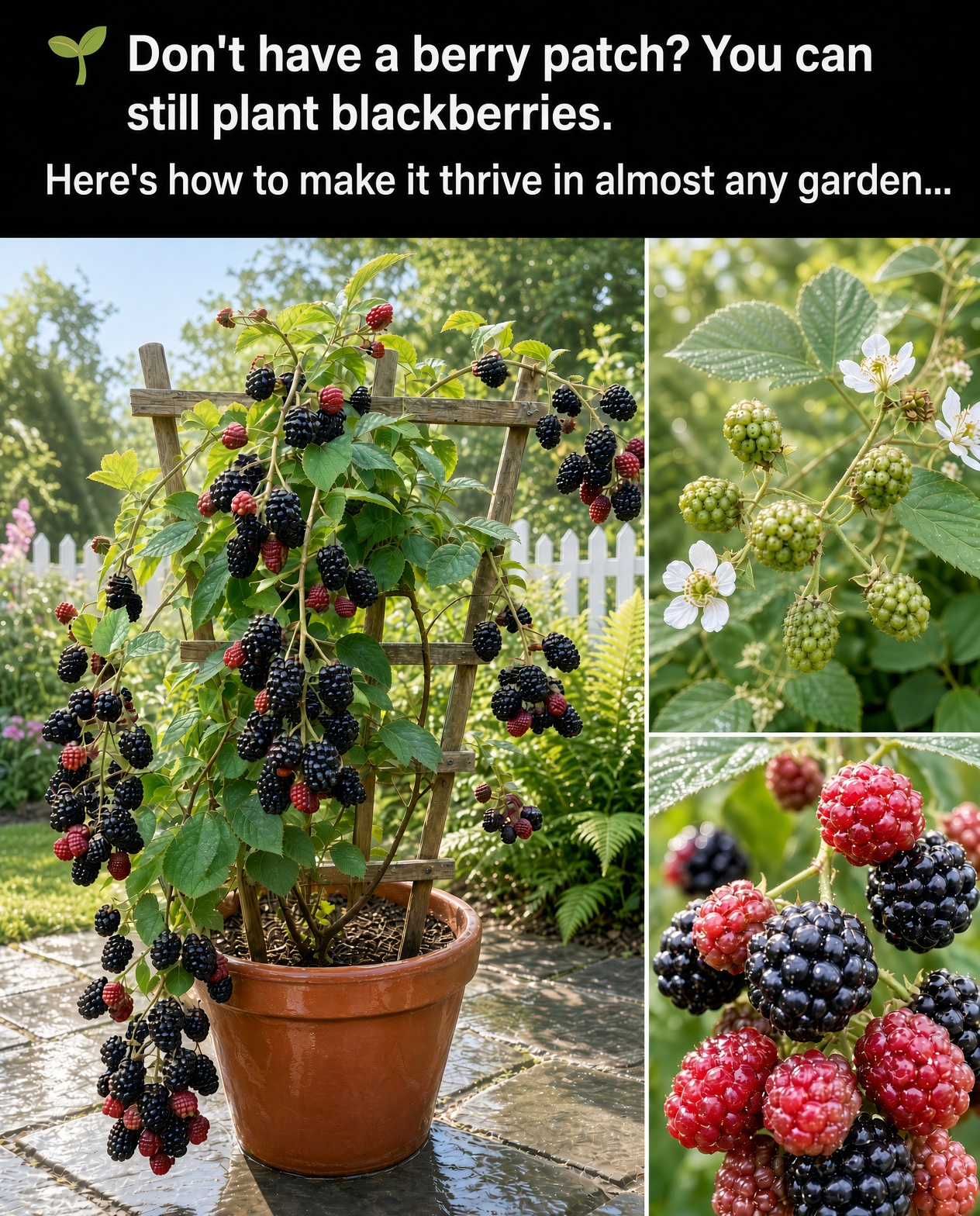
Blackberries are surprisingly adaptable plants. Their roots can grow happily in large pots, while their branches can be trained to stay organized and manageable. Container gardening also gives you greater control over soil quality, watering, and growing conditions.

Why Grow Blackberries in Containers?
Growing blackberries in pots offers several advantages, particularly if you have limited gardening space. Instead of allowing vigorous blackberry canes to spread across a garden, you can keep the plant in one designated location.
Here are some reasons to consider growing blackberries in containers:
- Space-saving: A large pot can accommodate a compact blackberry variety on a balcony, patio, or terrace.
- Better soil control: You can choose a suitable growing medium and improve drainage without changing your garden soil.
- Easier maintenance: Watering, feeding, pruning, and harvesting can be more convenient.
- Greater flexibility: Containers can be moved to sheltered locations when weather conditions become unfavorable.
- Less spreading: Growing in pots helps contain the plant’s root system and keeps its growth more manageable.
With a little planning, even a small outdoor space can become a productive berry garden.
1. Choose the Right Blackberry Variety
Not every blackberry variety is equally suitable for container gardening. Some produce long, vigorous canes that need considerable space, while compact and upright varieties are easier to maintain in pots.
When choosing a plant, look for varieties described as compact, dwarf, thornless, or suitable for small gardens.
Good Varieties to Consider
- Baby Cakes: A compact, thornless blackberry variety developed for smaller growing spaces and container gardening.
- Little Black Prince: A compact option worth considering for gardeners looking for a smaller blackberry plant.
- Natchez: An early-fruiting, thornless variety with an upright growth habit, although it needs adequate space and support.
- Apache: An upright, thornless variety known for its large fruit. It can be grown in a sufficiently large container.
- Black Satin: A thornless variety with vigorous growth that benefits from regular training and pruning.
Before purchasing, check whether the variety is suited to your local climate. Consider winter chilling requirements, summer heat tolerance, mature plant size, and whether the plant fruits on first-year or second-year canes.

2. Select a Large Container
One of the most important steps when growing blackberries in pots is choosing a container with enough room for healthy root development.
Although young blackberry plants may look small, they eventually develop substantial root systems. A container that is too small can dry out quickly and restrict growth.
For one mature blackberry plant, aim for a container that holds approximately 15–20 gallons (57–76 liters). A pot around 18–24 inches wide and deep is a useful starting point.
Make sure your container has several drainage holes at the bottom. Excess water must be able to escape freely because constantly wet soil can damage blackberry roots.
Suitable containers include:
- Large plastic gardening pots.
- Wooden planters with drainage.
- Half-barrel containers.
- Large fabric growing pots.
- Durable resin planters.
Remember that larger containers can become heavy once filled with damp soil. Choose the final location carefully or use a suitable plant caddy.
3. Prepare the Right Potting Soil
Blackberries grow best in fertile, moisture-retentive soil that drains well. They need consistent access to water, but their roots should never sit in soggy conditions.
A good container mix should be loose, well-aerated, and rich in organic matter.
You can prepare a simple growing mixture using:
- Two parts quality multipurpose potting mix.
- One part finished compost.
- One part perlite or another suitable drainage amendment.
Mix everything thoroughly before planting. Avoid using heavy garden soil by itself because it can become compacted in containers.
Blackberries generally prefer slightly acidic soil, with a pH around 5.5–6.5. A soil test can help you determine whether adjustments are necessary.
4. Plant Your Blackberry Bush Correctly
The best time to plant a blackberry bush is generally during its dormant season, provided the ground and container mix are workable and extreme weather is not expected. Container-grown plants can also be planted during suitable periods of the growing season.
Follow these simple steps:
- Fill your container with the prepared potting mixture, leaving enough room for the plant.
- Remove the blackberry plant carefully from its nursery pot.
- Gently loosen any tightly circling roots.
- Place the plant in the center of the container.
- Position the crown at approximately the same depth it was growing previously.
- Fill around the roots with potting mix and gently firm the surface.
- Water thoroughly to settle the soil around the roots.
- Add a thin layer of organic mulch while keeping it away from direct contact with the crown.
Avoid burying the crown too deeply, as this can encourage problems with rot.
5. Give Your Blackberry Plant Plenty of Sunlight
Blackberries need plenty of sunlight to produce strong growth, abundant flowers, and flavorful fruit.
Choose a location that receives approximately six to eight hours of direct sunlight daily. Morning sunlight is particularly useful, while some afternoon protection can help plants in extremely hot climates.
If your balcony or patio receives limited sunlight, choose the brightest available location. Insufficient light can result in weak growth and reduced fruit production.
Remember that container plants can heat up faster than plants growing in the ground. During very hot weather, protect the pot from excessive heat while allowing the leaves to receive adequate sunlight.
6. Water Consistently Without Overwatering
Watering is especially important when growing blackberries in containers because pots usually dry out faster than garden beds.
During active growth, check the soil regularly. Water when the upper inch of the growing medium begins to feel dry, making sure the entire root zone receives moisture.
Blackberry plants generally need more water during flowering and fruit development. Hot, windy conditions can also increase how quickly the soil dries.
Keep these watering tips in mind:
- Check soil moisture before watering.
- Water deeply rather than applying frequent tiny amounts.
- Allow excess water to drain through the bottom.
- Avoid leaving the container standing in a full drainage tray.
- Use mulch to help slow moisture loss.
Yellowing leaves, wilting, and poor growth can have several causes, so check both soil moisture and drainage before changing your watering routine.
7. Feed Your Blackberry Plant Properly
Because container plants have limited access to nutrients, regular feeding helps maintain healthy growth and fruit production.
Start with compost or a balanced fertilizer suitable for fruit-bearing plants. Apply fertilizer according to the manufacturer’s directions and the plant’s growth stage.
Avoid applying excessive nitrogen. Although nitrogen supports leafy growth, too much can encourage long, vigorous shoots at the expense of flowers and fruit.
During the growing season, monitor your plant for signs of nutrient deficiencies, such as unusual leaf discoloration or weak growth. Correct feeding problems gradually rather than applying large amounts of fertilizer at once.
8. Provide Support and Prune the Canes
Blackberries naturally produce long canes that may arch, spread, or become tangled. Providing support helps keep the plant organized and makes harvesting easier.
A small trellis, sturdy stakes, or a simple wire support system can work well in a container garden.
Train the canes gently and secure them with soft plant ties. Avoid tying them too tightly, as the stems need room to grow.
Pruning is equally important. Most traditional blackberry varieties produce fruit on second-year canes, called floricanes.
After these canes finish fruiting, remove them at ground level. Retain healthy first-year canes because they will generally produce the following season’s crop.
For compact varieties, remove weak, damaged, and overcrowded growth when necessary. Always check the pruning requirements of your particular variety, especially if it is a primocane-fruiting type.
9. Watch for Pests and Plant Problems
Container-grown blackberries can still experience pest and disease problems. Regular inspection makes it easier to notice changes before they become serious.
Keep an eye out for:
- Aphids: Small insects that gather around tender shoots and new leaves.
- Spider mites: Tiny pests that can cause leaf stippling, particularly during hot, dry weather.
- Gray mold: A fungal problem that can affect flowers and ripening fruit in humid conditions.
- Leaf spots: Various fungal diseases can produce discolored spots on foliage.
Improve air circulation by avoiding overcrowding, remove diseased plant material, and water the soil rather than regularly wetting the foliage.
Inspect both sides of the leaves and check developing berries regularly.
10. Harvest Your Blackberries at the Right Time
Harvesting is one of the most rewarding parts of growing blackberries at home. However, picking the fruit at the right stage makes a noticeable difference in flavor.
Blackberries change color as they mature. They usually progress from green to red before becoming deep purple-black when ripe.

Look for berries that are:
- Deep black or purple-black in color.
- Plump and fully developed.
- Slightly soft when gently touched.
- Easy to detach from the plant.
Pick ripe berries carefully to avoid crushing them. Harvesting every few days during the fruiting period helps prevent overripe berries from remaining on the plant.
Fresh blackberries can be enjoyed immediately, refrigerated for short-term storage, or frozen for later use.
11. Protect Your Potted Blackberries During Winter
Many blackberry varieties are deciduous and naturally enter dormancy during colder months. Their leaves may fall, but this does not necessarily mean the plant is unhealthy.
Container-grown roots are more exposed to temperature fluctuations than roots growing in the ground. Therefore, winter protection is worth considering, particularly in regions with freezing temperatures.
Here are some helpful precautions:
- Move the container to a sheltered position if severe cold is expected.
- Insulate the outside of the pot when necessary.
- Apply a layer of mulch over the soil surface.
- Reduce watering during dormancy without allowing the root ball to dry completely.
- Avoid keeping the container in a warm indoor room that interferes with natural dormancy.
In mild climates, a sheltered outdoor position may be sufficient. Always consider the winter hardiness of your particular blackberry variety.
Final Thoughts
Growing blackberries in containers is a practical way to enjoy homegrown fruit without dedicating an entire garden to berry bushes. With a suitable variety, a sufficiently large pot, fertile soil, and consistent care, these productive plants can thrive in surprisingly small spaces.
The most important things to remember are to provide plenty of sunlight, maintain consistent soil moisture, feed appropriately, and prune according to the plant’s fruiting habit.
Be patient during the establishment period, and don’t be discouraged if your first harvest is relatively small. Once established, a healthy blackberry plant can reward you with delicious fruit season after season.
Whether you grow yours on a balcony, patio, or sunny terrace, blackberries are a wonderful addition to a home container garden.
Frequently Asked Questions
Can blackberries grow successfully in pots?
Yes. Blackberries can grow very well in containers when provided with enough root space, suitable soil, sunlight, and regular watering. Compact and dwarf varieties are particularly convenient.
How big should a pot be for a blackberry plant?
A container holding approximately 15–20 gallons is a useful starting point for one mature plant. Make sure it has adequate drainage holes.
How much sunlight do container-grown blackberries need?
Most blackberry plants perform best with approximately six to eight hours of direct sunlight daily. In extremely hot climates, some afternoon shade may help prevent heat stress.
How long does it take for a blackberry plant to produce fruit?
Many traditional blackberry varieties produce their main crop on second-year canes. Depending on the variety and the age of the plant when purchased, you may need to wait until the following growing season for a substantial harvest.
Do blackberries need a trellis when grown in containers?
Many varieties benefit from a trellis or another support system. It helps keep the canes organized, improves accessibility, and makes harvesting easier.
Can I grow more than one blackberry plant in a pot?
It is generally better to grow one blackberry plant per container. Giving each plant sufficient root space helps reduce competition for water and nutrients.