
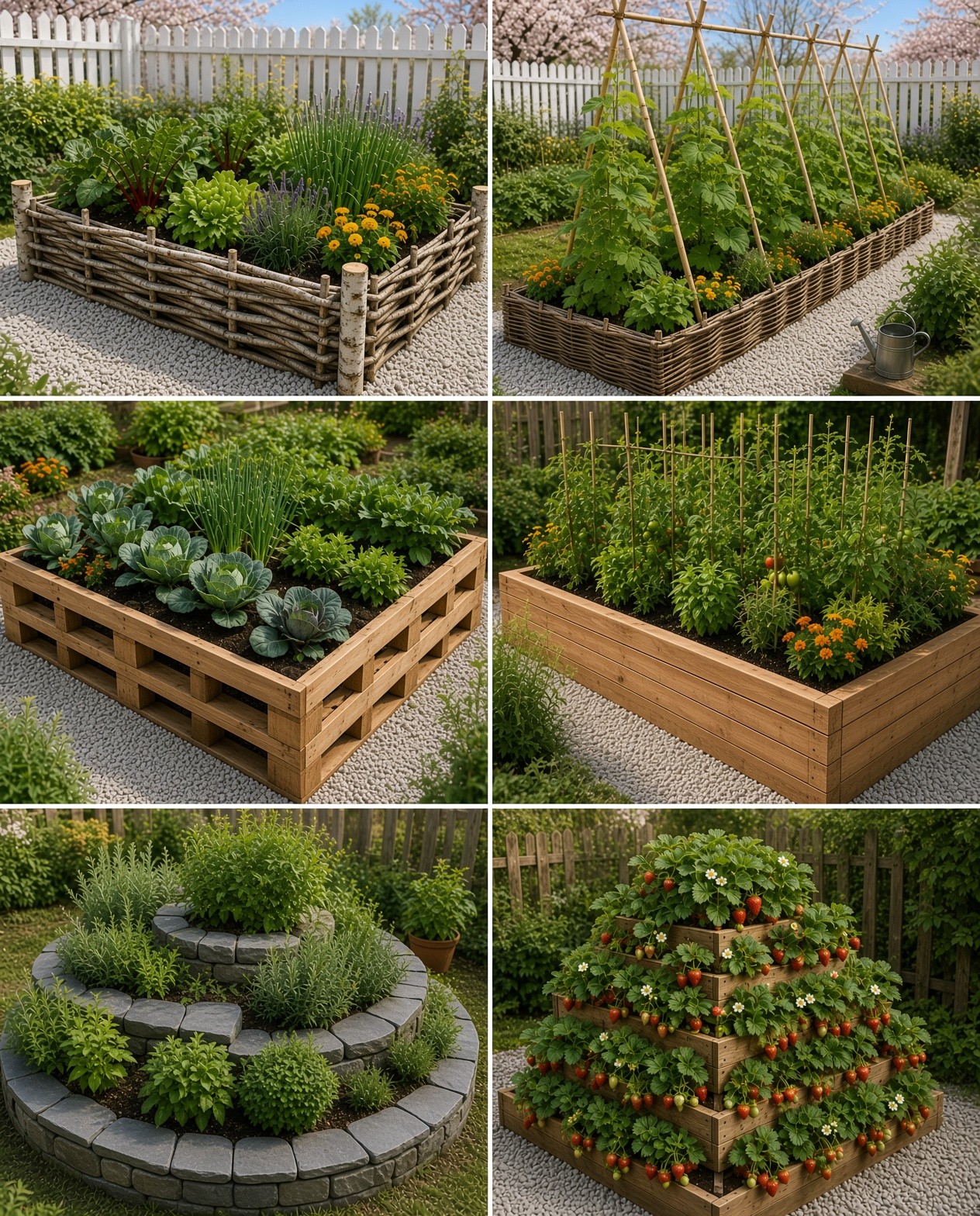
A wattle raised bed turns flexible branches and simple garden stakes into a beautiful growing space. The technique is practical, rustic, and adaptable, making it a wonderful choice when you want your vegetable or flower garden to feel connected to the landscape around it.

1. What Is a Wattle Raised Garden Bed?
Wattle is a traditional way of building a low garden structure by weaving flexible branches around upright stakes. Willow, hazel, and other supple young stems can be bent and layered into a strong woven edge that gives a raised bed a distinctive natural character.
The finished border holds soil in place, creates a clear growing area, and gives an ordinary vegetable or flower bed the look of a handmade garden feature.
2. Gather Flexible Rods and Strong Stakes
The basic materials are simple: straight stakes for the vertical supports and long, flexible rods for weaving. Willow and hazel are popular because young stems can bend without snapping when they are fresh and pliable.
 Choose branches that are reasonably even in thickness and long enough to span several stakes. Keep thicker pieces for lower courses and thinner pieces for tighter weaving near the top.
3. Prepare and Mark the Garden Site
Choose a location with enough sunlight for your crops and avoid areas where water naturally pools. Clear weeds and grass, then mark the outline with a hose, rope, or garden line.
 A simple rectangle is easiest to weave, but a rounded or gently curved bed can look especially attractive. Keep the width practical so you can reach the center from either side.
4. Set the Stakes and Start Weaving
Push the stakes firmly into the ground around the perimeter, keeping them as evenly spaced as possible. They need enough depth to resist movement when branches are pulled around them.
 Begin weaving one rod in and out of the stakes, alternating the direction of each new branch. Press the weave down as you work so the wall becomes compact and stable.
5. Build Up the Wattle Wall
Continue adding rods until the woven edge reaches the height you want. Overlap branch ends rather than leaving gaps, and tuck protruding tips into the weave where possible.
 A slightly irregular handmade finish is part of the charm, but a consistent wall holds soil better. If a section feels loose, add another branch before filling the bed.
6. Fill the Bed With Rich Growing Soil
Once the woven frame is secure, fill the bed with a fertile mixture of quality topsoil and finished compost. Leave a little room below the rim for watering and mulch.
 Organic matter gives the bed a strong start. As the wattle weathers, continue improving the soil with compost and other suitable amendments.
7. Plant Vegetables, Herbs, or Flowers
A wattle bed works for salad greens, herbs, seasonal vegetables, strawberries, flowers, or a mixture that combines food crops with pollinator-friendly plants.
 Keep taller plants toward the north side where practical so they do not cast unnecessary shade over shorter crops. Group plants with similar watering needs together.
8. Maintain the Wattle and Refresh It
Natural branches gradually weather, so a wattle bed should be viewed as a garden structure that will need occasional renewal. Inspect the wall and replace weak sections with fresh flexible rods.
 Small repairs are usually much easier than rebuilding the entire edge. With occasional weaving and fresh material, a wattle border can remain attractive while blending into the garden.
A Garden Bed That Feels Part of the Landscape
Wattle edging can turn an ordinary growing area into a focal point. Fill it with vegetables, herbs, flowers, or a mixture of all three, and the woven branches will soften naturally as the garden matures.
Would you build a wattle raised bed in your garden?