
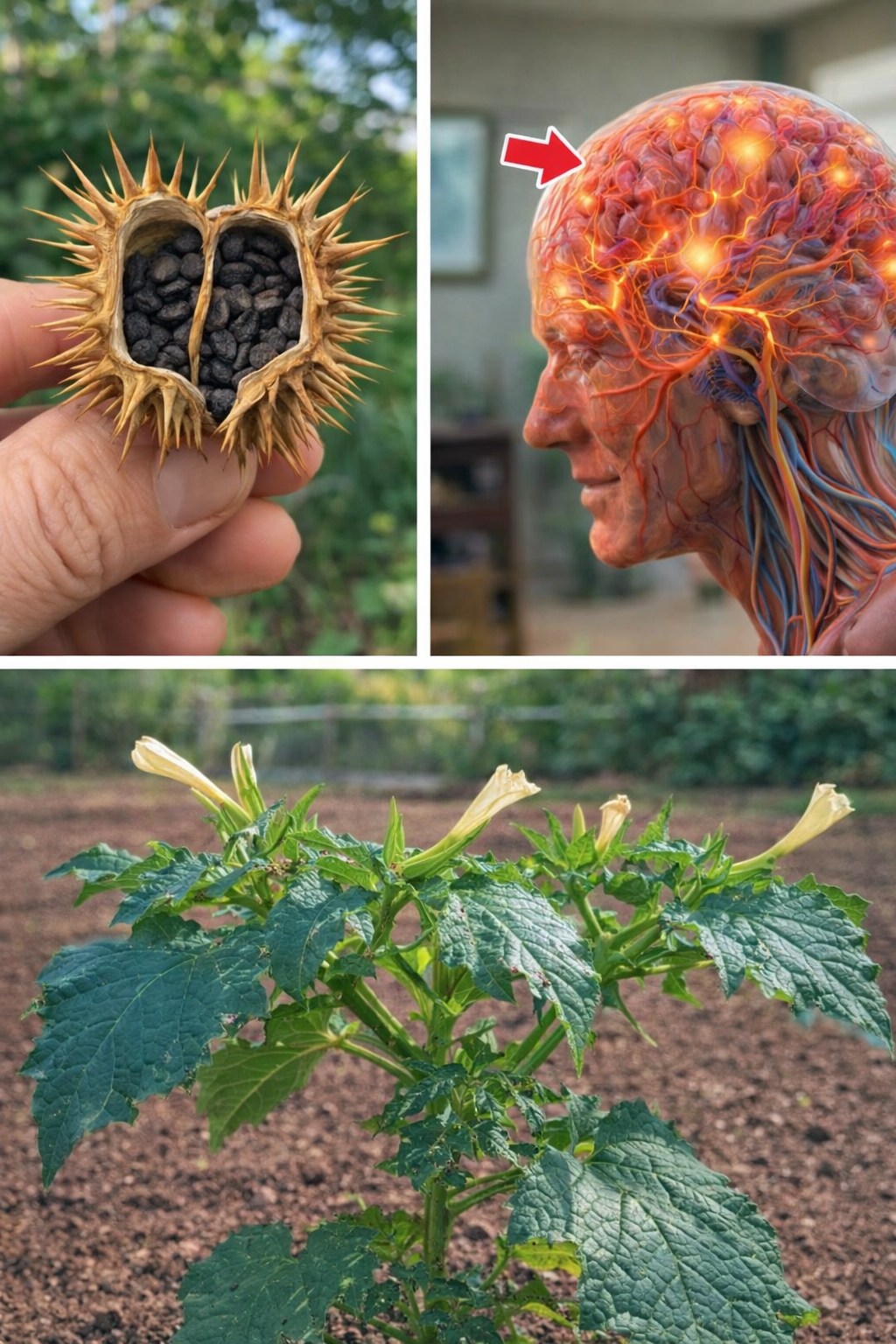
Many families enjoy spending time outdoors, but encountering unfamiliar plants can sometimes lead to unexpected concerns, especially when they resemble common flowers or weeds. This uncertainty can create worry about potential risks from accidental contact, particularly for children or pets who explore freely. Fortunately, gaining knowledge about specific plants like Datura can empower you to create safer spaces around your home. Stick around to the end, where you’ll uncover an unexpected daily habit that makes plant awareness second nature for everyone in your household.

Understanding Datura Plants
Datura, a genus of flowering plants in the nightshade family, includes several species commonly found in various environments across the United States and beyond. These plants often grow in disturbed soils, such as roadsides, gardens, or vacant lots, thriving in warm climates.
But wait, there’s more to know about their appearance.
Research indicates that Datura species are annual or perennial herbs that can reach up to 5 feet tall, with branching stems that may appear purple-tinged or hairy.

The truth is, recognizing them early helps in maintaining a mindful outdoor routine.
They are known for their distinctive features, which we’ll break down next.
Key Identification Features of Datura
Identifying Datura starts with observing its overall structure.
Leaves and Stems
Datura leaves are large, often 3 to 8 inches long, with a football- to egg-shaped form and wavy or toothed edges. They are typically dark green and may feel coarse.
Here’s something interesting: When crushed, the leaves emit a foul odor, sometimes described as a mix of wet dog and stale peanut butter.
Stems are sturdy and can be pale green to purple, with a hairy texture in some species.
But that’s not all—pay attention to the sap, which can irritate sensitive skin.
Flowers
The flowers are a standout trait, appearing as large, trumpet-shaped blooms that hang downward or stand erect. They are usually white, pink, or purple, with pointed lobes.
These vespertine flowers open in the evening, releasing a sweet fragrance that attracts pollinators.
Research shows they can measure up to 8 inches long, making them eye-catching at dusk.
The most interesting part? They often bloom from summer through fall.
Fruits and Seeds
Datura fruits are globular capsules covered in spines, earning the name “thornapple.” When mature, they split into four segments, releasing numerous small, kidney-shaped seeds.

These seed pods are spiky and green when young, turning brown as they dry.
But hold on—this is where caution is key, as seeds resemble tiny tomatoes but should never be handled casually.
Comparison with Look-Alikes
To avoid confusion, compare Datura with similar plants.
Here’s a helpful table:
| Feature | Datura | Morning Glory (Look-Alike) | Brugmansia (Related) |
|---|---|---|---|
| Flower Shape | Hanging trumpets with pointed lobes | Upright, funnel-shaped | Large, pendulous trumpets |
| Leaf Edges | Jagged, tooth-like | Smooth or slightly wavy | Broad, often wavy |
| Fruit | Spiky thornapple capsule | Smooth pod | Smooth or slightly spiny |
| Smell | Heavy, unpleasant when crushed | Mild or none | Sweet, pleasant |
| Stem | Purple-tinged, hairy | Green, smooth | Woody, tree-like |
This comparison, based on botanical observations, highlights distinct traits.
Potential Health Considerations with Datura
All parts of Datura contain compounds like atropine, scopolamine, and hyoscyamine, which research shows can affect the body if ingested or absorbed.
Symptoms from exposure might include dry mouth, blurred vision, or rapid heartbeat, as noted in medical reviews.
The CDC has reported cases of accidental exposures, emphasizing awareness.
But here’s the key: Knowledge reduces risks.
Skin contact may cause irritation in some individuals, so gloves are advisable.
Studies from poison control centers indicate most incidents involve unintentional contact.
Actionable Tips for Safe Identification
Follow these step-by-step instructions to identify Datura safely.
- Observe from a distance: Look for trumpet flowers and spiny pods without touching.
- Note the location: Datura prefers sunny, disturbed areas like gardens or roadsides.
- Check for odor: Gently wave a hand near leaves to detect any foul smell, avoiding direct contact.
- Compare features: Use a plant identification app or guide to match against known images.
- Document: Take photos for later reference or consultation with experts.
These steps, drawn from horticultural advice, promote careful habits.
Habits to Build for Ongoing Plant Safety
Incorporate these routines into your daily life.
- Conduct weekly garden walks to spot new growth.
- Educate family members using simple rhymes like “Spiky pod, trumpet bloom—give it room.”
- Plant native alternatives to reduce invasive species.
- Join local botany groups for shared knowledge.
Research supports that consistent habits enhance environmental awareness.
But wait, there’s one more.
Safe Removal Strategies
If Datura is present, removal requires care.
Step-by-Step Removal Guide
- Wear protective gear: Gloves, long sleeves, and eye protection.
- Pull by roots: Use tools to uproot young plants in moist soil.
- Bag securely: Place in sealed bags for disposal.
- Monitor area: Check for regrowth over weeks.
- Avoid chemicals if possible: Opt for manual methods to protect pollinators.
This approach minimizes exposure, as recommended by weed management resources.
What to Do in Case of Concern
If accidental contact occurs, wash affected areas with soap and water.
Monitor for any discomfort and consult a healthcare professional if needed.
Poison control data shows prompt action is beneficial.
The truth is, preparation eases worries.
Insights from Scientific Research
Studies on Datura highlight its ecological role but also potential impacts.
For instance, a 2025 report noted varying toxicity levels based on plant age.
Animal studies indicate effects on nervous systems, underscoring caution.
Human case reviews emphasize education’s value.
Here’s a list of common effects noted in research:
- Dry skin and mouth
- Rapid pulse
- Visual changes
- Digestive discomfort
These findings promote informed habits.
Building a Safer Outdoor Environment
Foster curiosity safely by exploring plant guides together.
Encourage questions and discussions during family outings.
Research shows this builds lifelong awareness.
Now, that unexpected habit? Make “plant spotting” a fun game during evening walks, turning identification into an engaging family ritual.
In summary, understanding Datura through its features and adopting simple habits can enhance your outdoor experiences while prioritizing safety. By identifying key traits like trumpet flowers and spiny pods, and building routines like regular checks, you create a more mindful environment.
Frequently Asked Questions
What does a Datura plant look like?
Datura plants have large, trumpet-shaped flowers that are often white or purple, jagged leaves with a foul odor when crushed, and spiny seed pods. They grow up to 5 feet tall in sunny, disturbed areas.
How can I tell Datura apart from similar plants?
Compare flower orientation—Datura’s hang like trumpets—versus upright ones in morning glories. Also, check for spiky fruits and hairy stems, which are unique to Datura.
What precautions should I take around unknown plants?
Always observe without touching, wear gloves if handling, and teach children to avoid putting plants in their mouths. Consult experts or apps for confirmation.
Disclaimer
This article is for informational purposes only and is not intended as medical advice. Consult a healthcare professional for any health concerns related to plant exposure. The information provided is based on general research and should not replace personalized guidance.