
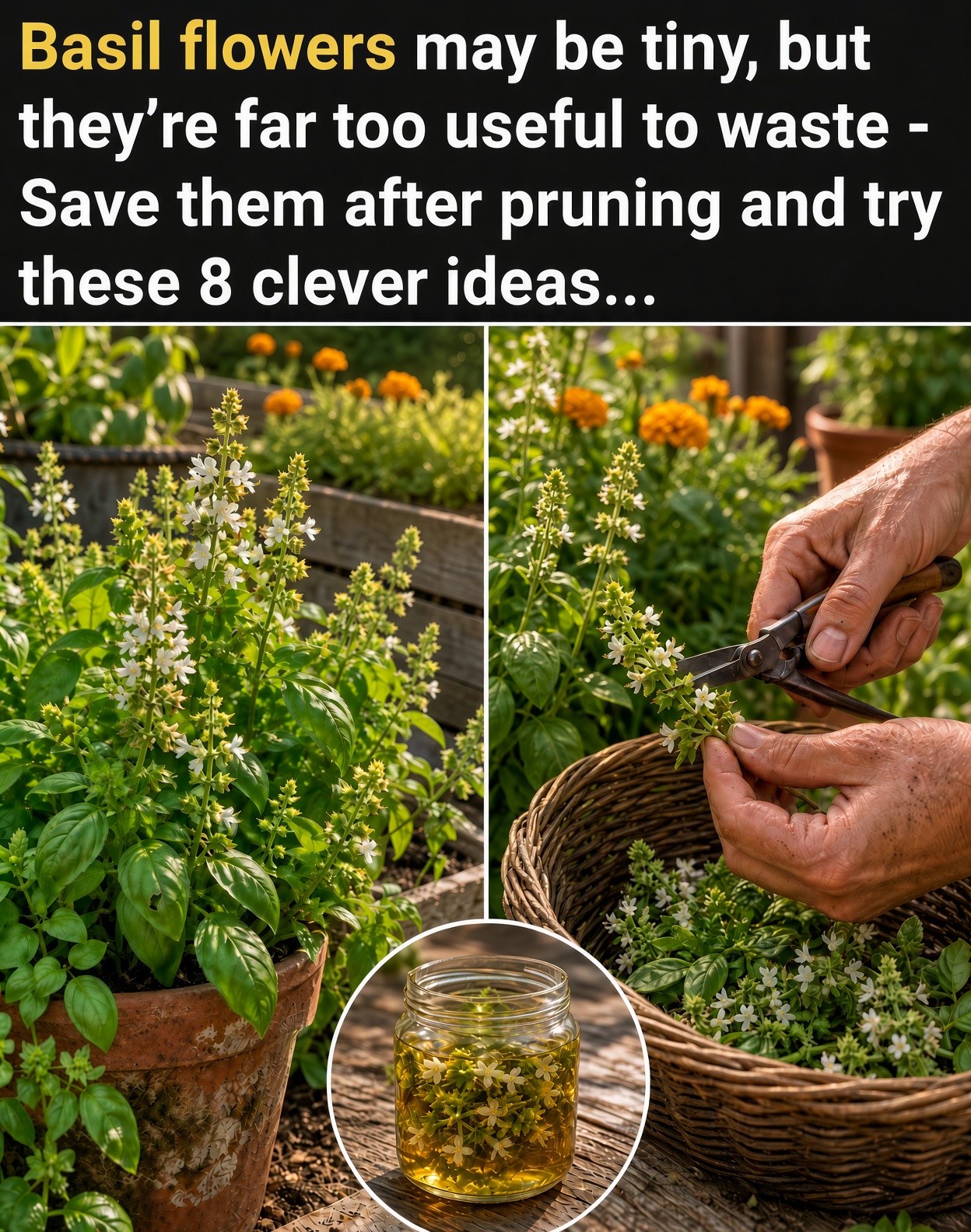
Why Basil Flowers Deserve a Second Look
When basil starts sending up flower spikes, many gardeners pinch them off immediately. That is useful when the main goal is maximum leaf production: Illinois Extension explains that removing flower buds helps basil stay bushier and produces more foliage. But flowers themselves are not waste. University of Minnesota Extension lists basil among edible late-summer herbs, and basil blooms can be used in food, drinks, drying projects, seed saving, and pollinator-friendly planting. The smart approach is to decide which plants are your leaf producers and which can be allowed to flower. That way you keep a strong supply of tender basil while also making practical use of the flowers that appear. Flowering is a normal stage in basil’s annual life cycle, not a sign that the plant suddenly has no value.

1. Add Fresh Basil Flowers to Salads
Basil flowers have a softer, more floral character than mature leaves, making them a natural garnish for fresh food. Snip clean flower clusters shortly before serving and gently rinse them. Scatter individual florets over green salads, tomato and cucumber salads, pasta salads, grain bowls, or caprese-style plates. The flowers bring color and visual texture while adding a light basil aroma. University of Minnesota Extension describes basil as having sweet, slightly spicy flavors with clove and anise notes, so the exact taste can vary by variety. For the best texture, use young blossoms rather than old dried flower heads. Only eat flowers grown as culinary herbs and harvested from clean plants that have not been treated with unsuitable pesticides.

2. Brew Basil Flower Tea
Basil flowers can be steeped in hot water for a fragrant caffeine-free herbal drink. Use clean food-grade flowers, pour freshly boiled water over them, and let the infusion steep for several minutes before straining. Lemon can brighten the flavor, while a little honey can soften the herbal edge. The supplied article describes basil-flower tea with several health effects, but those claims should be kept modest for ordinary sweet basil. A more accurate description is a pleasant herbal beverage containing naturally occurring plant compounds. Holy basil, or tulsi, is a different species with its own traditional and research history, so its claims should not automatically be transferred to common culinary basil.

3. Make Basil-Flower Vinegar
Fresh basil flowers can add a delicate herbal aroma to vinegar used for salads and marinades. Use a clean, dry jar and a food-safe vinegar, and follow a tested home-infusing method. The flowers can be combined with white-wine vinegar, rice vinegar, or cider vinegar depending on the flavor you want. After the infusion reaches a pleasant aroma, strain the plant material and store the vinegar in a clean bottle. Vinegar is a practical choice for preserving an herbal note because its acidity is useful in culinary preparations. Fresh herb-infused oils require more careful food-safety handling, so do not assume that a room-temperature oil recipe from a lifestyle article is safe simply because vinegar infusions are straightforward. Keep food preservation and casual flavor infusion as two different categories.

4. Garnish Lemonade, Sparkling Water, and Ice Cubes
Basil flowers can make a simple drink look special without adding much work. Float a few blossoms in sparkling water or lemonade, add them to iced herbal tea, or freeze individual flowers into ice cubes. Their mild herbal aroma works well with lemon, lime, cucumber, strawberries, and berries. Choose flowers from culinary basil and wash them before use. University of Minnesota Extension notes that basil varieties can have sweet, spicy, or citrus-like aromas, so a lemon basil bloom will not necessarily taste exactly like a sweet basil bloom. A small amount is usually enough because the goal is a gentle fragrance and attractive presentation rather than a strong herbal flavor.

5. Mix Basil Flowers Into Compound Butter
Compound butter is a simple way to turn a small harvest of basil blossoms into a useful kitchen ingredient. Finely chop fresh flowers and combine them with softened unsalted butter, a little salt, and optional lemon zest or garlic. Shape the mixture into a small log, wrap it, and refrigerate until firm. Slice off portions for warm bread, roasted potatoes, corn, grilled vegetables, pasta, rice, or cooked poultry. The flowers bring a subtle floral note, while the butter carries the aroma through the finished dish. Keep the prepared butter refrigerated and handle it like other perishable dairy products. This is especially useful late in the season when you have plenty of flowers but no longer want to use every spike solely for leaf production.

6. Make a Basil-Flower Pesto
Flowering basil can still make a flavorful pesto, especially when you combine the blossoms with some remaining leaves. Add basil flowers, leaves, garlic, Parmesan or Pecorino, nuts, olive oil, salt, and pepper to a food processor and pulse until the mixture reaches the texture you like. A flower-heavy pesto will usually be softer and more floral than a classic leaf-heavy version. A mixed batch keeps more of the familiar basil character. Use the pesto with pasta, sandwiches, roasted vegetables, or grains. University Extension resources consistently identify basil as an excellent culinary herb for sauces and pesto. Make only what you need for short-term refrigeration or freeze portions for longer storage rather than keeping fresh pesto warm for extended periods.

7. Dry the Flower Spikes for Later
Basil flowers can be preserved along with the leaves when the garden produces more fresh material than the kitchen can use. Harvest healthy stems on a dry day, tie small bunches, and hang them upside down in a warm, dry, well-ventilated place away from direct sunlight. University of Minnesota Extension recommends air-drying basil in small bunches and storing the thoroughly dried material in airtight containers away from heat and bright light. Once the flower spikes are crisp and completely dry, crumble them gently and remove large pieces of stem. Use the dried flowers in seasoning blends, soups, sauces, or herbal infusions. Make sure the material is fully dry before sealing the jar because leftover moisture can encourage mold.

8. Let Some Basil Flowers Feed Pollinators
If your basil is grown mainly for leaves, pinch the flower buds on most plants. But you can deliberately leave one or two healthy plants to flower. Illinois Extension notes that basil flowers attract pollinating insects, and University of Minnesota Extension also highlights basil blooms as useful in the late-summer garden. Allowing selected stems to bloom provides another nectar source and gives the garden more visual interest. You do not have to let the entire crop flower. A few dedicated “flower plants” can support insects while the rest remain focused on leaf production. Avoid unnecessary insecticide use around flowering herbs, especially if one reason for keeping the blossoms is to encourage beneficial insects.

9. Save Mature Basil Seeds for Next Year
Once basil flowers finish, the dried spikes can hold mature seed. Let selected flower stems remain on the plant until the flower structures become dry and brown. Then crumble the dry spikes over a clean sheet of paper or shallow tray and separate the tiny seeds from the surrounding husks. Utah State University Extension recommends saving seed from healthy, mature plants, drying it thoroughly, labeling it with the plant and date, and storing it in a cool, dry place. If you grow several basil varieties close together, remember that pollination can mix genetics, so seedlings may not look exactly like the parent. Choose the strongest plants to save from if you want to repeat a particularly productive crop.

10. Use Flower Spikes as a Fragrant Garden Harvest
Not every useful basil flower has to become a recipe. Fresh flower spikes can be added to an herb bouquet, used as a garnish around a serving platter, or displayed with other edible herbs. Some basil varieties have especially attractive flower colors, and Illinois Extension points out that flowering basil can have ornamental value as well as culinary value. Harvest clean stems from the garden and place them in water when using them as fresh decorative material. This is an easy way to make the most of a plant that is naturally transitioning from leaf production to flowering. It also lets you enjoy basil as both a food crop and a garden ornamental instead of removing every bloom automatically.

11. Know When to Pinch and When to Let Basil Bloom
Pinching and flowering are not competing rules; they are two different management choices. If you want tender leaves for pesto, sauces, salads, and everyday cooking, Illinois Extension recommends pinching flower buds as they form and harvesting stems just above a pair of leaves. This encourages branching and continued leaf production. If you want flowers, seeds, pollinator support, or an ornamental display, allow selected stems to bloom. A useful garden plan is to divide the crop: pinch the strongest leaf-producing plants and allow a few vigorous plants to flower. That gives you a steady culinary harvest without sacrificing all the other uses.

12. A Safe, Practical Way to Use Basil Flowers
Basil flowers are best treated as a culinary herb, a garden resource, and a seed-saving opportunity rather than a cure-all. The supplied article makes several medicinal-style claims for basil-flower tea and infused products, but those effects should not be presented as proven treatments for stress, digestive disease, headaches, infections, or other medical problems. For everyday use, grow clearly identified culinary basil, harvest flowers from clean plants, rinse them before eating, and use normal food-safety practices. Be particularly careful with fresh-herb oil infusions: homemade oil containing fresh plant material can create a botulism risk when prepared or stored incorrectly. Use a tested procedure and appropriate refrigeration instead of simply placing fresh basil flowers in oil at room temperature for weeks.
