
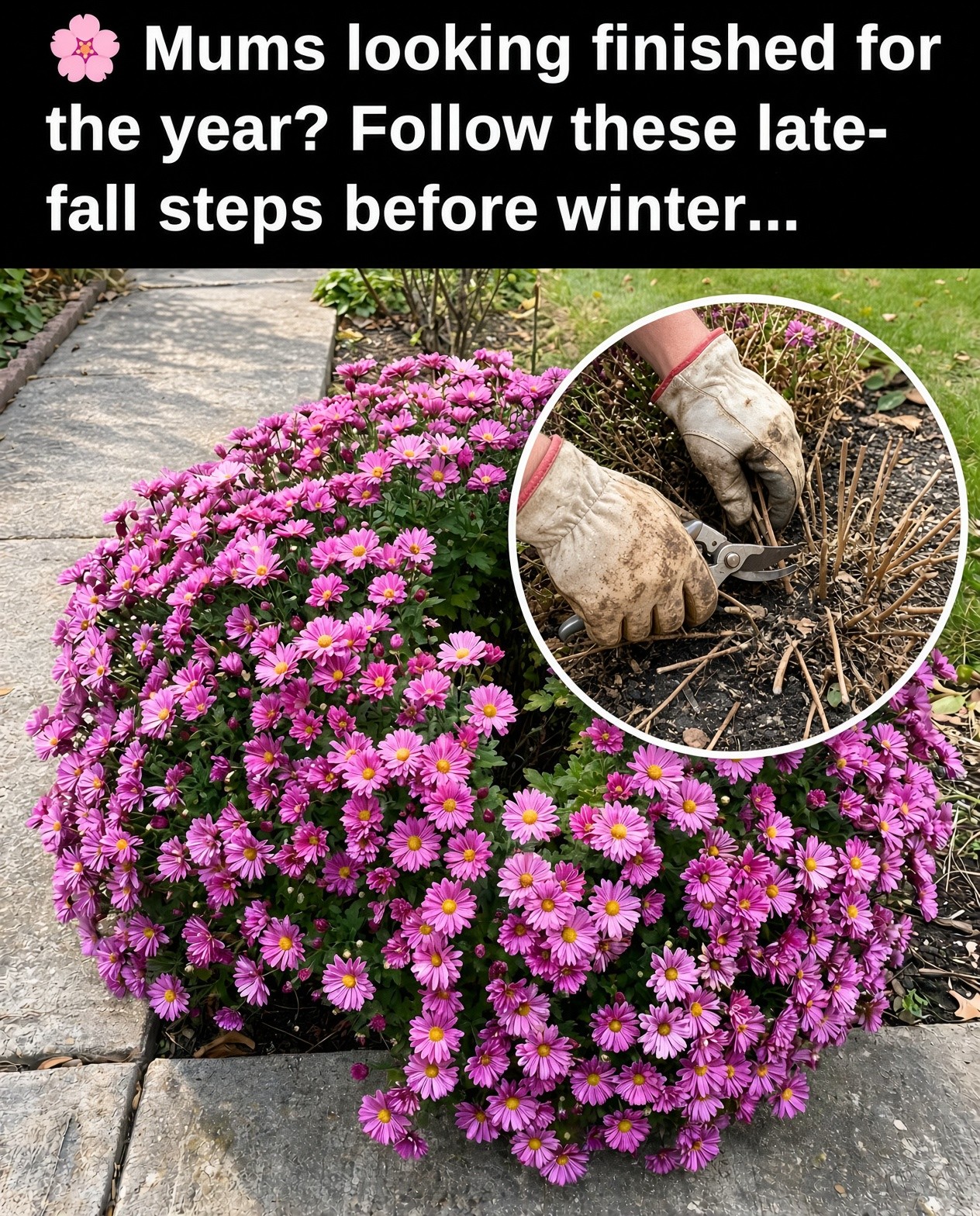
When mums finish flowering, a little cleanup and the right winter care can help them return stronger next season. The best approach depends on whether your plant is a hardy garden mum or a florist chrysanthemum, and on how cold and wet your winter gets.
Six steps for after-bloom care

1. Remove spent flowers
Snip off brown, shrivelled flower heads just above healthy foliage. This keeps the plant tidy and may prolong the display while other buds remain. Deadheading is different from the end-of-season cutback: once flowering is completely over, focus on preparing the plant for its next growth cycle.

2. Decide whether to cut back
Timing depends on the type of chrysanthemum and your winter climate. Some extension guidance recommends cutting dead tops down after flowering; other guidance advises leaving old stems standing over winter because they can help protect the crown. For borderline-hardy garden mums, leaving stems until spring is often the safer choice; remove clearly diseased material and follow local advice.

3. Protect the roots outdoors
Garden mums are more likely to survive when planted in well-drained soil and given time to establish. After the ground begins to cool, add a loose insulating mulch around the root zone. Avoid waterlogged sites, where roots can rot. Do not bury the crown under a dense, soggy layer of material.

4. Care for potted mums
Containers are more exposed to cold than garden beds. Check whether the plant is a hardy garden mum or a florist type, because survival varies. Move pots to a cool, sheltered, frost-protected place where appropriate, and make sure drainage holes remain open. Water sparingly during dormancy: the compost should not become bone-dry, but it must not stay soggy.

5. Keep an eye on moisture and disease
Remove fallen, diseased leaves and spent blooms. Give plants good airflow and water the soil rather than routinely wetting foliage. During winter, check pots and stored plants periodically for excessive dryness, standing water, mould, or soft, rotting stems.

6. Encourage fresh spring growth
When new shoots emerge, remove winter protection gradually. Once growth is several inches tall, pinching the tips can encourage branching and a bushier plant. Stop pinching well before flower buds form—often by midsummer, depending on the cultivar and local climate—so the plant has time to set autumn blooms.
Common mistakes to avoid
- Leaving pots standing in water or using containers without drainage holes.
- Assuming every chrysanthemum sold in autumn is reliably winter-hardy.
- Applying heavy, wet mulch before the soil cools or covering the crown too deeply.
- Pinching new growth too late in the season, which can delay flowering.
- Expecting every plant to return: cultivar, climate, drainage, and how early it was planted all affect survival.
Note: Extension recommendations differ on autumn pruning because climates and chrysanthemum types differ. Use advice suited to your local winter conditions.