
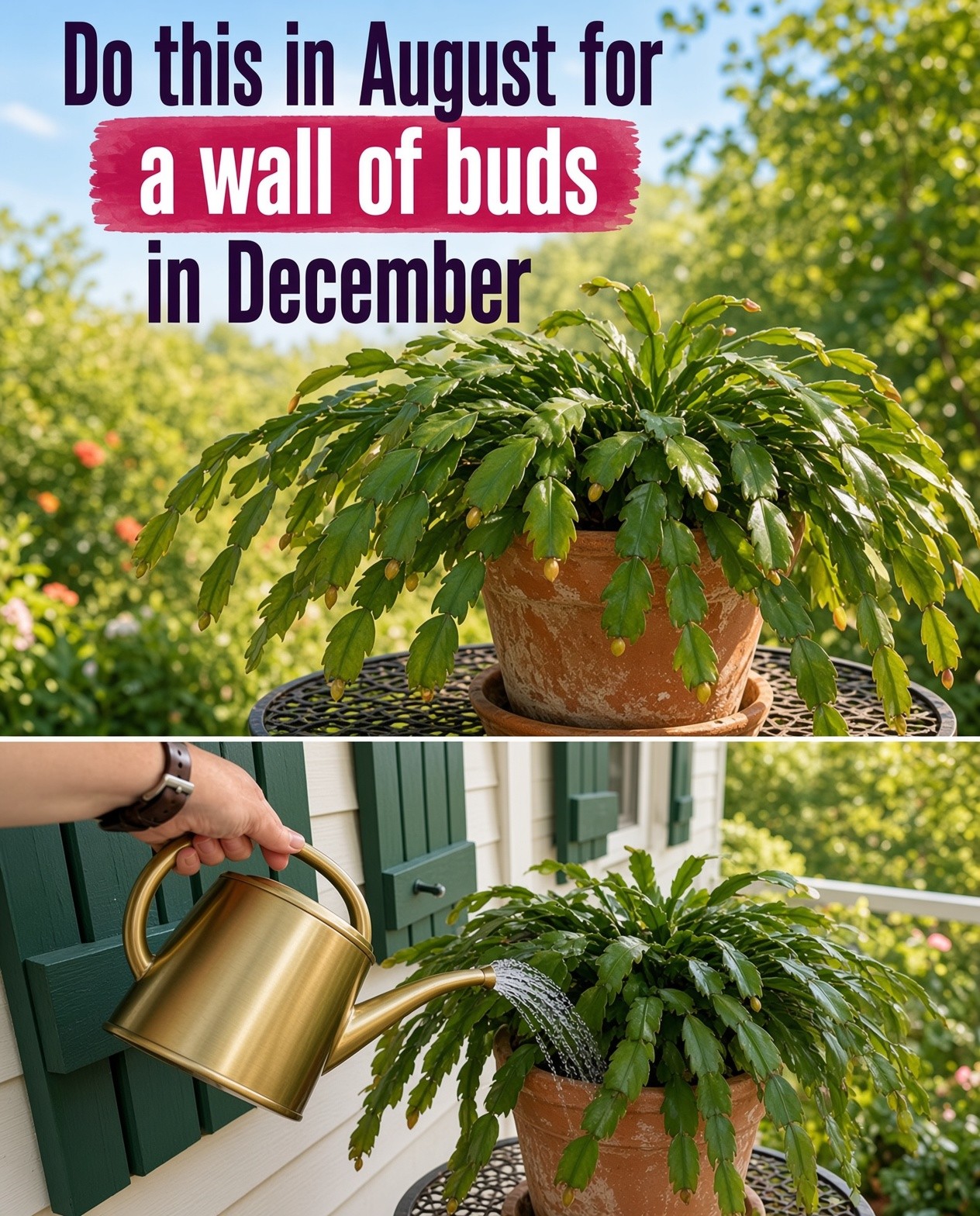
The right August care can help a Christmas cactus stay healthy through late summer and prepare naturally for a beautiful winter display.
Why August Matters for Christmas Cactus
August is an important transition month for Christmas cactus, also known as Schlumbergera. The plant is still capable of producing fresh growth, but the season is beginning to move toward the shorter days and cooler conditions that eventually encourage flower-bud formation. What you do now can make the plant healthier and better prepared for its winter display. The goal is not to force flowers early. Instead, give the cactus strong but gentle light, appropriate moisture, and steady growing conditions while allowing it to finish its summer growth naturally.

Give It Bright, Indirect Light
Christmas cactus needs plenty of light, but harsh midday or afternoon sun can scorch its flattened stem segments. If the plant has been outdoors for summer, choose a bright sheltered position beneath a porch, near a shaded window, or under filtered light. Indoors, an east-facing window is often a useful choice because it provides bright morning light without the intensity of late-day sun. Watch the plant rather than relying only on a fixed schedule: pale, weak growth can indicate insufficient light, while bleached or reddish patches can signal too much direct sun.

Keep Watering Consistent
During active summer growth, a Christmas cactus should not be left bone-dry for long periods. At the same time, constantly wet soil is a much bigger problem than occasional dryness because poor drainage can lead to root problems. Check the top layer of potting mix before watering. When it has dried somewhat, water thoroughly until excess moisture drains from the bottom of the pot. Empty any water collected in a saucer. Plants kept outside may dry faster in warm weather, while indoor plants may need longer between waterings because evaporation is slower.

Use a Well-Drained Potting Mix
Good drainage is essential for Schlumbergera. Although Christmas cactus is not a desert cactus, it is still an epiphytic plant that does not appreciate sitting in saturated soil. A loose houseplant mix amended with materials that improve drainage can help roots receive both moisture and air. Always use a container with drainage holes. If the pot stays heavy and wet for many days after watering, the growing medium may be holding too much moisture. Correcting the soil and drainage is usually more useful than simply reducing the amount of water you give.

Provide Comfortable Temperatures
Christmas cactus generally performs best when temperatures are comfortable and stable. Keep it away from blasts of hot air, heating vents, air conditioners, and very cold drafts. During August, avoid placing the plant against glass where intense sunlight can create excessive heat. A steady environment helps the plant continue healthy growth without unnecessary stress. As autumn approaches, cooler nights become useful because the change in day length and temperature helps signal the coming flowering season.

Maintain Moderate Humidity
Dry indoor air can make Christmas cactus less comfortable, particularly when the plant is moved indoors after spending summer outside. Moderate humidity can help the stems stay plump and healthy. A humidity tray, nearby plants, or a room with naturally moderate humidity can be useful. Avoid keeping the pot sitting directly in water, however, because the roots should never remain saturated. Good air movement is also important, especially when humidity is high, so leaves and stems can dry normally after watering.

Feed While It Is Actively Growing
A Christmas cactus benefits from regular nutrition during its active growing season. A balanced, water-soluble houseplant fertilizer can be applied according to its label directions, often at a diluted strength. Avoid the temptation to feed heavily; more fertilizer does not automatically mean more flowers. Excess salts can accumulate in the potting mix and damage roots. By late summer, pay attention to the plant’s growth cycle rather than continuing a heavy feeding program indefinitely. As the plant moves toward bud formation, its care should gradually become more focused on stable conditions.

Prune for a Fuller Shape
August can be a useful time to tidy a leggy or uneven Christmas cactus. Instead of making a drastic cut, gently twist or pinch off a few stem segments at natural joints. This can encourage branching and create a fuller plant. Clean scissors can be used when a precise cut is needed. The removed segments can also be allowed to dry briefly and propagated later if you want additional plants. Avoid aggressive pruning when the plant is already stressed, recently repotted, or showing signs of disease.

Inspect for Pests Before Moving It Indoors
If your Christmas cactus has spent the summer outdoors, inspect it carefully before bringing it back inside. Look between stem segments, around the crown, and across the surface of the potting mix. Check for visible insects, webbing, sticky residue, damaged tissue, or other signs that something has taken up residence. A gentle rinse can remove dust and some unwanted visitors. It is also sensible to keep a returning plant separate from your other houseplants for a short period so you can make sure it is clean and healthy before placing it among your indoor collection.

Do Not Rush to Repot in August
Repotting is usually not the job to prioritize when you are preparing a Christmas cactus for its winter display. Moving the plant into a new container can disturb the roots and alter the conditions it has been accustomed to. Christmas cactus also tends to flower well when it is slightly snug in its pot, so frequent repotting is unnecessary. If the container is still functional and the plant is growing well, leave it alone. Major repotting is better handled after flowering, when the plant has completed its seasonal display and begins a new growth cycle.

Ease Into the Autumn Transition
As August ends and September approaches, the plant should gradually move from active summer growth toward its flowering phase. Continue providing bright, indirect light and avoid sudden changes in temperature or watering. Do not try to force the plant into bloom immediately. Instead, let natural shortening days and cooler conditions do their work. When buds eventually appear, keep the plant in a stable location and avoid repeatedly moving or rotating it, because sudden environmental changes can cause developing buds to drop.

Check for New Growth
August is often a month of active growth, so look closely at the newest segments on your plant. Healthy new growth should appear firm and evenly colored rather than limp, shriveled, or badly discolored. If the plant has been outdoors, inspect new segments for chewing damage or signs of insects. Catching a problem while growth is young is much easier than trying to correct a stressed plant just before it begins preparing for flowers.

Avoid Sudden Changes
Christmas cactus responds best to consistency. If the plant has been growing happily in one bright location, avoid moving it repeatedly from deep shade to strong sun or from a cool room to a hot window. Sudden changes in light, temperature, or watering can stress the plant and make it harder for it to settle into its seasonal rhythm. Small adjustments are fine, but make them gradually whenever possible.

Keep the Pot Stable
A Christmas cactus can become surprisingly heavy as its stems lengthen. Make sure the container is stable and cannot tip easily, especially if the plant is hanging from a shelf or sitting near a busy window. A stable pot also makes watering easier because you can move the plant carefully without disturbing the roots or breaking delicate stem segments.

Plan for the Flowering Season
The spectacular winter display begins with ordinary summer care. Once August has passed, the plant’s priorities gradually shift away from producing lots of new segments and toward preparing for flowers. Resist the urge to keep stimulating vigorous growth with excessive fertilizer or constant repotting. A healthy, settled plant is better positioned to respond to the natural changes of autumn.

A Simple August Routine
The best August routine is surprisingly simple: bright filtered light, thorough but sensible watering, good drainage, moderate feeding while the plant is actively growing, comfortable temperatures, and as little unnecessary disturbance as possible. Inspect an outdoor plant before bringing it inside, keep it away from pests, and avoid repotting unless there is a genuine problem. Consistent care now gives your Christmas cactus the best chance of entering autumn healthy and ready for its winter show.

The August Checklist for Holiday Blooms
A simple August routine can make Christmas cactus care much easier. Give the plant bright filtered light, water when the upper soil has dried somewhat, maintain good drainage, and keep temperatures comfortable. Feed moderately while it is actively growing, tidy leggy stems if needed, and inspect carefully before bringing an outdoor plant inside. Most importantly, avoid unnecessary repotting and dramatic changes. Healthy growth now provides the foundation for the buds that will develop later. With steady care rather than complicated tricks, a Christmas cactus can enter autumn strong, compact, and ready for a beautiful winter flowering season.
