
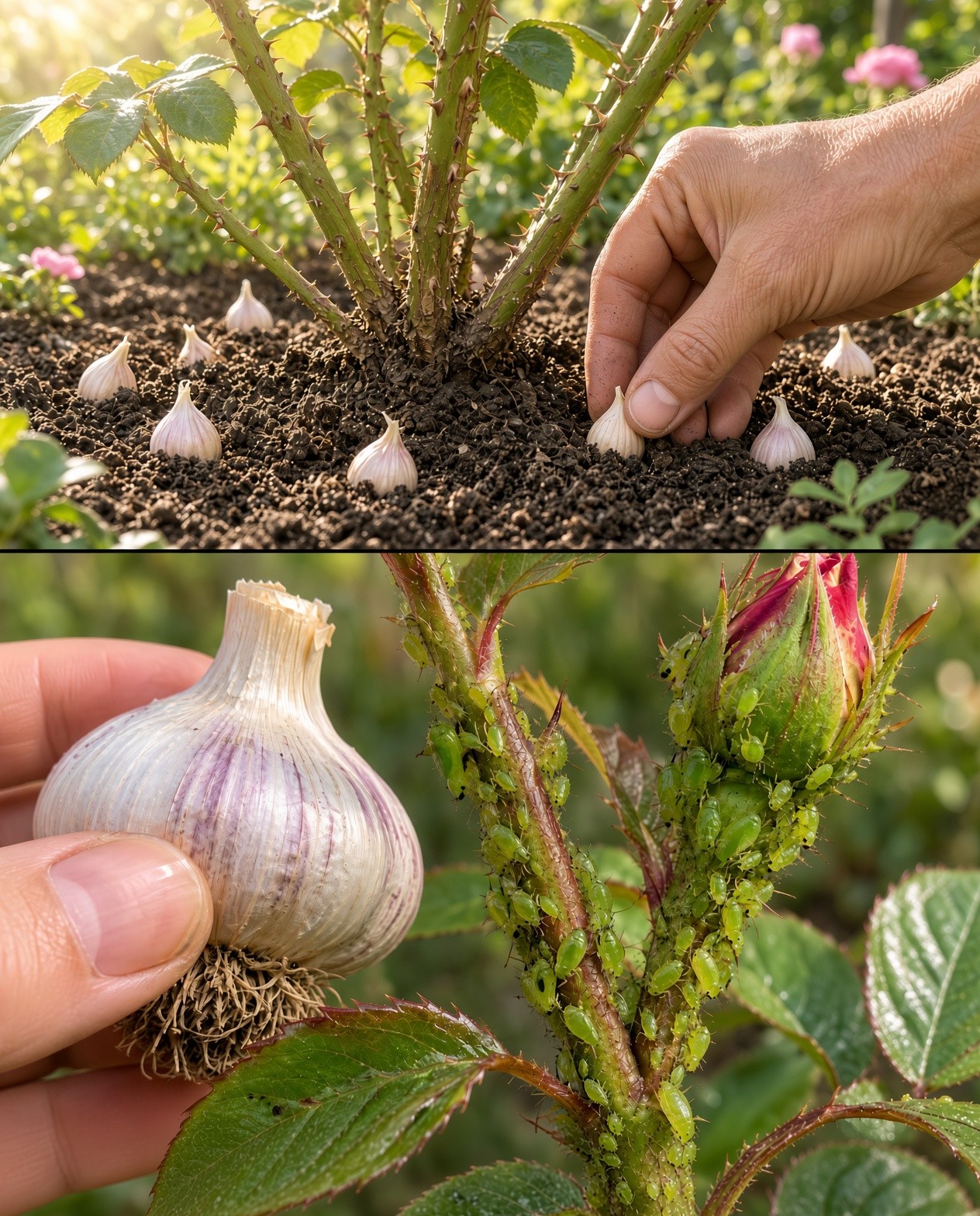
How to use garlic thoughtfully around roses, what a garlic spray can—and cannot—do, and the reliable steps that keep rose bushes healthy.

Garlic has a long history in home-garden remedies. Its pungent sulfur-containing compounds have inspired gardeners to plant cloves near roses or prepare garlic-infused water as a deterrent. The idea is appealing: protect prized blooms with an inexpensive kitchen ingredient. But there is an important distinction between a traditional garden practice and a treatment that has been shown to work consistently.
1. What garlic can realistically do
When garlic is crushed or cut, enzymes help form pungent sulfur compounds, including allicin. Laboratory studies and some formulated botanical products have investigated garlic extracts for biological activity. That does not mean a clove planted beside a rose releases a dependable, measured dose that protects the entire shrub.
Garlic’s scent may discourage some insects in some circumstances, but results depend on the pest, concentration, weather, and how the material is applied. A garden planted with garlic can still attract aphids, spider mites, thrips, and other rose pests. Likewise, garlic should not be considered a fungicide that cures an established infection.
2. Planting garlic near rose bushes
Growing garlic as a companion plant is the gentlest way to try the idea because it avoids spraying a homemade mixture onto delicate foliage. Think of it as an experiment in companion planting, not a guaranteed pest barrier.
When to plant
In climates with cool winters, garlic is commonly planted in autumn for a summer harvest. In milder climates, planting dates vary by local temperature and garlic type; choose a locally adapted variety and follow regional planting advice. Avoid planting during extreme heat or into waterlogged soil.
How to plant without crowding the rose
- Choose a suitable spot. Find an open area near the outer edge of the rose’s root zone, not tight against the crown or main stems.
- Prepare free-draining soil. Loosen the soil and mix in mature compost if needed. Garlic bulbs are prone to problems in persistently wet ground.
- Separate the cloves. Break a healthy garlic bulb into individual cloves shortly before planting. Keep the papery skin intact.
- Set them upright. Plant each clove with its pointed end up, generally about 5–7 cm deep, adjusting for soil and local growing guidance.
- Give them room. Space cloves roughly 10–15 cm apart, and leave enough distance from the rose to avoid competition and make maintenance easy.
- Water and mulch lightly. Water to settle the soil, then use a thin layer of mulch without burying the rose crown or garlic shoots.
Garlic and roses both appreciate good drainage, but their water needs are not identical throughout the season. Check soil moisture rather than watering both automatically. If the rose is established and the bed is crowded, grow garlic in a nearby separate row or container instead.
3. Using garlic-infused water cautiously
Homemade garlic sprays are often described online as natural insect repellents. There is no universally validated home recipe or dependable application schedule for rose bushes. A stronger mixture is not necessarily more effective—and can increase the risk of leaf or petal injury.
If you decide to test a garlic preparation
- Use a commercially formulated product labelled for ornamental roses when possible, and follow its label exactly.
- For a homemade preparation, treat it as an unproven trial rather than a pesticide with guaranteed performance. Do not add concentrated essential oils, alcohol, bleach, or extra ingredients to intensify it.
- Test a small, inconspicuous section of foliage first. Wait 24–48 hours and look for spotting, browning, curling, or other injury before considering broader use.
- Do not spray open flowers, stressed plants, or foliage exposed to strong midday sun or high heat.
- Avoid spraying when bees and other pollinators are visiting flowers. Do not assume that a “natural” spray is harmless to beneficial insects.
- Do not mix garlic preparations with other pesticides or household cleaners.
4. More reliable ways to manage common rose pests
| Problem | What to look for | Practical first response |
|---|---|---|
| Aphids | Clusters of soft-bodied insects on buds and tender shoots; sticky honeydew | Dislodge small colonies with a firm stream of water. Preserve lady beetles and other predators. Use insecticidal soap only if needed and according to its label. |
| Spider mites | Fine stippling, dull leaves, sometimes delicate webbing underneath | Check leaf undersides; reduce plant stress and wash foliage with water where appropriate. Use a labelled miticide or horticultural product only if the infestation warrants it. |
| Thrips | Scarred petals, distorted buds, tiny slender insects | Remove badly damaged blooms, monitor buds, and seek locally appropriate management advice before spraying. |
| Rose slugs (sawfly larvae) | Skeletonized or windowpane-like leaf damage; small green larvae underneath leaves | Inspect leaf undersides and hand-remove larvae when practical. For heavier damage, use a product labelled for the pest and rose use. |
| Japanese beetles or other chewing beetles | Chewed leaves or damaged flowers; visible adult beetles | Hand-pick where feasible and remove badly damaged blooms. Identify the beetle before choosing a control. |
For aphids, a strong water spray can be enough in many home gardens. UC Integrated Pest Management recommends regular monitoring, conserving natural enemies, and using water sprays or hand removal where suitable. Insecticidal soaps and horticultural oils can suppress some pests, but coverage and timing matter; always follow the product label and avoid treating flowers or pollinators unnecessarily.
5. Preventing black spot and other rose diseases
Garlic spray is not a substitute for disease prevention. Black spot and powdery mildew are influenced by plant susceptibility, weather, moisture, and growing conditions. A healthy rose in a suitable site is easier to manage than a crowded, stressed shrub.
- Choose resistant varieties. When buying a new rose, ask for varieties known to perform well in your local climate and to resist common diseases.
- Provide sunlight and airflow. Most roses perform best with ample sun and enough space for foliage to dry.
- Water the soil. Use a soaker hose or water at the base when possible; avoid repeatedly wetting leaves, especially late in the day.
- Clean up fallen leaves. Remove diseased foliage and plant debris, and dispose of it appropriately rather than leaving infected material beneath the shrub.
- Prune thoughtfully. Remove dead, damaged, or crossing stems with clean tools to improve airflow. Follow pruning guidance for the rose type.
- Mulch sensibly. Apply organic mulch to help conserve moisture and reduce soil splash, keeping it away from direct contact with the crown and stems.
6. Common mistakes to avoid
- Expecting garlic to cure disease. It cannot be relied upon to stop an established fungal infection.
- Planting cloves against the rose crown. Crowding makes watering, pruning, and airflow harder and can increase competition.
- Making the spray stronger. Higher concentration can injure foliage without improving control.
- Spraying every week “just in case.” Routine applications without a diagnosed problem can waste time and harm beneficial organisms.
- Ignoring the actual pest. Aphids, mites, sawfly larvae, and fungal diseases need different management approaches.
- Assuming natural means harmless. Botanical products can still affect insects, plants, pets, and people. Follow labels and use protective precautions.
7. A simple integrated rose-care routine
Rather than relying on one ingredient, use a short routine that prevents problems and catches them early:
- Inspect new growth and the undersides of leaves once or twice a week during active growth.
- Look closely at buds for aphids, thrips, distortion, or sticky residue.
- Water deeply when the soil needs it, preferably at the base of the plant.
- Remove diseased leaves and spent blooms as appropriate, and keep the area around the shrub tidy.
- Encourage beneficial insects by avoiding unnecessary broad-spectrum sprays.
- If you want to try garlic, plant a small amount nearby or test a labelled garlic product separately—then judge results honestly.
Frequently asked questions
Does planting garlic beside roses keep aphids away?
Will garlic water kill aphids on rose bushes?
Can garlic prevent black spot or powdery mildew?
Can garlic spray burn rose leaves?
How close should garlic be planted to a rose?
Is garlic safe for bees and ladybugs?
What is the best natural way to protect roses?