
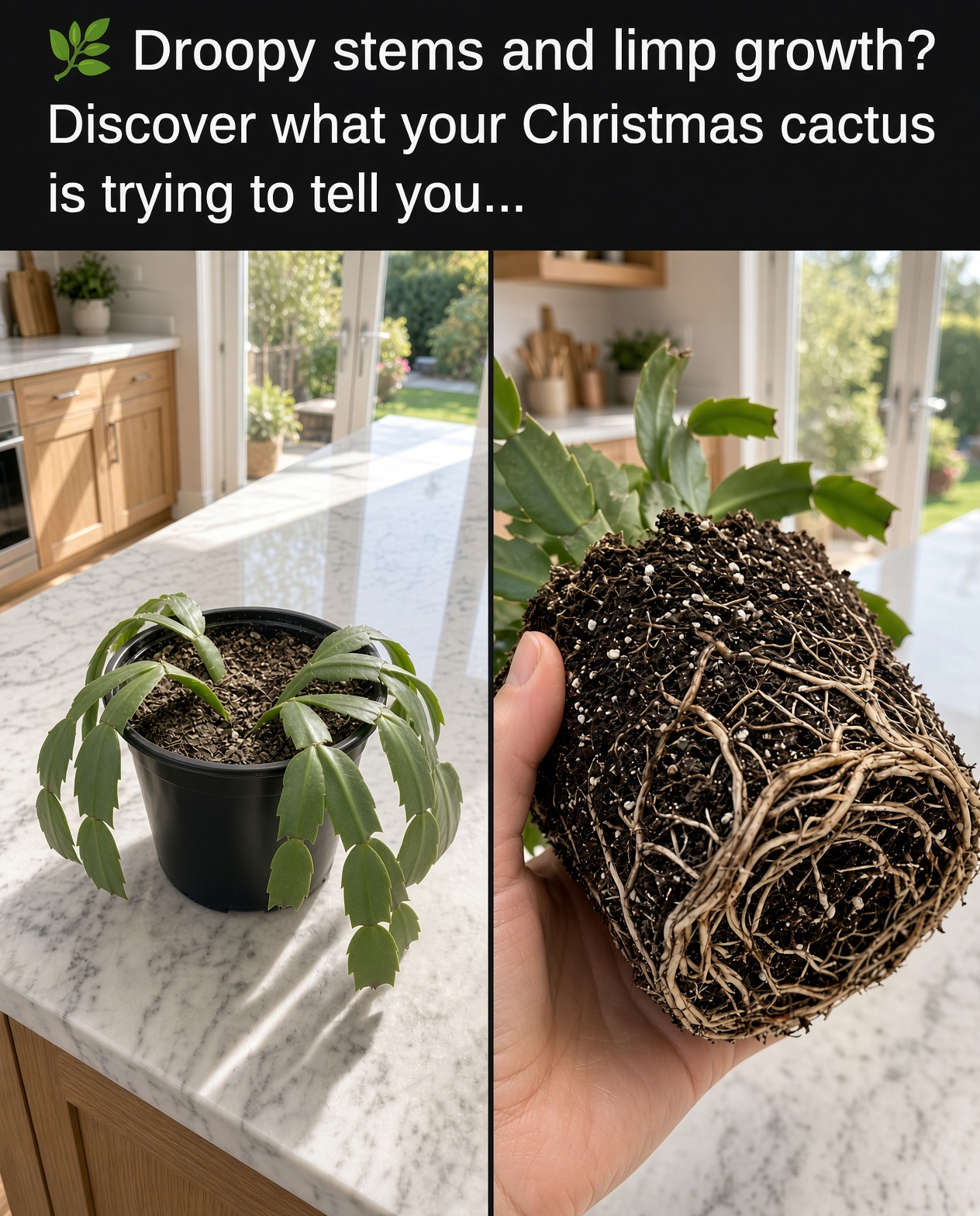
A Christmas cactus is a beautiful houseplant that can brighten any room with its cascading green stems and colorful seasonal flowers. However, when those once-fresh stems begin looking limp, wrinkled, or droopy, it’s usually a sign that something isn’t quite right.

Although wilting can look alarming, it doesn’t necessarily mean your plant is dying. Christmas cacti can recover when the underlying problem is identified and their growing conditions are corrected.
Sometimes the issue comes from watering too frequently, while other times it may involve damaged roots, insufficient light, or sudden temperature changes. Understanding what your plant is trying to tell you is the first step toward helping it recover.
1. Overwatering Can Cause Root Rot

One of the most common reasons a Christmas cactus starts wilting is excessive watering. Even though this plant enjoys some moisture, its roots need oxygen and cannot tolerate constantly saturated soil.
When the potting mix remains wet for too long, the roots may begin to deteriorate. Damaged roots struggle to absorb water properly, which can leave the stems looking soft, weak, and droopy.
You might also notice yellowing segments, soggy soil, or an unpleasant smell coming from the pot. These symptoms can indicate that the roots are struggling.
- Stop watering while the soil remains excessively wet.
- Check that the container has drainage holes.
- Remove standing water from the saucer.
- Inspect the roots if the plant continues deteriorating.
- Remove damaged roots and repot in fresh, airy potting mix when necessary.
Most importantly, don’t add more water simply because the stems look wilted. Check the soil first to understand what’s happening below the surface.
2. Underwatering Can Make the Stems Wrinkled

Giving your Christmas cactus too little water can create similar symptoms. When the potting mix becomes completely dry for an extended period, the flattened stems may lose their firmness and begin to shrivel.
Unlike overwatered segments, which may become soft or mushy, dehydrated segments often look thin, wrinkled, and noticeably limp.
This problem is more likely to happen in warm rooms, during active growth, or when the plant is kept in a small container that dries out quickly.
- Check the moisture level of the soil before watering.
- If the soil is dry, water thoroughly until excess water drains away.
- Allow the pot to drain completely.
- Avoid leaving the roots completely dry for long periods.
Try to maintain consistent soil moisture without keeping the roots constantly wet. Adjust watering according to the season and the conditions inside your home.
3. Too Much Direct Sunlight Can Stress the Plant

Christmas cacti naturally grow in tropical forest environments, where they receive filtered light rather than intense direct sunshine.
Placing one in a window with strong afternoon sunlight can cause the stems to become stressed, discolored, or damaged. Too little light can also weaken growth and affect flowering.
A plant receiving unsuitable light may develop reddish or yellowish areas, weak new growth, or an overall unhealthy appearance.
- Choose a bright location with indirect sunlight.
- Use a sheer curtain if the window receives intense sunshine.
- Avoid moving the plant repeatedly between very different lighting conditions.
- Rotate the pot occasionally for balanced growth.
A bright east-facing window is often a good location for a Christmas cactus because it provides gentle morning light.
4. Temperature Changes Can Cause Wilting

Sudden temperature changes can put considerable stress on a Christmas cactus. These plants prefer relatively stable conditions and may react poorly when exposed to cold drafts or excessive heat.
Keeping the pot beside a frequently opened exterior door, an air-conditioning vent, or a radiator can expose it to uncomfortable temperature fluctuations.
These changes may contribute to drooping stems and flower buds falling before they have a chance to open.
- Keep the plant away from cold drafts.
- Avoid placing it directly beside heating equipment.
- Maintain relatively stable indoor temperatures.
- Protect the plant when moving it between indoor and outdoor environments.
During normal growth and flowering, comfortable indoor temperatures around 65–70°F (18–21°C) are generally suitable.
5. Low Humidity Can Affect the Stems

Because Christmas cacti come from humid tropical environments, they appreciate some moisture in the surrounding air.
Indoor heating during winter can make the atmosphere particularly dry. When humidity becomes too low, the plant may experience additional stress, especially if watering and temperature conditions are also unsuitable.
Pay particular attention to plants positioned near radiators, fireplaces, or heating vents.
- Move the plant away from sources of dry heat.
- Use a small humidifier when indoor air is very dry.
- Group houseplants together.
- Place the pot above a tray of damp pebbles without allowing its base to sit in water.
Improving humidity can help create a more comfortable growing environment for your Christmas cactus throughout the colder months.
6. Root Problems and Poor Soil Can Weaken Growth
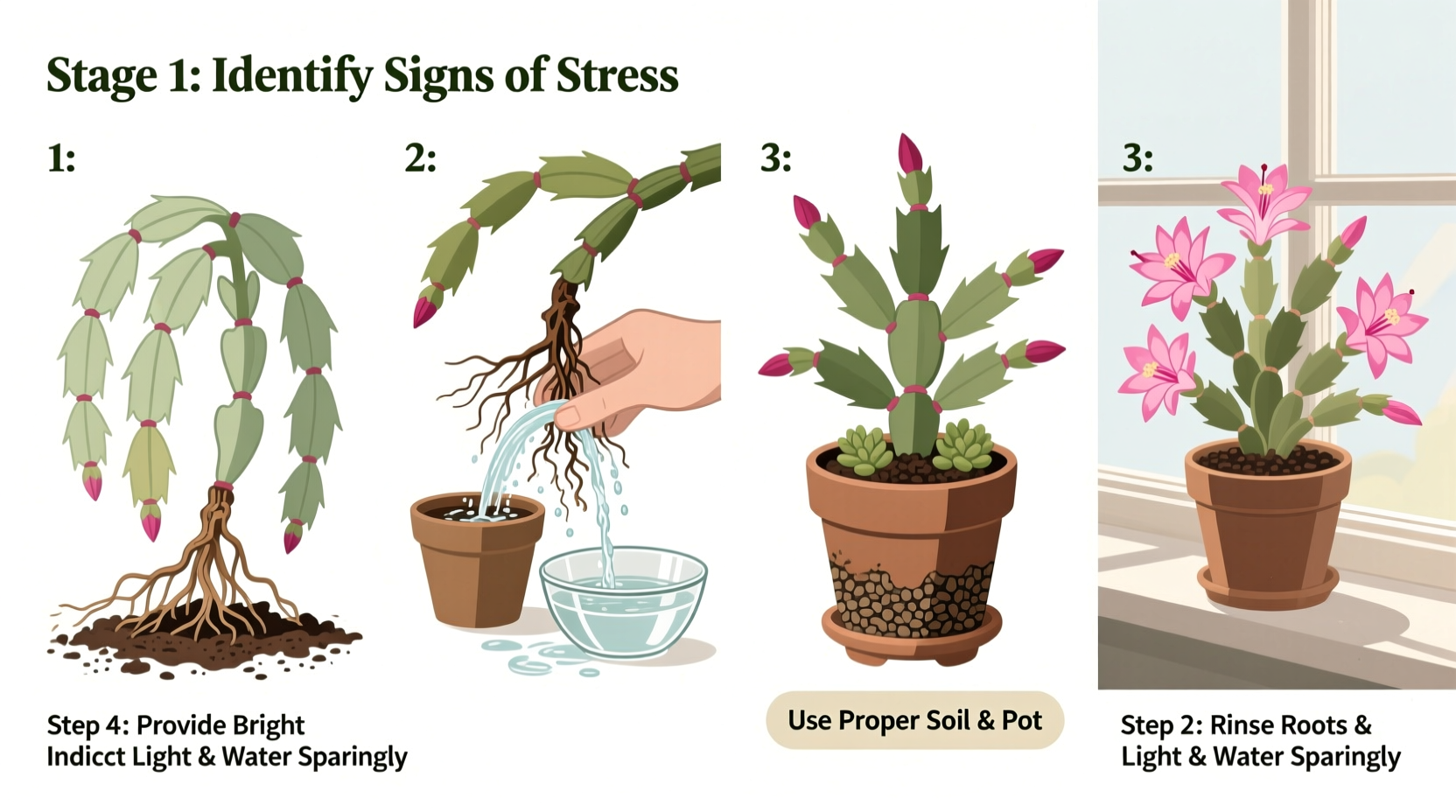
Sometimes, watering correctly isn’t enough to solve a wilting problem. The roots themselves may be damaged, crowded, or growing in compacted potting mix.
When roots cannot access enough oxygen or absorb moisture efficiently, the stems may continue looking weak even when you provide regular care.
Old potting mix can also become dense over time, making it harder for water to drain and air to circulate around the roots.
- Gently inspect the root system.
- Look for dark, soft, or unpleasant-smelling roots.
- Remove damaged roots using clean tools.
- Choose a fresh, airy potting mix.
- Use a container with adequate drainage.
A mixture containing regular potting soil, perlite, and orchid bark can help provide the drainage and aeration that holiday cacti need.
How to Keep Your Christmas Cactus Healthy

Preventing wilting is easier when you establish a consistent care routine. A few simple habits can make a noticeable difference in the long-term health of your plant.
Use Well-Draining Potting Mix
Choose a light, airy growing medium that holds some moisture but allows excess water to escape. Avoid heavy soil that remains soggy for extended periods.
Check the Soil Before Watering
Don’t follow a strict watering schedule. Instead, check the soil and adjust how often you water according to the season, indoor temperature, and moisture level.
Provide Suitable Lighting
Place your plant somewhere bright with filtered or indirect sunlight. Protect it from harsh afternoon rays that can damage the stems.
Avoid Unnecessary Changes
Christmas cacti appreciate stable growing conditions, particularly when flower buds are developing. Avoid repeatedly changing their position, temperature, or watering routine.
Inspect the Plant Regularly
Look for changes in stem color, texture, and firmness. Checking your plant regularly helps you notice potential problems before they become more serious.
How Long Does a Wilting Christmas Cactus Take to Recover?

The recovery period depends on what caused the wilting and how severely the plant has been affected.
A mildly dehydrated plant may begin improving after its watering needs are corrected. However, a Christmas cactus with damaged roots may need several weeks or longer to produce noticeable new growth.
Be patient and avoid making several changes at once. Give the plant time to respond to improved conditions before deciding whether additional treatment is necessary.
Final Thoughts

A wilting Christmas cactus doesn’t always mean that your plant is beyond saving. In many cases, it is simply responding to unsuitable watering, poor drainage, excessive sunlight, or changing temperatures.
The most important thing is to identify the actual cause before making changes. Check the soil, inspect the roots, and consider the conditions where your plant is growing.
With appropriate watering, bright indirect light, good drainage, and a stable environment, your Christmas cactus has a much better chance of returning to healthy growth and producing beautiful flowers again.