
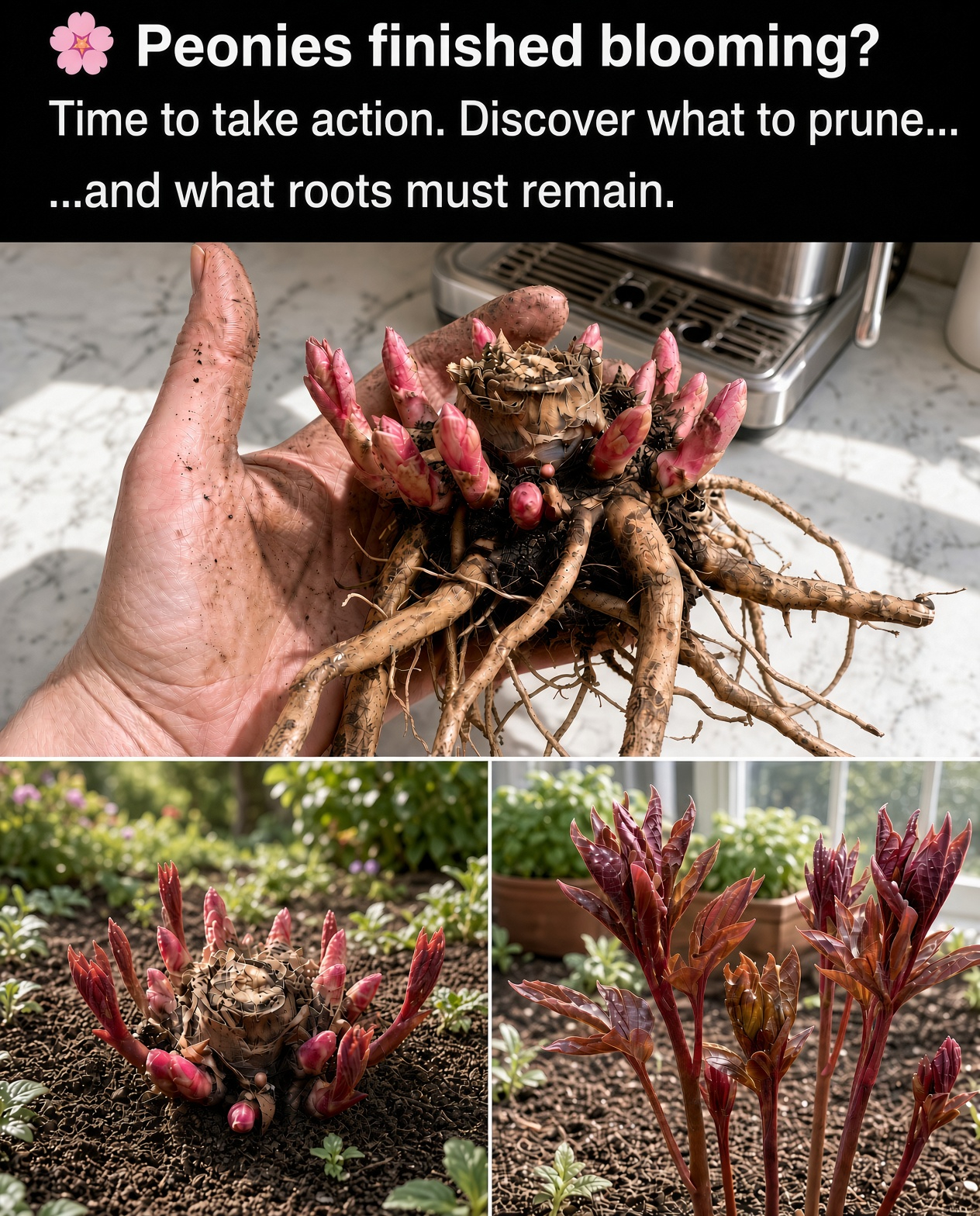
Peonies put on a spectacular show when they bloom, but once their beautiful flowers fade, many gardeners are left wondering what to do next. Should you cut the whole plant back, remove only the faded blossoms, or leave everything untouched?
The answer is a little of both. Some parts of the plant benefit from prompt attention, while other parts need to remain in place for several months. Knowing the difference helps peonies stay healthy and build the energy they need for next year’s flowers.

Should You Cut Back Peonies After Flowering?
You should remove faded flowers, but avoid cutting healthy green foliage immediately after blooming. The leaves are still working hard, even when the flowers are gone.
Peony foliage uses sunlight to produce energy that is stored in the roots. This stored energy supports the plant’s growth and flowering in the following spring. Removing healthy leaves too early can weaken the plant and reduce its future performance.
Think of post-flowering care as two separate jobs: tidy up the spent blossoms now, then wait until the foliage naturally dies back before doing the main seasonal cleanup.
1. Remove the Faded Flowers
Once peony flowers begin wilting and losing their petals, you can remove the spent flower heads. This practice is called deadheading.
Use clean pruning shears to cut just below the faded flower, while keeping as much healthy stem and foliage as possible. If seed pods are beginning to develop and you do not intend to collect seeds, remove those too.
Deadheading keeps the plant looking tidier and prevents it from putting unnecessary effort into seed production. However, it is important to understand that removing spent flowers will not make peonies bloom for a second time during the same season.
Remember: Remove the flower head, not the entire leafy stem. The leaves still need to remain on the plant.
2. Leave Healthy Green Leaves Alone
It can be tempting to cut back peonies as soon as their flowers disappear, especially when the garden starts looking less colorful. Resist that temptation.
The green leaves are essential for photosynthesis. They capture sunlight and help the plant replenish the energy stored in its roots and crown. That energy plays an important role in producing strong shoots and flowers next year.
Even if the plant looks less attractive without its blooms, healthy foliage should stay in place throughout summer and into autumn.
Helpful tip: If your peony has grown large or looks a little untidy, avoid giving it a drastic haircut. You can remove damaged or diseased portions, but leave the healthy green growth intact.

3. Wait Until Late Fall to Cut Back the Stems
The main foliage cleanup should wait until the plant has naturally finished its growing season. In many climates, this happens in October or November, after a significant frost or once the leaves have turned yellow and brown.
When the foliage has died back, herbaceous peonies can be cut down close to the ground. Leave approximately 1–2 inches of stem above the soil, taking care not to damage the crown or the buds near the surface.
Use clean, sharp garden shears and avoid cutting into the crown, where next season’s shoots will emerge.
Remember that this advice applies to herbaceous peonies. Tree peonies have permanent woody stems and should not be cut down to ground level. Itoh peonies also have their own pruning considerations, so identify your plant before doing a major cleanup.
4. Remove Old and Diseased Plant Debris
Cleaning up dead peony foliage is about more than appearance. Old leaves and stems can provide places for fungal diseases to survive through winter.
Botrytis blight and leaf blotch are among the problems that can affect peonies. Removing infected plant material helps reduce the amount of diseased debris remaining around the crown.
After cutting back the foliage, collect the stems and leaves rather than leaving them scattered around the plant. Healthy debris may be composted if your composting system handles it properly, but material showing signs of disease should be discarded according to local garden-waste guidance.
It is also worth cleaning your pruning tools between plants, especially when you have been cutting away diseased growth.

5. Avoid These Common Peony Pruning Mistakes
Peonies are dependable perennials, but incorrect pruning can affect their health and flowering. Keep these common mistakes in mind as you care for them after blooming.
Cutting Green Leaves Too Early
Removing healthy foliage in summer or early autumn interrupts the plant’s ability to make and store energy. Wait until the leaves have naturally yellowed or been killed by frost.
Removing Entire Stems When Deadheading
There is no need to remove a whole leafy stem just because its flower has faded. Cut off the spent flower head and leave the healthy leaves in place.
Leaving Diseased Foliage Around the Plant
Old infected leaves can help fungal problems persist from one season to another. Clear away diseased debris during the autumn cleanup.
Cutting Tree Peonies Down to the Ground
Tree peonies are different from herbaceous varieties. Their woody framework remains above ground and should not be treated like foliage that dies back each autumn.
Using Dirty Pruning Tools
Unclean tools can spread plant diseases. Clean and disinfect your shears before moving between plants, particularly when removing infected material.
6. Give Your Peonies a Good Start for Next Spring
Once the flowers have faded, your peony is already preparing for its next growing season. A few simple habits can help it remain healthy.
- Provide suitable sunlight: Peonies generally perform best in a sunny position with good air circulation.
- Water during prolonged dry periods: Give the soil a thorough watering when needed, rather than repeatedly wetting only the surface.
- Avoid waterlogged soil: Good drainage helps protect the roots from problems associated with excess moisture.
- Keep the surrounding area tidy: Remove fallen, diseased leaves and weeds that compete for space.
- Do not disturb established plants unnecessarily: Peonies can grow happily in the same location for many years when their conditions are suitable.
There is no need to rush into dividing or moving a healthy peony simply because its flowers have finished. These plants often prefer to remain undisturbed.

Final Thoughts
When peonies finish flowering, the best approach is not to cut everything back at once. Remove faded blossoms, keep healthy green foliage through the growing season, and wait until late autumn to cut back herbaceous stems after the leaves have died naturally.
Clean up old and diseased debris, use clean tools, and avoid damaging the crown. With the right timing, your peonies can store the energy they need to return with healthy growth and another beautiful display next spring.