
Rosemary is a beautiful evergreen herb that brings fragrance, texture, and year-round greenery to the garden. Its Mediterranean origins make it particularly fond of sunshine, warmth, and well-drained soil. However, colder temperatures and excessive winter moisture can make the colder months challenging.
Whether your rosemary grows in a garden bed or a container, here are five important tasks to complete before winter settles in.

1. Protect Outdoor Rosemary From Hard Freezes
Rosemary can tolerate some cool weather, but prolonged freezing temperatures may damage its leaves, stems, and roots. The amount of protection needed depends on the variety, the plant’s age, and the conditions in your garden.
Established plants in mild climates may remain outdoors throughout winter. In colder regions, however, even a healthy rosemary shrub can suffer when exposed to repeated hard freezes and drying winds.
What to do in November
- Check the expected winter temperatures in your area.
- Identify whether your variety is relatively cold-hardy or frost-sensitive.
- Choose a sheltered location for plants exposed to strong winter winds.
- Prepare breathable frost protection for vulnerable plants when freezing weather is forecast.
- Keep any protective covering from pressing tightly against the foliage.
Cold-hardy varieties such as ‘Arp’ may tolerate colder conditions than standard rosemary, but their survival still depends on drainage, exposure, and the severity of winter weather.
For plants growing in the ground, a breathable horticultural fleece can provide temporary protection during cold spells. Remove or loosen temporary coverings when conditions improve so the plant receives adequate light and airflow.
Avoid tightly wrapping rosemary in plastic. Trapped moisture and poor ventilation can encourage problems around the foliage.

2. Keep Excess Winter Moisture Away From the Roots
Cold weather is not the only challenge rosemary faces in winter. Waterlogged soil can be just as damaging, particularly when temperatures remain low and the growing medium dries slowly.
Rosemary needs oxygen around its roots. When soil stays saturated for extended periods, roots can become damaged and begin to rot. This is why drainage deserves particular attention during November.
Inspect the planting area
After heavy rain, check whether water collects around the base of your rosemary. Look for puddles, compacted soil, and fallen leaves that have become trapped against the woody stems.
Remove soggy debris and make sure rainwater can move away from the planting area. Avoid digging around established roots at this time of year. If the site repeatedly becomes waterlogged, consider improving the drainage or choosing a raised planting position in spring.
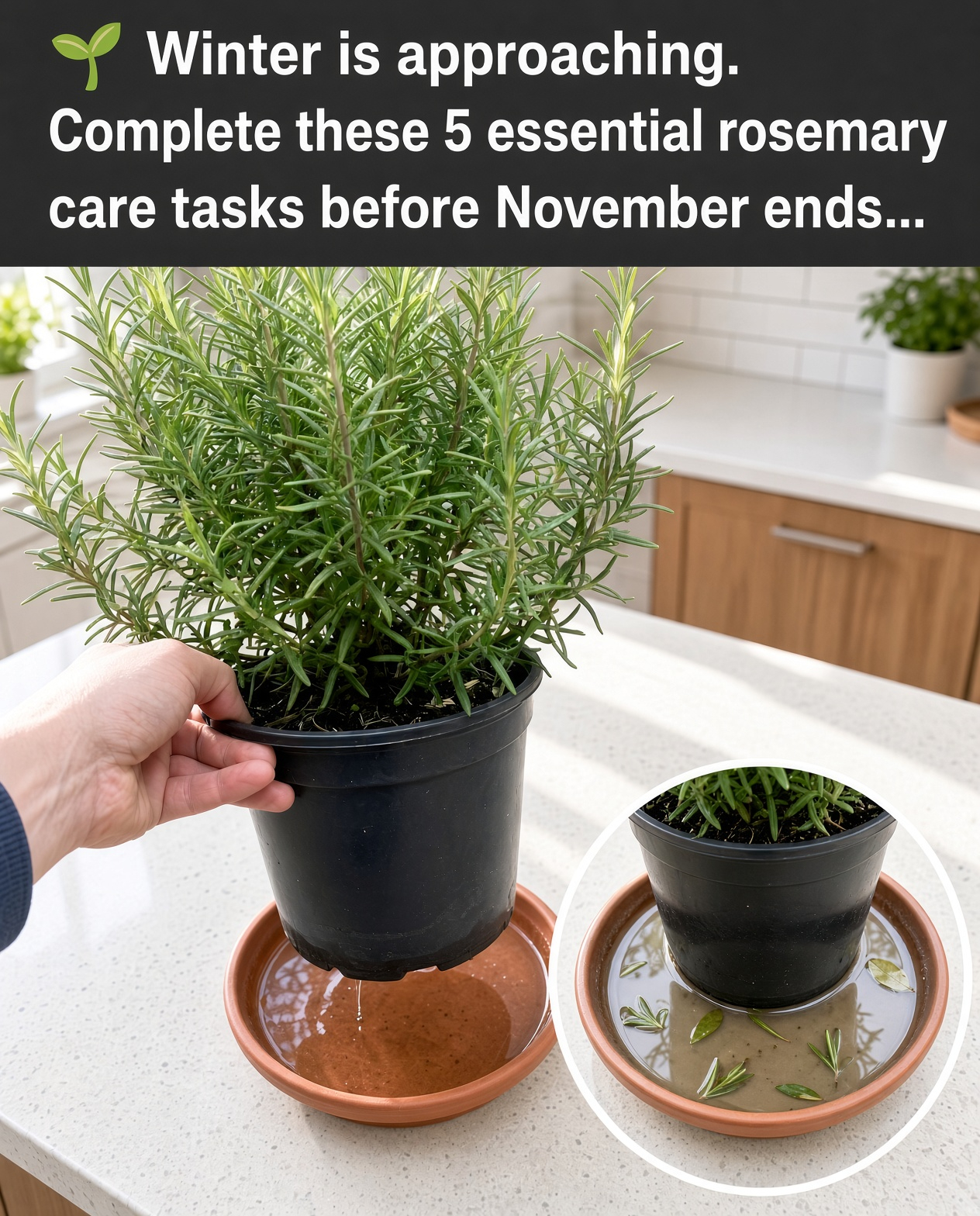
Check container drainage
- Make sure the pot has open drainage holes.
- Remove debris blocking the bottom of the container.
- Raise the pot slightly if water collects underneath.
- Empty any saucer that remains full after watering or rainfall.
- Move the container to a more sheltered location if winter rain is excessive.
Good drainage is one of the most useful forms of winter protection you can provide. Rosemary generally copes better with cool conditions when its roots are not sitting in cold, saturated soil.

3. Adjust Your Watering Routine
Rosemary usually grows more slowly during the colder months, which means its water requirements often decrease. Continuing to water it as frequently as you did during summer can leave the roots unnecessarily wet.
However, reducing watering does not mean allowing the plant to become completely dehydrated. The right approach depends on whether your rosemary grows in the ground or in a container.
Rosemary growing in the garden
Established outdoor plants often receive enough moisture from seasonal rainfall. Before adding water, check the soil several inches below the surface.
- If the soil is still damp, wait before watering again.
- If the soil is dry after an extended period without rain, water when conditions are suitable.
- Avoid watering frozen ground.
- Check drainage after prolonged rainfall.
Rosemary growing in containers
Potted plants need a little more attention because containers can dry out even during winter, particularly when placed in sheltered or indoor locations.
Check the soil regularly and water when the upper portion of the growing medium has dried. Apply water thoroughly, then allow all excess moisture to drain away.
Do not leave the pot standing in water. A container with good drainage is particularly important when rosemary is growing slowly.

4. Move Vulnerable Potted Rosemary to a Sheltered Location
Rosemary growing in pots is often more vulnerable to winter cold than rosemary planted directly in the ground. The roots have less surrounding soil to protect them from temperature changes, so containers can become cold much more quickly.
If your winters regularly bring freezing temperatures, moving a container-grown rosemary plant to a sheltered location may help it survive.
Choosing the right indoor location
Rosemary needs plenty of light, even when its growth slows down. A bright window is generally a better choice than a dark hallway or an interior room with little natural sunlight.
- Choose a bright position with several hours of available light.
- Keep the plant away from hot radiators and heating vents.
- Provide reasonable airflow around the foliage.
- Avoid placing the pot in a constantly humid or poorly ventilated corner.
- Check the plant for unwanted insects before bringing it near other houseplants.
A cool, bright, frost-free location is often preferable to a very warm room. Indoor rosemary may struggle when light levels are low and the air is excessively dry.
What about plants that can remain outdoors?
In milder climates, established rosemary may be able to stay outside. If freezing temperatures are uncommon, simply moving the pot beside a sheltered wall may provide enough protection from wind and heavy rainfall.

5. Avoid Heavy Feeding and Hard Pruning
November is generally not the best time to encourage vigorous new growth on rosemary. As daylight decreases and temperatures fall, the plant naturally slows down.
Applying excessive fertilizer at this stage may encourage tender growth that is less prepared for cold weather. Similarly, heavy pruning can remove healthy foliage and expose older woody stems just before winter.
What you should avoid
- Do not apply large amounts of nitrogen-rich fertilizer.
- Avoid major reshaping or cutting back the entire shrub.
- Do not cut deeply into old, bare woody stems.
- Leave healthy evergreen foliage in place.
If necessary, remove only dead, broken, or clearly damaged stems using clean pruning tools. You can also harvest a few healthy sprigs for cooking without removing large sections of the plant.
Save substantial shaping for spring or the appropriate post-flowering period, when the plant can recover during active growth.

Extra Tips for Keeping Rosemary Healthy Indoors
If you bring rosemary indoors for winter, remember that indoor conditions are different from its usual outdoor environment.
- Provide enough light: Choose the brightest suitable window available or use an appropriate grow light.
- Avoid excessive watering: Indoor plants often dry more slowly than outdoor containers.
- Maintain airflow: Leave enough space around the foliage.
- Inspect regularly: Look for signs of pests, yellowing leaves, or damaged stems.
- Rotate the container occasionally: This can help the plant receive more even light.
- Keep it away from heating vents: Direct hot air can dry the foliage and create stressful conditions.
Common Signs Your Rosemary Needs Attention
Winter stress can appear in several ways. Checking the plant regularly makes it easier to identify potential problems before they become severe.
| What you notice | Possible explanation |
|---|---|
| Yellowing foliage | Excess moisture, root stress, or unsuitable growing conditions |
| Brown or blackened tips | Cold damage or environmental stress |
| Dry, brittle foliage | Insufficient moisture or exposure to drying conditions |
| Soft stems near the base | Possible moisture-related damage |
| Weak, stretched growth indoors | Insufficient light |
These symptoms can have several causes, so check the soil, roots, temperature, and light conditions before deciding what adjustment is needed.
Final Thoughts
Preparing rosemary for winter is mostly about protecting it from the conditions it dislikes most: severe cold, prolonged wet soil, and unsuitable indoor environments.
Check the plant’s hardiness, keep excess moisture away from its roots, adjust watering, shelter vulnerable containers, and avoid heavy pruning or unnecessary feeding.
With the right seasonal care, rosemary has a better chance of maintaining its evergreen foliage and producing fresh growth when warmer weather returns.