
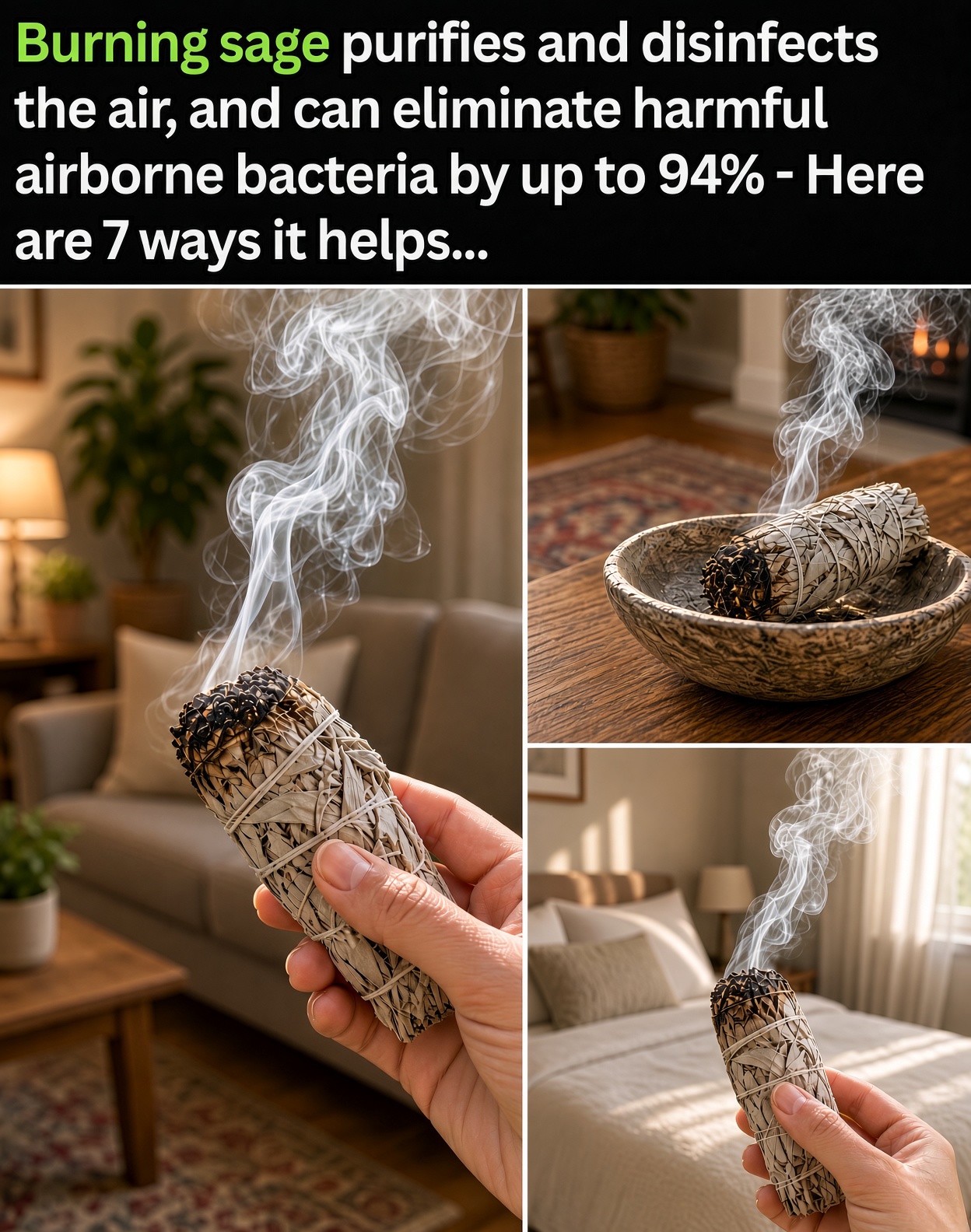
A thoughtful look at the ritual, the popular benefits, what research can—and cannot—confirm, and how to protect your indoor air.

Burning sage at home is often described as a way to refresh a room, relax the mind, or create a meaningful ritual. Some people value its scent and cultural or spiritual significance. But popular claims about air purification, anxiety relief, better sleep, and sharper memory go beyond what current evidence can prove—and any indoor burning produces smoke.

7 things people may experience when they burn sage
1. It can create a calming pause and a sense of reset

A small, intentional ritual may help mark a transition: the end of a workday, the start of meditation, or the moment you tidy a room. The benefit is best understood as psychological and personal—not proof that smoke removes invisible negative energy. A familiar scent, a few quiet minutes, and a clear intention can make a space feel different because you are deliberately changing how you use it.
What to keep in mind: There is no scientific test for “negative energy,” and burning sage has not been shown to remove it. If the ritual feels meaningful within your own tradition, you can treat it as a symbolic reset while keeping expectations realistic.
2. It may encourage mindfulness and emotional reflection

Preparing a room, opening a window, slowing your breathing, and setting an intention can create a mindful pause. Some people find that repeating a simple ritual helps them notice their emotions and move from a hectic task into a quieter activity. The reflective practice—not a proven chemical effect of sage smoke—is the plausible source of that benefit.
What to keep in mind: Try pairing a smoke-free version with three slow breaths, a short stretch, or a few minutes of quiet. You can get the same sense of intention without adding airborne particles to your home.
3. The scent may feel pleasant, but it is not a treatment for anxiety

Scent is personal: an herbal aroma may feel familiar, grounding, or comforting to one person and unpleasant to another. A pleasant sensory cue can become associated with a relaxing routine. However, there is not strong clinical evidence that burning sage treats anxiety, depression, or stress disorders, or that compounds in the smoke reliably raise serotonin or dopamine.
What to keep in mind: If anxiety is persistent or interfering with daily life, evidence-based support such as counselling, behavioural strategies, and appropriate medical care is more dependable than smoke-based remedies.
4. A bedtime ritual can support a wind-down routine—but smoke does not cure insomnia
A consistent bedtime routine, dimmer lighting, and a quiet room can help signal that the day is ending. If the smell of sage is personally soothing, it may be part of a brief wind-down ritual. But there is no good evidence that burning sage regulates the body clock, improves sleep architecture, or acts as a reliable sleep aid.
What to keep in mind: Avoid burning herbs in a bedroom before sleep or leaving embers unattended. Choose a smoke-free routine instead: read, journal, take a warm shower, or practise gentle breathing.
5. The ritual may help you focus by signalling a change of activity

A short, repeated routine can serve as a cue to begin studying, writing, or creative work. Clearing a desk, putting away distractions, and taking a mindful pause may make it easier to settle into a task. Claims that sage smoke itself improves memory, brain performance, or concentration have not been established in reliable human studies.
What to keep in mind: For stronger focus, use practical supports: a written task list, timed work sessions, regular breaks, enough sleep, and a comfortable, well-ventilated workspace.
6. It can be a meaningful symbol of protection or a sacred space

In some Indigenous communities, the burning of particular medicines—including certain sages—is part of specific ceremonial and spiritual traditions. For practitioners, the meaning may include prayer, purification, protection, or connection to community and ancestors. These are cultural and spiritual meanings, not medical claims that can be confirmed by laboratory testing.
What to keep in mind: The word “smudging” refers to specific cultural practices and should not be used as a generic label for every home fragrance ritual. Learn from the communities whose traditions you are discussing, and avoid treating sacred practices as a trend or a universal wellness hack.
7. Growing or sourcing sage thoughtfully can deepen your connection to plants

Growing culinary sage (Salvia officinalis) in a sunny, well-drained spot can be a rewarding way to learn about herbs and care for living plants. It also offers a smoke-free way to enjoy the plant: use leaves in cooking, admire its flowers, or dry a small amount for a sachet. Culinary sage is not the same species as white sage (Salvia apiana), which has particular cultural significance for some Indigenous peoples.
What to keep in mind: If you choose to buy white sage, look for transparent, responsible sourcing and avoid products of uncertain origin. Never harvest wild plants where collection is restricted or could damage local populations.
Does burning sage really purify the air?
This is one of the most repeated claims, but it needs careful context. A frequently cited 2007 study reported a reduction in airborne bacteria after medicinal herbs were burned in a controlled setting. That finding does not establish that burning a sage bundle in an ordinary home disinfects rooms, removes allergens, eliminates mould, or makes indoor air healthier. It also does not cancel out the particles created by combustion.
Public-health guidance identifies burning materials—including incense, candles, and other organic matter—as sources of indoor particulate pollution. Fine particles can irritate the eyes and airways and may aggravate asthma or existing heart and lung conditions. For everyday air quality, source control, ventilation when outdoor air is clean, and appropriate filtration are more dependable approaches than adding smoke.
How to approach a sage ritual more safely
The safest option for indoor air is not to burn anything. If you nevertheless choose to burn a small amount, keep the session brief and take precautions:
- Use a stable, heat-resistant bowl on a clear, non-flammable surface.
- Keep the burning material away from curtains, paper, bedding, children, and pets.
- Open a window or provide effective ventilation; stop if smoke builds up or causes irritation.
- Never inhale smoke directly, and never leave smouldering material unattended.
- Fully extinguish the bundle in a safe manner and confirm that no embers remain before leaving.
- Avoid indoor smoke if anyone present has asthma, COPD, significant heart or lung disease, or sensitivity to smoke. Be especially cautious around babies, children, and older adults.
Smoke-free alternatives for a peaceful home
You can create a similar sense of calm without combustion. Open the windows when outdoor air quality allows, tidy one small area, play quiet music, practise a short breathing exercise, write down an intention, or place fresh culinary sage in a vase. A dried-herb sachet can provide a gentle scent without burning. These alternatives do not disinfect a room either, but they avoid smoke as an added indoor pollutant.
Frequently asked questions
Does sage smoke kill bacteria in my house?
There is limited laboratory and historical research on smoke from medicinal herbs, but it does not prove that home sage burning reliably disinfects indoor spaces. Do not use it instead of ordinary cleaning, ventilation, or appropriate infection-control measures.
Can burning sage reduce anxiety?
Some people find the scent or ritual comforting. Strong clinical evidence that sage smoke itself treats anxiety is lacking. Consider it a personal ritual, not a substitute for mental-health care.
Will burning sage help me sleep?
There is no reliable evidence that it treats insomnia. A quiet, consistent, smoke-free bedtime routine is a better choice.
Is it safe to burn sage every day?
Daily indoor burning adds repeated smoke exposure. Because combustion produces fine particles, frequent use is best avoided, especially in homes with people who are sensitive to smoke.
Is culinary sage the same as white sage?
No. Culinary sage is usually Salvia officinalis, while white sage is Salvia apiana. They are different species, and white sage has specific cultural importance for some Indigenous communities.
What can I do instead of burning sage?
Try opening a window when outdoor air is clean, journaling, mindful breathing, gentle music, a tidy-room reset, or displaying fresh herbs. These can create a calming atmosphere without smoke.
Final thoughts
Burning sage can carry personal, cultural, or spiritual meaning, and a familiar ritual may help someone pause and reflect. The stronger claims—that it reliably purifies indoor air, cures anxiety, improves sleep, or boosts memory—are not established. Respect the traditions behind the practice, source plants thoughtfully, and remember that smoke is still smoke. If your goal is a calmer, healthier home, a smoke-free ritual is often the simplest choice.