
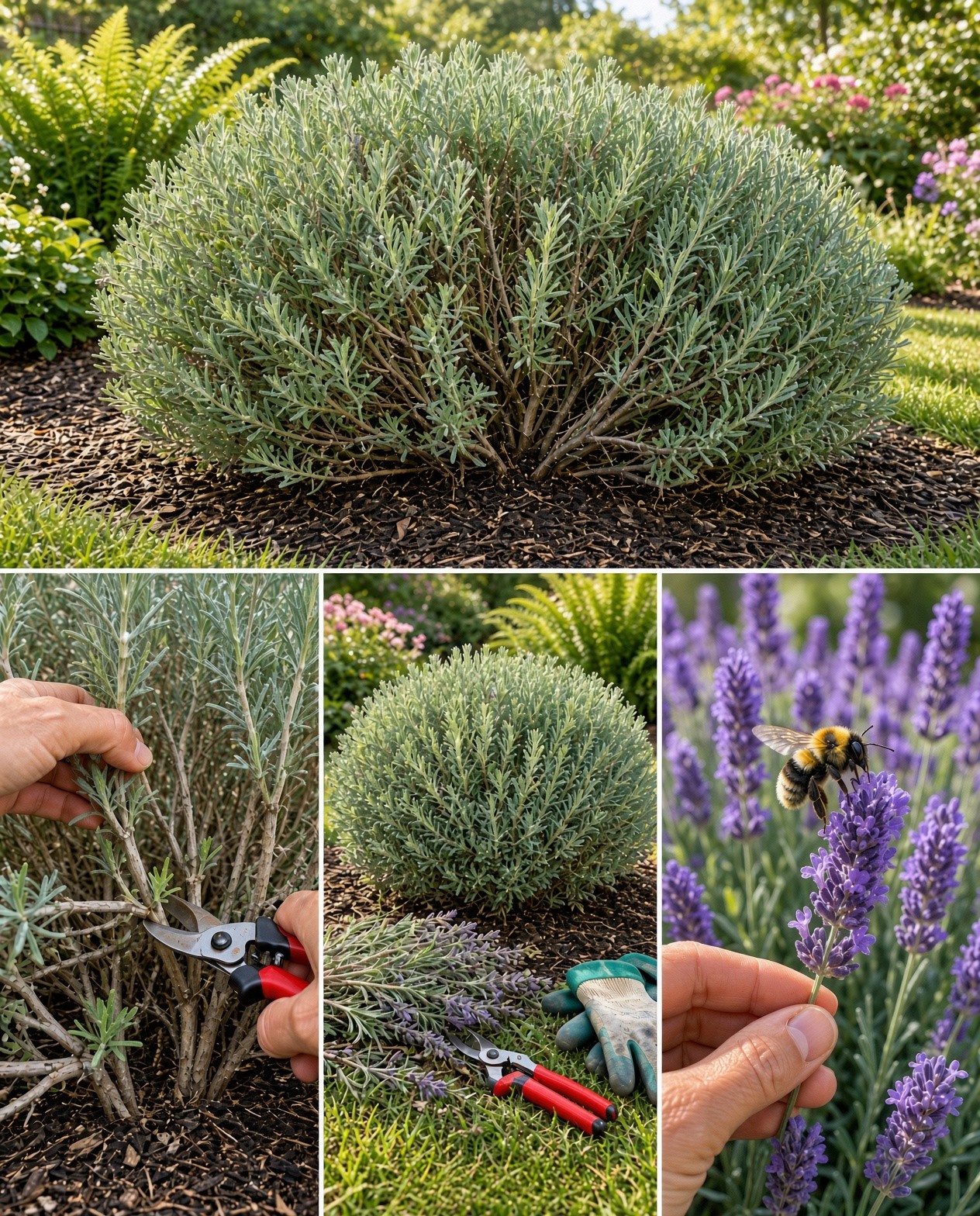
Lavender can become open, leggy, and woody as it ages, especially when it is not trimmed regularly. The key is to shape the plant while healthy leafy growth remains—not to wait until it is mostly bare and then cut it back hard.
Some woody growth at the base is normal because lavender is a woody subshrub. The aim is to keep the plant compact, flowering, and covered with healthy foliage while avoiding pruning cuts that leave only old, leafless stems.
1. Why lavender becomes woody
Lavender is a small woody shrub, so a brown base is normal as it matures. The problem is when leafy growth retreats to the ends of long branches, leaving the center open and the plant floppy. Regular, moderate trimming helps preserve a compact shape, but it cannot make every old bare stem grow new leaves.

2. Start shaping before it becomes bare
Do not wait until lavender is large and mostly woody before pruning. Once established and growing well, trim it each year to keep the outline rounded and encourage branching in leafy parts. Small, timely trims are safer than one drastic cut into old wood.

3. Cut only where green growth remains
Before making a cut, look below it for healthy leaves or fresh shoots. Lavender does not reliably sprout again from old, leafless wood, so cutting deep into a bare stem can leave a permanent gap. Shorten leafy stems conservatively and keep green growth below the cut.

4. Remove dead tips selectively
Use clean, sharp pruners to remove dead flower stalks and clearly dead or damaged tips. Avoid shearing the shrub down to brown, leafless branches. If only a few stems are dead, remove those selectively and leave healthy sections intact.

5. Give lavender full sun
Lavender generally grows more compactly in a sunny position. Too much shade can lead to stretched stems, sparse flowering, and an open shape. Choose a site with around six or more hours of direct sun when possible, considering your climate and lavender variety. Pruning alone will not correct a shady location.

6. Avoid rich soil and excess fertilizer
Lavender is adapted to relatively lean, well-drained soil. Heavy feeding, particularly with high-nitrogen fertilizer, may encourage soft leafy growth rather than a sturdy, compact plant. Unless a soil test or clear deficiency suggests otherwise, avoid routine heavy fertilizing and concentrate on sunlight and drainage.

7. Keep roots from staying wet
Persistently wet soil can damage lavender roots and cause sections of the plant to decline. Use well-drained soil, keep the crown clear of wet mulch, and avoid frequent watering once established. If foliage suddenly browns or branches collapse, check soil moisture and drainage before adding water.

8. Prune after flowering at the right time
For many English lavenders and lavandin cultivars, a light trim after the main flowering period helps remove spent flower stalks and maintain a rounded mound. Timing varies with climate and variety; in colder regions, avoid a severe late-season cut. Keep routine cuts within leafy growth.

9. Replace very old, bare plants when needed
If most of the plant is leafless wood, the center has split open, and green growth remains only at the branch tips, major rejuvenation may be unrealistic. Do not cut the whole shrub back to bare stumps. Consider taking cuttings from healthy young shoots and replacing the old plant in a sunny, well-drained location.

A simple seasonal routine
After the main flowering period, remove spent flower stalks and lightly shape the leafy outline if the timing suits your climate and variety. In spring, remove winter-damaged tips and tidy uneven growth, again avoiding cuts into bare wood. Adjust the routine to local frost dates and the lavender type you grow.
Final thoughts
Consistent, moderate pruning is safer than a drastic rescue cut. Pair it with full sun, excellent drainage, restrained feeding, and sensible watering. If an old plant has become almost entirely bare wood, replacement may be more successful than trying to force new growth from leafless stems.
Gardening note: General lavender-growing guidance from the Royal Horticultural Society recommends annual trimming after flowering and avoiding cuts into old woody stems.