
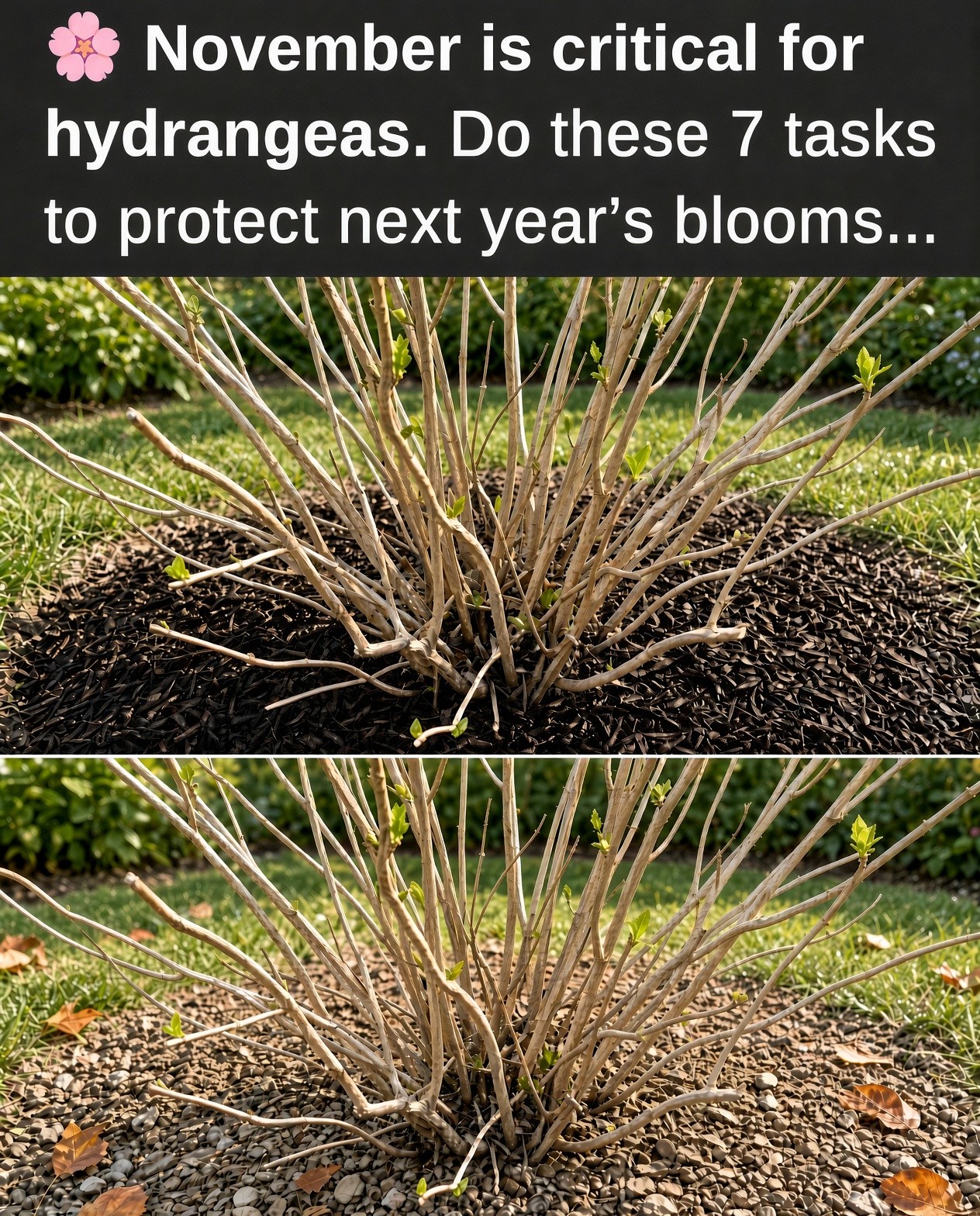
As autumn gives way to winter, a few careful hydrangea tasks can protect roots and flower buds for the next growing season. Focus on moisture, mulch, disease cleanup, and knowing when not to prune.
November hydrangea care is less about forcing growth and more about helping the shrub enter winter in good condition. The right approach depends on the type of hydrangea you grow and how cold your local winters become. Some varieties form next year’s flower buds on existing stems, so a heavy autumn trim can remove the blooms you hope to enjoy.
1. Identify Your Hydrangea Before Pruning
November is a month for protecting hydrangeas, not automatically cutting them back. Bigleaf, mountain, and oakleaf hydrangeas usually flower on old wood: next season’s flower buds are carried on stems that grew earlier in the year. Cutting those stems now can remove many of next summer’s blooms. Panicle and smooth hydrangeas flower on new wood, so they are generally more forgiving about pruning, but major shaping is usually best saved for late winter or early spring. Some reblooming cultivars flower on both old and new growth. If you do not know the cultivar, leave healthy stems in place and remove only clearly dead, diseased, or broken material. Check the plant label or ask a reliable local nursery if you need help identifying it.

2. Preserve Old-Wood Stems and Flower Buds
Bare-looking branches can still hold next year’s flower buds. In November, avoid shortening healthy stems on old-wood varieties, even if the shrub looks untidy. Dried flowerheads add winter interest and may provide a little protection to the buds immediately below them. If a branch is broken, diseased, or unquestionably dead, remove it with clean, sharp pruners. When you are unsure whether a stem is alive, wait until spring growth begins rather than guessing now. The safest fall pruning rule is simple: make only essential cuts and leave structural pruning for the appropriate season.

3. Check Soil Moisture Before the Ground Freezes
Cooler weather reduces water loss, but hydrangea roots should not enter winter completely dry. Check the soil during extended dry spells. If the soil a few inches below the surface feels dry, water slowly and deeply on a mild day so moisture reaches the roots. Newly planted shrubs and container hydrangeas may need closer monitoring than established plants. Do not water automatically every week: rainfall, soil type, drainage, wind, and temperature all affect how quickly the ground dries. Heavy, saturated soil can deprive roots of oxygen and encourage root problems. Stop watering when the ground is frozen.

4. Remove Diseased Leaves and Garden Debris
A little autumn cleanup can help reduce problems next spring. Gather fallen leaves that show clear signs of leaf spot, powdery mildew, or other disease, and dispose of them according to local garden-waste guidance. Do not leave badly infected foliage piled under the shrub, where pathogens may persist. Healthy leaves do not all need to be removed; a thin layer of ordinary leaf litter can contribute organic matter and shelter beneficial wildlife. The goal is to remove diseased material and thick, wet mats—not to strip the soil bare. Clean pruning tools after cutting diseased stems.

5. Refresh Mulch Around the Root Zone
Mulch helps moderate soil-temperature changes, conserve moisture, and protect shallow roots during cold weather. In November, top up the existing layer if needed with shredded bark, leaf mould, pine bark, or another suitable organic mulch. Around 2–3 inches (5–8 cm) is often sufficient, adjusted for local conditions and the material used. Spread mulch over the root zone rather than piling it against the main stems. Leave a small clear gap around the crown to reduce persistent dampness and rot. If the ground is waterlogged, prioritize drainage rather than adding material that holds more moisture against the base.

6. Protect Vulnerable Buds in Cold-Winter Areas
Hydrangeas that flower on old wood may lose their buds during severe winter cold, especially in exposed gardens or places where temperatures fluctuate sharply. If your bigleaf or mountain hydrangea has repeatedly suffered winter dieback, consider a breathable protective structure after the plant is dormant and its leaves have fallen. A wire-mesh cylinder around the shrub can be loosely filled with dry leaves to insulate the stems. Keep the leaves airy and avoid crushing branches. Horticultural fleece can help during a short cold snap. Avoid wrapping a plant tightly in plastic, which can trap moisture and heat. Protection reduces risk but cannot guarantee every bud survives extreme weather.

7. Give Container Hydrangeas Extra Attention
Hydrangeas in pots are more exposed to cold than shrubs planted in the ground because their roots have less surrounding soil for insulation. Before a hard freeze, move a container to a sheltered, unheated garage, shed, or protected spot if suitable for your climate. A dormant hydrangea generally does not need a warm living room; the goal is to reduce extreme cold while allowing it to rest. Ensure the pot has drainage holes and excess rainwater can escape. Raise it slightly on pot feet or wooden blocks if water collects underneath. Check compost occasionally and water sparingly if it becomes very dry, choosing a mild day.

8. Avoid Late Feeding and Unnecessary Disturbance
By November, most hydrangeas are slowing down or dormant, so regular feeding is usually unnecessary. Avoid high-nitrogen fertilizer that could encourage soft new growth at the wrong time of year. Instead, concentrate on protecting roots, managing moisture, and keeping the plant healthy until growth resumes in spring. A light top-dressing of mature compost may be useful in some gardens, but it is not a substitute for good drainage or correct pruning. Avoid unnecessary transplanting or hard renovation when soil is cold or waterlogged. Make a note of the cultivar and its performance this year so you can plan pruning and feeding at the right time next season.

9. Make a Simple Winter-Ready Checklist
Before you finish your November hydrangea care, check that healthy old-wood stems are intact, diseased fallen leaves are cleared, the soil is moist but not waterlogged, and mulch covers the root zone without touching the stems. Decide whether a container needs a sheltered position and whether a vulnerable shrub would benefit from a breathable leaf cage. Then leave the plant to rest. Hydrangeas do not need constant intervention during dormancy, and too much pruning or feeding can do more harm than good. In late winter or early spring, reassess the shrub, remove winter-damaged wood when it is clear what has survived, and prune according to its type.

Frequently Asked Questions
Should I prune hydrangeas in November?
Usually, avoid major pruning. Bigleaf, mountain, and oakleaf types often carry next year’s buds on old stems. Remove only clearly dead, diseased, or broken growth.
Should I cut off dried flowers?
You can leave them through winter for seasonal interest. If you remove them, cut only the flowerhead and avoid damaging buds on old-wood varieties.
How much mulch should I use?
About 2–3 inches (5–8 cm) is a useful general guide. Keep mulch a few inches away from the main stems.
Should I water hydrangeas in November?
Water during dry periods while the soil is unfrozen, especially for new shrubs and pots. Avoid saturated soil and stop when the ground freezes.
Do all hydrangeas need winter protection?
No. It depends on the species, cultivar, local temperatures, and exposure. Old-wood types in cold or windy locations are often most vulnerable.
Final Thoughts
Preparing hydrangeas for winter does not require a long list of complicated jobs. In November, preserve healthy stems, keep the root zone from drying out, clear diseased foliage, refresh mulch carefully, and give vulnerable plants suitable protection where local winters demand it. Container plants may need a sheltered location, while established shrubs in mild climates may need very little beyond sensible cleanup.
Most importantly, match your care to the hydrangea you grow. Protecting old-wood buds and avoiding unnecessary pruning are two of the simplest ways to improve the chances of a beautiful display next year. Once the shrub is settled for winter, let it rest and revisit pruning decisions in late winter or spring.