
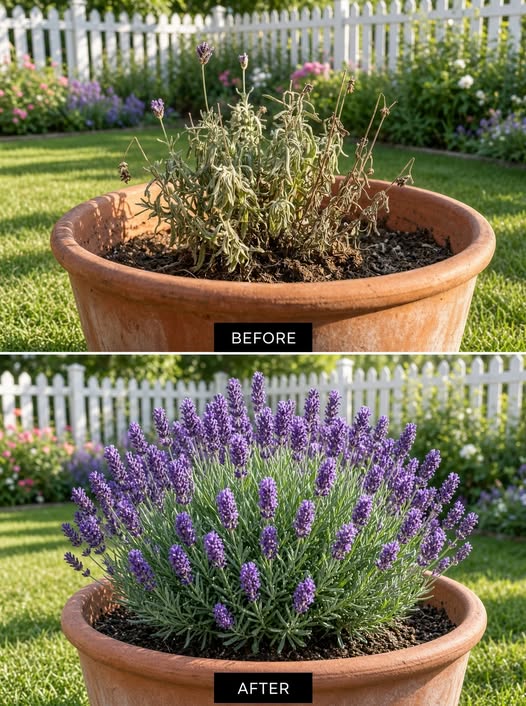
Yellow leaves, drooping stems, brown patches, or a plant that suddenly looks lifeless can be worrying. Before replacing your lavender, check its roots, drainage, light, and pruning history. The right response depends on what is causing the decline.
Lavender is adapted to sunny conditions and relatively dry, well-drained soil. It can suffer from drought, winter damage, or disease, but persistently wet roots are a particularly common problem. These steps can help you identify likely causes and decide what to do next.
1. Check the watering first
Lavender is drought-tolerant once established, but it struggles when its roots stay wet. Yellowing leaves, drooping stems, and brown growth near the base can indicate excess moisture or root trouble. Before adding more water, check the soil several centimeters below the surface. If it is still damp, pause watering and investigate drainage rather than following a fixed daily schedule.

2. Improve drainage around the roots
Poor drainage is one of the most common reasons lavender declines. Heavy soil can hold water around the crown and deprive roots of oxygen. In a garden bed, consider raising the planting area or moving lavender to a naturally free-draining spot. In a pot, make sure the container has open drainage holes and never sits in a saucer full of water. Do not try to fix waterlogged soil simply by adding more water or fertilizer.

3. Give lavender enough sun
Lavender generally needs a sunny position and good air circulation. In shade, growth may become weak and flowering can diminish; in crowded, humid conditions, foliage may remain damp for too long. If the plant is in a shaded corner, consider relocating it during suitable weather. Aim for a position with several hours of direct sunlight and enough space around the plant for air to move freely.

4. Remove dead or diseased stems carefully
Use clean, sharp pruners to remove stems that are clearly dead, broken, or diseased. Work gradually and inspect the plant as you go. Avoid cutting all the way down into old, leafless woody growth: lavender often produces little or no new growth from bare old wood. If you are unsure whether a stem is alive, scratch a tiny patch of bark; green tissue beneath suggests it may still be living.

5. Look for green growth before deciding it is lost
A lavender plant can look rough after winter, heat stress, or an extended wet spell yet still have living shoots. Check the lower stems and the crown for fresh green growth. If some sections are alive, remove only the dead portions and give the plant time to respond after conditions improve. If the crown is soft, dark, and rotting, or the roots are extensively damaged, recovery may be unlikely.

6. Inspect the root ball if the plant is in a pot
For a severely declining potted plant, gently slide it out of the container and inspect the roots. Healthy roots are generally firm; roots that are dark, mushy, or foul-smelling may have rotted. Trim only clearly dead roots with clean tools and repot if enough healthy roots remain. Choose a pot with drainage holes and a free-draining mix intended for Mediterranean herbs or similar plants.

7. Repot using a free-draining mix
If the existing potting mix stays wet for days, repotting may help. Use a container with drainage holes and a gritty, free-draining medium rather than dense garden soil. Set the crown at the same level it was growing before, firm the mix gently, and water enough to settle the roots. After that, allow the mix to dry somewhat between waterings. Do not leave the pot standing in runoff.

8. Water according to conditions, not habit
Newly planted lavender needs careful watering while roots establish. After establishment, it usually needs much less frequent irrigation than moisture-loving perennials. Water deeply when the root zone has dried, then let excess water drain away. Adjust for heat, rainfall, container size, and soil type; a plant in a small pot can dry much faster than one planted in the ground. Avoid keeping the soil continuously moist.

9. Know when replacement is the kinder option
If most stems are brittle and brown, the crown has rotted, and there is no living growth near the base, the plant may not recover. Replacing it can be more successful than repeatedly watering or feeding it. Choose a variety suited to your climate, plant it in full sun, and prioritize drainage from the beginning. Healthy lavender often starts with the right location rather than a complicated rescue treatment.

How to prevent the problem from returning
Plant lavender in a sunny spot with fast-draining soil and avoid overfeeding it. Give new plants water while they establish, but do not keep mature plants constantly damp. In containers, use pots with drainage holes and empty any saucer after watering. Prune lightly and regularly rather than cutting deep into old, bare wood.
Keep in mind that no single symptom proves the cause. Yellow leaves can follow overwatering, drought, cold damage, or root injury. If the plant continues to decline despite improved conditions, consult a local extension service or garden specialist, especially if you suspect a disease.
Final thoughts
The fastest route to saving lavender is usually diagnosis before treatment. Check soil moisture, inspect drainage, provide adequate sunlight, and remove only clearly dead growth. If the crown and roots are still healthy, the plant may recover as growing conditions improve. If root rot has destroyed most of the root system, replacing the plant and correcting the site is often the more reliable long-term solution.