
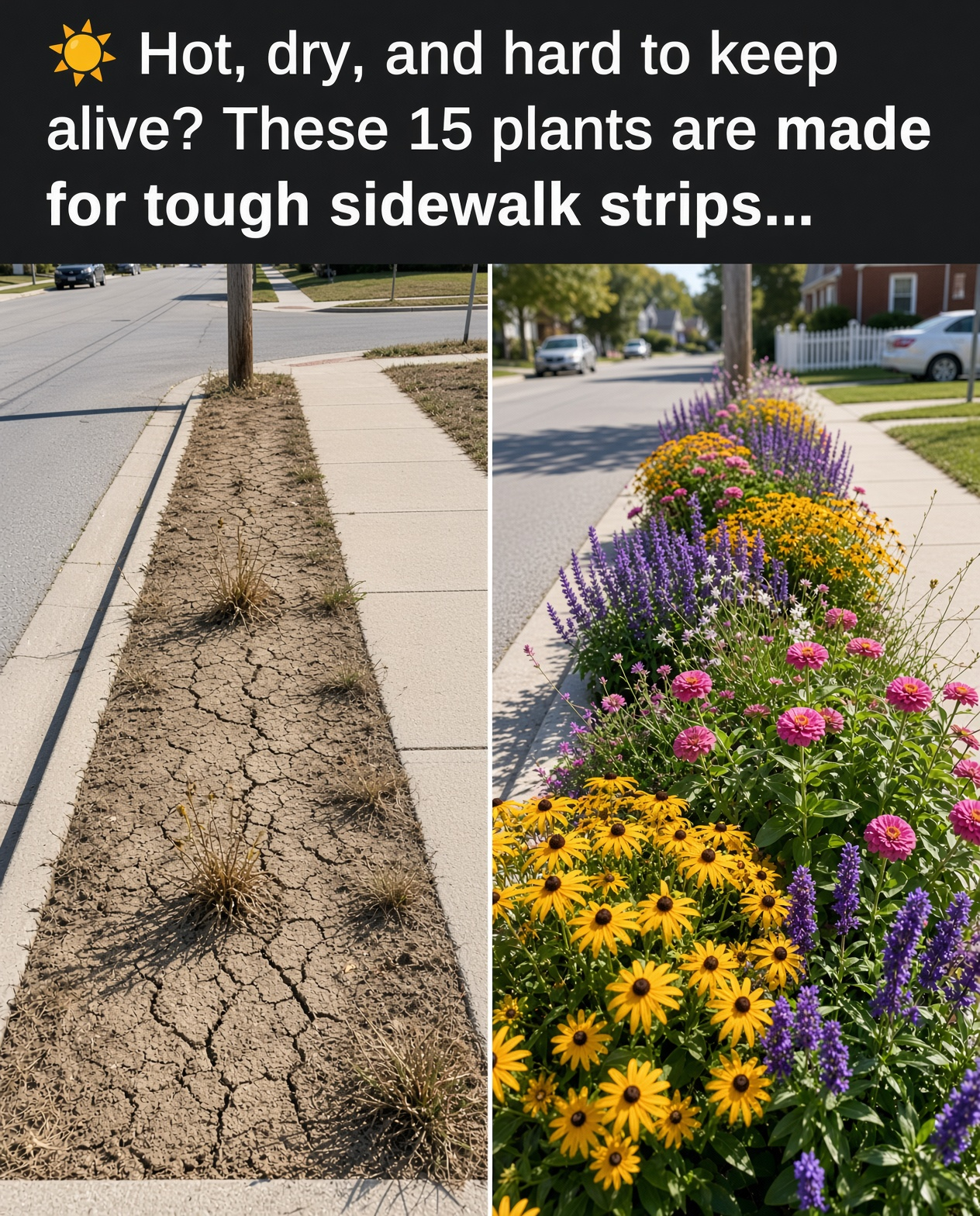
The narrow strip between a sidewalk and the street can be one of the toughest places to grow a garden. Hot pavement reflects sunlight, soil is often compacted, rainfall may run off quickly, and winter road salt can damage delicate plants.
Fortunately, the right plants can transform this difficult space into a colorful, low-maintenance garden. Drought-tolerant flowers, compact groundcovers, and sturdy ornamental grasses can soften the hard edges of a driveway or sidewalk while attracting pollinators.

What to Consider Before Planting a Sidewalk Strip
Before choosing plants, observe how much sunlight the strip receives, how quickly the soil dries, and whether water collects after rain. Also check local rules concerning planting near roads, sidewalks, utility lines, and intersections.
Choose plants that stay within the available space and won’t obstruct pedestrians or drivers. Contact your local utility-marking service before digging, and remember that plants need regular watering while their roots establish, even if they become drought-tolerant later.
1. Yarrow (Achillea millefolium)

Yarrow is a resilient perennial that performs well in sunny gardens with relatively dry, well-drained soil. Its flat clusters of tiny flowers attract bees and other beneficial insects, while its finely divided leaves provide texture throughout the growing season.
Once established, yarrow can tolerate dry spells and less-than-perfect soil. White is common in the species, while selected cultivars offer shades of yellow, pink, and red.
Growing tip: Choose a compact cultivar if space is limited. Some yarrow spreads through underground stems and self-seeding, so remove faded flower heads if you want to limit unwanted seedlings.
2. Blanket Flower (Gaillardia)

Blanket flower brings bold red, orange, and yellow tones to a hot roadside planting. Its daisy-like blooms add color through much of summer, and the flowers provide food for pollinators.
This plant generally prefers full sun and soil that drains well. Established plants can handle dry conditions, but young transplants need regular watering as their roots develop.
Growing tip: Avoid planting blanket flower in a spot that remains soggy during winter. Good drainage is particularly important for long-term success.
3. Threadleaf Coreopsis (Coreopsis verticillata)

Threadleaf coreopsis produces cheerful yellow flowers above delicate, thread-like foliage. Its airy growth helps soften the look of concrete without creating a bulky shrub that overwhelms a narrow planting bed.
It grows well in sunny locations and can tolerate relatively lean soil once established. Regular watering during its first growing season helps it settle in and develop a strong root system.
Growing tip: If flowering slows and the plants begin looking untidy, trim them lightly after the main flush. This can encourage fresh foliage and additional blooms.
4. Butterfly Weed (Asclepias tuberosa)

Butterfly weed is a North American native perennial known for its brilliant orange flower clusters. It attracts butterflies and other pollinators and is a host plant for monarch butterfly caterpillars.
Its deep taproot helps established plants cope with dry weather. However, that root also makes mature plants difficult to move, so choose their location carefully.
Growing tip: Give butterfly weed full sun and well-drained soil. Avoid areas where water stands after heavy rain, as prolonged wetness can damage its roots.
5. Purple Coneflower (Echinacea purpurea)

Purple coneflower offers pink-purple petals surrounding a distinctive raised center. The blooms bring color to a roadside garden and attract bees and butterflies during summer.
Established plants tolerate some dry weather, although prolonged heat and drought can still affect flowering. Their seedheads can also provide food for birds when left standing after the petals fade.
Growing tip: Position taller plants away from intersections and driveways so they don’t block sightlines. Leave some seedheads for wildlife or remove them if you prefer a tidier appearance.
6. Black-Eyed Susan (Rudbeckia hirta)

Black-eyed Susan produces golden-yellow petals around dark brown centers, making it an easy way to brighten a sunny roadside bed. It works well in informal, prairie-inspired plantings and attracts pollinators.
Depending on the variety and climate, it may behave as an annual, biennial, or short-lived perennial. It often self-seeds, allowing new plants to appear in later seasons.
Growing tip: Water new plants regularly while they establish, then adjust watering to the weather. Remove unwanted seedlings before they become established.
7. Catmint (Nepeta)

Catmint combines aromatic gray-green foliage with long-lasting lavender-blue or purple flower spikes. Its rounded shape can soften the edge of a sidewalk, and its flowers attract bees.
Many catmint varieties tolerate heat and moderate drought once established. They prefer sunlight and soil that drains well rather than persistently wet ground.
Growing tip: After the first major flowering period, trim the plant back if it becomes floppy. Many varieties respond with fresh growth and another flush of blooms.
8. Creeping Thyme (Thymus serpyllum)

Creeping thyme is a low-growing groundcover suited to sunny, well-drained spaces. Its small leaves form a dense mat, while tiny pink or purple flowers add color during the blooming season.
Because it stays close to the ground, creeping thyme can be useful in narrow strips where tall plants would obstruct the view. Its foliage releases a pleasant herbal scent when brushed.
Growing tip: Avoid areas where water regularly puddles. A light trim after flowering can help maintain a neat, compact mat.
9. Sea Thrift (Armeria maritima)

Sea thrift forms tidy tufts of narrow, grass-like leaves topped with round pink or purple flower clusters. Naturally associated with exposed coastal environments, it can tolerate lean soil and some salt exposure.
This compact perennial is especially useful along the edge of a sunny planting strip where taller flowers might look out of proportion.
Growing tip: Plant sea thrift in a spot that drains quickly. Trim faded flower stems to keep the clumps looking tidy and potentially encourage another light flush of flowers.
10. Candytuft (Iberis sempervirens)

Candytuft creates a low evergreen mound covered in white flowers, usually in spring. Its compact form is useful when you want a neat planting that stays below the height of taller perennials.
It prefers full sun and well-drained soil. In colder climates, the foliage may become weathered during winter, but a suitable site helps the plant remain healthy.
Growing tip: Avoid heavy, waterlogged soil. A light trim after flowering can help preserve a dense shape without cutting deeply into old woody growth.
11. Little Bluestem (Schizachyrium scoparium)

Little bluestem is a North American native grass that brings upright texture and seasonal color to a sunny garden. Its blue-green summer foliage often changes to copper, bronze, or reddish tones in autumn.
Once established, it tolerates dry conditions and generally performs well in lean soil. Its stems can remain attractive through winter, adding movement and habitat for small wildlife.
Growing tip: Check the mature height of the variety before planting. Little bluestem can reach several feet tall, so place it where it won’t obstruct drivers’ views or pedestrians.
12. Daylily (Hemerocallis hybrids)

Daylilies are popular for their colorful trumpet-shaped flowers and arching foliage. Many established varieties cope well with summer heat and can tolerate periods of limited rainfall.
Modern clumping hybrids are generally better suited to managed garden strips than aggressively spreading plants. Flowering time and repeat-blooming ability vary by cultivar.
Growing tip: Choose a compact variety that fits the width of the bed. Remove spent flower stalks when needed, and check local recommendations before planting varieties known to spread aggressively.
13. Creeping Stonecrop (Phedimus spurius and Related Sedums)

Creeping stonecrop is a low-growing succulent groundcover with fleshy leaves that store moisture. Depending on the variety, foliage may be green, bronze, or reddish, and small flowers can appear during the growing season.
Stonecrops are useful for shallow, sunny beds where ordinary plants struggle. However, they still need suitable soil and occasional watering during long periods of extreme drought.
Growing tip: Avoid spots that remain soggy. Many creeping sedums spread readily, so trim or lift stems that grow beyond the intended planting area.
14. Hens and Chicks (Sempervivum)

Hens and chicks form attractive rosettes that spread by producing smaller offsets around the original plant. Their compact size and water-storing leaves make them suitable for sunny, rocky, well-drained spaces.
They work especially well in a narrow strip with shallow soil, provided water doesn’t collect around their roots. The rosettes come in different shades of green, red, and purple, depending on the cultivar and conditions.
Growing tip: Keep the soil on the dry side rather than watering frequently. An older rosette may flower and then die, while its surrounding offsets continue growing.
15. Hardy Ice Plant (Delosperma cooperi)

Hardy ice plant creates a spreading carpet of succulent foliage and vivid magenta flowers. It can bring intense color to hot, sunny spaces where other groundcovers may struggle.
It prefers full sun and sharply drained soil. Winter wetness can be more damaging than summer dryness, so the planting site matters as much as the plant choice.
Growing tip: Confirm that the variety is hardy in your local climate before planting. In colder or wetter areas, choose a more suitable groundcover rather than risking repeated winter losses.
How to Arrange Plants in a Sidewalk Strip
A successful roadside garden looks intentional rather than crowded. Instead of planting one of every species, repeat a few compatible plants in small groups. This creates a cohesive design and makes watering and maintenance easier.
- Low, colorful edge: Use creeping thyme or stonecrop along the front, with candytuft behind it and threadleaf coreopsis in the wider section.
- Pollinator-friendly planting: Combine butterfly weed, purple coneflower, and compact catmint in a sunny strip.
- Succulent garden: Group hens and chicks with creeping stonecrop in a dry, well-drained location.
- Seasonal texture: Use low groundcovers at the edges and place little bluestem toward the back, away from corners and driveways.
- Long-lasting color: Mix plants with different flowering periods so the strip doesn’t depend on one short burst of blooms.
Help New Plants Establish
Even drought-tolerant plants need attention during their first growing season. Water new transplants when the soil begins to dry, especially during hot weather. As roots grow deeper, gradually adjust watering to the plant’s needs and local rainfall.
Compacted soil can prevent roots from spreading. Loosen the planting area where appropriate, improve drainage if necessary, and avoid digging near underground utilities.
Use a thin layer of suitable mulch to help control weeds and conserve moisture, keeping it away from plant crowns. Most of the plants listed here do not require heavy fertilizing, especially when the soil is already reasonably fertile.
Final Thoughts
The strip between a sidewalk and the street doesn’t have to remain bare or covered with struggling grass. With careful plant selection, even a narrow space can become a colorful garden that supports pollinators and softens the surrounding pavement.
Start by matching plants to your sunlight, soil drainage, winter conditions, and available width. Give them a little extra care while they establish, then maintain the garden with occasional weeding, trimming, and watering during extended dry spells.
The best roadside garden isn’t necessarily the one with the most plants. It’s the one filled with species suited to the conditions and arranged so they can thrive without blocking sidewalks or road visibility.