
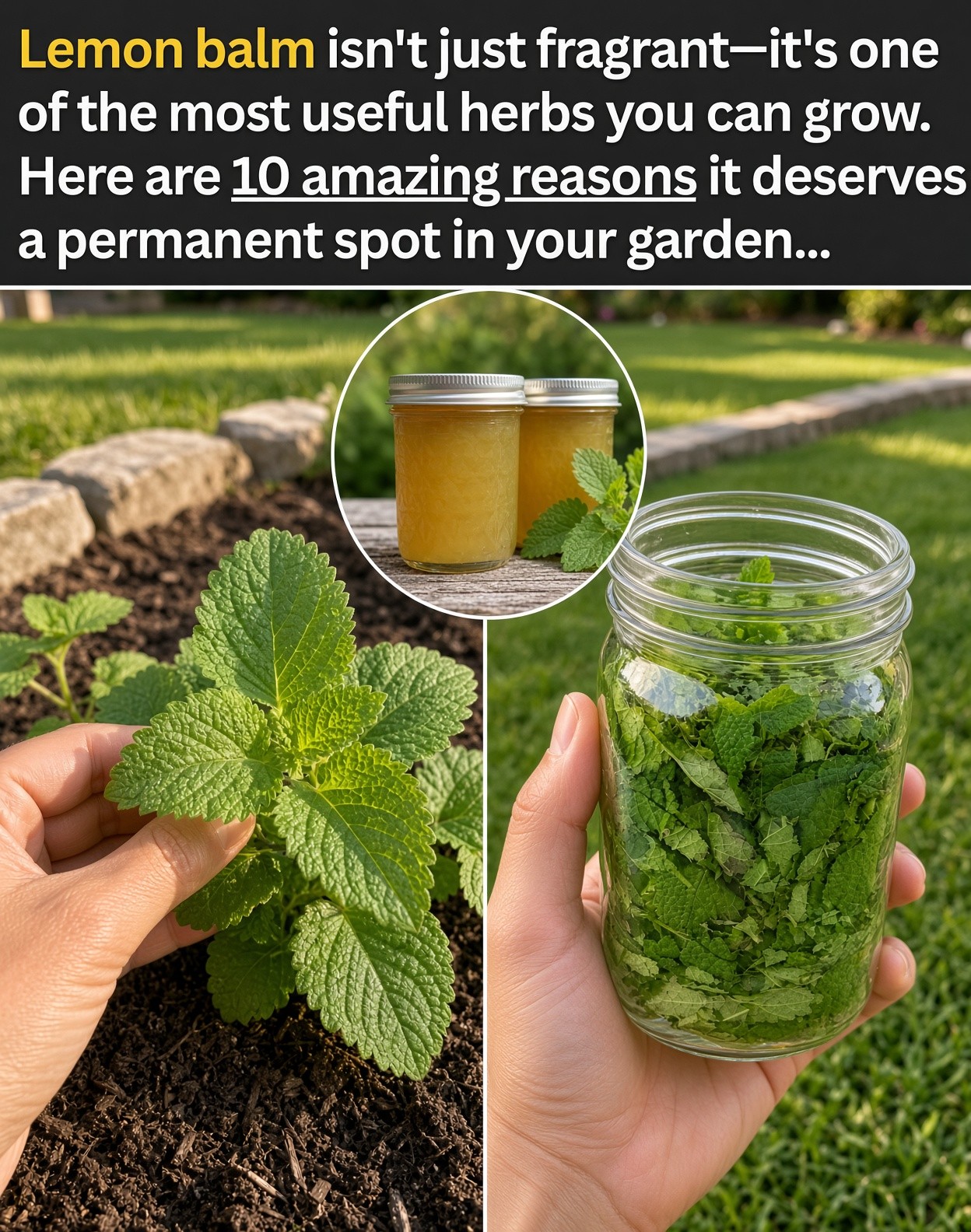
Lemon balm (Melissa officinalis) is one of those herbs that can earn its place in a garden for several different reasons. It has strongly scented green leaves, small pale flowers, useful culinary qualities and a growth habit that makes it approachable for beginners. The Royal Horticultural Society describes it as a vigorous, hardy perennial that grows in full sun or partial shade and can tolerate a range of soils as long as the site is not waterlogged. Its summer flowers also provide nectar for bees and other pollinating insects.

1. Lemon Balm Is Easy to Grow
One of the biggest advantages of lemon balm is that it does not demand complicated care. Established plants are hardy and can grow in full sun or partial shade. They prefer soil that drains reasonably well and stays moderately moist, but they are more forgiving than many delicate herbs. This makes lemon balm a useful choice for a first herb garden, a cottage-style border or a mixed planting area. Give it reasonable light, avoid permanently soggy ground and water young plants while they establish. Once settled, it generally needs much less attention.

2. It Returns Year After Year
Lemon balm is a herbaceous perennial, which means a healthy plant can return after winter rather than needing to be started from seed every season. Its leafy growth may die back as temperatures fall, but the plant survives below ground and can produce new shoots when conditions become favorable again. This perennial habit makes it especially useful for gardeners who want reliable herbs without replanting an entire bed each spring. Established clumps can also be divided in spring or autumn, giving you additional plants to place elsewhere or share.

3. The Flowers Feed Bees and Other Pollinators
Lemon balm is not only useful to people. Its small pale flowers produce nectar that attracts bees and other pollinating insects during the summer. The RHS specifically notes its value as a nectar source. Adding a clump to an herb garden or mixed border can therefore provide another flowering resource for visiting insects. For the best pollinator value, allow some stems to flower rather than cutting the entire plant back before bloom. If you do not want seedlings appearing around the garden, remove faded flower stems before they produce mature seed.

4. Fresh Leaves Have a Pleasant Lemon Fragrance
The leaves are one of the main reasons gardeners enjoy growing lemon balm. Crush or brush the foliage and a fresh lemon-like aroma is released. That fragrance makes the plant especially appealing beside paths, patios and areas where people regularly walk or work. Lemon balm does not need to be harvested every time you want to enjoy its scent. Simply growing it where you can occasionally touch the foliage can turn an ordinary herb bed into a more sensory garden.
.jpg)
5. Lemon Balm Is Useful in the Kitchen
The young leaves have a mild lemon flavor that works particularly well in drinks and fresh dishes. You can tear fresh leaves into fruit salads, use them to flavor cold water or herbal tea, or add finely chopped leaves to desserts. They can also complement savory dishes where a light citrus note is useful. For the strongest fresh flavor, harvest young shoots before or around flowering and use them soon after picking. Regular harvesting also encourages the plant to produce fresh leafy growth.

6. It Can Be Grown in a Container
There is an important practical reason to grow lemon balm in a pot: the plant can be vigorous. The RHS warns that lemon balm can spread and self-seed, so a container is a useful way to keep it contained. Choose a pot with drainage holes and use a good-quality growing medium. Place the container where the plant receives sun or partial shade, and water when the compost begins to dry. Container growing is particularly useful for small gardens, balconies and patios where you want fresh leaves without allowing the herb to occupy a large border.

7. It Is Simple to Propagate by Division
If you already have a mature lemon balm plant, you may not need to buy more. Established clumps can be lifted and divided into smaller sections, with each division replanted to create another plant. The RHS recommends division in spring or autumn. This is also a practical way to control an overcrowded clump. After dividing, replant the sections promptly, firm the soil around the roots and water them so they can settle into their new position. Division is particularly useful when you want several plants with the same characteristics as the original.
.jpeg)
8. Regular Cutting Keeps the Plant Manageable
Lemon balm can become large and untidy if it is left completely unmanaged. Cutting it back after flowering can encourage a fresh flush of foliage and can also reduce unwanted self-seeding. If you want flowers for pollinators, wait until flowering has finished before making a major cut. At the end of the growing season, old top growth can be removed according to local conditions, while leaving the plant’s roots undisturbed. The goal is not to keep the plant perfectly trimmed all year, but to prevent an established clump from becoming overcrowded or spreading farther than you intended.

9. You Can Preserve the Harvest
A large lemon balm plant can produce more leaves than you need at one time, so preservation is worthwhile. Fresh leaves are usually the most aromatic, but you can also dry leaves carefully for later use. Harvest healthy stems, remove damaged foliage and dry them in a clean, well-ventilated place away from intense direct sunlight. Once completely dry, store the leaves in an airtight container in a cool, dark cupboard. Freezing is another option when you want to preserve more of the fresh character of the herb. Label stored herbs with the harvest date so older material can be used first.

10. It Adds Fragrance and Texture to the Garden
Even if you never make tea or cook with it, lemon balm can still earn a place in the garden because of its foliage and fragrance. The softly textured green leaves work well in informal borders, herb beds and wildlife-friendly plantings. The plant can fill space quickly, making it useful where a leafy perennial is wanted, while its flowers add seasonal interest. Because it can spread, choose its position carefully or use a container. A spot near a path or seating area lets you enjoy the lemon scent whenever the leaves are brushed.

How to Grow Lemon Balm Successfully
For reliable growth, give lemon balm a sunny or lightly shaded position and avoid waterlogged soil. Keep newly planted specimens watered while they establish, then reduce watering once they are growing strongly. Harvest young shoots regularly if you want tender foliage, and cut plants back after flowering when you want to prevent self-seeding. If spreading is a concern, grow the herb in a container or keep an eye on seedlings around the parent plant. Dividing an old clump every few years can also help maintain a manageable size.

Final Thoughts
Lemon balm combines easy cultivation, fragrant foliage, useful leaves and nectar-rich flowers in one hardy perennial. It can be grown directly in the garden or contained in a pot, propagated by division and harvested repeatedly during the growing season. Its main drawback is also one of its strengths: it can grow vigorously and self-seed, so a little management keeps it where you want it. For gardeners looking for a productive herb that also contributes to a pollinator-friendly planting, lemon balm is a practical and attractive choice.
