
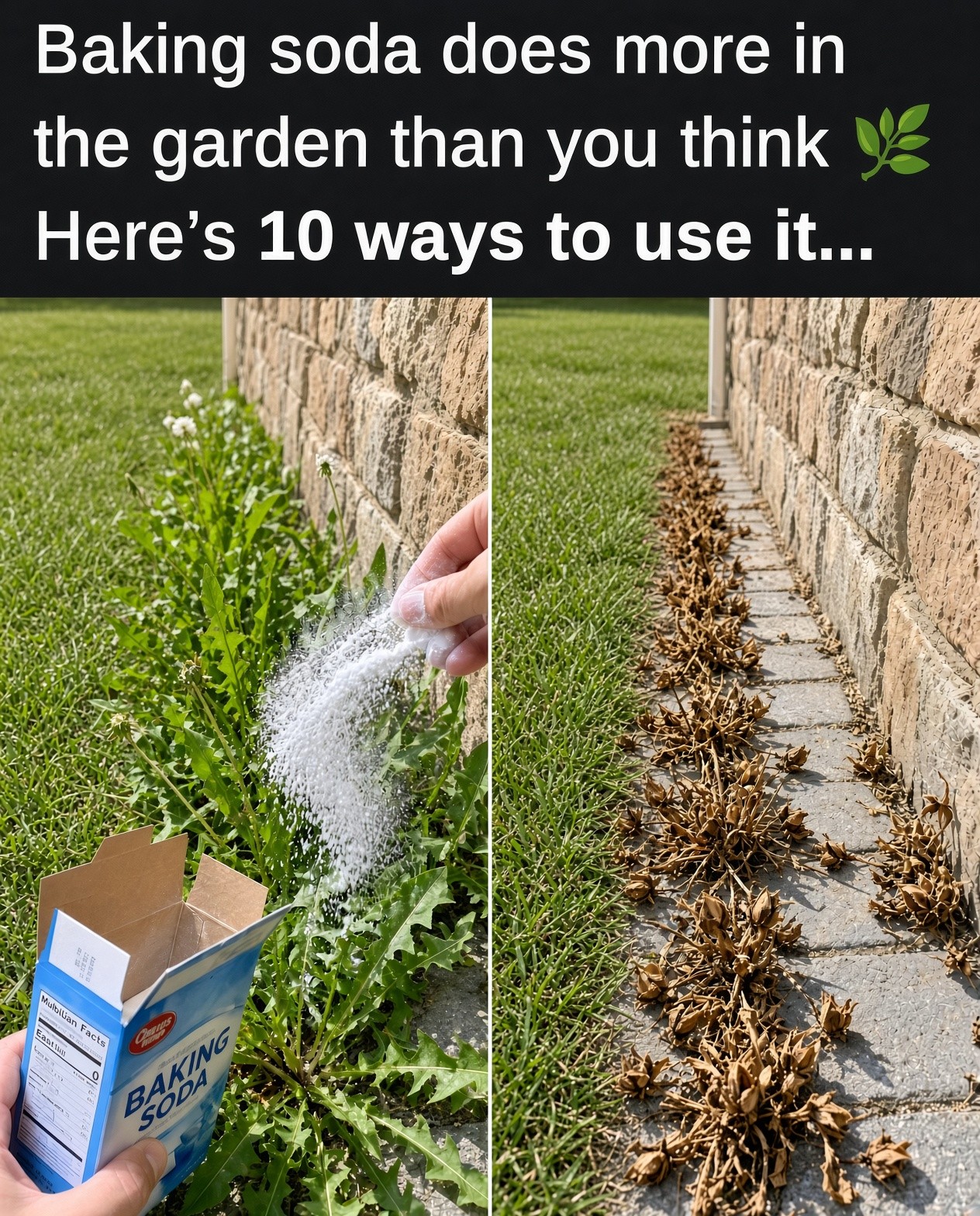
Baking soda is cheap, familiar, and often promoted online as a solution for everything from mildew and pests to weeds and soil problems. Some uses have a horticultural basis, but others are oversimplified or can harm plants when sodium bicarbonate is overused. Here is a practical, evidence-conscious look at what it can—and cannot—do.
Why Baking Soda Gets Attention in the Garden
Baking soda, or sodium bicarbonate, is inexpensive and easy to find, so it is often recommended as a homemade gardening helper. Some uses have a reasonable basis, especially certain foliar treatments for powdery mildew, but others are frequently overstated. Sodium bicarbonate adds sodium to the soil, and repeated use can affect soil chemistry and plant health. This guide separates practical uses from garden myths so you can use it carefully.
The original Tiny Garden Habit article lists ten uses, including leaf cleaning, fungal control, weed control, changing soil pH, compost odor, pests, tool cleaning, fruit rot, roses, and seed germination. Several of those claims need qualification. For example, soil pH should normally be changed only after testing, and baking soda should not be treated as a selective weed killer.

1. Clean Dust From Tough Plant Leaves
A very dilute baking-soda solution can be used as a simple cleaning aid for sturdy, smooth foliage, but plain water and a soft damp cloth are often enough for ordinary dust. The main benefit is physical cleaning rather than feeding the plant.
If you try baking soda on foliage, use a very weak solution, test it on a small area first, and rinse or wipe gently if residue remains. Avoid treating delicate, hairy, waxy, or sensitive leaves without checking that the plant tolerates the mixture.

2. Use Caution With Powdery Mildew Sprays
Baking soda has been studied as part of homemade powdery-mildew sprays. Colorado State University Extension notes an experimental baking-soda and lightweight horticultural-oil combination, while University of Minnesota Extension lists potassium bicarbonate among low-impact fungicides used to protect plants from powdery mildew. This does not mean ordinary kitchen baking soda is a guaranteed cure.
Cultural control remains important: improve airflow, avoid excessive nitrogen, choose resistant varieties when available, and remove severely infected material. Extension guidance also emphasizes that fungicides protect healthy tissue rather than magically removing established disease. If using any pesticide or labeled fungicide, follow its product label exactly.

3. Don’t Sprinkle Baking Soda Around the Garden as a General Weed Killer
The source article recommends sprinkling baking soda directly on weeds, but this should not be presented as a safe selective weed killer. Sodium salts can injure vegetation, and material that reaches desirable plants or accumulates in soil can cause problems.
For weeds growing between paving stones or in other places where nearby plants are not wanted, physical removal is usually safer for garden beds. Mulching, hand-weeding, cultivation, and improving competition from healthy plants are better long-term strategies than broadcasting sodium bicarbonate over soil.

4. Don’t Change Soil pH Without Testing
Baking soda is alkaline, so adding it to soil can raise pH, but that does not make it a good general-purpose soil amendment. Soil pH affects nutrient availability, and excessive sodium or alkalinity can create additional problems. Colorado State University Extension notes that high-pH soils can reduce availability of nutrients such as zinc, iron, and phosphorus.
If a plant is struggling because of soil chemistry, start with a soil test. Use an amendment recommended for the measured problem and the crop you are growing rather than guessing with household baking soda. This is particularly important for containers, raised beds, and small garden plots where repeated applications can concentrate salts.

5. Don’t Use It as a Routine Compost Deodorizer
Baking soda can neutralize some odors chemically, which is why the original article suggests adding it to compost. However, a healthy compost pile should not need repeated baking-soda applications. Persistent bad smells often indicate too much moisture, poor aeration, or an imbalance between wet nitrogen-rich materials and dry carbon-rich materials.
Instead, turn the pile, improve airflow, and add dry carbon materials such as dry leaves or shredded cardboard when appropriate. A well-managed compost pile should have an earthy smell rather than a strong rotten odor. Avoid repeatedly adding baking soda simply to cover up a management problem.

6. Be Skeptical of Baking Soda as a Pest Repellent
Dusting baking soda on foliage is sometimes promoted as a natural pest deterrent, but there is not strong general evidence that it is a reliable broad-spectrum insect control. More importantly, putting dry powder or concentrated mixtures on leaves can cause injury on sensitive plants.
Identify the pest first. Aphids, mites, caterpillars, scale, and fungal diseases require different approaches. Monitoring, hand removal, physical barriers, beneficial insects, and properly labeled products can be more reliable than treating every unexplained leaf problem with baking soda.

7. Baking Soda Can Help Scrub Garden Tools
This is one of the simplest low-risk household uses. Baking soda can act as a mild abrasive when mixed with a little water to make a paste. It can help loosen grime from metal hand tools before rinsing and drying them.
Tool cleaning is worthwhile, but baking soda does not replace proper disease hygiene. When moving between diseased and healthy plants, clean and disinfect tools using a method appropriate for the pathogen and tool material. Penn State Extension recommends cleaning tools between infected and healthy plants to reduce disease spread.

8. Don’t Rely on Baking Soda Alone to Prevent Fruit Rot
The source article suggests a baking-soda spray for fruit such as grapes and strawberries. Powdery mildew and some other diseases can sometimes be influenced by bicarbonate-based products, but fruit diseases have different causes and should be diagnosed before treatment.
Good garden hygiene, adequate spacing, airflow, careful irrigation, timely harvesting, and removal of diseased material are important first steps. Penn State Extension emphasizes keeping foliage and fruit as dry as practical and improving spacing to reduce disease pressure. If a fungicide is appropriate, use a product labeled for the crop and disease.

9. Be Careful With the Claim That It Makes Roses Bloom More
The original article suggests that a baking-soda soil drench can encourage fuller rose blooms. This is not a dependable general rose-care method. Roses need appropriate light, water, nutrition, pruning, and suitable soil conditions; adding sodium bicarbonate to otherwise healthy soil can do more harm than good if it shifts the soil chemistry unnecessarily.
For better flowering, focus on the basics first: adequate sunlight, good drainage, consistent moisture, appropriate nutrition based on soil and plant needs, and pruning at the correct time for the rose type. If a rose is underperforming, diagnose the growing conditions rather than assuming it needs an alkaline amendment.

10. Don’t Assume Baking Soda Speeds Every Seed’s Germination
Some gardeners experiment with alkaline solutions or other seed treatments, and the source article claims that baking soda helps break down seed coats. However, seed germination depends heavily on species, temperature, moisture, oxygen, and seed condition. There is no universal baking-soda soak that should be recommended for all garden seeds.
For seeds with hard seed coats, use the species-specific treatment recommended by a reputable seed or extension source. Some seeds benefit from scarification, soaking in plain water, stratification, or simply warm consistent conditions. Test any homemade treatment on a small number of seeds before risking an entire packet.

A Better Way to Use Baking Soda in the Garden
The safest approach is to treat baking soda as a limited household tool rather than a miracle garden product. Its best-supported gardening application in this context is as part of certain bicarbonate-based approaches to fungal disease, but even there, plant sensitivity and product instructions matter.
For soil, weeds, pests, compost, roses, and seeds, diagnose the actual problem first. A soil test is more useful than guessing at pH; mulching is more reliable than sprinkling powder everywhere; and species-specific seed guidance is better than a universal soak.

Important Safety and Plant-Health Tips
Never assume that because a substance is edible in the kitchen it is harmless at garden concentrations. Sodium can accumulate, and concentrated sprays can damage foliage. Always test homemade mixtures on a small area before broader use, avoid spraying during harsh heat or strong sunlight, and stop if leaf spotting, browning, or burn appears.
Do not mix baking soda with other garden products unless the label or reliable horticultural guidance specifically supports the combination. Colorado State University Extension describes its baking-soda/oil mildew recipe as experimental and recommends using it at your own risk. Labeled garden products have instructions for concentration, crops, timing, and safety that homemade recipes do not.

What to Use Instead When Baking Soda Isn’t the Right Tool
For weeds, start with hand-weeding, mulch, cultivation, or targeted methods appropriate to the location. For soil pH, test first and amend according to the result. For powdery mildew, combine cultural controls with an appropriate labeled treatment when needed. For pests, identify the pest before choosing a control.
These approaches may sound less exciting than a single kitchen ingredient, but they reduce unnecessary chemical changes in the garden and make it easier to solve the actual problem. Healthy spacing, correct watering, resistant varieties, sanitation, and good soil management remain the foundation of disease and pest prevention.

Final Thoughts
Baking soda can have a place in gardening, but it is not a universal cure-all. The most useful lesson is to understand what sodium bicarbonate can and cannot reasonably do. A cautious gardener uses it sparingly, tests first, avoids routine soil applications, and relies on evidence-based horticultural practices for persistent problems.
If you want to experiment, start small and observe the plant carefully. For important crops or valuable ornamentals, use university Extension recommendations and properly labeled products rather than relying on a viral home remedy. Good diagnosis will almost always save more plants than a one-size-fits-all recipe.
