
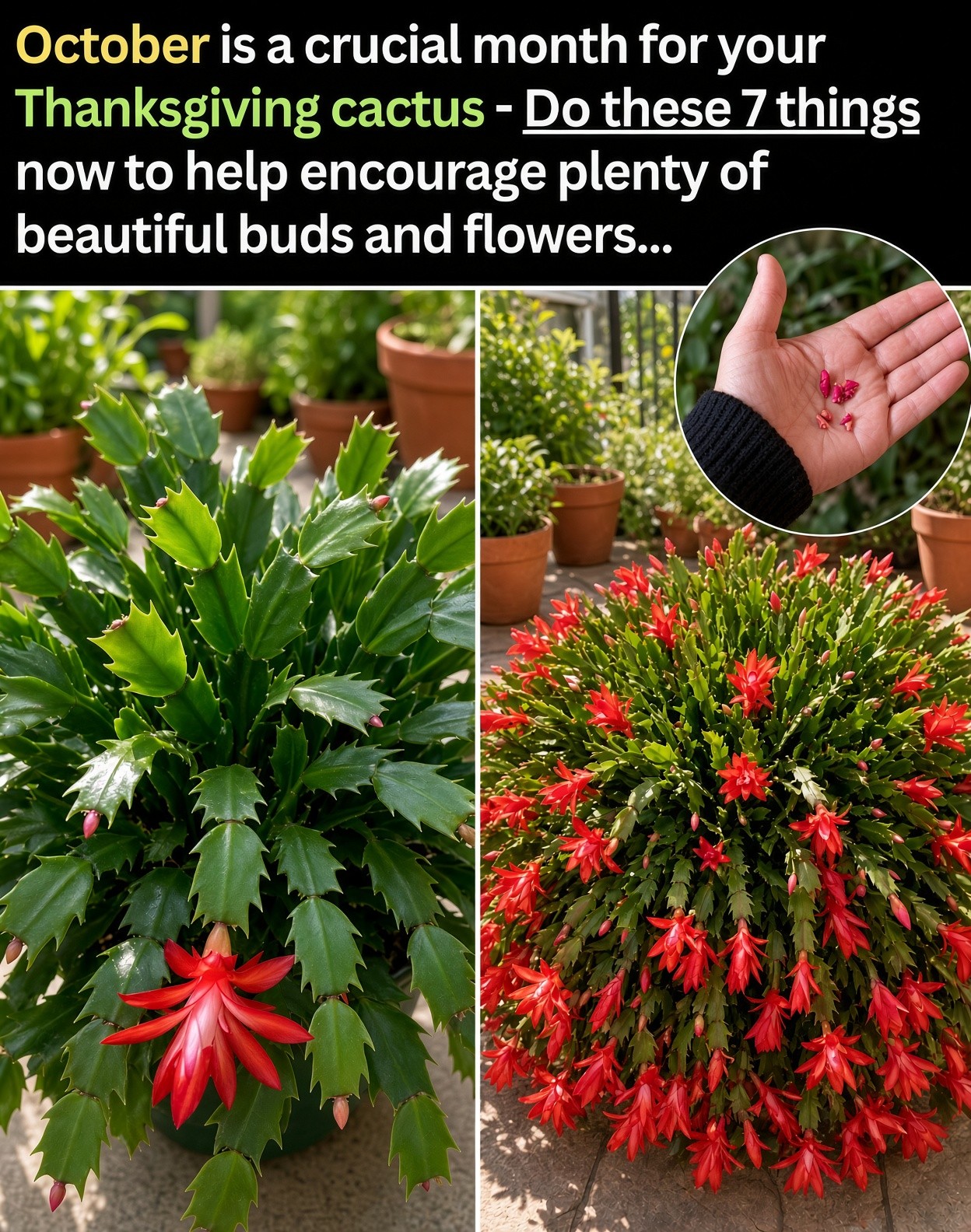
Why October Matters for a Thanksgiving Cactus
October is an important month for a Thanksgiving cactus because fall conditions help trigger flower-bud formation. The plant commonly sold as Thanksgiving cactus is Schlumbergera truncata, a forest cactus rather than a desert cactus. University Extension guidance explains that holiday cacti need shorter days and/or cool night temperatures to initiate buds, and that bright filtered light and well-drained soil are essential to health. University of Minnesota Extension notes that Thanksgiving and Christmas cacti can flower after roughly six weeks of short days, while Penn State recommends at least twelve hours of uninterrupted darkness during bud initiation. The practical lesson is simple: October care should focus on creating a predictable fall signal, avoiding extremes, and keeping the root system healthy.

1. Give It Long, Uninterrupted Nights
The most important October task is creating a reliable night period. Thanksgiving cactus responds to shorter days and longer nights, so artificial indoor lighting can interfere with bud formation. University of Minnesota Extension advises at least twelve hours of complete darkness every night for about six weeks when night temperatures are around 60–65°F, while Penn State similarly recommends twelve or more uninterrupted dark hours. Put the plant in a room that becomes naturally dark at night, away from lamps, bright hallway lights, television glow, or strong security lighting. You do not need to put the cactus in a closet if your home already provides a naturally dark room. What matters most is consistency. Give it bright filtered light during the day, then a stable dark period every night while buds are forming.

2. Let Fall Bring Cooler Nights
A drop in nighttime temperature can reinforce the flowering signal. University of Minnesota Extension recommends cool evening conditions around 55–65°F for holiday cacti and notes that plants are unlikely to bloom when nights stay above 65°F. Penn State also recommends cooler nights for holiday-cactus bud development. That does not mean exposing a Thanksgiving cactus to frost or a freezing window. It is a tropical forest cactus and should be protected from freezing temperatures, cold drafts, and sudden temperature shocks. A bright, sheltered room, enclosed porch, or protected location with cool but safe nighttime temperatures can work well. Avoid placing the plant beside a heater, radiator, or heating vent because rapid swings between hot and cold can stress the plant and contribute to bud drop.

3. Adjust Watering Without Letting It Go Bone-Dry
Thanksgiving cactus needs a different watering approach from a desert cactus. Its natural ancestors come from humid forest environments, and University of Minnesota Extension says holiday cacti need relatively moist soil for much of the year but cannot tolerate heavy, wet soil. In October, check the growing medium before watering rather than following a rigid weekly schedule. When the mix has dried sufficiently, water thoroughly from the top and allow excess water to escape through the drainage holes. Empty any water that collects in a saucer or decorative outer pot. Penn State also recommends watering thoroughly when the medium becomes dry. The goal is an even cycle of moisture and drying, not either extreme. A plant that is severely dry may become stressed, while a plant sitting in saturated soil is vulnerable to root rot.

4. Give It Bright, Filtered Daytime Light
Long nights do not mean the plant should spend all day in darkness. Thanksgiving cactus still needs light for photosynthesis and healthy growth. University of Minnesota Extension recommends bright but filtered light and warns that excessive direct sun can cause pale foliage, drought stress, or sunburn. During October, a bright window with gentle morning light or filtered daylight can be ideal. If the plant sits in a very dim room during the day, it may struggle even though the nights are long enough to encourage flowering. Try to create a clear contrast: bright, comfortable daytime light followed by complete darkness at night. Avoid moving the plant between dramatically different windows every few days. A stable location makes it easier to maintain both the light and temperature routine that flower-bud formation requires.

5. Reduce Fertilizer as Buds Begin to Form
October is not the month to push Thanksgiving cactus into a burst of leafy growth with heavy fertilizer. University of Minnesota Extension recommends balanced half-strength feeding during the active season and explains that holiday cacti can be affected by overfertilization while buds are developing. Penn State also recommends reducing feeding during fall and winter. If the plant has been growing strongly through summer, a gradual reduction or pause in regular feeding is more sensible than adding extra fertilizer in hopes of getting more flowers. Nutrients cannot replace the environmental signals the plant needs for flowering. Good light, cool enough nights, suitable darkness, and correct watering are more important. Once flowering is finished and the plant returns to active growth, resume an appropriate houseplant feeding routine.

6. Stop Moving It Once Buds Appear
Once tiny flower buds begin forming at the ends of the stem segments, consistency becomes especially important. Holiday cacti can drop buds when environmental conditions change abruptly. University of Minnesota Extension lists temperature changes, unsuitable watering, and poor environmental conditions among possible causes of bud drop; Penn State also notes that temperature extremes, lack of light, and watering problems can cause buds to fall. Keep the plant away from heating vents, cold drafts, doors that open directly to freezing air, and other locations with sudden temperature changes. Avoid turning the pot repeatedly or moving it from room to room just to find a “perfect” window. The best place is often the one where the plant can remain stable until flowering.

7. Check for Pests and Root Problems Before Blooming
October is a good time for a quick health inspection. Look between the segmented stems and around the base of the plant for scale insects, mealybugs, soft spots, or other signs of trouble. University of Minnesota Extension recommends checking holiday cacti for overall health and pests before bringing outdoor plants indoors. Also inspect the growing medium. A wilted plant is not automatically thirsty: if the soil is already wet, the real problem may be root damage from excessive moisture. Healthy stem segments should generally feel firm, while mushy tissue deserves attention. If pests are present, isolate the plant from other houseplants while you address the problem. If serious root rot or poor drainage is present, correcting that problem is more important than preserving an October flowering schedule.

8. Avoid Unnecessary Repotting in October
A Thanksgiving cactus that is preparing to flower usually does not need a larger pot simply because October has arrived. Penn State notes that holiday cacti like being somewhat pot-bound and recommends repotting after the blooming period rather than while the plant is actively flowering. Unnecessary repotting can disturb roots, change moisture conditions, and introduce new environmental variables during bud formation. If the container has good drainage and the plant is healthy, leave it alone. Repot sooner only when there is a genuine problem such as severe root rot, a broken container, or unusable drainage. When repotting is eventually necessary, use a slightly larger container and a well-drained potting mix, then give the plant time to settle.

9. Increase Humidity Without Keeping the Soil Waterlogged
Holiday cacti appreciate more humidity than many desert succulents. University of Minnesota Extension notes that these plants come from rainforest habitats and need relatively moist air and soil compared with typical desert cacti. If your home becomes dry in autumn because heating is running, place the plant in a naturally more humid room or group it with other plants. Penn State mentions light misting as one way to provide humidity, although good airflow and well-drained soil remain essential. Do not confuse humid air with wet roots. A constantly saturated pot is much more dangerous than moderately dry indoor air. A room humidifier can provide steadier moisture in very dry homes without leaving foliage or nearby surfaces damp for long periods.

10. Know What Thanksgiving Cactus Looks Like
Thanksgiving cactus and Christmas cactus are closely related and are often sold under the wrong common name. University of Minnesota Extension identifies Thanksgiving cactus as Schlumbergera truncata and Christmas cactus as Schlumbergera bridgesii. Thanksgiving cactus usually has more pointed, claw-like projections on the edges of its stem segments, while Christmas cactus generally has smoother, more rounded edges. That difference can help explain why one plant blooms earlier than another even when care seems identical. Both are holiday cacti with broadly similar flowering requirements, but exact bloom timing depends on species, hybrid, and growing conditions. Identifying the plant is useful when you are trying to understand its normal autumn behavior rather than assuming every holiday cactus follows the same schedule.

11. What to Do If Your Cactus Already Has Buds
If flower buds are already visible in October, the best response is usually to simplify the routine. Keep the plant in bright filtered daytime light, maintain an appropriate dark period, avoid sudden temperature changes, and water according to the actual condition of the potting mix. Do not start heavy fertilizer or repot merely because buds are present. Some bud loss can happen naturally, particularly when a plant has produced more buds than it can support, and University of Minnesota Extension notes that holiday cacti can sometimes self-prune excessive buds. The aim is not to manipulate the plant every day but to provide a stable environment while the buds expand. Cooler temperatures during bloom can also help flowers last longer.

12. Give the Plant a Stable Place Through Flowering
A successful October routine should continue into the weeks when flowers open. Keep the cactus away from cold drafts, heating vents, and abrupt changes in light or temperature. Water when the potting mix becomes dry enough to need it, but do not allow the plant to sit in water. Keep daytime light bright but filtered, and avoid harsh direct sun. Penn State recommends waiting until blooming has ended before repotting, and both Penn State and University of Minnesota Extension emphasize stable environmental conditions for better flowering. If your plant is in a good location, there is little benefit in chasing small changes from one window to another. A stable spot is usually more helpful than constant adjustment.

Final October Checklist for a Spectacular Thanksgiving Cactus Bloom
The October routine can be summarized in seven priorities: provide long, uninterrupted nights; allow safe cooler temperatures; water according to the potting mix; give bright filtered daytime light; reduce unnecessary fertilizer; avoid moving the plant once buds appear; and inspect for pests or root problems. Add two more habits for a smoother season: postpone unnecessary repotting and keep the plant away from sudden temperature changes. Thanksgiving cactus does not need to be treated like a desert cactus. It is a forest cactus that prefers filtered light, humidity, well-drained but not bone-dry soil, and a clear seasonal change in light and temperature. With consistent conditions, a healthy plant can reward you with a strong display of holiday flowers.
