
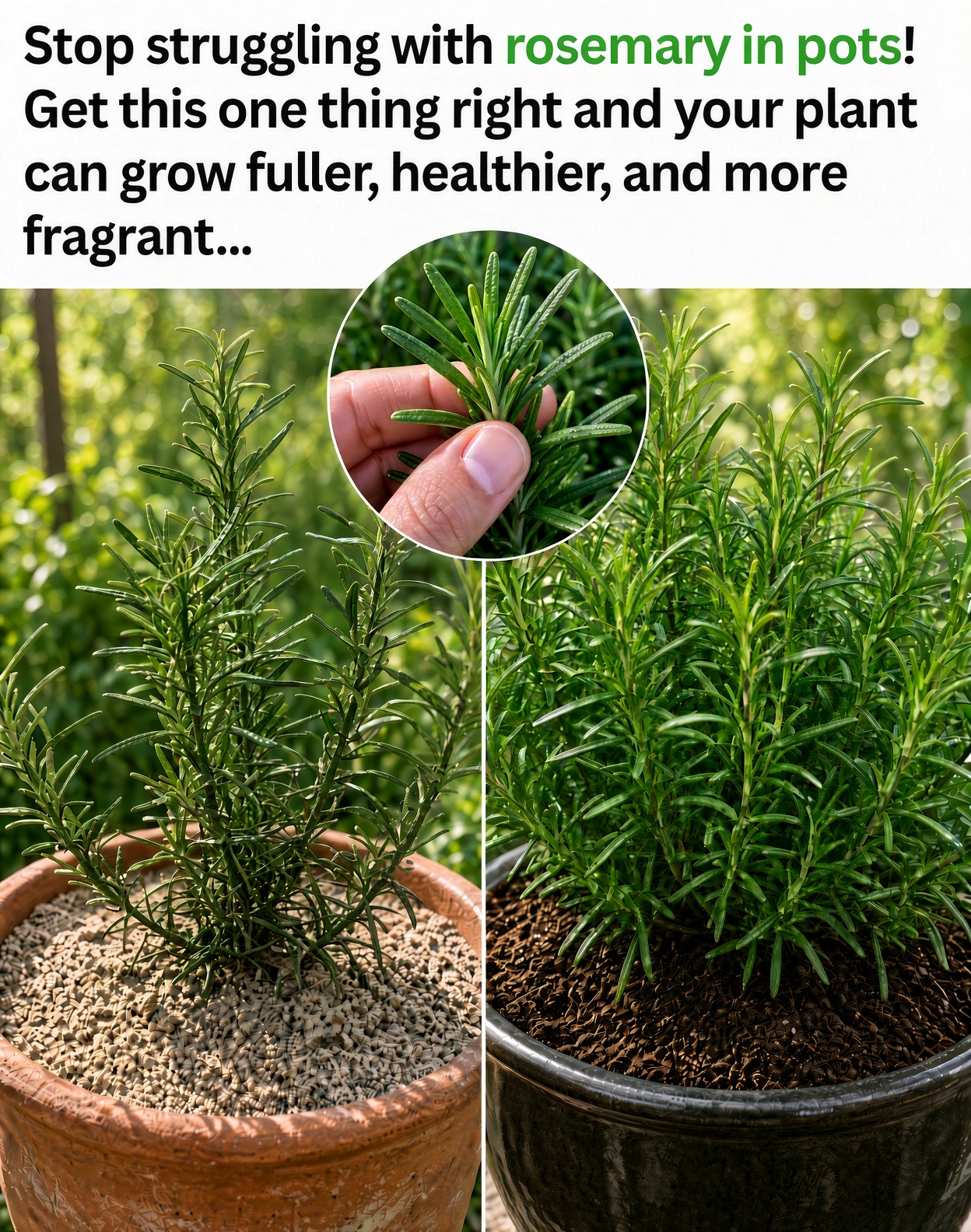

Rosemary is one of those herbs that seems as though it should be almost impossible to kill. It is naturally adapted to sunny Mediterranean conditions, tolerates dry periods, and can produce fragrant foliage for years.
Yet potted rosemary often struggles indoors and on patios. A plant that looked full and healthy at the garden center can quickly become brown, sparse, or weak after being brought home.
The problem is often not a lack of fertilizer. For container-grown rosemary, the growing medium and the amount of air around the roots can make a huge difference.
The simple trick is to create a much faster-draining potting mix by adding plenty of coarse material such as perlite. Combined with strong sunlight, careful watering, and sensible pruning, this gives rosemary the conditions it prefers.
The Main Trick: Give Rosemary a Fast-Draining Root Zone

Rosemary naturally grows in well-drained soils where water does not remain around its roots for long periods. A heavy potting mix that stays wet for days creates the opposite environment.
For a container, a useful approach is to combine approximately 60% quality potting soil with 40% coarse perlite or pumice. The result should feel noticeably lighter and more open than ordinary potting soil.
Perlite helps create larger spaces within the growing medium. Water can move through those spaces more easily, while air can occupy some of the pores after excess moisture drains away.
This is especially important for rosemary because constantly wet roots are much more troublesome than a short dry spell.
Why ordinary potting soil can cause trouble
Many general-purpose potting mixes are designed to retain moisture for plants that appreciate consistently damp soil. Rosemary has different preferences.
If the root zone stays wet for too long, roots can become stressed and vulnerable to rot. The plant may then show symptoms above the soil, including yellowing, wilting, browning, or gradual loss of foliage.
Improving drainage is therefore one of the first things to consider when a potted rosemary repeatedly struggles.
Give Rosemary Plenty of Direct Sunlight

Good soil cannot compensate for a lack of light. Rosemary is a sun-loving herb and generally performs best when it receives several hours of direct sunlight each day.
For an outdoor container, choose the brightest practical location. A sunny patio, balcony, terrace, or garden area can work well as long as the pot has adequate drainage.
Indoor rosemary is more difficult because windows can provide considerably less usable light than an outdoor position. A bright south- or west-facing window is often preferable to a dim room.
Watch the plant’s shape as well. Long, weak stems and widely spaced leaves can indicate that the plant is not receiving enough light.
Use the Soak-and-Dry Watering Method

One of the most common rosemary mistakes is giving the plant small amounts of water every day.
Frequent little sips can keep the upper layer damp without properly wetting the entire root ball. Instead, allow the soil to dry noticeably between thorough waterings.
When the pot needs water, soak the growing medium thoroughly until water begins flowing from the drainage hole. This ensures moisture reaches the entire root zone.
Then allow excess water to drain away completely.
Never leave the pot sitting in water
If your container sits inside a saucer, empty the saucer after watering. A pot that remains in standing water can stay wetter for much longer than rosemary prefers.
The exact watering interval will vary with temperature, sunlight, pot size, soil composition, and the season. Instead of watering because a certain number of days has passed, check the soil first.
Choose an Unglazed Terracotta Pot

Container material also influences how quickly the growing medium dries. Unglazed terracotta is particularly useful for plants that dislike prolonged wetness.
Unlike nonporous containers, terracotta can allow some moisture to move through the walls and evaporate. This can help the growing medium dry more evenly.
Choose a pot with a genuine drainage hole rather than relying on decorative containers without drainage. A pot around 10 to 12 inches wide can provide useful space for an established rosemary plant, although the ideal size depends on the plant you are starting with.
Do not automatically choose an enormous pot. An oversized container contains a larger volume of soil, which can remain wet for longer after watering.
Feed Rosemary Lightly

More fertilizer does not necessarily mean a healthier rosemary plant. Heavy feeding can encourage soft, excessive growth rather than the compact, aromatic plant most gardeners want.
Container rosemary can usually be maintained with relatively modest feeding. If the plant is actively growing and the potting mix is depleted, use a mild fertilizer according to its label directions.
There is little reason to repeatedly fertilize a struggling plant before correcting its light, drainage, and watering conditions.
Think of fertilizer as a supporting element rather than the main solution. A rosemary plant growing in the wrong soil and sitting in excess water will not be rescued by adding more nutrients.
How to Pot Rosemary for Stronger Growth
Step 1: Choose the container
Select a sturdy terracotta container with a good drainage opening. Make sure the hole is not blocked by compacted soil or debris.
Step 2: Make the airy soil mix
Combine roughly three parts quality potting soil with two parts coarse perlite. Mix thoroughly so the perlite is distributed throughout the root zone instead of forming one separate layer.
Avoid creating a thick layer of gravel or other material at the bottom of the pot as a substitute for good drainage. The drainage properties of the entire growing medium matter more than simply putting rocks underneath it.
Step 3: Remove the nursery plant carefully
Slide the rosemary from its original container and inspect the root ball. If roots are tightly circling the outside of the root ball, gently loosen some of the outer roots with your fingers.

Step 4: Position the plant correctly
Add some of the new potting mix to the container and place the rosemary in the center. Keep the top of the original root ball close to the appropriate soil level rather than burying the stem deeply.
Step 5: Backfill without compacting heavily
Fill the space around the root ball with the airy mix. Press gently enough to stabilize the plant, but do not compress the soil into a dense block.
Step 6: Water thoroughly
Give the newly potted rosemary a deep watering until excess water drains from the bottom. Then place it in its bright growing position and allow the excess moisture to escape.
Prune Rosemary to Make It Bushier

Even a healthy rosemary can become tall and woody if it is never trimmed. Regular harvesting can double as shaping, allowing you to keep the plant compact while collecting fresh sprigs for cooking.
Instead of picking individual needles from random parts of the plant, cut the tips of actively growing green stems.
Trim the soft green growth
Take a few inches from the end of a green stem, making the cut just above a pair of leaves. This leaves active growth points below the cut and encourages the plant to branch.
Regular light trimming can gradually turn a sparse young plant into a denser, more rounded specimen.
Do not cut aggressively into old wood
Be careful with mature, gray-brown stems. Rosemary does not reliably produce fresh shoots from every piece of old woody growth.
For that reason, avoid removing large amounts of the green growth all at once. Harvest and prune gradually, always leaving healthy foliage on the branches you want to retain.
Common Mistakes That Keep Potted Rosemary Small

- Watering every day: Rosemary prefers the soil to dry between thorough waterings.
- Using heavy soil: A dense medium can hold too much moisture around the roots.
- Keeping it in shade: Insufficient light can produce weak, stretched growth.
- Using a pot without drainage: Excess water needs a clear escape route.
- Overfertilizing: Constant feeding is unnecessary for this relatively lean-growing herb.
- Pruning into old wood: Removing too much mature woody growth can leave bare sections that recover slowly.
- Leaving water in the saucer: Standing water can keep the lower root zone excessively wet.
A Simple Routine for a Lush Potted Rosemary

The secret to a lush rosemary plant in a container is not complicated. Start with the root zone, then give the plant the environmental conditions it naturally prefers.
- Use a pot with an effective drainage hole.
- Choose an airy growing medium with plenty of coarse drainage material.
- Place the rosemary where it receives strong direct sunlight.
- Water deeply when the soil has dried sufficiently rather than giving daily sips.
- Empty standing water from the saucer.
- Feed lightly when active growth and soil conditions call for it.
- Harvest and prune the soft green tips regularly to encourage branching.
- Avoid cutting deeply into old woody stems.
Final Thoughts
Growing a lush rosemary plant in a pot is less about constant attention and more about creating the right environment from the beginning.
The most important improvement is excellent drainage. A mix containing plenty of coarse perlite or another suitable drainage material gives the roots more room for air while allowing excess water to leave the container quickly.
Pair that airy root zone with strong sunlight, careful soak-and-dry watering, a well-drained terracotta pot, modest feeding, and regular tip pruning. These simple habits can help your rosemary stay fuller, healthier, and much more productive throughout the growing season.