
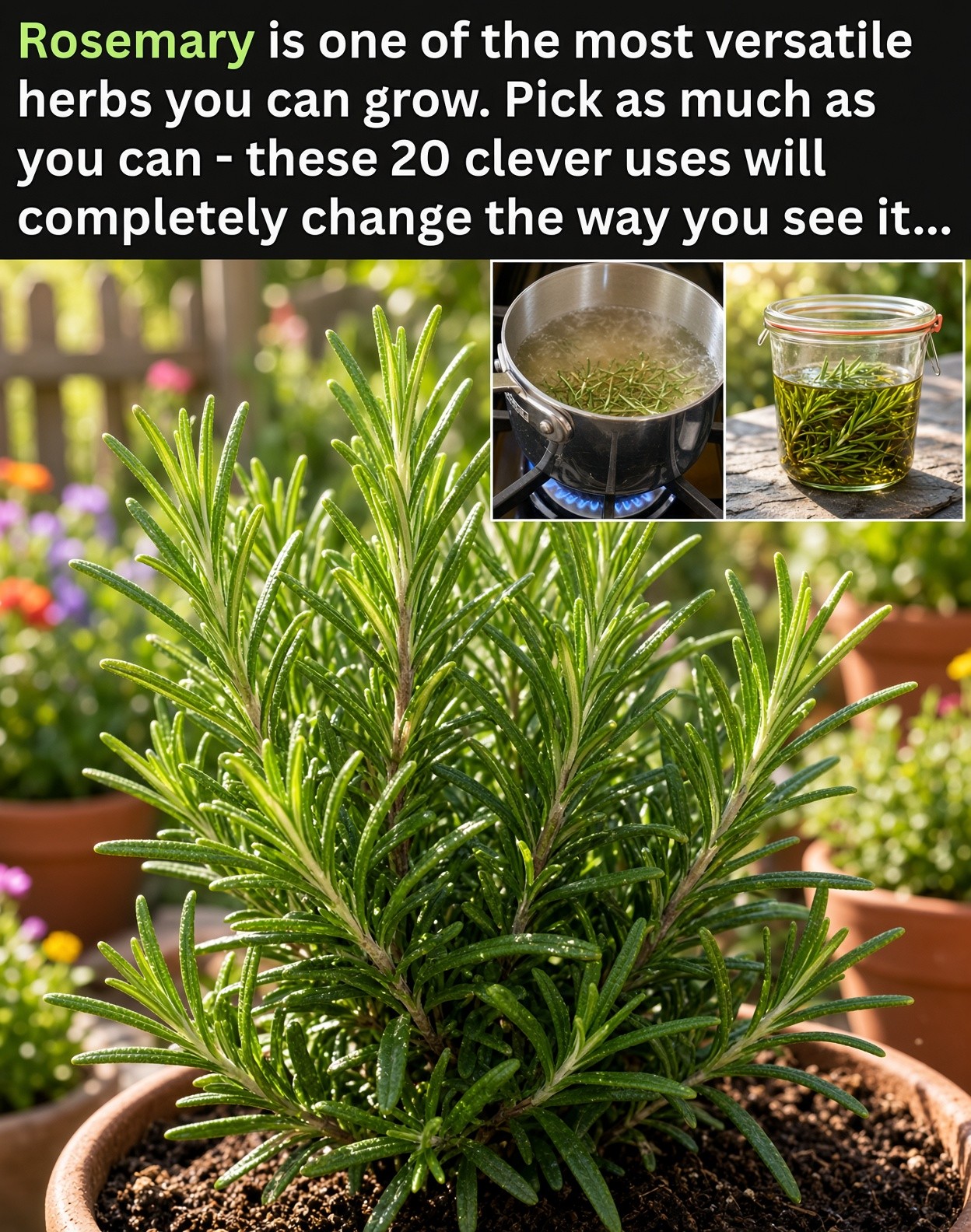
If you have a healthy rosemary bush growing in your garden, you may have discovered one small problem: it can produce far more fragrant sprigs than you can use in a few meals. Fortunately, rosemary is one of those herbs that can be used in many different ways.

Fresh rosemary can transform roasted vegetables, meats, breads, sauces, and marinades, while dried rosemary can be stored for months. The plant also has decorative and aromatic uses around the home and garden. Instead of allowing extra stems to go unused, you can harvest them and turn your rosemary into flavorful kitchen ingredients, fragrant home projects, and long-lasting pantry staples.
1. Make Homemade Rosemary Salt

Rosemary salt is one of the easiest ways to preserve a large harvest. Finely chop completely dried rosemary and combine it with coarse salt, then store the mixture in a tightly sealed jar. Use it to season roasted potatoes, vegetables, chicken, fish, homemade bread, soups, or grilled foods. Because rosemary has a strong flavor, start with a modest amount and adjust it to taste.
2. Create Rosemary Butter

Softened butter becomes much more flavorful when mixed with finely chopped rosemary. Add garlic, black pepper, or lemon zest for another layer of flavor. Shape the mixture into a log, wrap it well, and refrigerate it. Slice off small portions whenever you need a quick finishing butter for potatoes, vegetables, grilled meat, fish, or warm bread.
3. Add Rosemary to Roasted Potatoes

Few combinations are simpler than potatoes, olive oil, garlic, and rosemary. Strip the leaves from fresh stems, chop them finely, and toss them with potatoes before roasting. The heat releases rosemary’s aroma and gives the potatoes a deep herbal flavor. Rosemary also pairs naturally with carrots, mushrooms, tomatoes, squash, and other roasted vegetables.
4. Flavor Homemade Bread

Fresh rosemary works beautifully in focaccia, flatbread, biscuits, savory rolls, and other homemade breads. Mix finely chopped rosemary into the dough and finish the top with olive oil and a few leaves. The herb’s aroma becomes especially noticeable as the bread bakes, making a simple loaf feel much more special.
5. Use Rosemary With Grilled Foods

Rosemary is a classic companion for grilled chicken, lamb, beef, vegetables, and seafood. Add chopped leaves to marinades or place whole sprigs near the food while grilling for an aromatic touch. Particularly sturdy rosemary stems can also be used as cooking skewers for suitable foods.
6. Preserve Rosemary by Drying It

If your plant produces more rosemary than you can use fresh, drying is one of the simplest preservation methods. Harvest healthy stems, tie them loosely into small bundles, and hang them in a dry, well-ventilated place. Once completely dry, strip the leaves from the stems and store them in an airtight container away from heat and light.
7. Freeze Rosemary for Future Meals

Freezing is another convenient option for a large harvest. Rosemary leaves can be frozen on their own or placed into ice-cube trays with water or oil. Once frozen, transfer the portions to a freezer-safe container or bag. Add individual portions directly to soups, sauces, roasted vegetables, and other cooked dishes.
8. Make Rosemary-Infused Vinegar

Rosemary can add a pleasant herbal aroma to vinegar. Clean rosemary sprigs can be used to flavor vinegar for salad dressings, marinades, and sauces. For food preservation, follow a tested procedure when making products intended for long-term storage rather than relying on an untested recipe.
9. Create a Fragrant Kitchen Bouquet

Fresh rosemary does not always have to be chopped. Whole sprigs can be combined with other herbs to make a small kitchen bouquet. Tie rosemary together with thyme, sage, or parsley and use the bundle to flavor soups, stews, sauces, or stocks. Remove the stems before serving.
10. Make Rosemary Sachets

Dried rosemary leaves can be placed inside small fabric sachets and used in drawers, closets, or linen storage. The dried foliage retains its characteristic fragrance and can be combined with other aromatic herbs such as lavender. This is a simple way to use small amounts of rosemary that might otherwise be discarded.
11. Add Rosemary to Homemade Potpourri

A large rosemary harvest can become part of a decorative potpourri mixture. Combine completely dried rosemary with dried citrus peel, lavender, flower petals, cinnamon, or other aromatic materials. Arrange the mixture in a decorative bowl and gently mix it from time to time to refresh the fragrance.
12. Create Decorative Rosemary Wreaths

Rosemary’s evergreen foliage makes it useful for dried arrangements and wreaths. Long stems can be woven or tied around a simple wreath form. A rosemary wreath can add texture and fragrance to a kitchen, patio, entryway, or garden shed. Once completely dry, handle the stems gently because dried foliage becomes more brittle.
13. Grow Rosemary in Containers

Rosemary can also be grown for its ornamental value. Some varieties grow upright while others have trailing or spreading habits, making them suitable for containers and hanging baskets. A container with excellent drainage and a sunny position can provide both an attractive plant and a convenient supply of fresh leaves.
14. Shape Rosemary Into a Small Hedge

In a suitable climate, rosemary can become an attractive evergreen garden feature. Its woody stems and aromatic foliage allow it to be maintained as a compact hedge or shaped plant. Regular trimming helps maintain a tidy form, while well-drained soil and plenty of sun support healthy growth.
15. Make a Simple Aromatic Bath Sachet

Dried rosemary can be included in an aromatic bath sachet for its fragrance. Place dried leaves in a small muslin bag and allow it to steep in warm bathwater. This is primarily a fragrance and bathing use rather than a medical treatment. Avoid applying concentrated essential oils directly to the skin without appropriate dilution and safety guidance.
16. Use Rosemary in Homemade Beauty Projects

Rosemary’s aromatic foliage and oils have long been used in cosmetic products. For simple home projects, dried rosemary can be included in decorative soaps or aromatic sachets. When using essential oils, follow the manufacturer’s safety directions because concentrated oils are much stronger than fresh leaves.
17. Add Rosemary to Homemade Marinades

A rosemary marinade can bring together olive oil, garlic, lemon, black pepper, and other herbs. Use it with chicken, lamb, vegetables, or other foods that pair well with strong Mediterranean flavors. Fresh rosemary can be chopped finely so that its flavor spreads throughout the marinade.
18. Build a Long-Term Rosemary Pantry Supply

One of the smartest ways to handle an oversized harvest is to divide it between several preservation methods. Keep some sprigs fresh for immediate cooking, dry another portion for the pantry, and freeze the rest for future meals. This gives you several ways to use one harvest throughout the year.
19. Harvest Rosemary at the Right Time

Harvest healthy rosemary stems with clean scissors or pruners and avoid removing too much growth from one area at once. For drying, harvesting before flowering is commonly recommended. Regular light harvesting helps you keep a productive plant manageable while providing a steady supply for the kitchen.
20. Keep Using Rosemary Fresh

Sometimes the best use for an abundant rosemary plant is simply to use it more often. Add a few chopped leaves to roasted vegetables, soups, beans, sauces, breads, potatoes, eggs, or grilled foods. Rosemary has an assertive flavor, so a small amount can make a noticeable difference.
How to Store Fresh Rosemary
If you are not ready to dry or freeze your harvest, fresh rosemary can be kept for short-term use in the refrigerator. Keep the sprigs clean and dry, and use them promptly. During food preparation, keep fresh herbs separated from raw meat and meat juices and wash produce appropriately.
Why Growing Your Own Rosemary Is So Useful
Rosemary is rewarding because the same plant can serve several purposes. It can be an attractive evergreen garden plant, a culinary herb, a source of dried seasoning, and a material for aromatic decorative projects. Rosemary also prefers sunny conditions and well-drained soil, so it can be a practical choice for gardeners who want a useful herb that fits naturally into a Mediterranean-style garden.
Final Thoughts
A large rosemary bush is much more useful than it may first appear. Instead of harvesting only a few sprigs for dinner, you can preserve your crop, flavor homemade foods, create fragrant decorations, and use the plant as an attractive feature in the garden.
The easiest place to start is with the basics: use fresh rosemary in everyday cooking, dry some for the pantry, and freeze the excess. Once you have those methods under control, you can explore rosemary salts, herb butters, marinades, sachets, wreaths, potpourri, and other projects.