
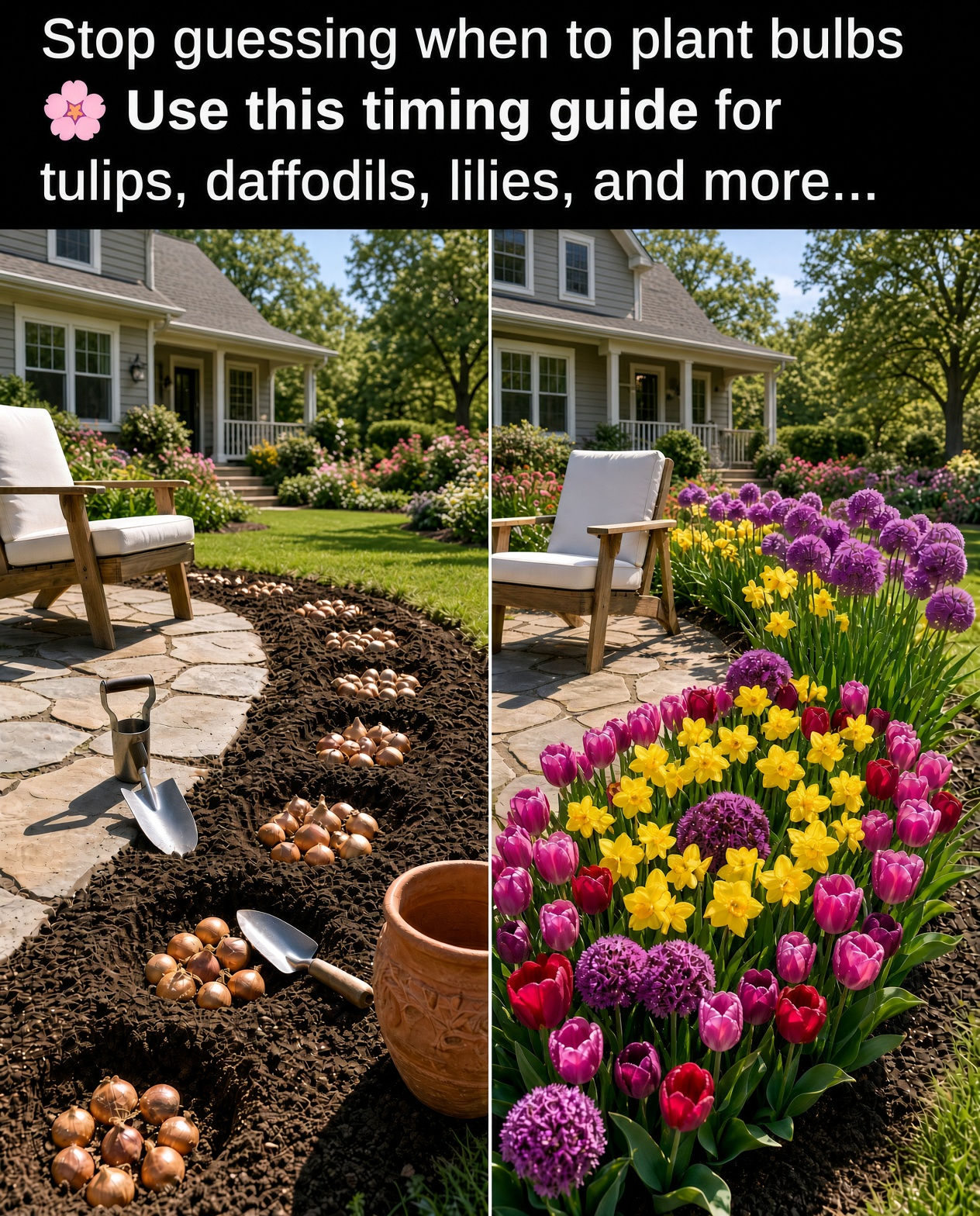

Flower bulbs are one of the easiest ways to add seasonal color to a garden, but choosing the right planting time makes a major difference. Tulips, daffodils, hyacinths, crocuses, alliums, dahlias, and gladiolus do not all follow the same schedule.
The easiest way to understand bulb timing is to think about when the plant is supposed to flower and what kind of temperatures it needs before flowering.
Many spring-flowering bulbs are planted in fall, while tender summer-flowering bulbs and tubers are usually planted in spring after the danger of frost has passed.
Why Bulb Planting Time Matters
Bulbs contain stored energy that helps them produce leaves and flowers, but they still need time to develop a healthy root system. Planting at the wrong time can interfere with that process.
Spring-flowering bulbs use the cool months to establish roots before producing their main growth. Warm-season bulbs have different requirements and can be damaged by cold, wet conditions.
Understanding these seasonal differences makes it much easier to plan a successful bulb garden.
When to Plant Spring-Flowering Bulbs

For most spring-flowering bulbs, fall is the main planting season. The ideal window is generally after summer heat has passed but before the soil becomes frozen.
This gives the bulbs enough time to establish roots while temperatures are cool.
Tulips
Tulips are classic fall-planted bulbs. In many temperate climates, they can be planted from early fall through late autumn.
The exact timing depends on your climate. Gardeners in warmer regions may need to use varieties adapted to mild winters or provide the bulbs with an appropriate chilling period.
Daffodils
Daffodils are another excellent choice for fall planting. They are hardy, dependable, and can return for many seasons when grown under suitable conditions.
Plant them in groups along borders, beneath deciduous trees, around pathways, or in naturalized areas.
Hyacinths
Hyacinths are planted in fall and produce dense clusters of highly fragrant flowers in spring.
They are particularly effective near paths, entrances, patios, and other locations where their fragrance can be enjoyed.
Crocuses
Spring-flowering crocuses are generally planted in fall. Because they are small, they look much more natural when planted in groups.
Try planting them beneath deciduous trees, around pathways, or throughout suitable lawn areas.
Ornamental Alliums

Ornamental alliums are generally planted in fall and flower later in spring.
Their tall stems and rounded flower heads provide excellent contrast against shorter tulips, daffodils, and other spring plants.
When to Plant Summer-Flowering Bulbs
Summer-flowering bulbs, tubers, and corms usually follow a warmer planting schedule.
In climates where frost occurs, wait until the danger of freezing weather has passed and the soil has begun to warm.
Lilies
Many true lilies can be planted in spring, while some varieties can also be planted during fall in suitable climates.
Good drainage is particularly important. Once established, many lilies can remain in the ground from year to year.
Dahlias

Dahlias are warm-season plants and are generally planted outdoors in spring.
Wait until frost danger has passed and the soil has warmed. In colder climates, gardeners often lift the tubers before winter and store them in a protected place.
Gladiolus
Gladiolus corms are normally planted during spring after cold weather has passed.
If you want a longer flowering display, planting batches several weeks apart can help spread the bloom period.
Cannas
Cannas are warm-season plants known for bold foliage and colorful flowers. Plant them after the danger of frost has passed.
Gardeners in colder climates may need to lift the rhizomes before winter and store them in a protected location.
Caladiums
Caladiums prefer warm soil and should not be rushed into the garden during a cold spring.
Once temperatures are suitable, they can provide spectacular foliage color throughout the warm season.
When to Plant Fall-Flowering Bulbs

A smaller group of bulbous plants flowers during autumn. These are generally planted toward the end of summer or at the beginning of fall.
Colchicum
Colchicum, sometimes called autumn crocus, is commonly planted in late summer.
Its flowers can appear before the plant develops its full foliage, producing a surprising burst of color in the autumn garden.
Fall-Blooming Crocus
Fall-flowering crocuses are also planted toward the end of summer or early fall.
Saffron crocus is a well-known example. These plants provide flowers during a season when many summer displays are already beginning to fade.
What Bulbs Should You Plant in Fall?
If your goal is a colorful spring garden, some of the most popular choices include:
- Tulips
- Daffodils
- Hyacinths
- Spring crocuses
- Ornamental alliums
- Snowdrops
- Dwarf iris
- Glory-of-the-snow
For a longer-lasting display, combine bulbs that flower at different points in spring. Early crocuses can begin the season, followed by daffodils and hyacinths, with tulips and alliums extending the display.
How to Know the Right Planting Time
Check Your Local Climate
There is no universal planting date that works for every garden.
Your local frost dates, winter temperatures, and soil conditions are more useful than simply following a fixed calendar month.
Watch the Soil
For fall planting, the ground should still be workable. For tender summer bulbs, wait until the soil has warmed.
Cold, saturated soil can create difficult conditions for many warm-season bulbs and tubers.
Consider the Bulb
Always check the requirements of the specific plant. A hardy daffodil and a tender dahlia should never automatically be given the same planting schedule.
Think About Winter
Many spring bulbs actually benefit from exposure to cool conditions. This is one reason fall planting is so important for tulips, daffodils, crocuses, and many other hardy spring bulbs.
What Happens If You Plant Bulbs Too Early?
Planting too early can sometimes encourage bulbs to begin growing before winter has properly arrived.
If tender new growth appears and temperatures suddenly drop, that growth can be damaged. For spring bulbs, it is generally better to aim for a cool planting period rather than putting them into warm soil too early.
What If You Plant Bulbs Too Late?
Missing the ideal date does not automatically mean your bulbs are useless.
If the soil is still workable and the bulbs are healthy, planting them promptly may still give them an opportunity to establish before the most severe weather arrives.
The important thing is not to leave healthy bulbs sitting unplanted simply because the perfect calendar date has passed.
Simple Bulb Planting Calendar
| Bulb | Planting Season | Flowering Season |
|---|---|---|
| Tulips | Fall | Spring |
| Daffodils | Fall | Spring |
| Hyacinths | Fall | Spring |
| Spring Crocus | Fall | Late winter–spring |
| Alliums | Fall | Late spring |
| Lilies | Spring / suitable fall climates | Summer |
| Dahlias | Spring | Summer–fall |
| Gladiolus | Spring | Summer |
| Cannas | Late spring | Summer |
| Caladiums | Late spring | Summer |
| Colchicum | Late summer | Fall |
| Fall Crocus | Late summer–early fall | Fall |
Tips for Planting Bulbs Successfully
- Choose healthy bulbs: Avoid bulbs that are soft, badly damaged, or showing signs of rot.
- Plant at the recommended depth: Different bulbs have different depth requirements.
- Use well-drained soil: Excessive moisture around bulbs can encourage rot.
- Match the light conditions: Choose a planting location appropriate for the variety.
- Give bulbs enough space: Avoid overcrowding them.
- Mark your planting areas: This makes it easier to remember where dormant bulbs are located.
Final Thoughts
The best time to plant bulbs depends on the variety, your climate, and the season when you want flowers.
Fall is the main planting season for many spring-flowering bulbs, including tulips, daffodils, hyacinths, crocuses, and ornamental alliums. Spring is generally better for tender summer bulbs and tubers such as dahlias and gladiolus.
Instead of relying on one exact date, pay attention to local temperatures, soil conditions, frost patterns, and the needs of the individual bulb.
Get the timing right, and bulbs can give your garden waves of color from the first signs of spring all the way into autumn.