
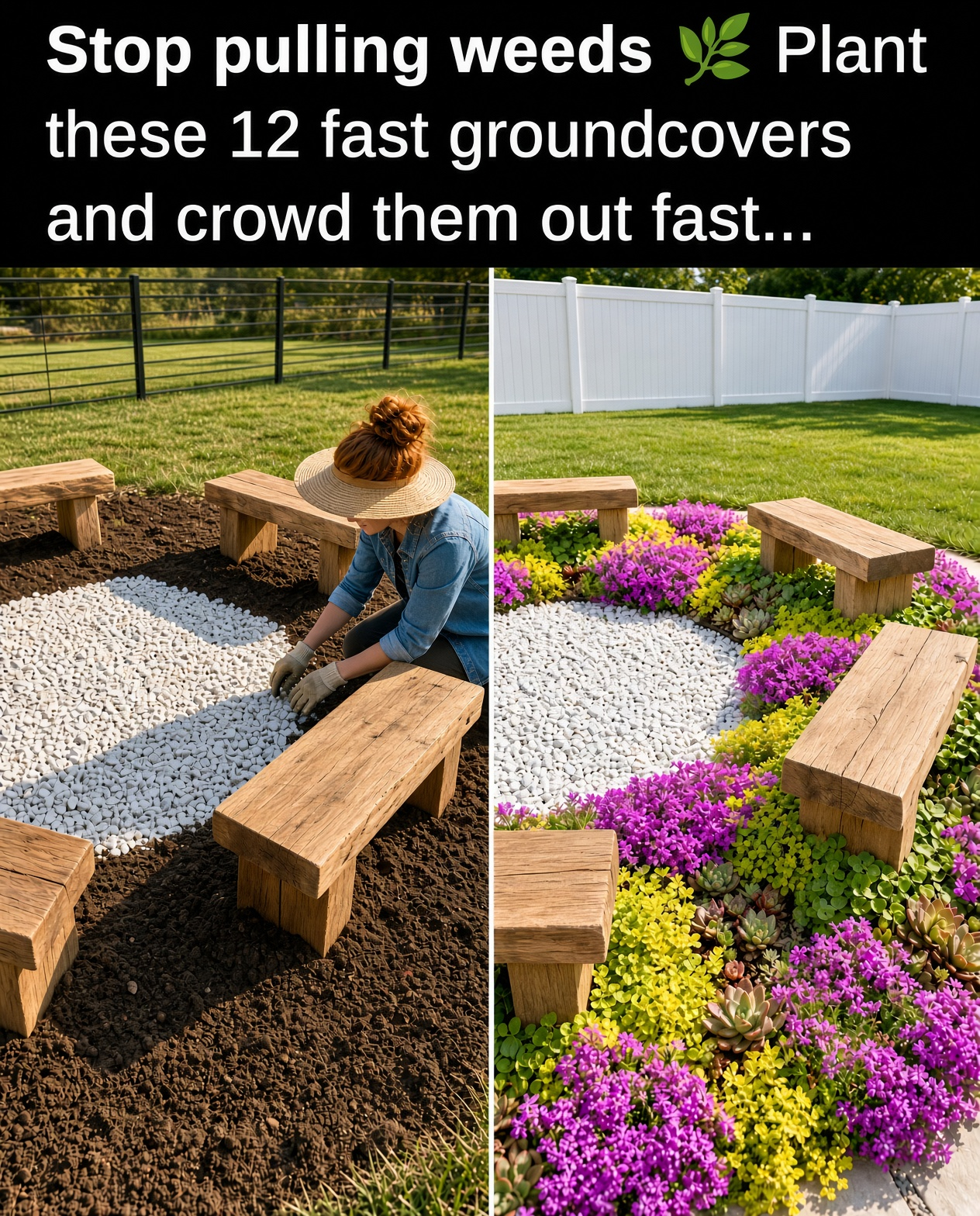
If you are tired of pulling weeds from the same garden bed over and over again, the right groundcover can make a huge difference. Instead of leaving large areas of bare soil where weeds can easily sprout, low-growing plants can spread across the surface and create a living carpet.
Here are seven useful choices to consider, along with the conditions where each one performs best.
1. Ajuga (Bugleweed)
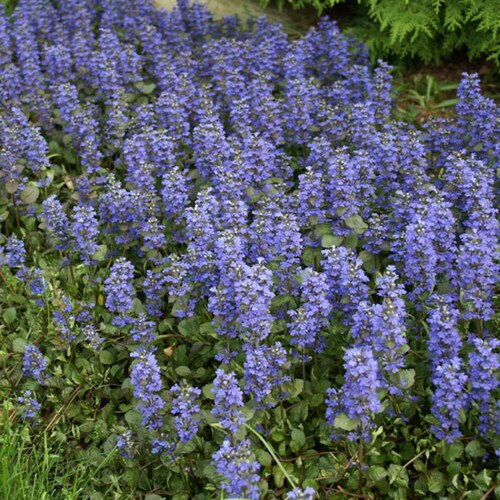
Ajuga reptans is one of the strongest choices when you need a low-growing plant that can quickly create a dense mat. Its spreading stems creep along the soil surface and root as they establish, allowing a planting to fill in relatively quickly.
The foliage stays close to the ground, while colorful flower spikes rise above it in spring. Depending on the variety, leaves can be green, bronze, burgundy, or variegated.
Ajuga is especially useful beneath trees, around shrubs, and in areas where grass struggles because of shade. Extension guidance notes that its dense mat can help smother weeds, although its vigorous spreading habit also means it needs boundaries and occasional maintenance.
Best conditions
- Part shade to shade, with many cultivars tolerating more sun
- Moist but well-drained soil
- Under trees and shrubs
- Borders, slopes, and difficult-to-cover areas
One caution: Ajuga can spread aggressively. Check whether it is considered invasive in your region before planting, and keep it away from areas where you do not want it to spread.
2. Creeping Thyme
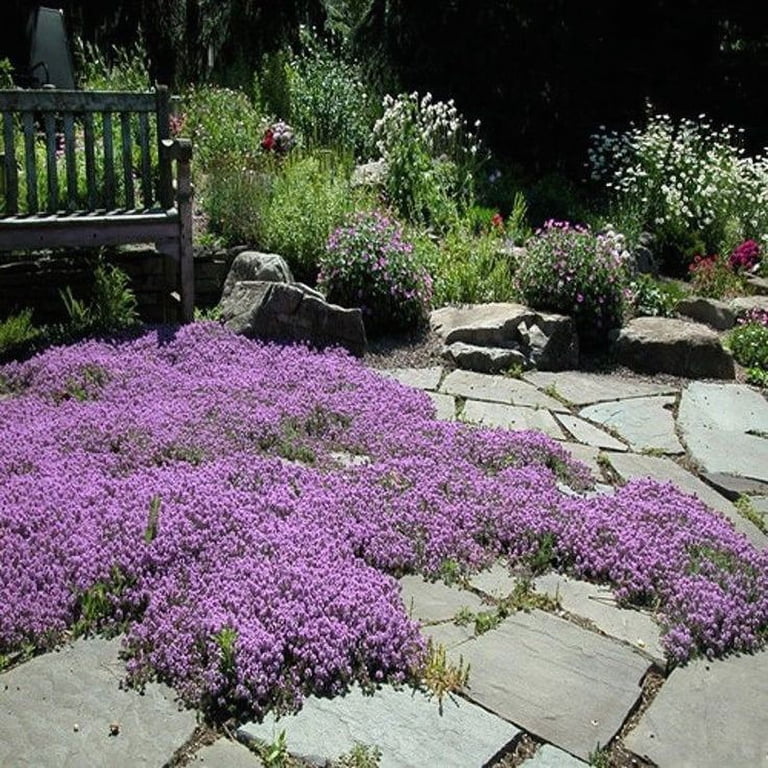
For sunny areas, creeping thyme is one of the most attractive ways to replace bare soil. It forms a low carpet of tiny leaves and can produce masses of small flowers during its blooming period.
Unlike taller plants that leave plenty of exposed ground underneath, creeping thyme stays close to the soil. Once established, it works particularly well between stepping stones, along paths, around rocks, and at the front of sunny borders.
It also has the advantage of being relatively drought tolerant once established, making it a useful option for gardeners who want a groundcover without creating a constantly wet planting bed.
Best conditions
- Full sun
- Well-drained soil
- Rock gardens and paths
- Dry or low-water areas
Don’t plant creeping thyme in heavy, poorly drained soil and expect it to thrive. Good drainage is much more important than simply keeping the soil constantly moist.
3. Sweet Woodruff
If you have a shady part of the garden where grass refuses to cooperate, sweet woodruff is worth considering. This low-growing perennial produces whorls of green leaves and delicate white flowers, creating a soft woodland-style carpet.
It spreads by slender rhizomes and can fill an area relatively quickly when growing conditions suit it. Penn State Extension describes sweet woodruff as a quick-spreading groundcover that performs particularly well in partial to full shade.
It is especially attractive beneath trees or around woodland borders, where its fresh green foliage contrasts beautifully with spring bulbs and other shade-loving plants.
Best conditions
- Partial to full shade
- Moist, well-drained soil
- Woodland gardens
- Under mature trees
Because sweet woodruff can spread enthusiastically, give it enough room and keep an eye on its boundaries.
4. Pachysandra
Pachysandra is another useful choice for shady ground. Its evergreen foliage can create a dense green layer beneath trees and shrubs, making it particularly useful for places where maintaining lawn is difficult.
It is not a plant you choose for fast flowers. Instead, its value comes from its foliage and ability to create a continuous-looking carpet once established.
Pachysandra is especially useful for large shady beds where you want to reduce the amount of exposed soil that needs regular weeding.
Best conditions
- Shade to partial shade
- Moist, well-drained soil
- Under trees
- Large woodland-style beds
Good soil preparation is important when establishing any groundcover. Remove existing weeds first rather than expecting the new plants to instantly overcome an established weed problem.
5. Creeping Phlox
Creeping phlox brings both ground coverage and seasonal color. Unlike some foliage-focused groundcovers, it can become covered with flowers when conditions are right, creating a bright carpet across rocks, slopes, borders, and other sunny areas.
Its low-growing habit makes it useful around the edges of garden beds where taller plants would leave open soil. It also works particularly well in rock gardens and on gentle slopes.
For the strongest growth, give it plenty of sunlight and avoid planting it in a location where water constantly collects.
Best conditions
- Full sun to light shade
- Well-drained soil
- Rock gardens
- Slopes and sunny borders
6. Sedum
Low-growing sedums are excellent candidates for hot, sunny spaces where many moisture-loving groundcovers struggle. They produce succulent foliage and spread horizontally, making them useful for covering dry soil and filling spaces between rocks.
Many creeping sedums remain short and can tolerate dry conditions once established. Their foliage also comes in a surprising range of shapes and colors, so you can choose a variety that complements the rest of your garden.
Because sedum prefers good drainage, it is especially valuable in raised beds, rock gardens, gravel gardens, and other areas where water drains quickly.
:max_bytes(150000):strip_icc()/sedum-ground-cover-01-7c3c8b0b0d0b4c3b9e2b6f5f2e0e5e6e.jpg)
Best conditions
- Full sun
- Dry to moderately dry soil
- Excellent drainage
- Rock gardens and gravel beds
7. Mondo Grass
Mondo grass provides a completely different look from flowering groundcovers. Instead of forming a carpet of tiny leaves, it produces narrow, grass-like foliage that creates a neat, textured layer close to the soil.
It can be useful around trees, along pathways, beneath shrubs, and in shaded landscape beds where conventional lawn grass is difficult to maintain.
Different types and cultivars vary in size, so choose one that fits the area rather than assuming all mondo grass stays extremely short.
Best conditions
- Partial shade to shade
- Well-drained soil
- Under shrubs and trees
- Edges and landscape borders
How Groundcovers Help Keep Weeds Down
A groundcover does not magically eliminate every weed. Instead, it changes the growing conditions at the soil surface.
When plants create a dense canopy, there is less bare soil available for new weeds. Their leaves also shade the ground, reducing the amount of sunlight that reaches weed seedlings.
That is why establishment is so important. A newly planted groundcover may leave plenty of open spaces during its first season. Those gaps are exactly where weeds can appear.
Mulch can help during this transition. A thin layer of organic mulch around young plants can reduce exposed soil while the groundcover spreads.
How to Plant Groundcovers for Faster Coverage
1. Remove Existing Weeds First
Do not simply plant groundcover directly into a bed filled with established weeds. Remove perennial weeds and as many roots as practical before planting.
2. Prepare the Soil
Loosen compacted soil and improve drainage where necessary. The ideal preparation depends on the groundcover you choose, because a dry-loving sedum and a moisture-loving shade plant do not want exactly the same conditions.
3. Use the Correct Spacing
Planting closer together generally produces faster visual coverage, but planting too densely can increase competition and disease problems. Follow the spacing recommended for your particular variety.
4. Water During Establishment
Even drought-tolerant groundcovers need regular attention while their roots are becoming established. Once the plants are well rooted, watering can usually be adjusted to their natural preferences.
5. Keep Weeds From Getting Ahead
Pull emerging weeds while the groundcover is still filling in. A few minutes of maintenance during establishment can prevent a much bigger problem later.
Don’t Choose a Groundcover Only Because It Spreads Fast
Fast growth sounds perfect when your goal is weed suppression, but aggressive spreading can become a problem if the plant moves into lawns, paths, neighboring beds, or natural areas.
Ajuga, for example, is praised for its dense weed-suppressing mat but is also listed as invasive in some regions. Sweet woodruff can spread quickly as well. Before planting any vigorous groundcover, check how it behaves in your local climate.
The best groundcover is not necessarily the fastest one. It is the plant that fills the space effectively without becoming a new maintenance problem.
Which Groundcover Should You Choose?
| Groundcover | Best For | Light |
|---|---|---|
| Ajuga | Dense coverage and shady beds | Part shade to shade |
| Creeping thyme | Paths, rocks and dry beds | Full sun |
| Sweet woodruff | Woodland areas | Shade |
| Pachysandra | Large shady beds | Shade |
| Creeping phlox | Flowering borders and slopes | Sun |
| Sedum | Dry, sunny locations | Full sun |
| Mondo grass | Shady borders and under trees | Part shade to shade |
Final Thoughts
A bare patch of soil is an open invitation for weeds. Replacing that empty space with the right groundcover can make the garden look fuller while reducing the amount of exposed soil available for unwanted plants.
For sunny, dry areas, consider creeping thyme, sedum, or creeping phlox. For shade, sweet woodruff, pachysandra, mondo grass, or ajuga may be better suited.
Just remember that the fastest spreader is not always the best choice. Select a groundcover that matches your soil, sunlight, moisture, and available space. Give it proper care while it establishes, and over time you can replace a high-maintenance patch of bare ground with a living carpet that requires far less weeding.