
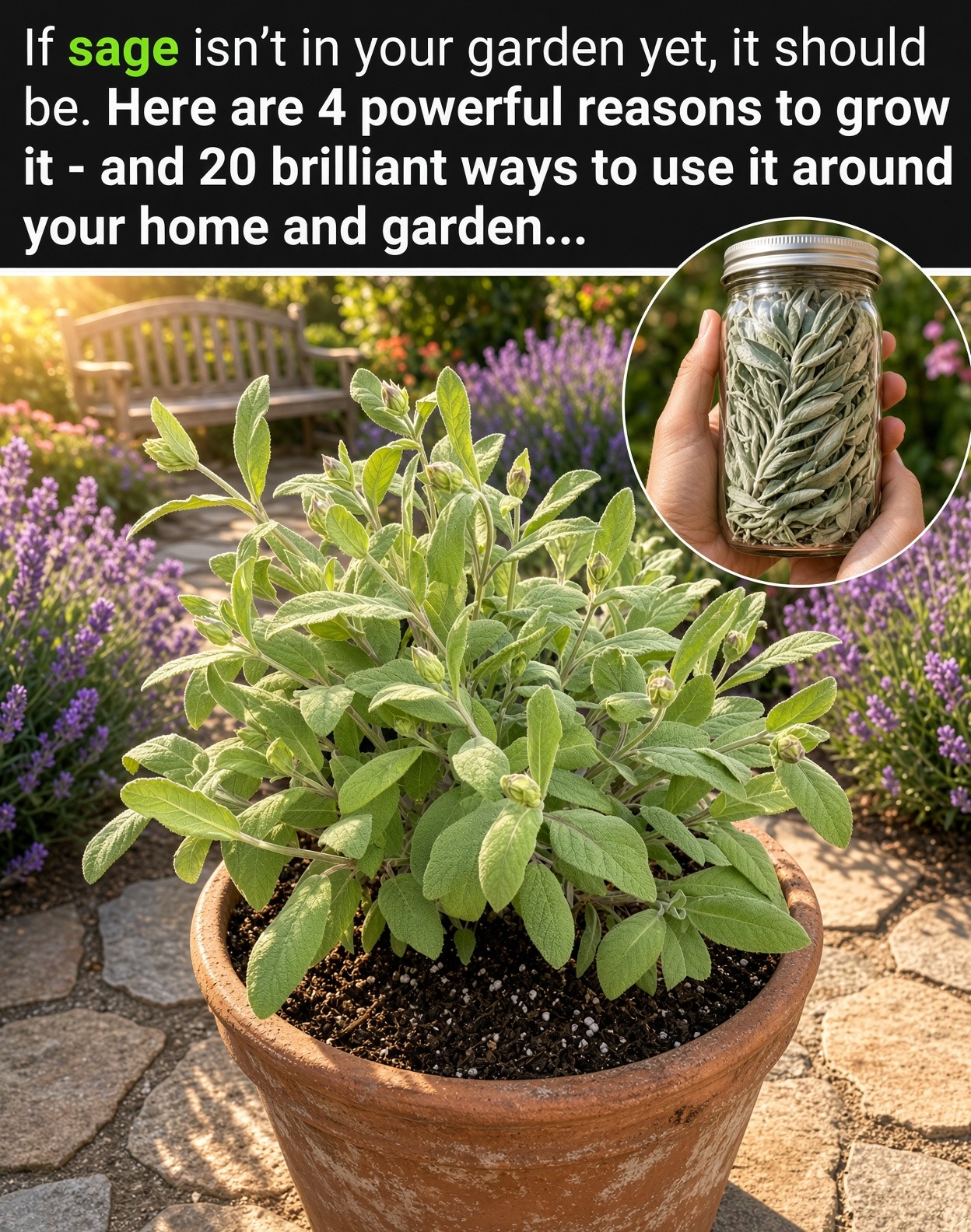
Sage (Salvia officinalis) is one of the most resilient, fragrant, and hardworking herbs you can possibly welcome into your garden. With its striking velvety, gray-green leaves and earthy, robust aroma, sage has been revered for centuries not only as a culinary staple but as a potent medicinal plant and household powerhouse. Whether you are looking to establish a low-maintenance perennial herb garden or expand your homesteading toolkit, growing sage offers incredible long-term rewards that keep on giving year after year.

If you have ever wondered why experienced gardeners and chefs consider sage an absolute must-have, the answer lies in its unbeatable combination of ornamental beauty, drought resistance, and unmatched versatility. From comforting roasted autumn dishes to natural wellness remedies and aromatic home crafts, sage punches well above its weight class. Let’s explore the top four reasons you need to plant sage right away, followed by 20 brilliant ways to put every single leaf to use.
Part 1: 4 Compelling Reasons to Grow Sage
1. Exceptional Drought Tolerance
Low Maintenance
Sage is a native Mediterranean herb that despises soggy, waterlogged soil. Once established, its deep root system makes it exceptionally drought-tolerant. It requires very little supplemental watering compared to tender herbs like basil or cilantro, making it the perfect candidate for water-wise xeriscaping, rocky slopes, or neglected garden corners that receive baking afternoon sun.
2. Stunning Ornamental Appeal
Landscape Beauty
Beyond its usefulness in the kitchen, sage is a gorgeous ornamental plant. Varieties like ‘Purpurascens’ (Purple Sage), ‘Tricolor’, and ‘Golden Sage’ bring rich splashes of burgundy, cream, and chartreuse to garden beds and container planters. In early summer, established plants produce spikes of lovely lavender or blue flowers that act as a magnet for hungry bees and beneficial pollinators.

3. Perennial Longevity
Multi-Year Harvest
Unlike annual herbs that must be replanted every single spring, common sage is a hardy perennial in USDA zones 5 through 9. Once you plant it, it will return year after year, growing into a sturdy, woody subshrub. With proper care and minimal annual pruning, a single sage plant can provide abundant harvests for up to five to seven years before needing replacement.

4. Pest and Deer Resistance
Natural Protection
Thanks to its potent aromatic essential oils, sage is naturally repellent to common garden pests, rabbits, and hungry deer. Planting sage near more vulnerable crops like brassicas, tomatoes, or beans can help confuse insect pests with its strong scent, making it an exceptional companion plant for organic vegetable gardens.
Part 2: 20 Brilliant Ways to Use Your Sage Harvest
Once your sage plant is established, you will be rewarded with a bountiful harvest of fragrant leaves. Instead of letting them go to waste, here are 20 brilliant culinary, wellness, and household ways to utilize every single cutting.

Culinary Uses
- Crispy Sage Butter: Fry fresh sage leaves in melted butter until crispy for an incredible sauce tossed over gnocchi or pasta.
- Sage-Infused Olive Oil: Steep fresh leaves in high-quality extra virgin olive oil for roasting vegetables or dipping artisanal bread.
- Classic Poultry Stuffing: Finely chop fresh sage to form the cornerstone flavor profile of traditional holiday stuffing and dressings.
- Roasted Root Vegetables: Toss cubed butternut squash, carrots, and sweet potatoes with olive oil and whole sage leaves before roasting.
- Sage Butter Compound: Blend softened butter with minced sage, garlic, and sea salt, then roll into a log for steaks and poultry.
- Herbed Sausage Seasoning: Mix ground pork with crushed dried sage, black pepper, and fennel to craft homemade breakfast sausage patties.
- Sage & Lemon Roast Chicken: Stuff a whole roasting chicken with fresh lemon halves and generous sprigs of sage under the skin.
- Savory Sage Bread: Fold finely minced fresh sage leaves into homemade artisan sourdough or focaccia dough before baking.
- Homemade Sage Salt: Blend dried sage leaves with coarse sea salt in a food processor for a savory finishing seasoning.
- Sage Infused Honey: Warm honey gently with fresh sage sprigs to create a rich glaze for roasted pork or cheese boards.

Medicinal & Wellness Uses
- Soothe a Sore Throat: Brew a strong infusion of fresh sage leaves and gargle with warm salt water to relieve throat irritation.
- Digestive Herbal Tea: Steep fresh or dried leaves in hot water for ten minutes to aid digestion after a heavy meal.
- Natural Breath Freshener: Chew raw sage leaves directly to neutralize bad breath and promote oral hygiene.
- Calming Aromatherapy Steam: Add dried sage to a bowl of steaming water, drape a towel over your head, and inhale to clear nasal passages.
- Relaxing Herbal Bath: Tie a bundle of fresh sage directly under your bathtub faucet for an aromatic, skin-soothing soak.

Household & Craft Uses
- Cleansing Smudge Bundles: Tie harvested sage stems together with cotton twine, dry them completely, and burn them to freshen indoor air.
- Natural Fabric Dye: Simmer dried sage leaves in water with a mordant to impart soft, earthy yellow-green tones to natural linen or cotton.
- Natural Moth Repellent: Dry sage leaves and place them in small linen pouches inside your closets and dresser drawers to deter moths.
- Homemade Herbal Wreaths: Weave fresh, flexible sage stems into rustic wreaths to fragrance your entryway or kitchen.
- Potpourri Booster: Combine dried sage with lavender, rose petals, and citrus peels for a long-lasting, grounding potpourri blend.
