
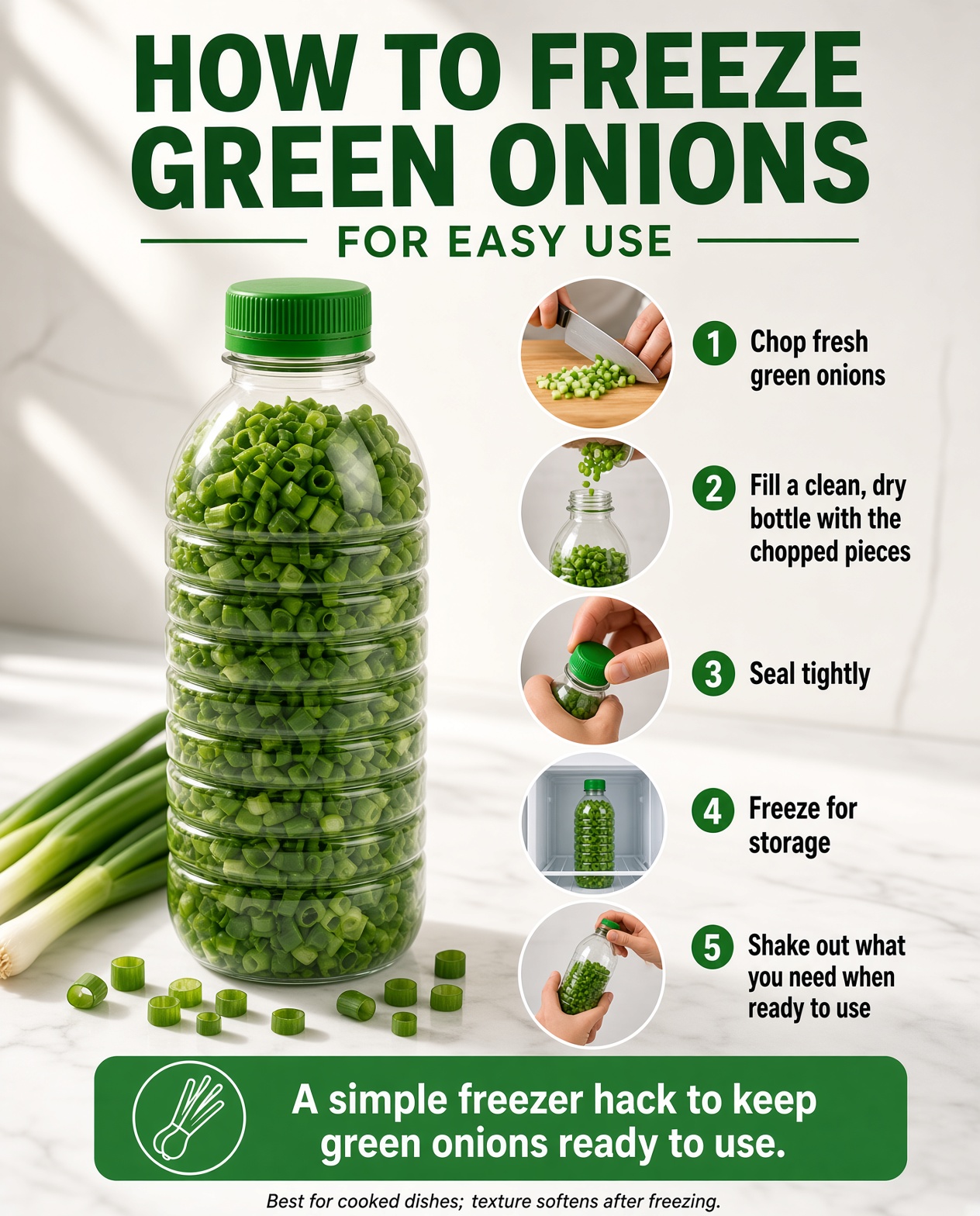
A simple way to preserve extra green onions and keep them ready for soups, eggs, stir-fries, sauces, and quick weeknight meals.

Start With Fresh, Firm Green Onions
For the best frozen results, begin with green onions that still look fresh and crisp. Choose bunches with firm white bases, upright green leaves, and no slimy or badly damaged areas. Freezing cannot improve vegetables that are already past their prime, so starting with good-quality onions gives you better flavor after storage.

Wash and Prepare Them Carefully
Rinse the onions under cool running water, separating the stalks gently so dirt does not remain around the roots or between the layers. After washing, trim away the roots and remove any wilted outer pieces. Give the onions a moment to drain before moving to the chopping step.

Chop the Green Onions to a Useful Size
Slice the onions into small, even pieces that match the way you normally cook. You can keep the green tops and white portions together, or separate them if you prefer to use the stronger white parts in cooked dishes and the milder green tops elsewhere. Smaller pieces are especially convenient because you can add them directly to recipes without thawing an entire portion.

Dry Them Thoroughly Before Freezing
Drying is an easy step to overlook, but it makes a noticeable difference. Spread the chopped onions over a clean kitchen towel or several layers of paper towel and gently pat away excess water. The drier the pieces are before they go into the freezer, the less likely they are to freeze into one large, difficult-to-use clump.

Pack Small Portions for Easy Use
Transfer the dry chopped onions into a freezer-safe bag or airtight container. If you have a large quantity, divide it into smaller portions rather than freezing everything together. Press as much excess air as practical from a freezer bag before sealing it, then label the package with the contents and date. Small portions make it much easier to take only what you need later.

Freeze Them Flat and Keep Them Organized
Place the sealed bag or container in the freezer and keep it in a stable location. If using freezer bags, laying them flat while they freeze can create thin portions that are easier to break apart later. Once frozen solid, the bags can be stacked neatly. Keeping packages dated also helps you use older portions first instead of letting them disappear at the back of the freezer.

Add Frozen Green Onions Directly to Cooked Dishes
One of the biggest advantages of freezing green onions is convenience. In most cooked recipes, there is no need to thaw them first. Scoop out the amount you need and add it directly to a hot pan, soup, stew, omelet, fried rice, sauce, or stir-fry. The pieces will soften as they cook and release their onion flavor into the dish.

Know What Frozen Green Onions Are Best For
Freezing changes the texture of green onions, so they will not have the same crisp bite as freshly cut onions after thawing. For that reason, frozen green onions are best used in cooked recipes rather than as a raw garnish for salads or dishes where crunch is important. They are particularly useful for soups, sauces, casseroles, scrambled eggs, rice dishes, and stir-fries where the softened texture blends naturally into the food.

A Simple Freezer Habit That Saves Food
Freezing extra green onions takes only a few minutes and can prevent a useful ingredient from being wasted. Wash them, dry them well, chop them into practical pieces, pack them in a freezer-safe container or bag, and label the package before freezing. When you need them, simply take out the amount required for cooking. It is a small kitchen habit, but one that can make everyday meal preparation faster and more convenient.