
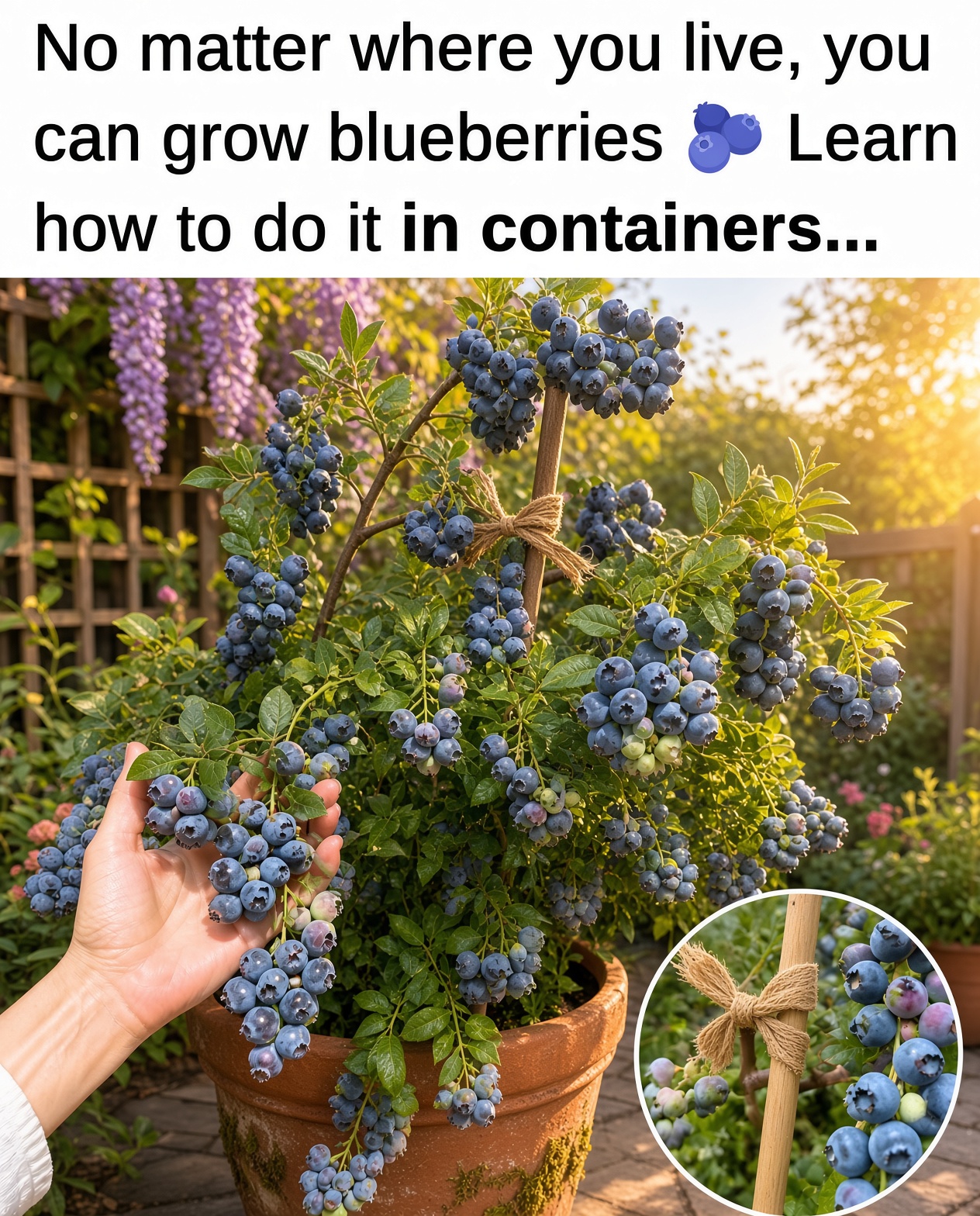
Grow fresh, flavorful blueberries even when garden space is limited. The key is creating the acidic, well-drained and consistently moist environment these fruiting plants prefer.
Blueberries are a little different from many container plants. They prefer strongly acidic soil, consistent moisture, good drainage, and plenty of sunlight. Once those needs are understood, container care becomes much more manageable, and a healthy bush can produce attractive flowers followed by clusters of sweet berries.

1. Choose a Variety That Fits Container Growing
The easiest place to start is with the right blueberry variety. Compact, dwarf, and naturally smaller cultivars are generally easier to maintain in containers because they require less space and are easier to protect and prune.
When shopping, look for plants described as compact, dwarf, patio-friendly, or suitable for containers. Depending on your climate, varieties such as Top Hat or Sunshine Blue may be worth considering, but always check the plant’s mature size and local growing requirements before buying.
Choosing a suitable cultivar from the beginning saves a great deal of work later. A naturally compact bush is much easier to keep healthy in a pot than a vigorous plant that quickly outgrows its container.

2. Select a Large Container With Excellent Drainage
Blueberry roots need room to spread, so avoid placing a healthy plant in a tiny decorative pot simply because it looks attractive. A container around 12 to 16 inches wide and deep can be suitable for a young plant, while larger containers provide better long-term growing space.
Drainage is just as important as size. The pot should have several open drainage holes so excess water can escape quickly. Containers that remain waterlogged can deprive roots of oxygen and increase the risk of root problems.
As the plant develops, you can move it into a larger container if the roots have become crowded. Choose a stable pot that will not tip easily once the bush becomes tall and leafy.

3. Give Blueberries the Acidic Soil They Need
Soil pH is one of the most important details in blueberry growing. Blueberries are acid-loving plants and generally perform best in a strongly acidic growing medium, roughly around pH 4.5 to 5.5.
Ordinary garden soil is often a poor choice for containers because it can become compacted and may not be acidic enough. Instead, use a quality acidic or ericaceous potting mix intended for plants such as blueberries, azaleas, or rhododendrons.
A loose, well-aerated mix is especially helpful in containers. If your blueberry repeatedly develops pale foliage or weak growth despite proper watering and feeding, testing the growing medium’s pH can help identify whether acidity is part of the problem.

4. Plant at the Correct Depth
When planting, position the blueberry at approximately the same depth at which it was previously growing. Avoid burying the stem or root crown deeply beneath the potting mix.
Fill around the root ball with the acidic growing medium, gently firm it, and water thoroughly. The goal is to secure the plant without compressing the mix so tightly that air movement around the roots is restricted.
A thin layer of suitable mulch can help slow moisture loss from the surface. Keep mulch slightly away from the main stem to prevent excessive moisture from collecting directly against the plant.

5. Keep Moisture Consistent
Container blueberries need steady moisture, particularly during warm or windy weather when pots can dry quickly. Check the growing medium regularly instead of relying on a fixed watering schedule.
Water thoroughly when the surface begins to dry, allowing excess water to drain from the bottom of the container. The objective is evenly moist soil—not a pot that stays saturated.
Water quality can also matter over time. If irrigation water is highly alkaline, repeated watering may gradually raise the pH of the growing medium. If maintaining acidity becomes difficult, testing the water as well as the soil can provide useful information.

6. Provide Plenty of Sunlight
Blueberries need abundant light to support vigorous growth and good fruit production. Aim for roughly six to eight hours of direct sunlight each day when possible.
A bright patio, sunny terrace, or other open location can work well. Rotate the container occasionally if the plant receives uneven light from one direction.
In very hot climates, container roots can become much warmer than roots in the ground. During periods of extreme heat, some protection from the harshest afternoon sun can reduce stress, while still providing enough light for the plant to remain productive.

7. Fertilize Carefully
Blueberries benefit from appropriate nutrition, but overfertilizing can do more harm than good. Use a fertilizer formulated for acid-loving plants and follow the manufacturer’s directions rather than applying extra fertilizer in the hope of producing more fruit.
Avoid making large, unplanned additions of manure, compost, lime, or other amendments that can alter the growing medium in unwanted ways. Container blueberries do best when their root environment remains stable.
If growth is weak or leaves become unusually pale, check the plant’s growing conditions—including moisture and pH—before simply increasing the fertilizer rate.

8. Prune for Health and Productivity
Pruning keeps a blueberry bush from becoming overcrowded and helps maintain an open framework of productive branches. Begin by removing dead, damaged, or badly crossing growth.
As a mature bush develops, older stems that have become less productive can gradually be removed to encourage younger shoots. Avoid cutting away large amounts of healthy growth at once unless there is a specific reason to do so.
Good airflow through the canopy is valuable because dense, constantly damp foliage can create conditions that favor disease. Clean, sharp pruning tools also help make neat cuts with minimal damage.

9. Protect Developing Fruit From Birds and Pests
Blueberries can attract birds as soon as the fruit begins to ripen. If birds regularly take your crop, lightweight garden netting can provide a simple physical barrier.
Inspect the plant frequently for insects, damaged leaves, unusual spots, or fruit that begins to shrivel. Early attention is generally easier than trying to correct a serious problem later.
Good growing conditions also matter. Proper spacing, airflow, careful watering, sanitation, and timely harvesting all contribute to a healthier container plant.

10. Harvest Only When the Berries Are Fully Ripe
Blueberries develop their best flavor when allowed to ripen fully on the plant. Look for berries that have reached an even, deep blue color and feel plump rather than firm and underripe.
Do not assume every berry will mature at the same time. Check the bush regularly and pick ripe fruit in stages. Mature berries should come away relatively easily with a gentle touch.
Freshly harvested blueberries can be eaten immediately, refrigerated for short-term use, or frozen for later. Regular harvesting also keeps the plant producing more fruit as the season continues.

Common Container Blueberry Mistakes
A few avoidable mistakes account for many disappointing blueberry plants. The most common are using ordinary alkaline garden soil, choosing a container that is too small, allowing the roots to remain waterlogged, or letting the pot dry out completely for long periods.
Another mistake is treating yellow leaves as an automatic signal to add more fertilizer. When the pH is too high, some nutrients may be present but difficult for the plant to absorb. Checking the growing medium first can prevent unnecessary fertilizer applications.
Finally, remember that container plants need closer attention than plants growing directly in the ground. A quick inspection every few days during the growing season can reveal changes in moisture, foliage, fruit, or pests before they become major problems.

Final Thoughts
Growing blueberries in pots does not require a large garden—it requires the right environment. Start with a container-friendly variety, provide a spacious pot with reliable drainage, and use an acidic growing medium from the beginning.
From there, focus on consistency: give the plant plenty of light, keep moisture steady, fertilize carefully, prune when necessary, and protect ripe berries from birds. These simple habits can turn a patio or balcony into a productive little fruit garden.
With patience and regular care, a well-maintained blueberry bush can reward you with attractive foliage, spring flowers, and homegrown berries season after season. The extra attention is worth it when the first ripe fruit is ready to pick straight from your own container.
