
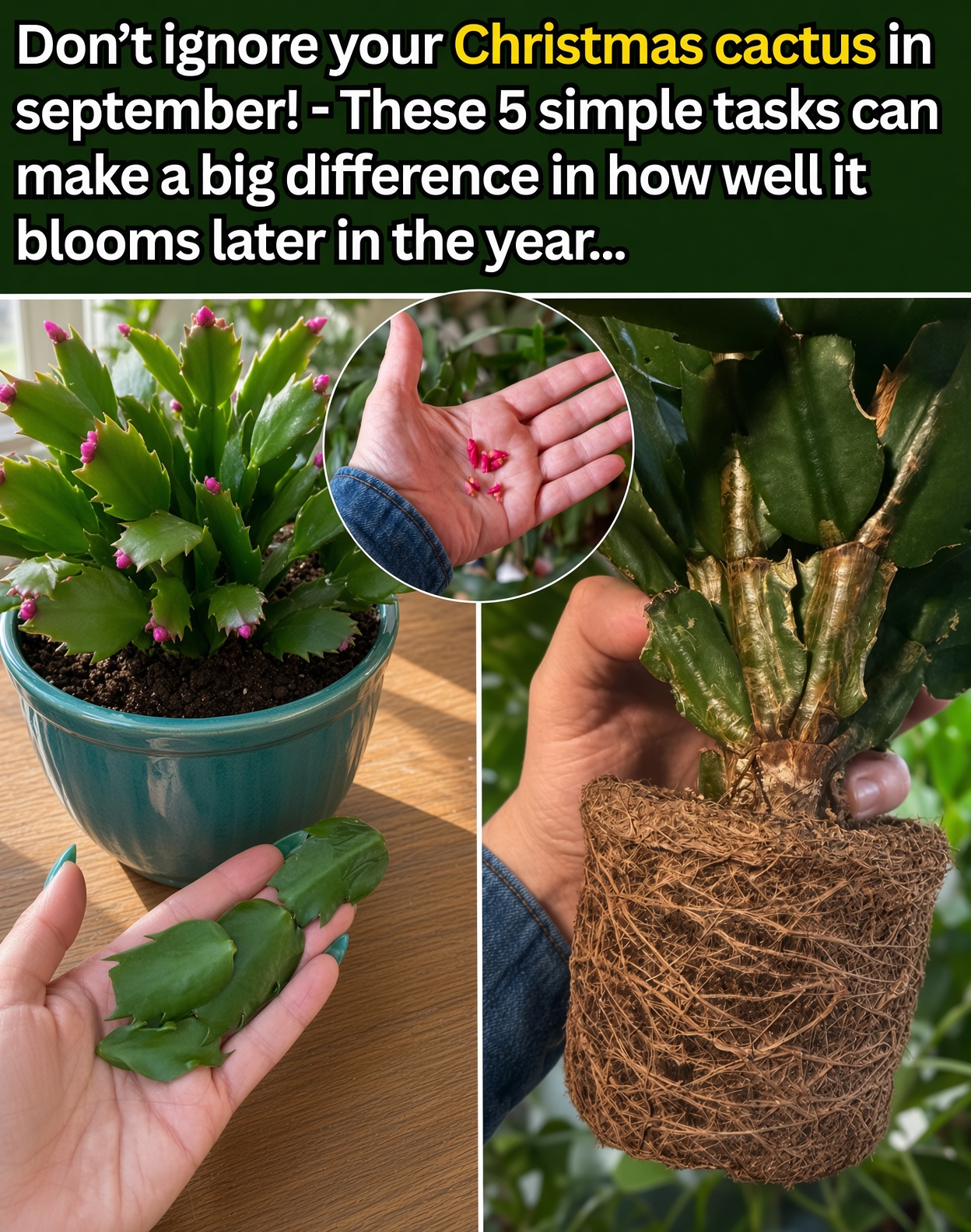
5 Things to Do With Your Christmas Cactus in September for Maximum Blooms

Why September Matters for Christmas Cactus
September is the transition between summer growth and the flowering season. Holiday cacti respond to seasonal signals such as shorter days, longer nights, cooler temperatures, and a change in watering. The goal is not to stress the plant harshly, but to give it a stable routine that encourages flower-bud formation. A healthy plant entering fall has a much better chance of producing a strong display.
1. Give It Long, Uninterrupted Nights
Christmas cactus is strongly influenced by day length. Many plants need roughly 12 to 14 hours of uninterrupted darkness each night for several weeks to initiate buds. During the day, provide bright, indirect light. At night, keep the plant away from lamps, porch lights, televisions, and other artificial light. Consistency matters more than repeatedly moving the plant.
2. Adjust Watering Carefully
As the plant moves toward bud formation, watering can usually be reduced compared with summer. Do not treat it like a desert cactus: Christmas cactus is a tropical forest plant and should not remain bone-dry. Let the growing medium dry somewhat between waterings, then water thoroughly and allow excess water to drain. Never leave the pot sitting in stagnant water. Overly wet soil can cause root problems and weaken the plant.
3. Keep It Cool and Stable
Cooler fall nights can help signal that flowering season is approaching. A useful general range for bud initiation is about 55–65°F (13–18°C) at night, while avoiding freezing temperatures and sudden shocks. Keep the plant away from radiators, heating vents, fireplaces, and cold drafts. Stable conditions are more useful than chasing one exact temperature.
4. Be Careful With Fertilizer
September is not the time to assume that more fertilizer means more flowers. Excess feeding can encourage leafy growth when the plant should be transitioning toward reproduction. If the plant has been fed appropriately during active growth, ease off as buds begin forming. Avoid heavy doses or repeated applications intended to force blooms. Follow the fertilizer label and never overapply.
5. Prune Only If Necessary
Pruning can make a holiday cactus fuller by encouraging branching, but timing matters. Major shaping is better done after flowering or during active growth. Once September arrives and buds are forming, avoid aggressive cutting because healthy stem tips can become flowering points. Remove dead, damaged, diseased, or weak material, but leave healthy growth alone.
6. Skip Unnecessary Repotting
Late summer and early fall are usually poor times for unnecessary repotting when your goal is holiday flowering. Repotting can disturb roots and change the moisture environment just as the plant receives seasonal flowering signals. If the pot drains well and the plant is healthy, wait until after flowering. Christmas cactus often performs well when slightly root-bound.
7. Check Outdoor Plants for Pests
If your Christmas cactus spent summer outdoors, inspect it carefully before bringing it inside. Look around stem joints, under leaves, near the pot rim, and around the soil surface for mealybugs, scale, spider mites, and signs of rot. Bringing an infested plant indoors can spread pests to other houseplants. A careful inspection in September gives you time to address problems before buds develop.
8. Once Buds Appear, Keep Conditions Steady
Flower buds are a sign that the fall routine is working. From then on, consistency becomes especially important. Avoid moving the plant repeatedly, changing its light dramatically, allowing it to become severely dry, or exposing it to sudden temperature changes. Holiday cacti can drop developing buds when conditions change abruptly. Give it bright indirect light and appropriate moisture in a stable location.
9. Keep Humidity Reasonable
Christmas cactus comes from humid forest environments, so extremely dry indoor air can make fall and winter care harder. If your home becomes dry because of heating, a humidifier can provide more consistent moisture in the air. Grouping houseplants together can also help slightly. Keep good air circulation and avoid creating constantly wet conditions.
10. Your September Bloom Checklist
Think of September as a preparation month: bright indirect light during the day, long uninterrupted darkness at night, sensible watering, cooler and stable nights, and less unnecessary feeding. Avoid major repotting and aggressive pruning once buds are forming. Inspect outdoor plants for pests before bringing them inside, then be patient. Individual Christmas and Thanksgiving cacti may bloom on different schedules, but consistent fall care gives them a much better chance of producing a full winter display.