
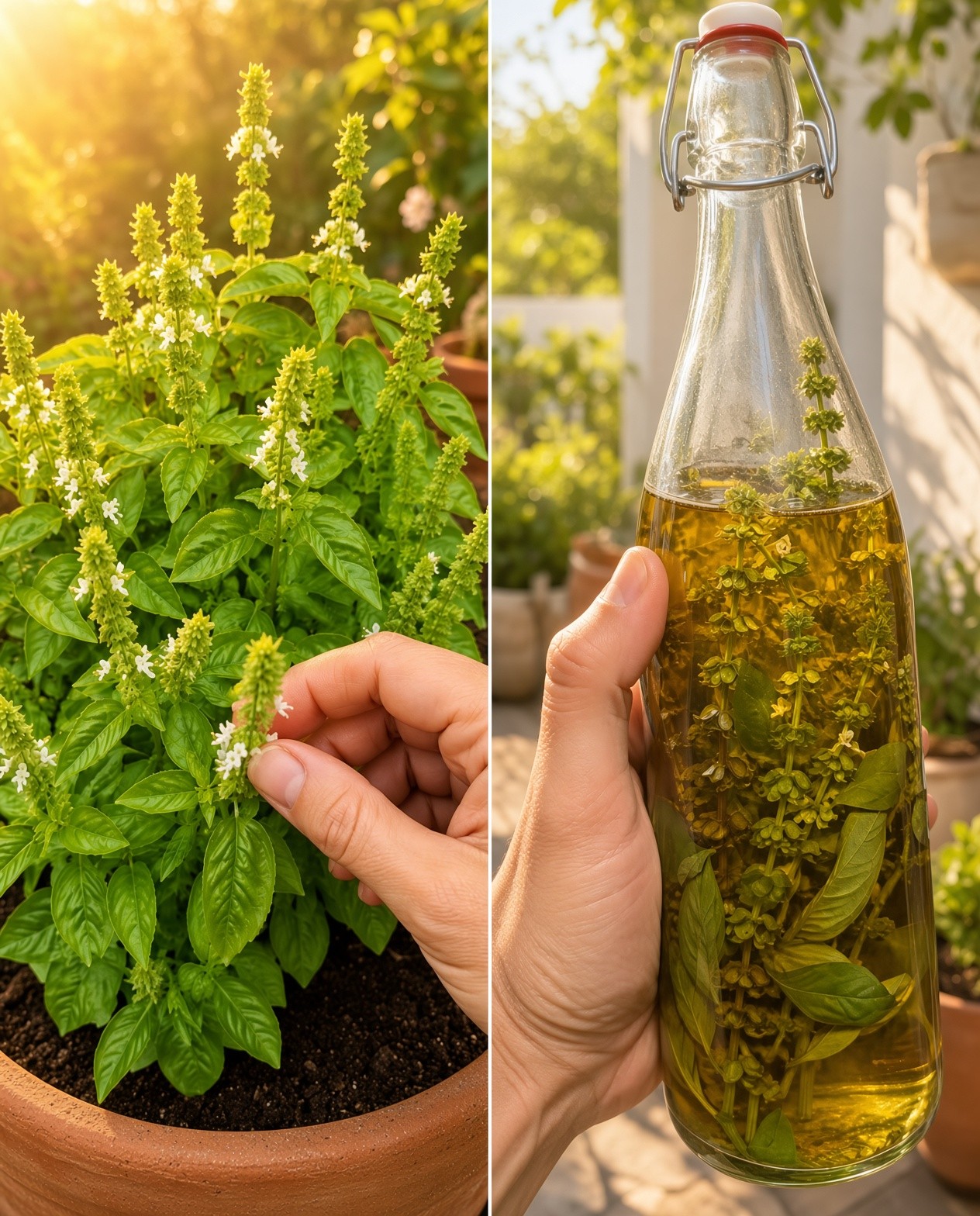
Basil Flowers Are More Useful Than Most Gardeners Realize
When basil begins sending up flower spikes, many gardeners immediately pinch them off. That is often a good way to keep the plant producing tender leaves, but it does not mean the flowers are useless. Basil blossoms are edible, fragrant, attractive, and surprisingly versatile. They can be scattered over salads, used as a delicate garnish, infused into vinegar or oil, steeped as a mild herbal drink, or simply left on the plant to provide nectar for visiting insects. The important distinction is between culinary enjoyment and medical claims. Basil flowers contain aromatic plant compounds and can be part of a varied diet, but they should not be presented as a cure for diseases or as a replacement for medical treatment. Think of them first as a flavorful garden ingredient with plenty of practical uses.

1. Add Fresh Basil Flowers to Salads
The easiest way to use basil flowers is to eat them fresh. Pick clean flower clusters from plants that have not been sprayed with pesticides or other products that are not approved for edible crops. Separate the blossoms gently and scatter them over green salads, tomato salads, grain bowls, or sliced summer vegetables. Their flavor is usually milder than mature basil leaves, with the familiar basil aroma and a slightly peppery note. Because the flowers are delicate, add them just before serving rather than cooking them for a long time. They can also make a simple plate look much more polished. A few white, pink, or purple basil blossoms against green leaves and red tomatoes create an attractive garnish without requiring extra work.

2. Make a Simple Basil Flower Tea
Basil flowers can also be steeped as an herbal infusion. Rinse freshly picked blossoms, place a small amount in a cup, and cover with hot water. Let the flowers steep for several minutes, then strain and taste. The result is a light, aromatic drink that can be enjoyed plain or with lemon and a little honey. Dried flowers can be used in the same way. Because home-prepared herbal teas vary in strength and there is limited evidence for many of the health claims made online about basil flowers, it is best to treat this as a culinary beverage rather than a medicine. Anyone who is pregnant, breastfeeding, taking medication, or managing a medical condition should ask a qualified health professional before regularly consuming concentrated herbal preparations.

3. Infuse Vinegar for Salads and Marinades
Basil flower vinegar is an easy kitchen project that turns an abundance of blossoms into a useful pantry ingredient. Place clean, dry flowers in a sterilized glass jar and cover them completely with a mild vinegar such as white wine vinegar or apple cider vinegar. Seal the jar and let it infuse in a cool, dark place, tasting periodically until the aroma is strong enough for you. Strain the flowers and store the finished vinegar appropriately. Use it in salad dressings, quick marinades, vegetable salads, or sauces. The flowers contribute a gentle basil fragrance without the need to buy another flavored condiment. For food safety, use clean equipment, avoid introducing water into the vinegar, and follow a tested preservation method if you plan to store it for a long period.

4. Make Basil Flower Oil for Cooking
Fresh basil flowers can contribute aroma to an oil used soon after preparation. For a simple kitchen version, gently bruise a small amount of clean blossoms and combine them with oil for a short infusion, then strain and refrigerate. Use the flavored oil promptly on tomatoes, roasted vegetables, pasta, or bread. For longer storage, be cautious with fresh herbs in oil because low-acid plant material can create conditions that support dangerous bacterial growth if stored improperly. A safer approach for extended storage is to use a tested recipe, refrigerate according to its instructions, or work with fully dried plant material and an established preservation method. The goal is to enjoy basil flower flavor without turning a simple kitchen project into a food-safety problem.

5. Stir the Blossoms Into Pesto and Sauces
Basil flowers can be used alongside leaves in recipes where their delicate texture and aroma are welcome. Add a small handful to a traditional basil pesto with leaves, garlic, nuts, hard cheese, and olive oil. You can also blend them into green sauces, herb dressings, or a simple yogurt-based dip. The flowers will not necessarily make the recipe taste dramatically different, but they add another layer of basil character and make good use of flowering stems. If the flowers are mature and the stems feel tough, use mostly the blossoms and tender upper portions rather than fibrous lower stems. This is an especially useful trick late in the season when a basil plant is flowering heavily and you want to harvest more than just leaves.

6. Use Basil Flowers in Drinks and Desserts
A few basil blossoms can turn an ordinary drink into something that looks restaurant-worthy. Float fresh flowers on lemonade, iced tea, sparkling water, or a nonalcoholic summer drink. They can also be frozen into ice cubes for a decorative effect. In desserts, use a small amount as a garnish for berries, fruit salads, panna cotta, or simple cakes. Because the blossoms are aromatic, a little goes a long way. If you are serving flowers to guests, make sure they are correctly identified as edible basil blossoms and have been grown without unsuitable pesticides. Do not assume that every flower from a garden is edible. Keep ornamental flowers and culinary flowers clearly separated to avoid accidental use of the wrong plant.

7. Leave Some Flowers for Bees and Other Beneficial Insects
Not every basil flower needs to end up in the kitchen. Basil blooms can attract bees and other visiting insects, especially when the garden offers a variety of flowering plants throughout the season. Leaving some flowering stems on the plant adds another source of nectar and makes the garden more welcoming to pollinators. This can be especially valuable in a vegetable garden where you are already growing tomatoes, peppers, cucumbers, squash, or fruiting plants that depend on pollination. You can balance both goals by harvesting some flower clusters for the kitchen while leaving others untouched. Once flowering begins, the plant may put less energy into producing large quantities of tender leaves, but that is not necessarily a problem if your priority has shifted toward flowers, seeds, and pollinator value.

8. Dry Basil Flowers for Later
Drying is one of the simplest ways to preserve an excess of basil flowers. Harvest healthy flower clusters on a dry day, remove damaged material, and spread them in a single layer somewhere warm, dry, and well ventilated away from direct sunlight. When completely dry and crisp, store them in a clean airtight container labeled with the date. Dried basil flowers can be crumbled into herb blends, used for tea, or added to small amounts of homemade potpourri. Make sure the flowers are thoroughly dry before sealing them; residual moisture can encourage mold. If you want the strongest culinary aroma, use dried flowers relatively soon rather than keeping them indefinitely. Small batches are usually easier to protect and use.

9. More Smart Ways to Use Basil Flowers at Home
Once you begin treating basil flowers as a useful part of the harvest rather than garden waste, many small ideas become possible. Add them to compound butter, fold them into scrambled eggs, sprinkle them over flatbreads, or use them as a finishing touch on soups and pasta. They can flavor simple pickled vegetables, decorate a summer cheese board, or become part of a homemade herb salt. Fresh blossoms can be combined with basil leaves for a more interesting garnish, while dried flowers can be mixed with other dried culinary herbs. The key is restraint: basil flowers are best used as a subtle accent rather than a dominant ingredient. Their value comes from aroma, appearance, and the satisfaction of using more of what the garden produces.

10. The Best Reason to Keep Basil Flowers
The most useful benefit of basil flowers may be that they make the plant more versatile. You can harvest leaves for everyday cooking, flowers for garnishes and infusions, and some mature blooms for pollinators or seed production. Instead of viewing flowering as the end of the basil season, you can adapt your harvesting strategy to what you need. If you want maximum leaf production, pinch flower spikes early and regularly. If you want flowers for cooking or the garden ecosystem, allow selected stems to bloom. Either way, keep harvesting cleanly and monitor the plant for pests, disease, and declining vigor. Basil flowers are not a miracle cure, but they are a genuinely useful part of an edible garden—and once you start using them, you may stop seeing those little flower spikes as something that simply needs to be removed.
