
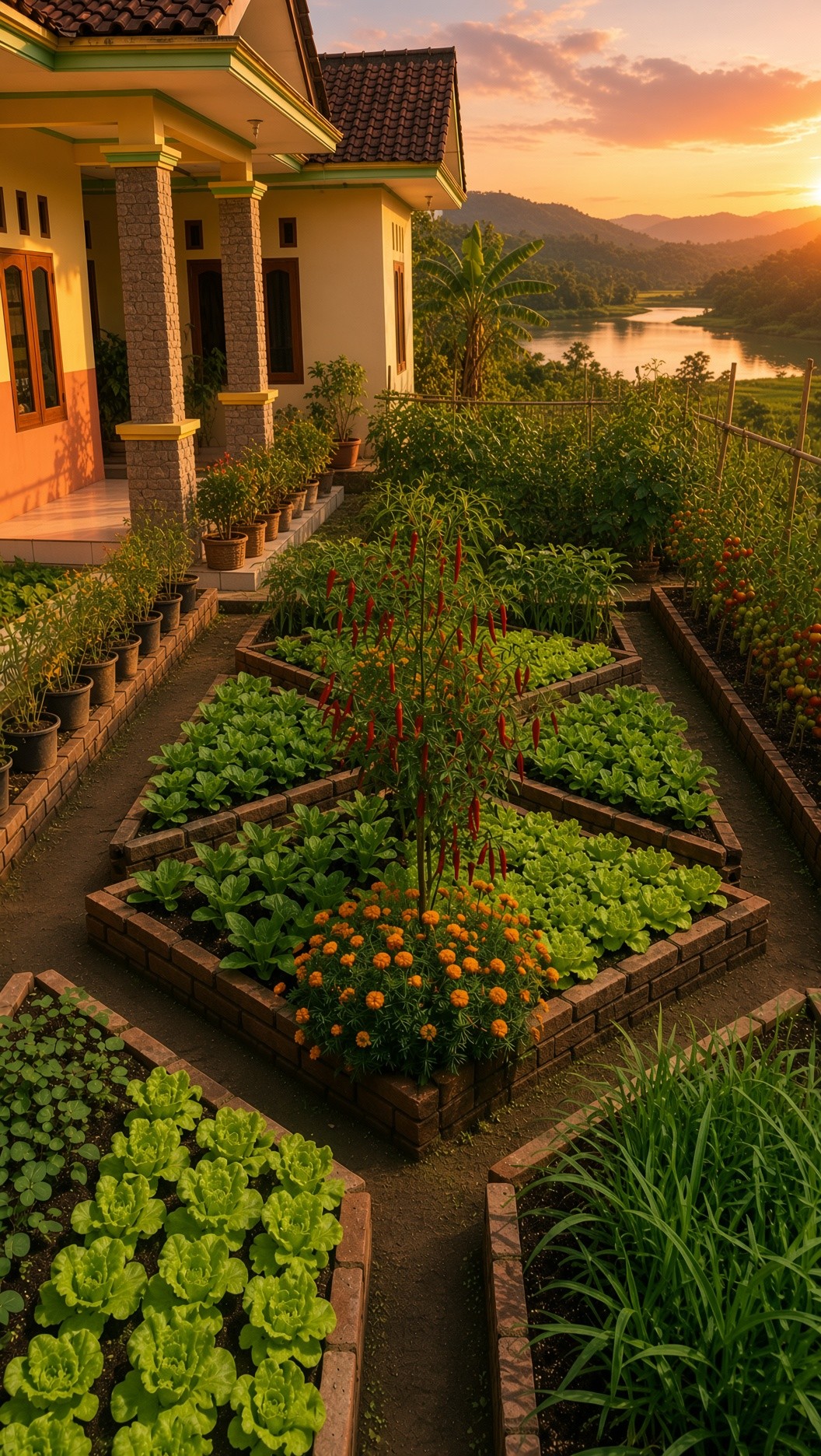
A Beautiful Garden Right Outside the Door
A productive garden does not have to be hidden at the back of a property. With thoughtful planning, the space beside a home can become a beautiful source of vegetables, herbs, edible flowers, and fresh ingredients. Raised beds make the growing area easy to organize, while clear paths keep harvesting and routine maintenance comfortable. The most successful home gardens are designed around how people actually use them: plants are placed where they can be reached, frequently harvested crops stay close to the kitchen, and taller plants are positioned so they do not shade everything else. The result is more than a decorative landscape. It becomes a practical outdoor pantry that changes with the seasons and provides a daily reason to step outside.

Start With Sunlight, Access, and Drainage
Before building beds, spend a day observing the area. Most fruiting vegetables need roughly six to eight hours of direct sunlight, although leafy greens can tolerate less. Notice where morning and afternoon shade falls, especially if buildings, walls, or trees are nearby. Easy access matters just as much. A garden that looks beautiful but requires walking through mud or stepping across beds quickly becomes frustrating. Keep paths wide enough for comfortable harvesting and, if necessary, a wheelbarrow. Good drainage is equally important. Avoid low spots where water collects after rain, and use raised beds when the native soil drains poorly. Planning these basics first can prevent many problems later.

Build Soil That Supports Healthy Roots
Healthy soil is the foundation of a productive edible garden. Instead of relying on a single ingredient, aim for a balanced growing medium that holds moisture while still allowing excess water and air to move through it. Mature compost can improve structure and add organic matter, while a soil test can tell you whether pH or nutrient levels need attention. Avoid repeatedly adding fertilizer without knowing what the soil already contains. Too much of some nutrients can create problems even when plants look vigorous at first. Before planting, loosen compacted soil and remove persistent weeds. After the beds are established, a layer of organic mulch can protect the surface, reduce evaporation, and make weed control easier.

Choose Crops for Continuous Harvests
A beautiful vegetable garden becomes much more useful when crops are selected for different harvest times. Leaf lettuce, spinach, radishes, and many herbs can provide quick, repeated harvests. Tomatoes and peppers take longer but can produce for weeks once they begin. Beans and cucumbers can be trained vertically to save ground space. Planting small amounts of fast-growing crops every few weeks can provide a steadier supply than sowing everything on one day. Also consider what your household actually eats. A garden filled with crops nobody wants to harvest is not productive, no matter how attractive it looks. Choose dependable favorites first, then experiment with a few unusual varieties each season.

Use Flowers to Add Beauty and Support Pollinators
Flowers can make an edible garden look intentional rather than purely utilitarian. Marigolds, calendula, nasturtiums, and other suitable flowers add color while providing nectar and pollen for visiting insects. Their presence can help create a more diverse garden ecosystem, although flowers should not be treated as a guaranteed pest-control solution. The greatest benefit comes from combining flowering plants with good cultural practices: healthy soil, adequate spacing, regular inspection, and appropriate watering. Place flowers along bed edges, at pathway corners, or between vegetable groups where they can be enjoyed easily. Some edible flowers can also be harvested for salads and garnishes, giving ornamental planting an additional practical purpose.

Water Deeply and Consistently
Watering is easier when the garden is designed for efficiency. Young seedlings need consistent moisture while their roots are developing, but established plants generally benefit from deeper watering rather than frequent shallow sprinkling. Water near the soil surface so less moisture is lost to evaporation and leaves stay drier. Morning is often a convenient time because plants can use the water during the day and wet foliage has more opportunity to dry. Check the soil before watering instead of following a rigid schedule. Weather, soil type, container size, and plant maturity all affect how quickly a bed dries. Mulch can further reduce moisture loss, especially during hot periods.

Make Harvesting Part of the Design
The best home garden is one you can harvest without effort. Keep salad greens, herbs, and frequently picked vegetables near the easiest path or closest to the kitchen. Use trellises for climbing crops such as cucumbers and beans, giving them support before vines become difficult to manage. Harvest leafy crops regularly instead of allowing them to become overcrowded, and pick beans and cucumbers while they are young and tender if that matches the variety. Frequent harvesting can encourage continued production in many crops. Keep a small basket or harvesting scissors nearby so collecting dinner ingredients becomes a simple habit rather than another chore.

Protect Productivity With Simple Maintenance
You do not need to spend all day in the garden. A short routine performed regularly is usually more effective than occasional major cleanups. Walk through the beds several times a week and look closely at new growth. Remove weeds while they are small, check leaves for signs of insect damage or disease, and remove damaged plant material promptly. Tie or guide plants before they become tangled. Replace mulch where it has thinned and check irrigation after storms or unusually hot weather. At the end of a crop’s productive period, remove spent plants and add healthy organic material to the soil when appropriate. Small actions prevent minor issues from becoming major jobs.

Think Beyond One Season
A productive garden improves when you plan for the next crop while the current one is still growing. Rotate plant families between beds when practical to reduce repeated pressure from certain soilborne pests and diseases. Avoid planting the same crop family in exactly the same location year after year. Keep notes about varieties that performed well, harvest dates, pest problems, and watering needs. Vertical structures can remain useful for a second crop, while empty spaces can be replanted with quick greens or herbs when temperatures allow. This approach turns a garden from a fixed arrangement into a changing system that uses space more efficiently across the year.

Turn the Space Into a Garden You Enjoy
A productive edible garden should also be a pleasant place to spend time. Brick or stone bed edges can create clear boundaries, while simple paths make the layout easier to navigate. Containers near the door can hold herbs that you use frequently, and a few flowers can soften the transition between the house and the growing area. Keep the design realistic for the amount of time you have available. A slightly smaller garden that receives regular attention will usually outperform an oversized garden that becomes difficult to maintain. With sunlight, soil, water, crop selection, and access working together, even an ordinary area outside the door can become a beautiful and genuinely useful part of the home.
