
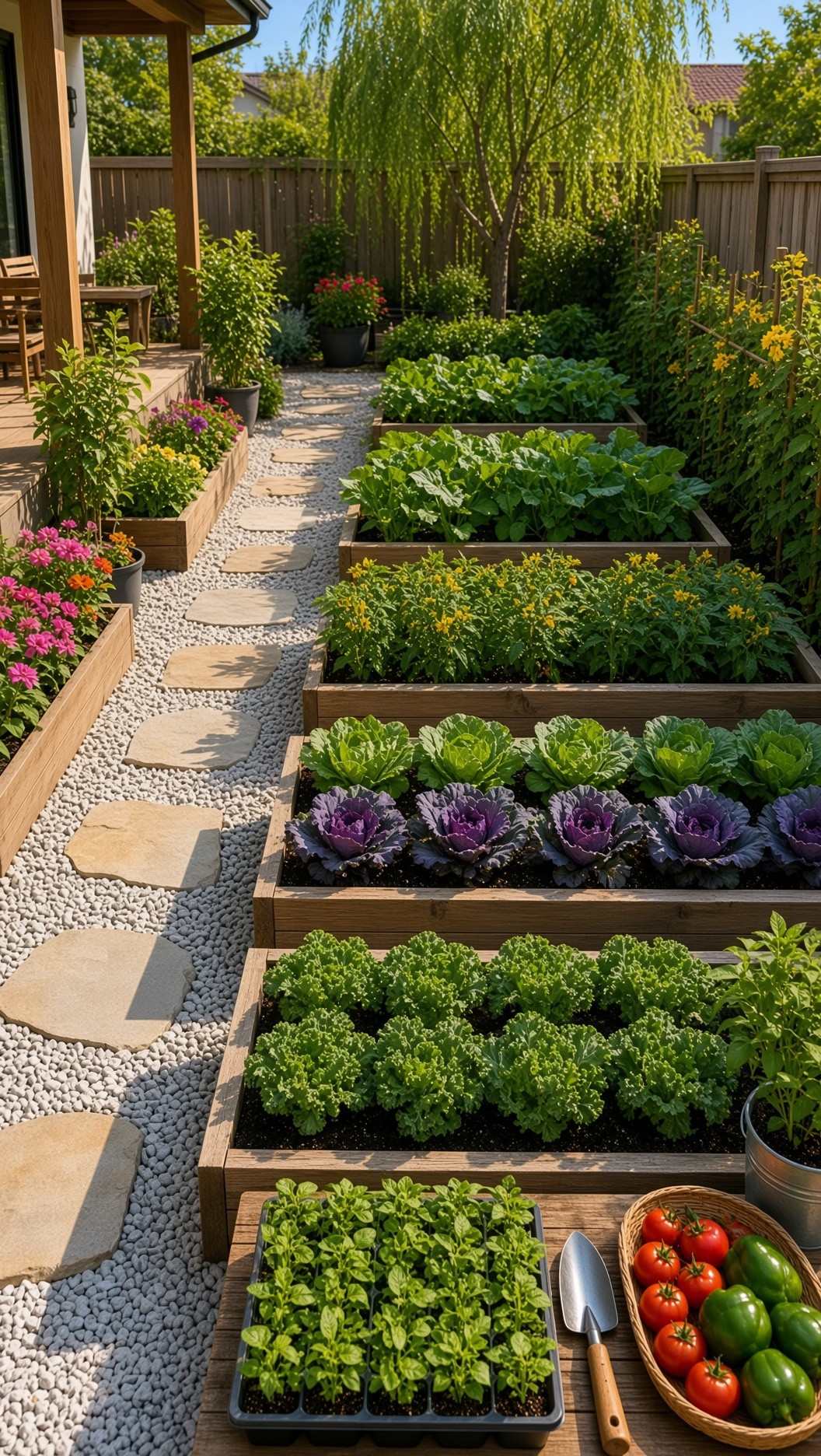
You do not need acres of land to grow a generous amount of food. With raised beds, compact planting, vertical supports, succession seedlings, useful pathways, and a few flowers, even a narrow backyard can become an attractive garden that supplies fresh vegetables and herbs throughout the season.

1. Start With a Simple Garden Plan
A small backyard can become surprisingly productive when every part of the space has a job. Before buying plants or building beds, sketch the area and note where the strongest sunlight falls, where water is easiest to reach, and where you naturally walk through the yard.
 A clear plan prevents a common small-garden problem: filling every inch with plants and leaving no comfortable way to reach them. Keep the layout practical first, then add decorative touches around it.
2. Build Raised Beds to Make Space Work Harder
Raised beds are one of the easiest ways to organize a compact vegetable garden. They create defined growing zones, make it simpler to improve the soil, and turn narrow spaces between beds into useful paths instead of wasted ground.
 Keep beds narrow enough that you can reach the middle without stepping into the soil. Several smaller beds can also be more flexible than one oversized rectangle.
3. Grow Leafy Greens in Compact Rows
Lettuce, kale, chard, spinach, and other leafy crops are excellent choices when space is limited. They mature relatively quickly and can be planted in close, orderly rows, allowing a modest bed to produce several harvests.
 For a continuous supply, avoid planting the entire bed on one day. Sow or transplant small amounts at intervals so another crop is ready as the first is harvested.
4. Use the Edges for Onions, Herbs, and Small Crops
The edges of raised beds are valuable growing real estate. Compact onions, chives, parsley, basil, thyme, and other herbs can fit along borders without taking much room away from larger crops in the center.
 Edge planting also keeps frequently used herbs easy to reach. Group crops with similar watering needs and keep taller plants from shading smaller ones.
5. Take Vertical Crops Off the Ground
Climbing vegetables can dramatically increase the amount of food you grow without increasing the garden footprint. Cucumbers, pole beans, peas, and some small-fruited squash can climb trellises, arches, or sturdy supports along a wall or the back edge of a bed.
 Vertical growing improves airflow and keeps fruit away from damp soil. Install supports early and guide young growth toward them before vines become heavy.
6. Start Seedlings for a Steady Harvest
A small propagation tray can help you use your beds more efficiently. Starting seedlings gives you young plants ready to replace crops as soon as a row is harvested, reducing empty soil.
 You do not need a large greenhouse. A bright windowsill, protected patio, or small covered tray can be enough for many starts. Sow a few plants at a time to spread harvests across the season.
7. Mix Flowers Into the Vegetable Garden
Edible gardens do not have to look purely utilitarian. Flowering plants around raised beds add color and can help create a welcoming habitat for pollinators.
 Choose flowers that fit your climate and available space, and place them where they will not crowd the vegetables. A few well-positioned blooms can soften the garden without sacrificing much growing room.
Imagine Your Next Dinner Coming From the Backyard
A few raised beds can provide lettuce for salads, herbs for cooking, tomatoes and peppers for summer meals, and climbing vegetables that make use of vertical space. Add a simple path and a few flowers, and the result can be both productive and beautiful.
Would you turn a small backyard into an edible gardeen like this?