
Why August Is a Smart Time to Sow Spring Flowers
August can look like an odd month for starting flowers. The garden may be hot, established plants are filling every bed, and spring seems far away. But for many hardy annuals and biennials, late summer is exactly when planning for the next season begins to pay off. Sowing at the right time allows young plants to establish roots while the soil is still warm, then settle into a slower period as temperatures fall. Instead of asking a tiny seedling to germinate in cold spring soil and grow quickly at the same time, you give it a head start. The result can be sturdier plants and earlier, more generous flowering when spring returns. The important point is that August sowing is not one-size-fits-all. Your climate, first-frost timing, winter conditions, and the flower itself all matter. Use your growing zone as a starting point, then adjust for your local weather.

Zones 3–4: Choose Hardy Flowers and Protect Young Plants
Gardeners in the coldest regions need to think about winter survival first. Flowers that can tolerate frost and a prolonged cold season are better choices than tender annuals. Forget-me-nots, sweet William, foxglove, and other hardy biennials can be useful options where they are suited to the local climate. The goal in August is not to produce a large flowering plant before winter. Instead, encourage a compact young plant with a healthy root system. Give seedlings bright light and avoid keeping the soil constantly wet. As temperatures fall, a light mulch can help buffer the root zone after the ground has cooled. In very cold areas, the exact timing may need to be earlier or later than a calendar date suggests. Watch your local forecast and first-frost pattern. If a seed packet recommends a different sowing window for your region, follow that guidance rather than forcing an August planting.

Zones 5–6: Build a Strong Autumn Rosette
Moderate climates offer gardeners a broad selection of flowers to sow in late summer. Cornflower, Shirley poppy, sweet William, foxglove, larkspur, and other cool-season candidates can work when their preferred conditions match your garden. August warmth helps seeds germinate, but the seedlings should not be pushed into excessive soft growth. Keep the seedbed evenly moist during germination, then reduce watering frequency as roots develop and the weather cools. Good drainage is important because young plants can struggle when warm soil stays saturated. In areas with cold winters, the aim is usually a sturdy plant that can pause or form a low rosette rather than a tall, floppy stem. Once established, many hardy types handle cool weather much better than newly planted spring seedlings. A little attention in August can therefore make spring planting feel much easier because the plants already have a foundation.

Zones 7–9: Use the Longer Growing Season to Your Advantage
Warmer zones can have a longer window for establishing cool-season flowers, but heat still changes how seeds should be started. In very warm areas, direct afternoon sun can dry the surface of a seedbed quickly and make germination uneven. Choose a location with bright morning light and some protection from the hottest afternoon conditions when the species allows it. Flowers such as California poppy can be suitable for warm climates, while other choices depend on the exact zone and winter pattern. The key is to avoid assuming that a warm climate means every flower should be sown immediately. Some species need cooler conditions before they perform well. If August nights remain extremely hot, sowing may work better later in the season when temperatures begin to moderate. Check the seed packet for temperature guidance and use your local weather rather than the calendar alone.

Larkspur, Cornflower, Poppy and Nigella
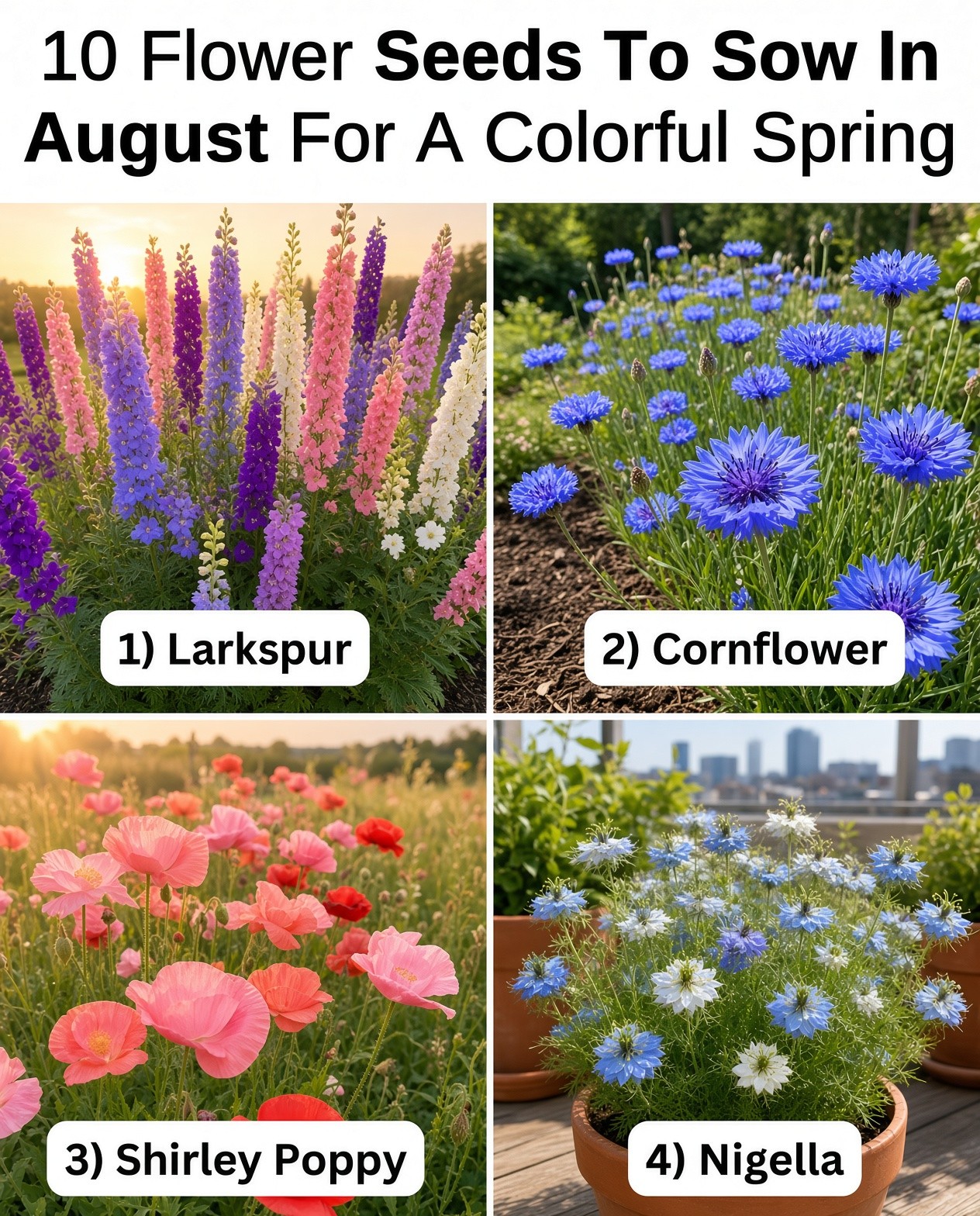
Several hardy annuals are especially useful when you want an informal, colorful spring display. Larkspur can be a good candidate in regions where autumn and winter conditions suit it, and it generally performs best with plenty of light. Cornflower prefers sun and can provide cheerful blue flowers later in the season. Shirley poppy is another classic cool-season choice, producing delicate blooms when conditions are favorable. Nigella, often called love-in-a-mist, can also fit into an August sowing plan in warmer areas. These flowers do not need a complicated setup. A fine, well-prepared seedbed, consistent moisture during germination, and the correct sowing depth are usually more important than elaborate equipment. Avoid burying tiny seeds too deeply. Many flower seeds need light or only a very shallow covering to germinate well, so the packet instructions should always take priority.

Foxglove, Sweet William and Honesty
Biennial flowers deserve special attention because their life cycle is different from that of a typical summer annual. Foxglove, sweet William, and honesty often spend their first season establishing foliage and roots before producing their main display the following year. That makes late summer a useful time to get them started. Foxglove can tolerate some shade, while sweet William generally performs best with more direct light. Honesty is adaptable and can work in sun or partial shade when the soil is suitable. Keep young seedlings free from aggressive weeds, because competition at this stage can slow development. Do not be disappointed if the plants look modest by autumn. A healthy first-year rosette is exactly what you want. Their value comes from allowing the plants to establish before the next flowering season. Once you understand that cycle, August sowing feels less like waiting and more like preparing the next chapter of the garden.

California Poppy, Wallflower and Forget-Me-Not
Some flowers are particularly useful when your climate gives you a mild autumn and winter. California poppy is better suited to warmer zones, while wallflower is another option for regions where winter conditions are not too severe. Forget-me-not has a broad range of tolerance and can create a soft carpet of color in spring. Each has different preferences, so avoid treating them as interchangeable. Wallflowers can appreciate some protection from intense sun in warmer locations, while California poppies generally need excellent light and drainage. Forget-me-nots may appreciate shade during periods of extreme heat even though brighter conditions can support flowering later. If your August weather is unusually hot, consider starting seeds in a protected bed or container where moisture and light are easier to manage. Once temperatures moderate, seedlings can be moved or thinned according to the needs of the species.

Simple August Seed-Sowing Tips for Better Spring Results
Success with August flower sowing usually comes down to a few simple habits. Start with fresh, correctly stored seed and a clean seedbed or container. Prepare fine soil without creating a hard crust on the surface. Sow at the depth listed on the packet; for many small flower seeds, that means barely covering them. Water gently so the seeds are not washed away, and keep the surface consistently moist until germination. Once seedlings appear, give them enough light to stay compact and gradually space them so they are not competing for air, water, and nutrients. Label every planting with the flower name and sowing date. This is especially helpful when several seedlings look alike. Most importantly, use your USDA hardiness zone only as a guide, not as a guarantee. Local elevation, rainfall, exposure, soil, and first-frost timing can all shift the ideal window. A little observation will help you fine-tune the timing each year.

How to Choose the Right Flowers for Your Zone
The easiest way to avoid disappointment is to choose plants that fit both your hardiness zone and your seasonal temperatures. A zone tells you about typical winter cold, but it does not tell the whole story. A garden beside a warm wall can behave differently from an exposed hillside, and a damp low spot can have very different growing conditions from a raised, sunny bed. Before sowing, look at the seed packet for the recommended zones, light requirements, and preferred sowing season. Then consider your own garden. If a flower is listed for your zone but dislikes winter wet, place it where drainage is excellent. If a species prefers cooler conditions, do not assume an unusually hot August is ideal simply because the calendar says August. Matching the plant to the microclimate is one of the simplest ways to turn a promising seed packet into a successful spring display.

What to Do After the Seeds Germinate
The work does not end when tiny green seedlings appear. August germination can be surprisingly fast, and young plants need enough light to develop sturdy stems. Keep watering gentle and consistent, but let excess water drain away. If seedlings are crowded, thin them according to the spacing recommended for the species rather than allowing a dense mat to develop. Crowding can reduce airflow and encourage weak, stretched growth. As autumn approaches, gradually reduce intervention and let hardy seedlings experience the natural change in temperature. Before severe winter weather arrives, make sure the planting area is free of weeds and has suitable drainage. A light protective mulch may help in colder climates, but avoid burying small crowns or creating a wet, airless layer around them. The best spring displays often begin with very ordinary-looking seedlings that were given the right conditions in late summer.
