
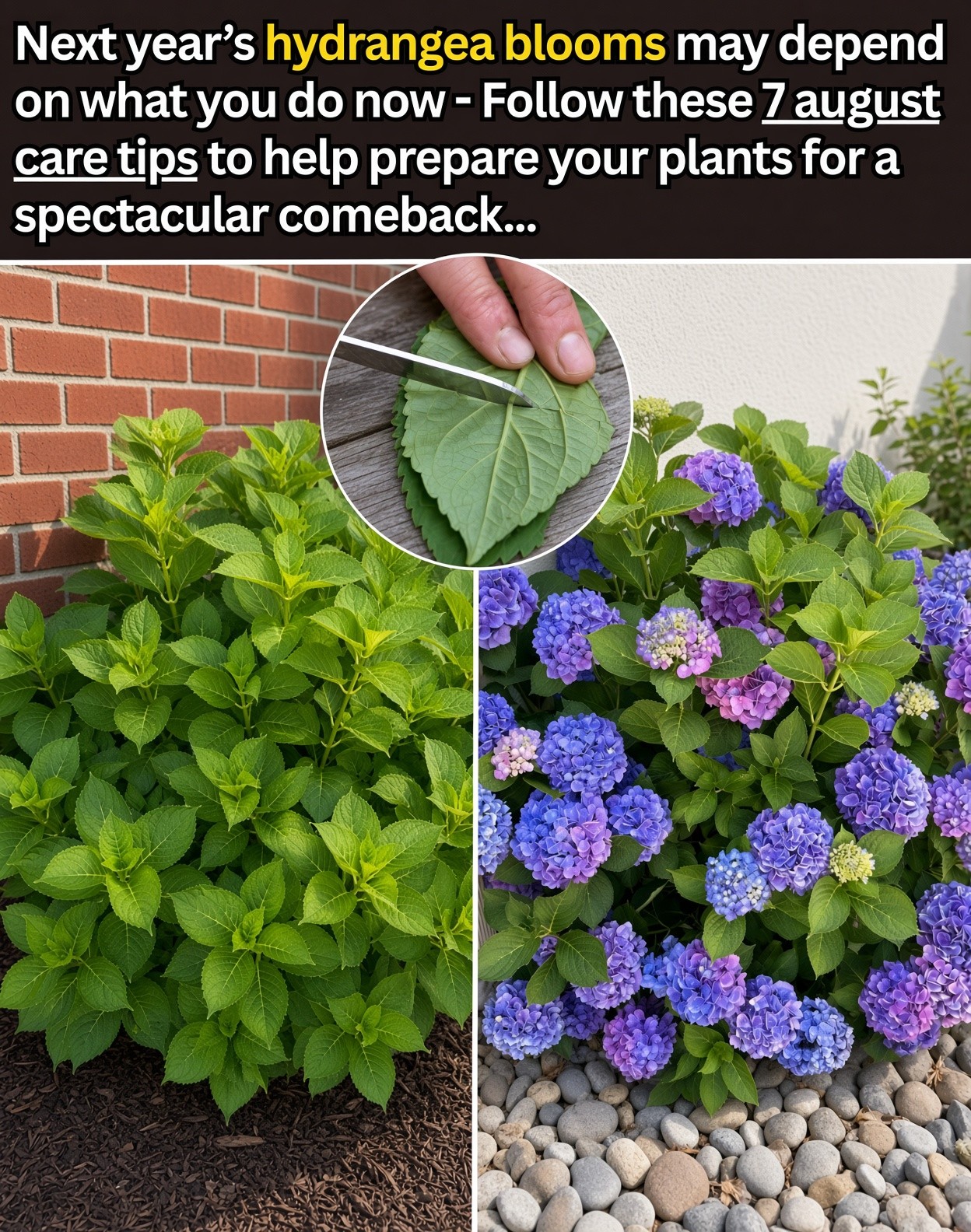
August Is the Time to Think Ahead
August is more than the month when hydrangea flowers begin to fade into soft green, mauve, and antique shades. Late summer is also when the plant is preparing for the next growing season. The most useful August routine is simple: identify the type of hydrangea you have, protect the stems that carry future buds, keep the root zone evenly moist, refresh the mulch, avoid excessive late-season growth, and watch the foliage for problems. Many bigleaf, mountain, and oakleaf hydrangeas flower from older stems, while panicle and smooth hydrangeas generally bloom from new growth. That difference determines how cautiously you should prune. With a few well-timed jobs, you can help your shrub enter autumn strong and give it a much better foundation for next year’s flowers.

1. Know Whether Your Hydrangea Blooms on Old or New Wood
Before you prune, identify your hydrangea. Bigleaf hydrangeas, including many mophead and lacecap types, along with mountain and oakleaf hydrangeas, commonly form their next flower buds on existing woody stems. Those buds must survive winter before they open the following year. Panicle hydrangeas and smooth hydrangeas generally flower on new growth produced during the current growing season, so they tolerate more flexible pruning. If you are unsure of the cultivar, check the plant label or a reliable horticultural reference before making a major cut. This small bit of preparation can prevent a common August mistake: removing healthy stems that already contain next year’s flowers.

2. Finish Necessary Pruning Carefully
Old-wood hydrangeas should not receive a heavy late-season haircut. If shaping, size control, or deadwood removal is necessary, make selective cuts rather than shortening every branch. Remove dead or broken stems at their base, and when deadheading, cut the spent flower stem just above a healthy pair of leaves or a strong lateral bud. Avoid cutting deeply into healthy mature stems simply because they look long. Panicle and smooth hydrangeas are more forgiving, but they still do not need unnecessary pruning. Step back after every few cuts and check the overall shape. A natural framework with healthy branches is more valuable than a perfectly clipped outline.

3. Water Deeply and Consistently
Hydrangeas can lose moisture quickly during August heat because their broad leaves release a great deal of water. Repeated wilting places stress on the plant, so watering should be steady without leaving the soil permanently saturated. Water slowly enough to wet the main root zone instead of giving frequent shallow sprinkles. The exact schedule depends on rainfall, temperature, soil type, and whether the plant is growing in a container or in the ground. Check the soil before watering again. Morning watering is often convenient because the plant begins the hottest part of the day hydrated. Container hydrangeas deserve special attention during heat waves because their limited soil volume can dry much faster.

4. Refresh the Mulch Around the Root Zone
A two- to three-inch layer of organic mulch can make a noticeable difference during late-summer heat. Shredded bark, pine straw, or well-rotted leaf material helps slow evaporation, moderate soil temperature, and reduce competition from shallow-rooted weeds. Spread the mulch over the root zone, but leave a small open space around the main stems so the crown and bark stay reasonably dry. Check the existing layer before adding more. If it is already very thick or compacted, loosen or refresh it instead of continually building a deeper pile. Mulch is a support for good watering, not a substitute for it. The goal is a stable root environment that does not swing rapidly between very dry and very wet conditions.

5. Feed With Restraint in Late Summer
August is not the time to force a hydrangea into a large flush of soft new foliage. Before adding fertilizer, consider whether the plant actually needs additional nutrients. A soil test is more useful than guessing from leaf color or flower size. If feeding is appropriate, choose a product labeled for flowering shrubs or hydrangeas and follow the package directions. Avoid excessive nitrogen late in the season because lush new growth may be more vulnerable when temperatures fall. Fertilizer also cannot fix drought, poor drainage, compacted soil, or unsuitable light. Correct those basic growing conditions first. Healthy roots and consistent care are more important than repeated applications of fertilizer.

6. Check Leaves for Pests and Disease
Walk around the shrub at least once a week and inspect both sides of the leaves. Look for fine webbing, stippled yellowing, distorted new growth, powdery coatings, or expanding brown and purple spots. Warm days combined with humid nights can make pest and fungal problems easier to notice. Good airflow, appropriate watering, and garden sanitation can reduce some problems. Avoid spraying automatically. First identify the likely pest or disease, then choose a treatment labeled for that particular problem and plant. Remove badly affected material when appropriate, and clean pruning tools after working on visibly diseased growth. Early attention is usually easier than trying to correct a widespread problem later.

7. Protect the Stems That Will Carry Next Year’s Flowers
As August moves toward autumn, preserving healthy mature stems becomes more important than making the shrub look perfectly tidy. On old-wood hydrangeas, next year’s flower buds may already be developing along those stems. Unnecessary autumn or winter pruning can remove them. Keep watering steady while hot weather continues, and avoid major cuts once the plant has finished flowering. In colder areas, winter protection should match the species and local climate. Mulch can help insulate roots, while a breathable temporary screen can reduce exposure to drying winter winds. Avoid tight coverings that trap moisture around the stems. The goal is to send the plant into winter with healthy roots, foliage, and flowering wood intact.

Final August Hydrangea Checklist
Before September arrives, give each hydrangea a simple inspection. Make sure the root zone is moist but not waterlogged, the mulch is useful without touching the stems, and the foliage is free from obvious new pest or disease problems. Confirm that old-wood varieties have not been cut back unnecessarily, and remove only clearly dead or damaged growth. If the plant is healthy, resist the temptation to keep adding products. Hydrangeas respond best to consistent care rather than constant intervention. By protecting the right stems, maintaining moisture, keeping the root zone comfortable, and watching the foliage, you give your shrub a stronger starting point for a fuller and healthier flower display next year.
