
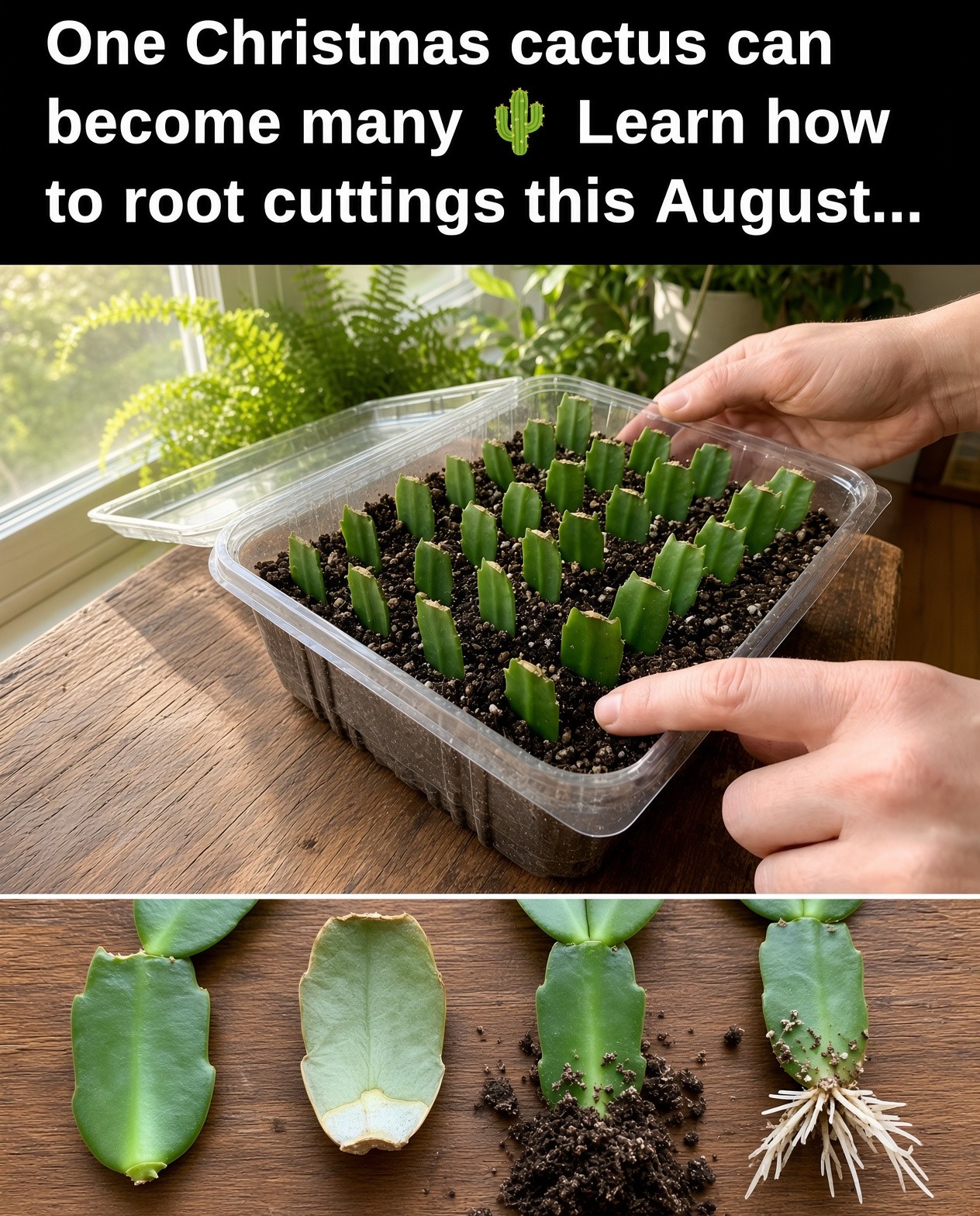
Learn a simple, reliable way to grow new Christmas cactus plants from healthy stem cuttings.
Why Propagate a Christmas Cactus?
Propagating a Christmas cactus is an easy way to turn one healthy plant into several new plants. The process uses stem segments rather than seeds, so you can make new plants from a mature specimen you already enjoy. With clean cuttings, a loose growing medium, careful watering, and patience, the new plants can establish roots and eventually become flowering houseplants.

Choose the Right Parent Plant
Start with a healthy, well-established Christmas cactus. Look for firm green segments, active growth, and no obvious signs of rot, pests, or disease. A strong parent plant gives your cuttings the best starting point. Propagation is best done when the plant is not busy flowering, because taking several cuttings during bloom can add unnecessary stress. Late spring or early summer, after flowering has finished, is a convenient time for many growers.

Take Healthy Stem Cuttings
Choose a stem with several connected segments and separate it at a natural joint. You can gently twist the segments apart with your fingers or use clean, sharp scissors if the joint is difficult to separate. A cutting with two to four segments is a practical size: it is large enough to establish well without being unnecessarily bulky. Handle the cutting gently so you do not crush the joint or damage the remaining parent plant.

Let the Cuttings Callus
Before planting, place the fresh cuttings in a dry, shaded spot and allow the broken end to dry for about a day. This creates a small callus over the wound and can reduce the chance of rot when the cutting enters moist growing medium. The cutting does not need to sit for many days. Once the end is dry to the touch and the segment remains firm, it is ready for the next step.

Prepare a Small Pot and Airy Soil
Use a small container with drainage holes. Christmas cactus cuttings do not need a large pot while they are rooting, and excess unused soil can stay wet for too long. Choose a loose, well-draining mix intended for cacti, succulents, or houseplants, and improve drainage with perlite or another coarse material if necessary. The goal is a medium that holds some moisture while allowing plenty of air around the developing roots.

Plant the Cuttings Correctly
Insert the callused end into the growing medium so the cutting stands upright. Bury only enough of the lower segment to hold it securely; pushing it too deeply can keep the stem unnecessarily wet. If you are rooting several pieces in one container, leave a little space between them. Firm the mix gently around each cutting without packing it tightly. A stable cutting has a better chance of developing roots without repeatedly shifting in the soil.

Give Light, But Avoid Harsh Sun
Place the new cuttings in bright, indirect light. A bright room near a window is usually better than a dark corner, while strong direct midday sun can overheat or scorch young tissue. The goal during rooting is steady conditions rather than maximum light. Keep the container somewhere warm and protected from cold drafts, heating vents, and abrupt temperature changes.

Water Sparingly While Roots Form
New cuttings have no established root system, so they cannot use large amounts of water. After planting, allow the cut surface to settle before giving a small amount of moisture. Keep the medium lightly moist rather than constantly wet. If the soil remains soggy for days, reduce watering and improve drainage. Too much moisture is one of the quickest ways to turn a promising cutting into a soft, rotting stem.

Watch for Signs of Rooting
Root development happens below the soil, so patience is important. Depending on warmth, light, and the condition of the cutting, visible progress can take several weeks. Gentle resistance when you lightly test a cutting can suggest that roots are beginning to anchor it, but avoid repeatedly pulling it from the soil to check. New segment growth is an even better sign that the cutting has established enough roots to support active growth.

Begin Normal Feeding After Establishment
Once a cutting has rooted and begins producing new segments, its care can gradually shift toward normal Christmas cactus care. Continue with bright indirect light and sensible watering. If the plant is clearly growing, a balanced houseplant fertilizer used according to its label can provide nutrition during the active growing season. Avoid heavy feeding on newly planted cuttings because young roots are more sensitive to concentrated fertilizer salts.

Transplant Only When Necessary
There is no need to rush a rooted cutting into a much larger pot. Christmas cactus generally does well in relatively snug containers, and a large volume of soil can stay wet longer than a small root system needs. Wait until the young plant is established and the container is becoming crowded or difficult to manage. When transplanting, use fresh, well-draining mix and move the root ball gently to minimize disturbance.

Help the New Plant Mature
A propagated Christmas cactus needs time to become a substantial flowering plant. Keep its environment steady, provide good light, water when the upper layer of soil has dried somewhat, and avoid dramatic changes in care. As the plant matures, it will produce more segments and become fuller. Good summer growth gives it the reserves it needs for future flowering.

Prepare for Future Blooms
Once the young plant is mature enough, autumn conditions help initiate its flowering cycle. Shorter days and cooler nights naturally signal the approach of the holiday season. When buds form, keep the plant in a stable location and avoid unnecessary changes in temperature, light, or watering. A propagated cutting may not flower immediately in its first season, so focus first on building a healthy plant.

Common Propagation Mistakes to Avoid
The most common problems are overwatering, planting cuttings too deeply, using heavy soil, taking cuttings from an unhealthy parent plant, and checking the roots too often. Another mistake is placing fresh cuttings in intense direct sun. Propagation works best when the process is simple: clean cutting, brief callusing, airy soil, modest moisture, bright indirect light, and patience.

How Many Cuttings Should You Plant Together?
You can root several cuttings in one small pot if there is enough room to keep them upright and prevent overcrowding. A few established cuttings together can eventually create a fuller plant much faster than relying on a single segment. If you prefer to monitor each cutting separately, use individual small pots. Both approaches work; the important thing is to keep the growing medium well drained and avoid excessive moisture.

When Is the Best Time to Propagate?
Timing matters because the parent plant needs enough energy to recover and the new cutting needs favorable conditions for rooting. The easiest window is generally after the main flowering period, when the plant has returned to active growth. Spring and early summer offer longer days and warmer conditions that support root development. You can sometimes propagate at other times, but avoid taking numerous cuttings while the plant is flowering or obviously stressed. If your cactus has recently suffered from pests, root problems, or a major change in environment, let it recover before taking propagation material.

Can You Root Cuttings in Water?
Christmas cactus cuttings can produce roots in water, but rooting directly in a light, well-draining medium is often simpler for long-term growing. Water roots are adapted to a very wet environment, so a cutting moved from water into soil needs time to adjust. If you choose water propagation, keep only the lower portion of the cutting near the water and change the water regularly. Once a useful root system develops, transfer the cutting gently into a loose potting mix and keep the medium moderately moist while it adapts. Soil propagation avoids that extra transition and can be a straightforward choice for beginners.

What If a Cutting Starts to Shrivel?
A little wrinkling does not automatically mean the cutting has failed. Fresh cuttings can lose some moisture before roots form, especially in a warm or dry room. Check the base for softness, dark discoloration, or an unpleasant smell, which can indicate rot rather than ordinary dehydration. If the cutting remains firm, improve the rooting environment instead of soaking it. Keep it in bright indirect light, use a well-draining medium, and provide modest moisture. Once roots form and new segments begin to develop, the cutting should gradually regain a fuller appearance.

How to Build a Fuller New Plant
A single rooted cutting will eventually make a plant, but several rooted segments planted together can create a fuller specimen sooner. Once individual cuttings have established roots, group a few of similar size in one appropriately small pot. Space them so the segments are not pressed tightly against each other. As new growth branches from the joints, the plant will gradually fill out. You can also pinch or twist off a segment from established growth later to encourage branching, but avoid repeated pruning while the young plant is still concentrating on root development.

The Simple Propagation Routine
The entire process can be reduced to a straightforward routine: choose a healthy parent, take a few strong stem segments, let the cut ends callus, plant them in an airy medium, provide bright indirect light, water lightly, and wait for roots and new growth. Once established, continue normal Christmas cactus care. With a little patience, a single mature plant can become the starting point for a collection of healthy new Christmas cacti.
