
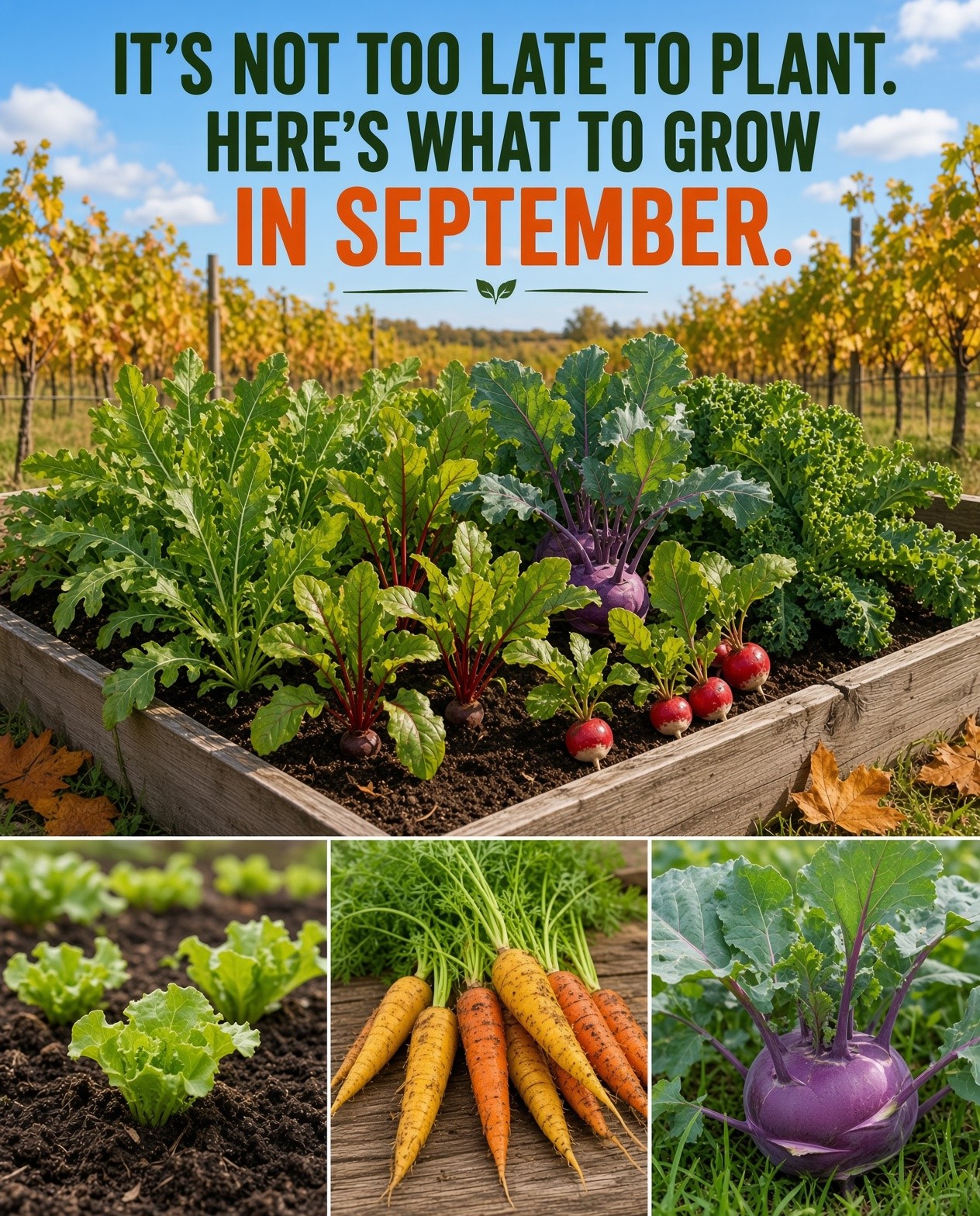
Keep your garden productive with quick-growing, cool-season vegetables that can thrive as summer heat fades.
Why September Is Still a Great Planting Month
September does not have to mean the end of the vegetable garden. As summer heat fades, cooler nights create excellent conditions for many leafy greens, quick roots, and hardy crops. The key is to choose vegetables that mature quickly or tolerate cool weather well. Instead of trying to grow long-season summer crops, focus on plants that can give you a useful harvest before severe cold arrives. In many gardens, this late-season approach can extend fresh eating by several weeks and sometimes well into winter.

Leafy Greens Are the Easiest Win
If you want one dependable category for September, start with leafy greens. Lettuce, spinach, arugula, mustard greens, and Asian greens generally appreciate cooler conditions. They can be harvested young, which is especially helpful when the remaining growing season is short. Sow several small batches rather than filling the entire bed at once. This gives you a sequence of young plants at different stages instead of one large harvest arriving all together.

1. Spinach
Spinach is one of the best vegetables for a fall garden. It prefers cool temperatures and can produce tender leaves quickly once the soil becomes comfortable. Sow it in fertile, well-drained soil and keep the seedbed evenly moist while seeds germinate. Harvest outer leaves first, leaving the center growing point intact. In colder areas, row cover can protect young plants and extend the harvest window after the first light frosts.

2. Lettuce
Loose-leaf, butterhead, and romaine lettuce can all work well for a September planting when local temperatures are suitable. Loose-leaf types are particularly useful because you can harvest baby leaves instead of waiting for a full head. Keep the soil consistently moist and provide light protection if temperatures drop suddenly. In warm regions, choose the cooler part of September or plant where afternoon shade helps reduce heat stress.

3. Arugula
Arugula is a fast crop that can reward you quickly. Its peppery leaves are excellent in salads, sandwiches, and pizzas, and young leaves are usually tender and mild enough for frequent harvesting. Sow seeds shallowly, keep the surface moist until germination, and begin cutting once the leaves reach a useful size. Repeated small sowings are better than one large planting because arugula can mature rapidly and eventually become stronger in flavor.

4. Mustard Greens
Mustard greens are another strong choice for cool weather. They grow quickly and can be harvested as baby leaves or allowed to develop larger foliage for cooking. A light frost can soften their sharp flavor, making fall an especially good season for them. Give plants steady moisture and avoid crowding them. Good spacing improves airflow and makes harvesting easier.

5. Asian Greens
Tatsoi, mizuna, and baby bok choy are useful additions to a September garden because many varieties mature quickly. Their textures range from tender and leafy to crisp and juicy, so they can be used in salads, stir-fries, soups, and roasted dishes. Choose varieties suited to your local fall temperatures and harvest while plants are young if the season is short. A little frost protection can make the planting more forgiving.
6. Radishes
Radishes are among the quickest vegetables you can grow in fall. Many varieties can be ready in roughly a month, making them ideal when you are planting late. Sow them directly where they will grow, thin crowded seedlings, and keep the soil evenly moist. Succession sowing every week or two can provide a steady supply instead of one oversized harvest. Fall-grown radishes are often crisp and pleasantly mild.
7. Turnips
Small salad turnips are particularly well suited to a late-season garden. They mature much faster than large storage types and can be eaten raw, roasted, sautéed, or pickled. Sow them directly into loose soil and thin seedlings so the roots have room to swell. The leaves are edible too, giving you a second harvest from the same planting. Harvest roots while they are young for the best texture.
8. Baby Beets
Beets need more time than radishes, but small roots can still be realistic for a September planting in many climates. Choose a quick variety and plan to harvest the roots young rather than waiting for full size. The leaves are useful as well, but avoid stripping the plant completely because healthy foliage helps the root develop. Loose soil is important because compacted ground can produce misshapen roots.
9. Short-Season Carrots
Carrots are more challenging because many varieties need a long growing period. For a late planting, choose a short-season variety and check its days to maturity against your local frost date. Keep the seedbed consistently moist during germination, when tiny seedlings are easy to lose in dry soil. Small carrots can be harvested earlier than full-size roots and are often exceptionally sweet in cool weather.
10. Kale
Kale is one of the most dependable cold-tolerant vegetables for extending the garden season. It can be planted for young leaves and allowed to keep producing as temperatures fall. Pick older outer leaves first and leave the central growing point untouched. Light protection can help during severe freezes, but many kale varieties tolerate ordinary autumn cold remarkably well.
11. Collards
Collards also appreciate cooler weather and can provide substantial leaves for cooking late into the season. Give them fertile soil, consistent moisture, and enough space for the broad leaves to expand. Harvest gradually rather than removing the entire plant. Because collards are relatively tough, they can be especially useful when tender salad greens begin to struggle.
12. Kohlrabi
Kohlrabi is a fast-growing crop that forms a swollen stem above the soil line. It is best harvested while the stem is still young and tender. Plant it where the soil is loose and fertile, and thin seedlings early so each plant has enough room. The leaves are edible too. Kohlrabi is an excellent choice for gardeners who want something different from the usual fall greens and roots.
13. Cilantro and Dill
Cool weather is also helpful for herbs such as cilantro and dill. Cilantro is much less eager to bolt once summer heat disappears, while dill can provide fresh leaves for sauces, pickles, and autumn cooking. Sow small amounts at intervals rather than expecting one planting to last indefinitely. Harvest regularly while plants are young and keep the soil from becoming excessively dry.
How to Make September Plantings Succeed
Match each crop to the time you actually have left. Look for quick-maturing varieties, count backward from your expected first hard frost, and allow extra time for slower growth as daylight decreases. Succession planting is valuable for radishes, lettuce, arugula, and other fast crops. Row covers, low tunnels, and cold frames can protect plants from unexpected cold and extend the harvest. Keep young seedlings watered consistently because dry soil can slow establishment.
Protect Crops When Cold Arrives
The first light frost does not necessarily end the fall garden. Many cool-season vegetables tolerate brief cold, and some become sweeter after exposure to chilly temperatures. Keep a lightweight row cover, fleece, or low tunnel ready for sudden temperature drops. The cover should allow light and air through while providing a small layer of protection around the plants. On sunny days, check covered beds so they do not become excessively warm. Water the soil before a forecast freeze if plants are dry, because healthy, hydrated plants generally handle cold better than drought-stressed seedlings. With simple protection and regular harvesting, a September planting can often remain productive well beyond the date when summer vegetables have finished.
Prepare the Soil Before Sowing
Good soil preparation can make a big difference when planting late in the year. Remove exhausted summer crops and pull out weeds before sowing the next round. Loosen the top few inches of soil and mix in a modest amount of finished compost if the bed needs organic matter. Avoid heavy applications of fresh manure or high-nitrogen fertilizer, which can encourage excessive leafy growth and may not be necessary for quick fall crops. Smooth the seedbed so small seeds such as lettuce, radish, and carrot can be planted at a consistent depth. Water the soil before sowing when conditions are dry, then keep the surface evenly moist until seedlings are established. A well-prepared bed helps seeds germinate evenly and gives young plants a better start as daylight gradually shortens.
A Productive Fall Garden Is Worth It
September gardening is less about chasing enormous harvests and more about using the remaining season intelligently. A few rows of spinach, lettuce, radishes, turnips, kale, or Asian greens can keep fresh food coming when the summer garden is winding down. Start small, choose crops suited to your climate, and protect them when cold arrives. With the right selections, the garden does not have to end when summer does—it can simply change into a cooler, quieter, and surprisingly productive fall garden.