
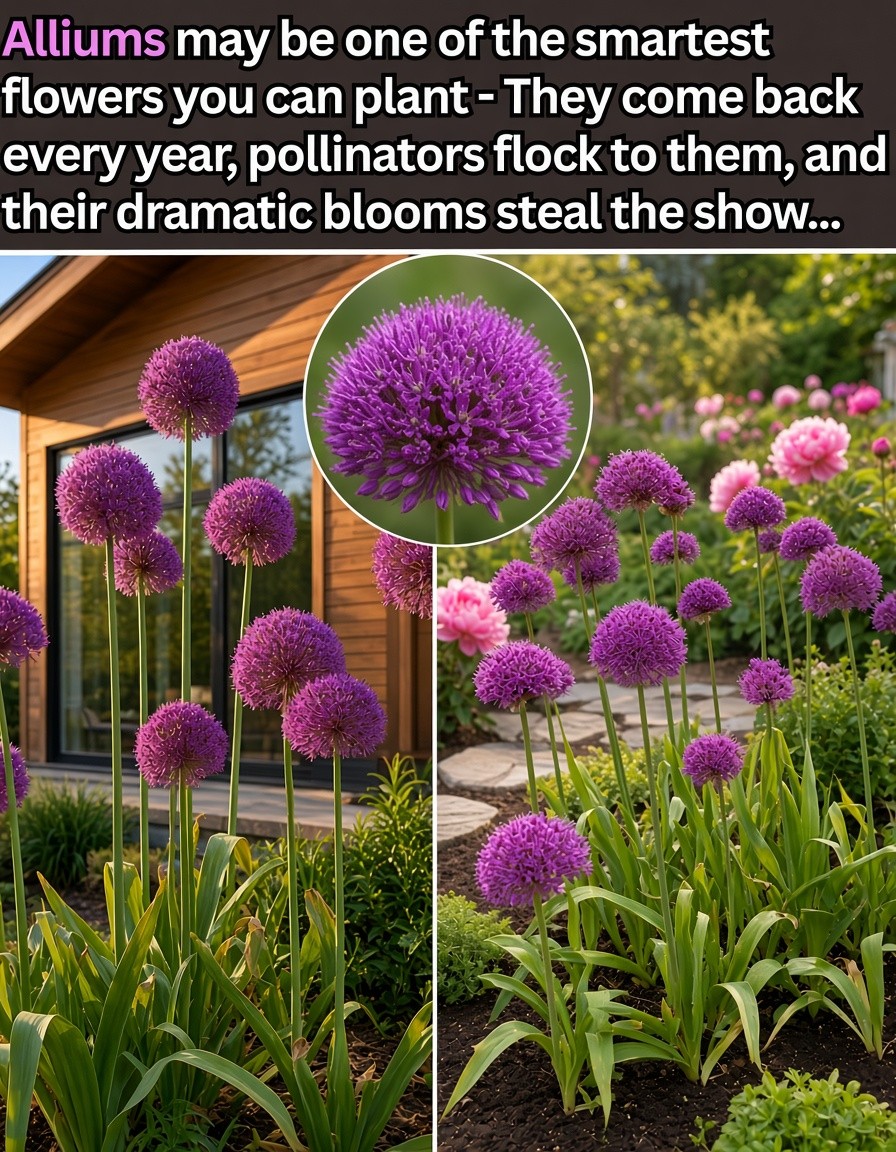
Grow striking alliums with the right bulbs, a sunny planting site, good drainage, and simple seasonal care.
What Makes Alliums So Special?
Alliums, often called ornamental onions, are among the easiest ways to add strong structure and color to a garden. Their flowers rise on tall, clean stems and form rounded clusters that can look almost perfectly geometric when planted in groups. Depending on the variety, blooms can be rich violet, soft pink, white, or blue, and the flower heads often remain attractive even after the petals begin to fade. These plants are members of the onion family, but ornamental types are grown primarily for their flowers rather than for the kitchen. They are perennial bulbs, so once planted in a suitable location they can return for many seasons with relatively little attention. Another advantage is their height: alliums can rise above lower perennials without blocking them completely. That makes them useful in borders, mixed beds, cottage gardens, and modern landscapes alike. Their nectar-rich flowers are also valuable to bees and other pollinators, giving the garden both visual impact and ecological interest.

Choosing the Right Allium Variety
There is a surprisingly wide range of ornamental alliums, so choosing a variety should start with the size and style of your planting area. Giant forms create dramatic, architectural flower heads high above the surrounding plants, while medium-sized cultivars are easier to fit into ordinary borders. Purple is the classic allium color, but white and blue selections can create a softer effect when combined with silver foliage or pale flowers. Some varieties have extremely large, dense globes, while others produce looser, star-like heads that resemble fireworks. Think about bloom timing as well. Different cultivars flower at slightly different points from late spring into early summer, so combining several can extend the display. Mature height is another important consideration. Tall varieties are excellent toward the middle or back of a border, while shorter selections can work closer to paths and containers. When buying bulbs, choose firm, healthy specimens without soft spots, mold, or visible damage. Starting with strong bulbs gives the plants a much better foundation for the following growing season.

When and Where to Plant Allium Bulbs
For most gardens, fall is the ideal time to plant allium bulbs because the bulbs can establish roots before winter and then use the following spring to produce leaves and flower stems. Choose a location that receives plenty of direct sunlight. Six hours or more is a useful target, although the exact requirement can vary with the variety and local conditions. Drainage is even more important than rich soil. Allium bulbs dislike sitting in cold, saturated ground, and prolonged wetness can encourage bulb rot. Before planting, loosen the soil deeply enough for roots to develop without compacted layers underneath. If your soil is heavy, improve its structure with suitable organic matter and consider a raised planting area where drainage is poor. Plant bulbs with the pointed end upward and generally place them at a depth of roughly two to three times the bulb’s height. Spacing depends on the mature size of the variety, but giving each bulb room to develop prevents overcrowding and allows the flower heads to stand out clearly when they bloom.

How to Care for Alliums Through the Season
Once established, alliums are notably undemanding. Water newly planted bulbs enough to settle the soil and support root development, then avoid keeping the bed constantly wet. During active spring growth, water when the soil becomes dry, particularly during extended periods without rain. As the foliage begins to yellow after flowering, the plant naturally moves toward dormancy and needs less moisture. Feeding can also be simple. A balanced bulb fertilizer or a modest spring feeding can support healthy growth, but excessive nitrogen is not helpful because it can encourage lush leaves at the expense of flowers. Good drainage and adequate sunlight usually matter more than heavy fertilization. Mulch can help suppress weeds and moderate soil conditions, but keep it relatively light around the bulbs and avoid creating a permanently damp layer. The goal is a growing environment that is fertile enough for steady growth but never waterlogged. With the right conditions, alliums often need far less attention than many other flowering bulbs.

What to Do After Alliums Bloom
One of the most important allium-care decisions comes after the flowers fade. The temptation is to cut everything back immediately, but the green foliage is still working for the bulb. Leaves continue photosynthesizing after flowering and help store energy for the next year’s growth, so leave them in place until they naturally turn yellow and begin to collapse. You can remove spent flower heads if you prefer a tidier appearance, but there is another option: leave them standing. Dried allium seed heads can provide weeks or even months of architectural interest, especially in autumn and winter gardens. Their papery texture catches light and frost beautifully. If you want to collect seed, allow selected heads to dry fully before gathering them. For a cleaner border, remove only the dead material while avoiding unnecessary disturbance to the bulbs below. This simple approach gives the plant time to complete its natural cycle and usually results in stronger, more reliable flowering in the following season.

Dividing and Multiplying Alliums
Alliums can gradually form larger clumps as bulbs multiply underground, and an established planting may eventually become crowded. If flowering becomes weaker or the group starts looking congested, division can help restore space and vigor. The usual time to lift and separate bulbs is after the foliage has died back, during late summer or early autumn. Dig carefully around the clump and lift the bulbs without slicing through them. Separate healthy offsets from the main bulb, discard any soft or damaged material, and replant the viable bulbs promptly at the appropriate depth. Division is also an easy way to spread a favorite allium to another part of the garden. Do not divide simply because a clump looks full, however; many alliums are perfectly happy to remain undisturbed for several years. If the plants are flowering strongly and the spacing still works, leaving them alone is often the lowest-maintenance choice. Replanting bulbs at the correct depth and in well-drained soil is more important than trying to divide on a strict calendar.

Common Problems and How to Avoid Them
Alliums are generally tough, but poor growing conditions can still cause trouble. Bulb rot is the biggest issue in many gardens, and it is usually connected to excessive moisture or inadequate drainage. If bulbs repeatedly sit in wet soil, improve drainage rather than simply watering less. Weak flowering can have several causes, including insufficient sunlight, overcrowding, immature bulbs, or a planting site that stays too damp. Give plants enough room and check whether nearby shrubs or trees have begun casting more shade than when the bulbs were first planted. Fungal problems are more likely where foliage stays wet and air movement is poor, so avoid unnecessary overhead watering and maintain reasonable spacing. Alliums are also valued because deer and many rodents generally find them less appealing than other garden plants. If a planting performs poorly, start with the basics: sunlight, drainage, planting depth, spacing, and the condition of the bulbs. Correcting those factors often makes a bigger difference than adding extra fertilizer or complicated treatments.

Using Alliums in a Beautiful Garden Design
Alliums are especially useful when you want a garden to look intentional without requiring constant maintenance. Planting several bulbs together creates a stronger visual statement than scattering single plants randomly, while repeating the same variety in different areas can make a larger landscape feel connected. Their tall stems work beautifully among lower perennials such as salvias, ornamental grasses, roses, lavender, and other plants with contrasting flower shapes. Place taller alliums toward the middle or rear of a border and shorter types where their flower heads can be appreciated up close. They can also be used along paths, in gravel gardens, in mixed perennial beds, or in containers when the variety is suitable for pot culture. Think about the foliage as well as the flowers: allium leaves can become untidy after blooming, so surrounding them with plants that expand later in the season can disguise the fading foliage. The result is a planting that changes naturally from spring flowers to summer texture. With a sunny site, good drainage, and a little patience, alliums can become one of the most reliable repeat performers in the garden.
