
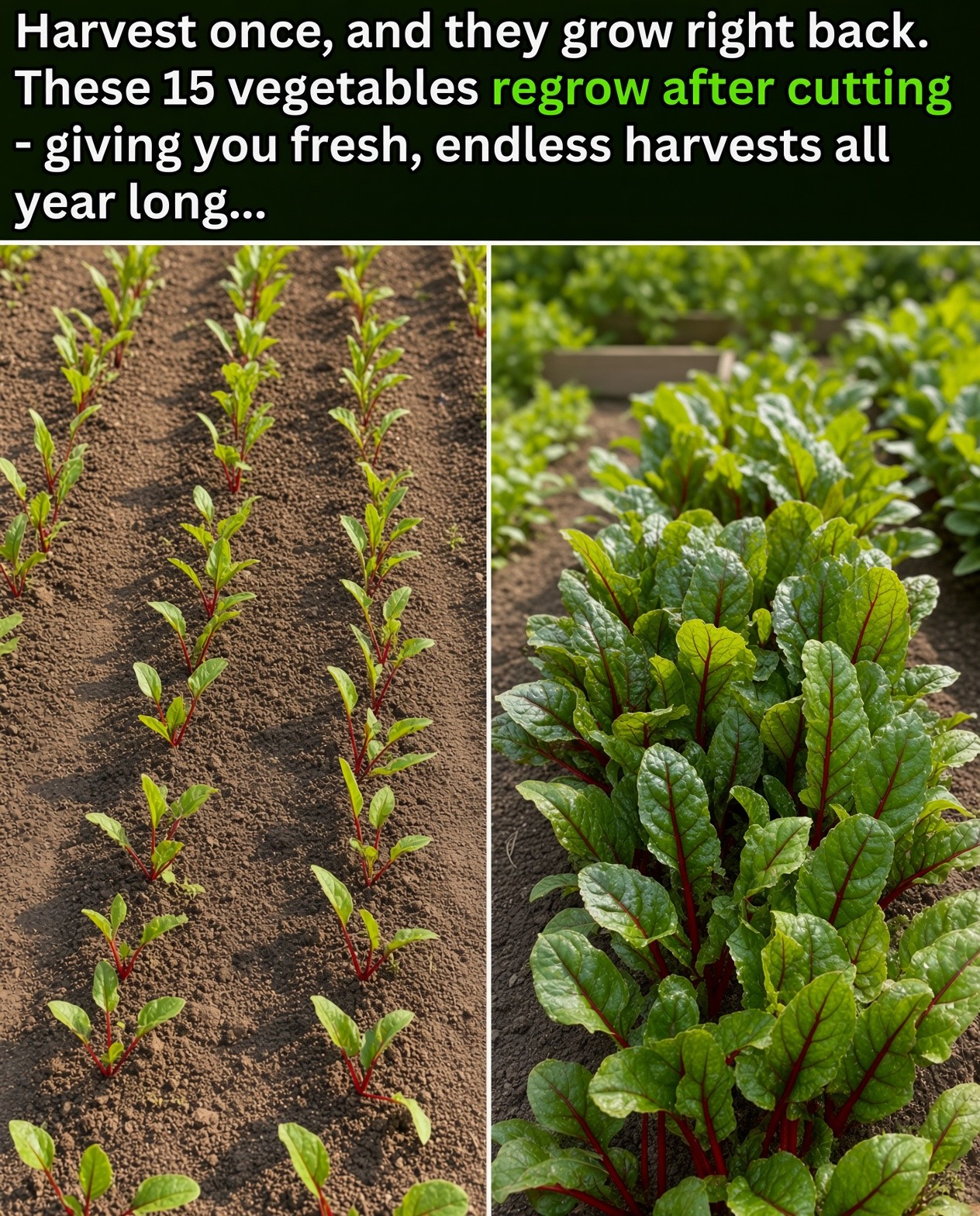
These cut-and-come-again vegetables can give you repeated harvests, reduce waste, and help a small garden produce more food.
What if one planting could give you several harvests instead of just one? That is the idea behind cut-and-come-again gardening. Rather than pulling an entire plant when it reaches harvest size, you remove selected leaves or stems while leaving the growing point, crown, or roots capable of producing new growth.

This simple technique is especially useful for leafy vegetables and herbs. It can stretch the productive life of a planting, reduce the amount of replanting required, and make even a small raised bed or patio container surprisingly productive. The Royal Horticultural Society lists lettuce, chard, spinach, mizuna, mustard, pak choi, parsley, coriander, rocket, and several other leafy crops as suitable candidates for repeated harvesting.

The important word is selective. Regrowth is not magic, and not every vegetable will produce indefinitely. Plants need enough leaves left behind to keep photosynthesizing, adequate moisture, suitable temperatures, and healthy roots. Harvest too aggressively and the plant can stall, become stressed, bolt, or simply reach the end of its productive life.

Here are 15 vegetables and herbs that can reward you with repeated harvests when you use the right technique.

1. Loose-Leaf Lettuce
Loose-leaf lettuce is one of the easiest places to start. Instead of waiting for a perfect full head, pick the larger outer leaves while leaving the small leaves in the center untouched. You can also shear a young planting about an inch above the soil and allow the remaining crown to push out fresh leaves.

Choose loose-leaf types such as oakleaf or Salad Bowl when repeated harvesting is the goal. The RHS notes that loose-leaf lettuce is particularly well suited to cut-and-come-again harvesting, while regular small sowings help keep a continuous supply coming.

Harvest in the morning when leaves are crisp and hydrated. In hot weather, keep the plants evenly watered because heat and drought can encourage bolting and bitter leaves.

2. Kale
Kale is a long-lasting crop because its growing point sits above a steady supply of mature outer leaves. Pick the older leaves from the bottom and sides of the plant, but never strip away the central cluster of young leaves.

Tuscan, curly, and Red Russian types can all work well for repeated harvesting. The more carefully you preserve the growing tip, the longer the plant can remain productive.

Kale is especially useful for gardeners who want a crop that bridges seasons. In many climates it can continue producing well into cool weather, when more tender greens have slowed down.

3. Spinach
Spinach can provide several rounds of tender leaves when grown during its preferred cool conditions. Harvest the largest outer leaves first and leave the younger center growth intact.
This crop has one major limitation: heat and long days can trigger bolting. For that reason, repeated spinach harvests are generally most successful in spring and fall, or during mild weather.
Use sharp scissors or clean fingers to remove individual leaves without disturbing the crown. If the plants begin producing a flower stalk or the leaves become tough and bitter, it is usually time to replace the crop rather than forcing another harvest.
4. Swiss Chard
Swiss chard may be the workhorse of a cut-and-come-again garden. Its leaves emerge from the center of the plant, allowing you to remove mature outer stalks while the inner leaves continue developing.
Cut each outer stalk close to its base, but avoid damaging the central crown. Never strip the entire plant at once. A few large leaves left behind provide the photosynthetic engine needed for the next round of growth.
Chard is also an excellent choice when you want a vegetable that looks ornamental. Rainbow-colored stems can add interest to raised beds and containers while supplying greens for cooking throughout the season.
5. Arugula
Arugula grows quickly and is ideal when you want fast returns from a small space. Harvest the young outer leaves before they become overly sharp or tough, leaving enough central growth for the plant to continue.
After cutting, water consistently and harvest again when fresh leaves reach a useful size. Because arugula can bolt quickly in warm weather, succession sowing is often smarter than trying to keep one planting alive forever.
For a continuous supply, sow a small amount every couple of weeks. Then older plants can be allowed to flower while younger ones take over the harvest.
6. Mustard Greens
Mustard greens respond well to repeated picking, particularly when harvested while the leaves are young and tender. Use scissors to remove the larger outside leaves and leave the central rosette intact.
These greens prefer cooler conditions, so they are especially valuable in spring and fall gardens. If temperatures rise and the plants begin to bolt, flavor can become stronger and the leaves may become tougher.
For the best succession, grow several small plantings rather than one large crop. That way, you always have young leaves coming along while older plants finish their cycle.
7. Endive and Escarole
Endive and escarole are often grown for their leafy heads, but they can also be harvested selectively. Remove a few of the larger outside leaves while protecting the inner growing point.
Repeated harvesting works particularly well during cooler weather, when the leaves are less likely to become excessively bitter. Give the plants consistent moisture and avoid letting them repeatedly wilt.
These crops are useful when you want something different from standard salad greens. Their slightly bitter flavor works well in salads, soups, braises, and cooked dishes.
8. Bok Choy
Bok choy can produce additional tender shoots when you avoid destroying its crown. Instead of pulling the whole plant, remove outer leaves and stalks as needed.
For a larger plant, cut the outside stems close to the base while leaving the center intact. Some gardeners also cut the whole plant above the soil and allow a smaller second crop to develop from the remaining base.
Because bok choy is prone to bolting in hot weather, partial harvesting can be useful. It lets you collect food without creating as much stress as removing the entire plant.
9. Mizuna
Mizuna is one of the fastest greens for a cut-and-come-again garden. Its finely divided leaves are mild enough for salads when young and become more peppery as they mature.
Snip the foliage above the crown rather than cutting into the growing point. Keep the soil evenly moist after harvesting and allow the plant to rebuild before taking another large cut.
Mizuna is also excellent in containers because it grows quickly and does not require a huge root zone. The RHS specifically includes mizuna among leafy crops suited to repeated cutting.
10. Beet Greens
Beets are usually grown for their roots, but the leaves are an additional harvest you should not overlook. Pick a few of the largest outer leaves while leaving the center leaves intact.
Avoid stripping too much foliage from a plant that you also want to develop a large beetroot. The leaves are the plant’s solar panels, so removing too many at once can reduce the energy available for root development.
Young beet greens are tender enough for salads, while larger leaves are excellent cooked with garlic, olive oil, or other hearty vegetables.
11. Collard Greens
Collards are built for repeated harvesting. Their broad outer leaves can be removed one at a time while the central growing point continues to produce new foliage.
Begin with the oldest leaves at the bottom and work upward gradually. Leave the youngest leaves around the center untouched.
Collards also tolerate cool weather well, making them useful for extending the season after more delicate greens have slowed down. If you have space for only a few long-producing workhorses, collards are worth considering.
12. Celery
Celery can be harvested selectively rather than removing the entire plant. Cut individual outside stalks near the base and leave the central shoots growing.
This method is especially useful when you do not need a whole bunch at once. You can take only the stalks required for a meal and allow the rest of the plant to keep developing.
Keep celery consistently moist. Plants that experience repeated drought tend to produce smaller, tougher stalks, while steady moisture supports better growth and texture.
13. Parsley
Parsley behaves differently from many annual vegetables because it is a biennial herb. Still, it fits perfectly into the cut-and-come-again approach.
Instead of trimming the tops of every stem, cut the oldest outer stems down near the base. This encourages the plant to keep producing fresh shoots from the center.
Both curly and flat-leaf parsley can be harvested this way. Regular picking also prevents the plant from becoming an overgrown mass of old stems and keeps the freshest leaves available for cooking.
14. Cilantro
Cilantro grows quickly but is more difficult to keep productive for long periods because it naturally moves toward flowering as temperatures rise.
Harvest the outer leaves while the plant is young, leaving the center untouched. Once flowering begins, leaf production and flavor change, so the best strategy is usually succession sowing rather than expecting one plant to last all season.
Sow small batches every few weeks during suitable weather. In hot climates, a little afternoon shade can slow bolting and extend the useful leaf-harvesting window.
15. Garlic Chives
Garlic chives are among the most reliable perennial herbs for repeated cutting. Once established, they can return year after year and tolerate regular harvesting.
Cut the leaves a short distance above the soil rather than pulling the plant. New foliage will emerge from the base, allowing you to harvest again after the clump has recovered.
The flowers are edible as well and are attractive to pollinators. If you want the strongest leaf production, remove some flower stalks; if you want flowers and seeds, allow selected stems to bloom.
How to Harvest Cut-and-Come-Again Vegetables Without Slowing Regrowth
The basic rule is simple: do not take more than the plant can replace. For individual-leaf harvesting, remove only the mature outer leaves and preserve the center. For dense salad greens, a clean cut about an inch above the growing point can work, provided the crown remains intact.
Use clean, sharp scissors or pruners. Harvesting in the morning is ideal because leaves are usually better hydrated and less wilted. The RHS recommends taking only a few leaves from each plant and leaving the inner leaves to develop. Many cut-and-come-again sowings provide several cuts before plants become tough, bitter, or prone to flowering.
After harvesting, keep moisture consistent. Avoid flooding the soil, but do not let leafy crops repeatedly dry out. A light layer of organic mulch can help stabilize soil moisture and temperature.
Good sanitation matters too. If a plant shows clear disease, remove affected leaves and avoid spreading the problem with dirty cutting tools. Repeated harvesting creates many small wounds, so clean equipment and good airflow are worthwhile precautions.
The Secret to Truly Continuous Harvests
Even the best regrowing vegetable eventually slows down. That is why succession planting is the partner technique that turns cut-and-come-again gardening into a reliable harvest system.
Instead of planting an entire bed on one day, sow small batches at intervals. When the first planting begins to slow down, the next one is already approaching harvest size.
For example, you could dedicate one section of a raised bed to lettuce, another to chard or kale, another to arugula and mizuna, and a final section to spinach or mustard greens. Re-sow the fast crops regularly while allowing the longer-lived crops to keep producing.
The result is not literally an endless vegetable plant. It is better: a garden that keeps replacing older plants with younger ones while each individual plant gives you more than one harvest.
5 Mistakes That Can Stop Regrowth
Cutting the crown is one of the easiest ways to stop regrowth. The growing point is the part you most want to protect. If you damage it, recovery can be slow or impossible.
Harvesting everything at once can also set a plant back. Removing all the foliage leaves little surface area for photosynthesis, so the plant has less energy available to rebuild.
Letting plants dry out repeatedly is another common problem. New leaves need water, and drought stress can slow recovery or make greens tough and bitter.
Ignoring bolting can waste a planting. Lettuce, spinach, arugula, cilantro, and other cool-season crops eventually flower. Once quality declines, replace the plant rather than trying to force another cutting.
Finally, never stop starting replacements. A cut-and-come-again crop still has a natural lifespan. Succession planting keeps the garden productive when the first generation finishes.
Make Every Plant Work Harder
Cut-and-come-again gardening is one of the easiest ways to get more food from a small growing space. Instead of treating harvest day as the end of a plant’s useful life, you leave enough healthy growth behind for another round.
Start with forgiving crops such as loose-leaf lettuce, Swiss chard, kale, arugula, and garlic chives. Learn how each plant responds to your local weather, then add faster greens such as mizuna and mustard.
The real advantage is not that these vegetables grow forever. It is that they give you multiple opportunities to harvest before you need to replant.
With careful cutting, consistent watering, clean tools, and a little succession planting, a small garden can provide a surprisingly steady supply of fresh leaves for salads, soups, stir-fries, sandwiches, and everyday cooking.