
A simple late-summer routine for deadheading, watering, feeding, disease control, and wildlife-friendly care.
Coneflowers are one of the most dependable summer perennials, but August is more than a month for admiring their flowers. It is a transition point when the plant is balancing continued blooming with seed production and preparation for the months ahead.
1. Deadhead the Right Flowers at the Right Time
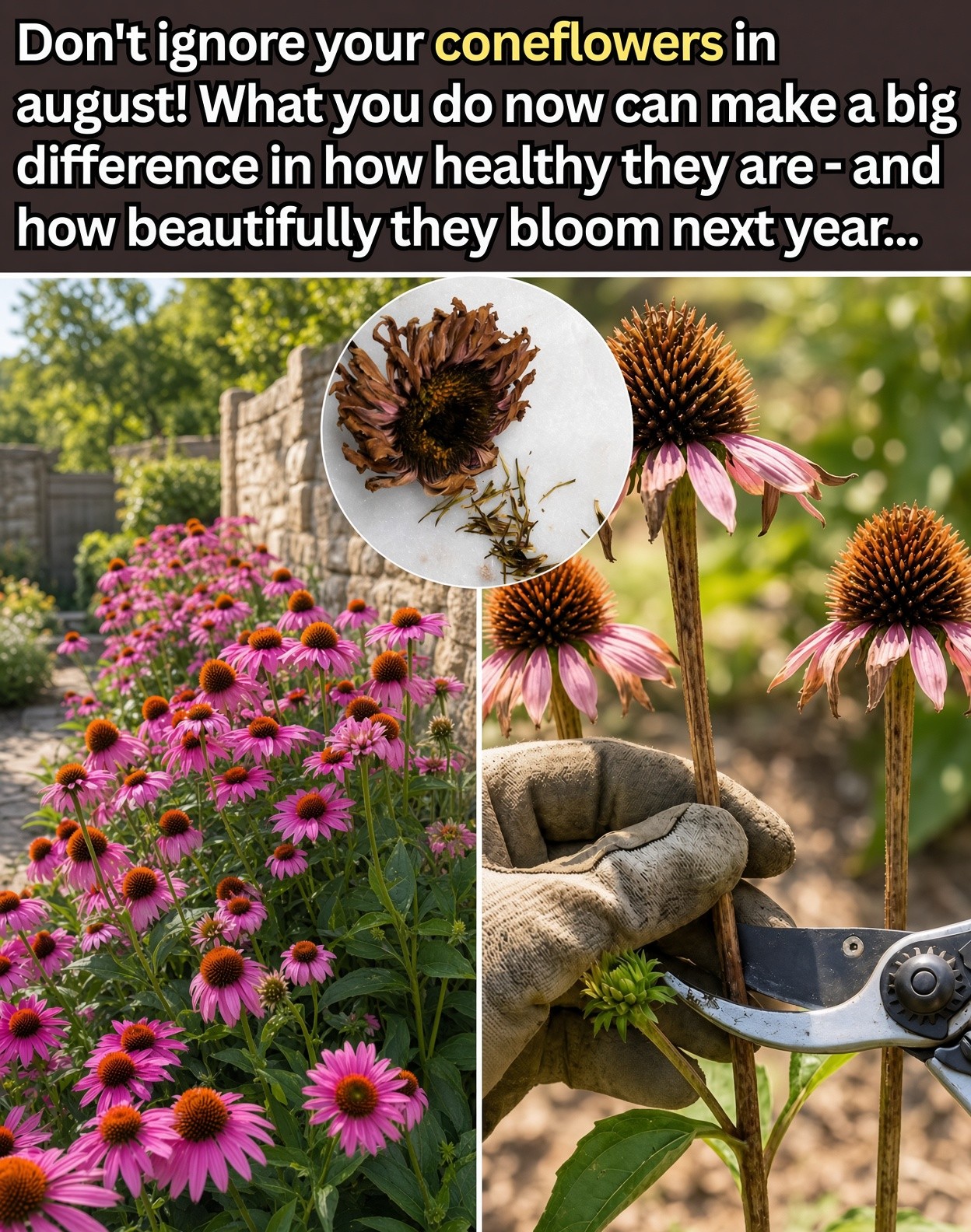
August is the month when coneflowers can look caught between two jobs: producing another round of flowers and beginning the transition toward seed production. That makes selective deadheading one of the most useful things you can do.
If a flower has faded, the petals are drooping or gone, and the center is beginning to harden, you can remove that spent head while the plant is still actively producing new buds. Follow the flower stem downward until you reach a healthy leaf junction or a developing side bud. Make a clean cut just above that point rather than leaving a long bare stalk.
This can help keep the plant flowering longer because you are removing some of the flowers that would otherwise move toward seed production. Extension guidance also supports deadheading to extend the flowering period. However, you do not need to remove every faded flower. Coneflowers are valuable wildlife plants, and their mature seed heads have a purpose.

2. Stop Treating Every Spent Flower as a Problem
There is an important second half to the deadheading story. By late August, it can be better to leave some flowers alone.
The dried cones provide seeds for birds and add structure to the garden as summer color fades. Goldfinches are especially fond of coneflower seed heads, and leaving standing stems can also provide useful habitat for insects and other small wildlife.
A practical compromise is to deadhead the flowers you want to encourage into another flush while leaving several mature cones toward the back or center of the planting. This gives you a longer display without turning the entire bed into a perfectly manicured, seed-free space.
If you grow several coneflower varieties, you can also use this approach to learn which plants produce attractive seed heads and which ones continue flowering particularly well after deadheading.

3. Give the Roots a Deep Drink During Dry Spells
Established coneflowers are famously tolerant of heat and dry conditions, but drought tolerance does not mean a plant should be allowed to remain severely stressed for weeks. August heat can dry the upper soil quickly, especially around plants growing beside walls, paving, or other heat-reflecting surfaces.
When rainfall is scarce, water deeply enough to moisten the root zone instead of giving the plant a quick sprinkle every day. Water at the base of the plant and allow the soil surface to dry somewhat between thorough soakings.
Avoid routinely wetting the foliage late in the day. Keeping leaves dry can help reduce conditions that favor fungal problems.
Newly planted coneflowers deserve particular attention because their root systems are not yet as extensive as those of established clumps. They may need more frequent monitoring during hot weather even though mature plants can handle considerable dryness.
The goal is not constantly wet soil. Coneflowers prefer well-drained conditions and generally cope better with occasional deep watering than with roots sitting in water.

4. Skip the Heavy Nitrogen Fertilizer
If a coneflower looks tired in August, fertilizer is not automatically the answer. In fact, pushing a lot of nitrogen late in the season can create exactly the kind of growth you do not want.
High-nitrogen feeding encourages soft, leafy growth. That can make plants taller and more prone to flopping, while also encouraging foliage when the plant should be moving toward a more balanced late-season cycle.
Coneflowers are not heavy feeders. Illinois Extension notes that they perform well in full sun and dry conditions and specifically cautions against heavy fertilization because it can contribute to tall, weak growth.
If your soil needs improvement, a light layer of finished compost around the planting can be a gentler option. Compost improves soil structure and adds organic matter without trying to force a sudden flush of lush growth.
If you suspect a nutrient deficiency, the best approach is to test the soil rather than guessing and repeatedly adding fertilizer.
5. Refresh the Mulch Without Burying the Crown
A modest layer of organic mulch can make August watering more effective by slowing evaporation and moderating soil temperature. Shredded leaves, fine bark, or another suitable garden mulch can work well.
Keep the layer relatively light and leave a small gap around the base of the plant. Do not pile mulch directly against the crown. Constantly damp material pressed against the crown can encourage rot and create an overly humid environment around the stems.
If an existing mulch layer has become compacted, gently loosen the surface before adding more. The objective is to protect the soil, not create a deep mound around the plant.
Mulch is particularly useful in exposed beds where the soil heats and dries rapidly. In a naturally moist, well-drained planting, you may need very little.
6. Inspect the Leaves Before the Weather Turns Cooler
August is also the time to become a plant detective. Look closely at the leaves rather than assuming every yellow or spotted leaf is simply normal aging.
Powdery mildew can appear as a white, dusty coating on leaves and stems. Leaf spots may appear as irregular dark, purple, brown, or black lesions. Severe disease can cause foliage to dry, curl, or drop early.
Good sanitation matters. Remove badly affected leaves and keep fallen diseased material from accumulating around the crown. Improve air circulation by avoiding dense weeds and excessive crowding around the plants. When watering is needed, apply it to the soil rather than repeatedly wetting the foliage.
Aster yellows is a more serious issue. Infected coneflowers can develop distorted or greenish flower structures and abnormal, bushy growth. Extension recommendations advise removing and destroying plants showing clear signs of aster yellows rather than composting them, because the disease can spread to nearby susceptible plants.
Do not diagnose every blemish as a disease, though. Some older leaves naturally deteriorate as summer progresses.

7. Mark Crowded Clumps—But Don’t Divide Them in the Heat
Older coneflowers can eventually become crowded, particularly when a clump has been growing in the same place for several years. You may notice weaker stems, a congested center, or a decline in flowering.
August is a good time to identify plants that may need division, but it is usually not the best time to dig them up during intense heat.
Instead, mark the overcrowded clumps now. Depending on your climate, division can be done during a cooler autumn window or in early spring. The safest timing varies with local winter conditions, so the goal is to transplant when the plant is under less heat and drought stress.
Division is not an annual chore. Healthy coneflowers can remain productive for years, and some species readily reseed themselves. Divide only when the plant actually shows signs that it would benefit from being rejuvenated or when you need additional plants.

8. Let Healthy Stems Stand Longer
Gardeners often feel pressure to cut everything down as soon as flowers fade. With coneflowers, waiting can be beneficial.
Healthy stems and seed heads contribute winter structure, and birds can use the seeds later in the season. Some native bees also use hollow or standing stems for nesting, so an overly aggressive autumn cleanup can remove habitat that would otherwise remain available.
If your garden must look tidy, you can compromise by removing only obviously diseased or damaged material while leaving healthy stems standing through winter. Then cut the old growth down in late winter or early spring before fresh shoots become difficult to work around.
This approach also makes the garden more interesting after the first frost. The dried brown cones catch snow and frost, giving a perennial bed shape even after the colorful flowers have disappeared.
9. Choose Between More Flowers and More Seeds
The best August routine depends on what you want from your garden.
For the longest possible flowering display, continue selective deadheading while the plants are actively producing new buds.
For wildlife, leave a larger proportion of flowers to mature.
For a balance of both, deadhead the most visible spent blooms and leave several strong seed heads untouched.
There is no rule saying every coneflower must be managed identically. In fact, a mixed approach can make the garden more useful. Some plants can be kept in bloom near patios and paths, while others can be allowed to mature naturally in a wildlife-focused part of the border.
This is especially useful with modern coneflower hybrids. Breeding has produced an enormous range of colors, heights, flower forms, and bloom habits, and some cultivars behave differently from straight species. Seed collected from hybrids may also produce offspring that do not look like the parent plant.
10. The August Routine That Sets Up Next Season
Think of August coneflower care as preparation rather than a rescue mission.
Start by removing only the flowers that are genuinely finished and that you want to replace with another flush. Keep several seed heads for birds. Water deeply when prolonged dry weather creates real stress, but avoid keeping the soil saturated. Skip heavy nitrogen fertilizer, refresh mulch lightly if the soil is drying quickly, and inspect leaves for disease.
At the same time, look at the whole plant. Is it crowded? Are stems flopping because of excessive growth? Are some plants consistently stronger than others? Make notes now so you can adjust spacing, support, or variety choices later.
Coneflowers are naturally tough plants. Their best performance usually comes from giving them the conditions they prefer rather than trying to force them into constant bloom with fertilizer, water, or aggressive pruning.
By the time autumn arrives, your plants should be transitioning naturally toward dormancy. Some flowers will have become seed heads, some stems will remain upright, and the root system will be storing energy below ground.
That is exactly what you want.
A thoughtful August routine can extend the current display while leaving your coneflowers healthy, useful to wildlife, and ready to return when the next growing season begins.
August Coneflower Checklist
- Deadhead faded flowers selectively if you want another flush.
- Leave several mature seed heads for birds.
- Water deeply during prolonged dry weather.
- Keep water off the foliage when possible.
- Avoid heavy nitrogen fertilizer late in summer.
- Refresh mulch lightly and keep it away from the crown.
- Inspect leaves for mildew, leaf spots, and unusual flower deformation.
- Mark overcrowded clumps for division during a cooler planting window.
- Leave healthy stems standing for winter habitat and structure.
The Bottom Line
You do not need to do much to keep coneflowers happy in August—but the few things you do should be deliberate. Remove the spent flowers that are preventing the look or bloom pattern you want, keep some seed heads for wildlife, protect the roots from prolonged drought, and avoid forcing late-season growth with strong fertilizer.
That balance is what makes coneflowers such rewarding perennials. They can keep flowering through late summer while simultaneously preparing the garden for fall, winter, birds, and the next growing season.