
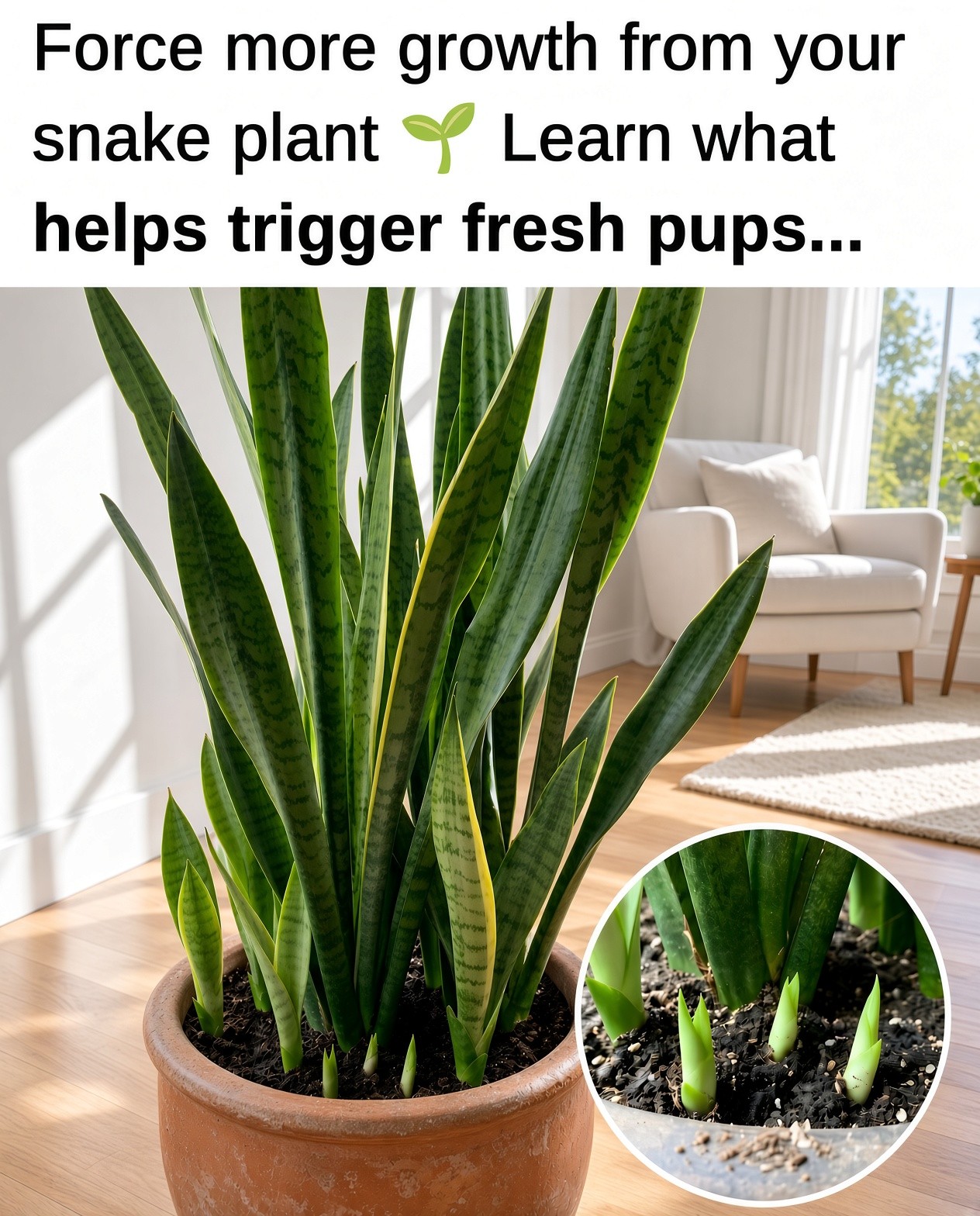
Snake plants (Dracaena trifasciata, formerly Sansevieria trifasciata) are famous for putting up with a lot. Low light? Fine. Forgot to water for a while? They’ll probably forgive you. Ignore one in a corner? Somehow, it’s still alive and judging you.
But surviving and actively growing are two different things. If you want yours to start producing pups, “still alive” isn’t really the goal.
You want a plant that’s actually happy and growing. And let me tell you right away, there’s no secret trick that makes pups appear overnight. No root torture, no fertilizer overdose, no plant voodoo.
But there are a few simple things I do that give mine the best chance of getting busy underground.
What Are Snake Plant Pups?
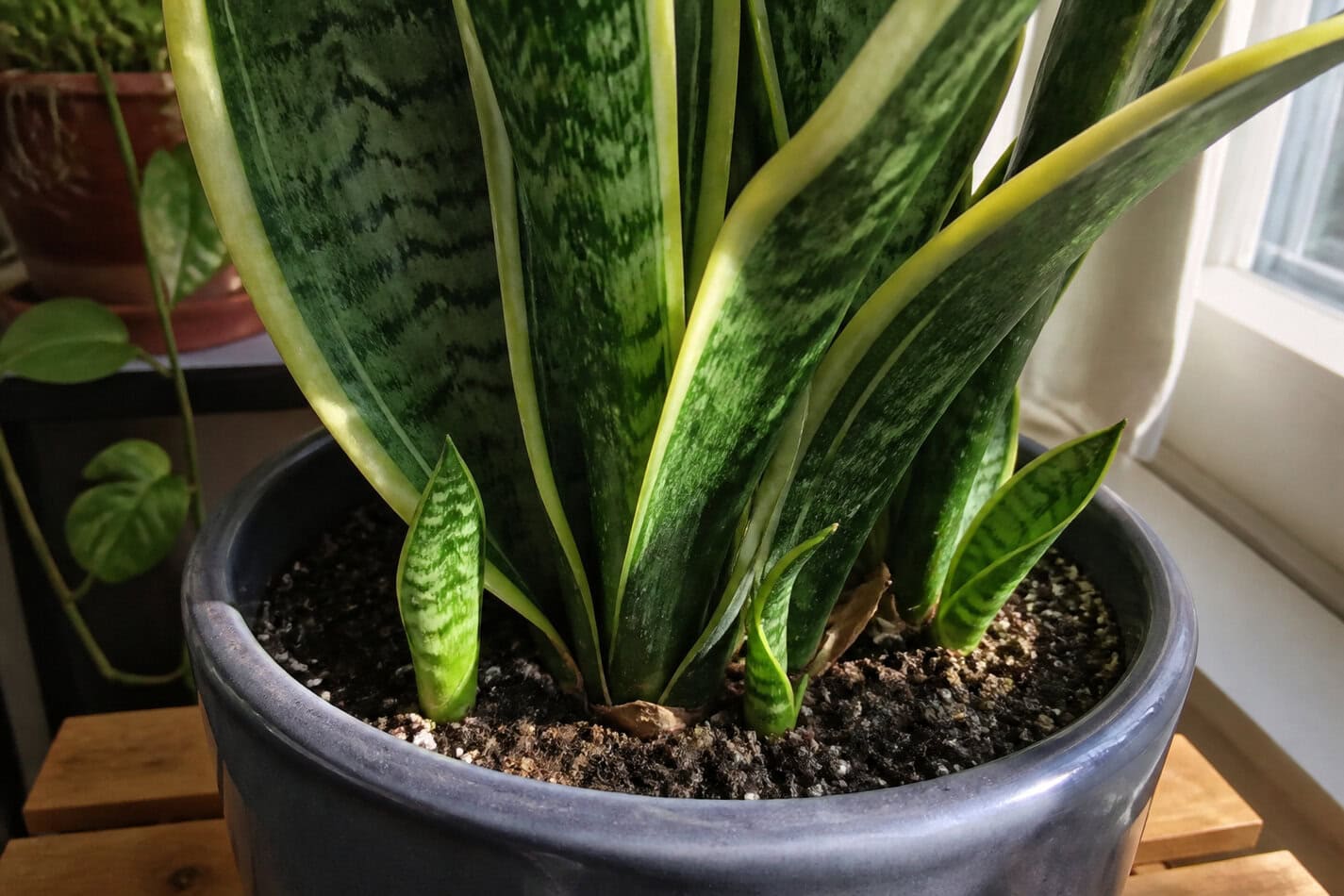
Before we go any further, what exactly are these “pups” we’re trying so hard to get? They are the little shoots that pop up from the soil next to the mother plant, usually when you weren’t even looking.
Under the soil, snake plants grow thick horizontal stems called rhizomes. New shoots grow from those rhizomes and eventually push their way above the soil.
And there you have it: a tiny copy of the mother plant! One minute you have one snake plant, and the next it’s quietly starting a family.
Can You Really “Force” a Snake Plant to Produce Pups?

Not exactly. I wish there were a button on the pot labeled MAKE PUPS NOW, but unfortunately, snake plants didn’t come with one.
What I can do is give mine the conditions that keep it healthy and actively growing. When the plant is happy and putting on growth, those underground rhizomes can keep spreading and eventually send up new pups.
I focus on four things: light, watering, feeding, and healthy roots. Nothing dramatic, no weird stress tricks, and definitely no begging the plant to cooperate.
Tip 1: Give Your Snake Plant Enough Light

I know, I know… Light. Boring. Boo. But out of all the tips I’m about to give you, this is probably the most important one.
When one of my snake plants seems to be doing absolutely nothing, light is the first thing I check. They tolerate low light, but that doesn’t mean they grow their best in it.
When I want mine to put out new growth, I give it about six hours of bright, indirect light each day. But don’t sit there with a stopwatch counting hours, just make sure it’s in a genuinely bright spot.
If “bright, indirect light” sounds like one of those annoyingly vague plant-care phrases, think of it this way: the room should feel bright during the day, but the leaves shouldn’t be roasting in harsh sun for hours.
Quick note: A little direct sun is not going to make your snake plant burst into flames. But don’t take one that’s been living in a dark corner for months and suddenly throw it into blazing afternoon sun. Ease it into brighter light gradually and give it time to adjust.
Tip 2: Get the Watering Right
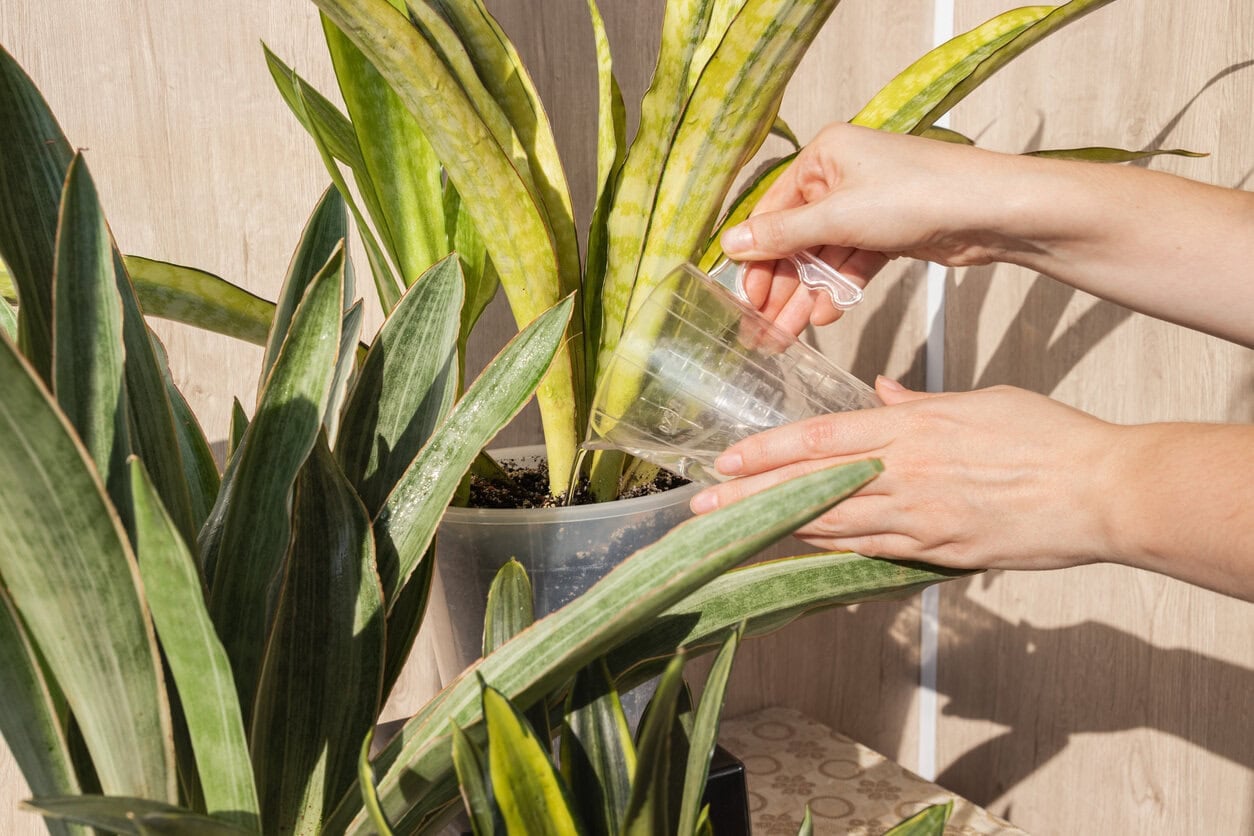
Now, I know what you’re thinking: “Really, Rita? Watering is going to make my snake plant produce pups?” Not directly. But a snake plant with soggy, unhappy roots isn’t exactly in the mood to start a family.
Snake plants are much easier to kill with too much water than too little, so I never water mine on a fixed schedule. Instead, I check the soil by pushing my finger a couple of inches down:
After watering, I empty the saucer so the roots aren’t sitting in leftover water. Then I leave it alone again. Honestly, that’s half the battle.
If you’re new to snake plants, they store water in their thick leaves, so they’re perfectly happy drying out between waterings. Keeping the soil constantly damp, on the other hand, is a very good way to end up with root rot.
Quick tip: If you’re standing there thinking, “Maybe I should water it just in case,” check the soil first. Snake plants are much more forgiving of a little neglect than an enthusiastic surprise drink.
Tip 3: Feed It, but Don’t Go Crazy

And now we get to the part every plant owner loves: fertilizing. But wait… put that fertilizer down! I can already feel you reaching for it.
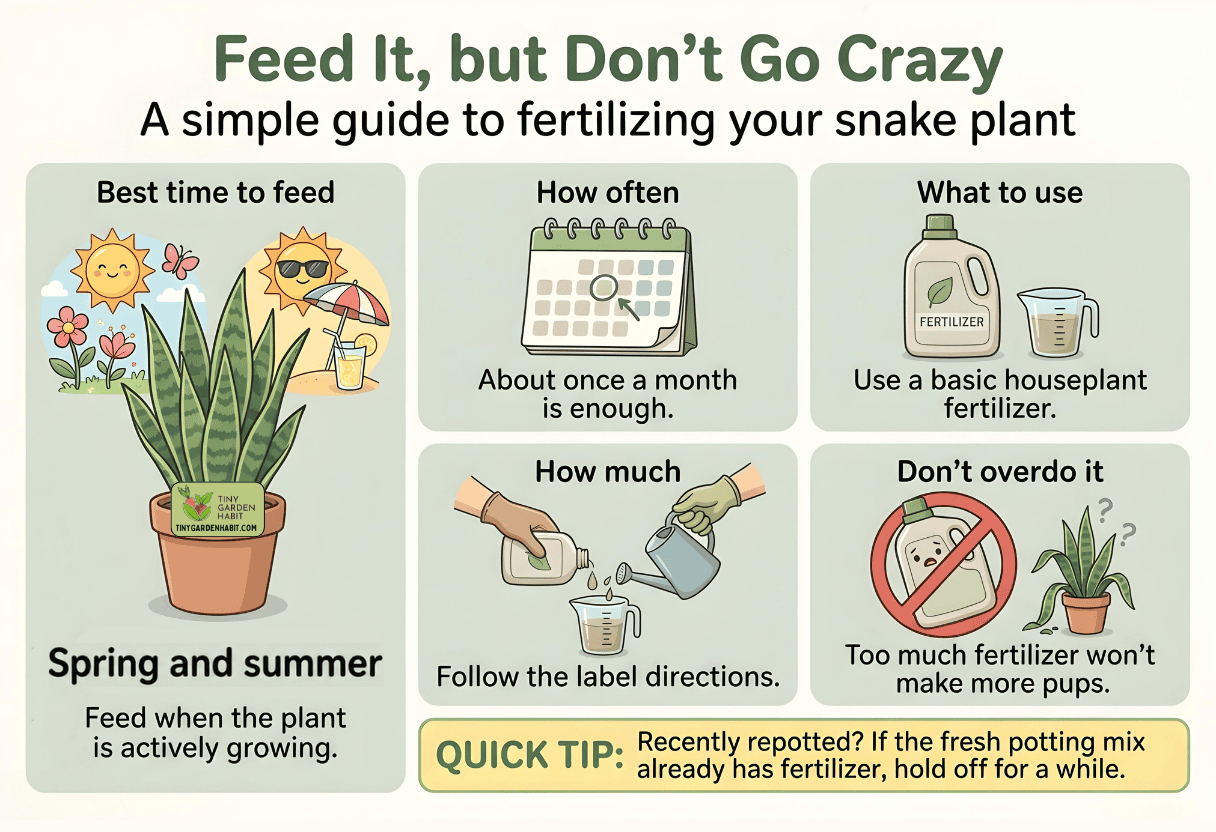
Yes, a little fertilizer can help your snake plant when it’s actively growing, especially if it’s been sitting in the same potting mix for a while. But more fertilizer does not mean more pups. Trust me, you cannot bribe a snake plant into motherhood.
During spring and summer, I feed mine about once a month with a basic houseplant fertilizer, following the label directions. If you don’t know what to get, I’ve used both Miracle-Gro Indoor Plant Food or Espoma Organic Indoor and either one does the job nicely.
Quick tip: If I’ve recently repotted into fresh mix that already contains fertilizer, I hold off on feeding for a while.
Tip 4: Keep the Pot Snug, Not Ridiculously Tight
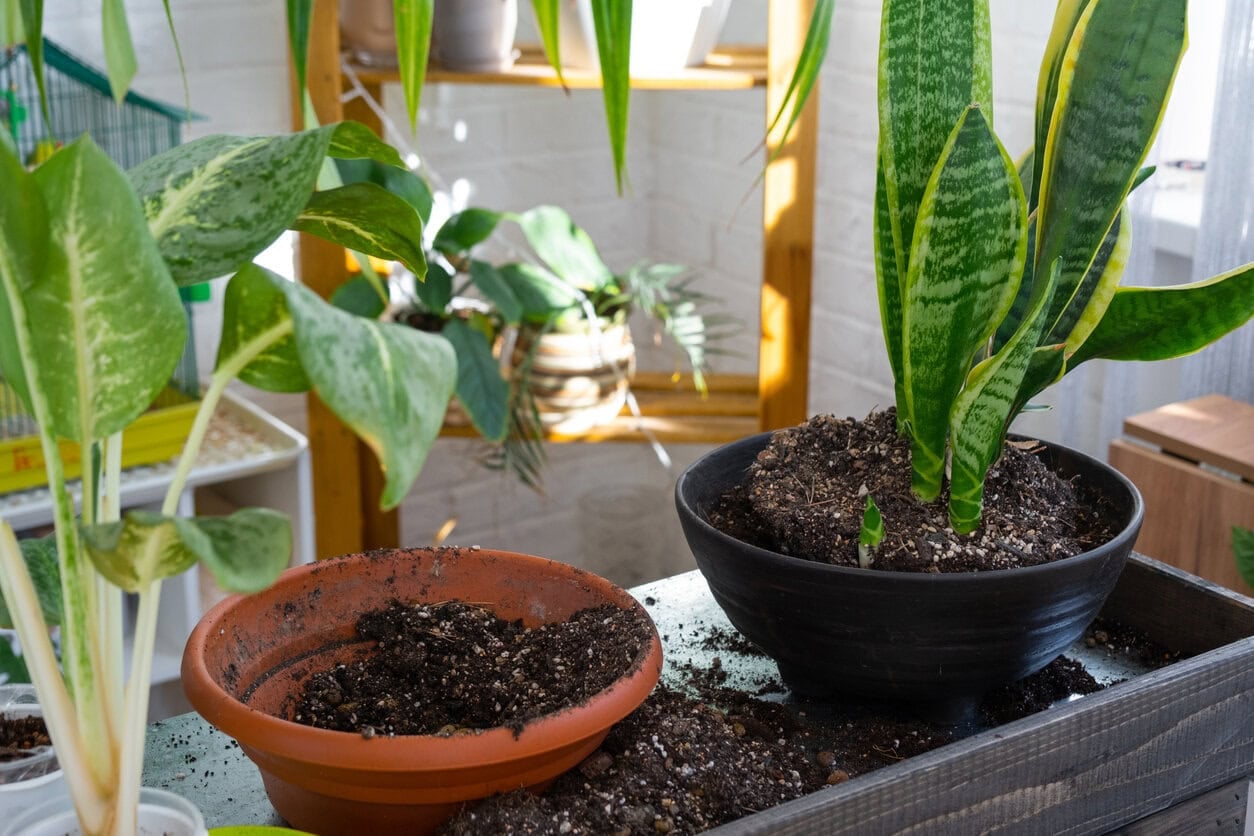
Okay, fertilizer crisis avoided. Now let’s talk about the pot, because this is another place where people tend to get a little carried away.
You’ve probably heard that snake plants “like to be rootbound.” They’re definitely happy being a little snug, but that doesn’t mean the roots need to be packed in there like people on a crowded subway.
But how do you know when it actually needs a bigger pot? Look for:
When one of those happens, that my cue to repot. Don’t move it into a huge pot hoping it’ll make more pups. Too much extra soil stays wet longer, which is exactly what a snake plant doesn’t need.
I usually go up just one pot size, about 1-2 inches wider than the current pot.
Quick tip: And whatever pot you choose, make sure it has a drainage hole. That’s one thing I don’t negotiate with snake plants.
Tip 5: Don’t Stress Your Snake Plant on Purpose

You’ll sometimes see advice telling you to let a snake plant get bone-dry, mess with its roots, or otherwise stress it to “force” more pups. I’d leave that advice right where I found it.
Wait… this is actually a tip? YES. Let me put it this way: you know that one coworker who stresses you out so much you want to hide when you see them coming? Congratulations, that’s exactly how your snake plant feels when you keep messing with it!
Snake plants are great at surviving stress, but surviving something and benefiting from it are not the same thing.
If I want more plants quickly, I’ll propagate instead. Otherwise, I give mine what it needs and let it get on with growing.
You may also see people talking about cutting the rhizome. That’s something you do when dividing an established snake plant into separate plants, because the rhizome is what connects them underground. But that’s a propagation method, not a trick for forcing the mother plant to make more pups.
What to Do When Your Snake Plant Finally Produces a Pup
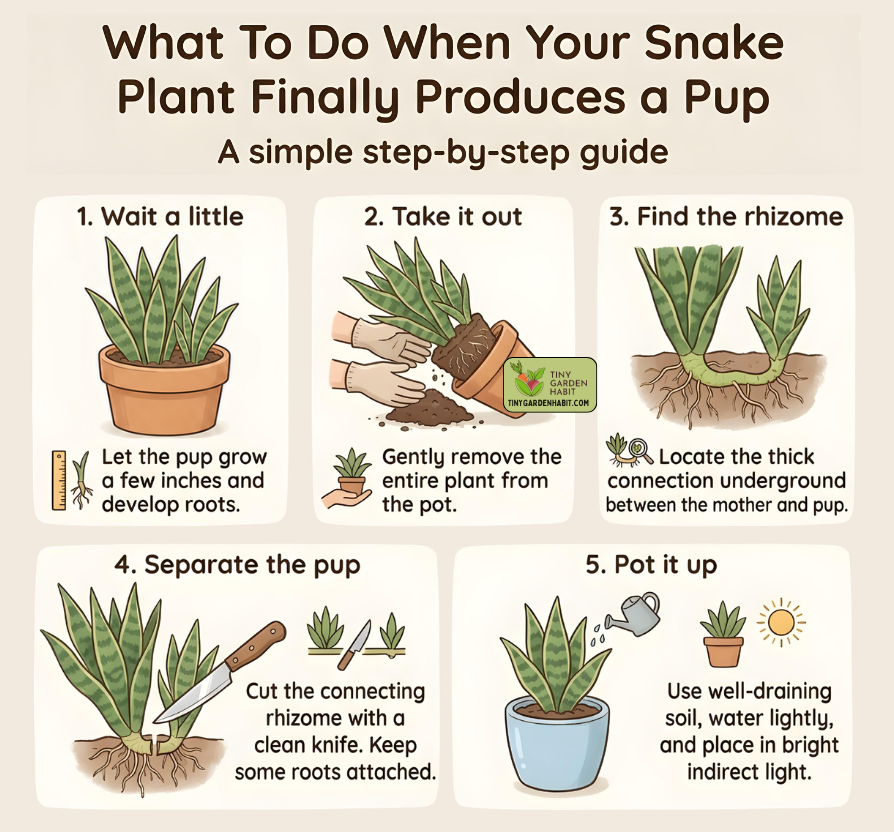
Finally! After all that patience, there it is: a tiny snake plant poking up through the soil.
First, don’t immediately grab a knife! You don’t have to separate the pup at all. I often leave mine attached if I want the pot to look fuller.
But if I do want another plant, I wait until the pup is a few inches tall and has some roots of its own. Then I:
Then I leave it alone and let it settle in. Congratulations, you’ve officially turned one snake plant into two. This is usually the point where I start wondering how many snake plants is too many.
My Snake Plant Still Isn’t Producing Pups
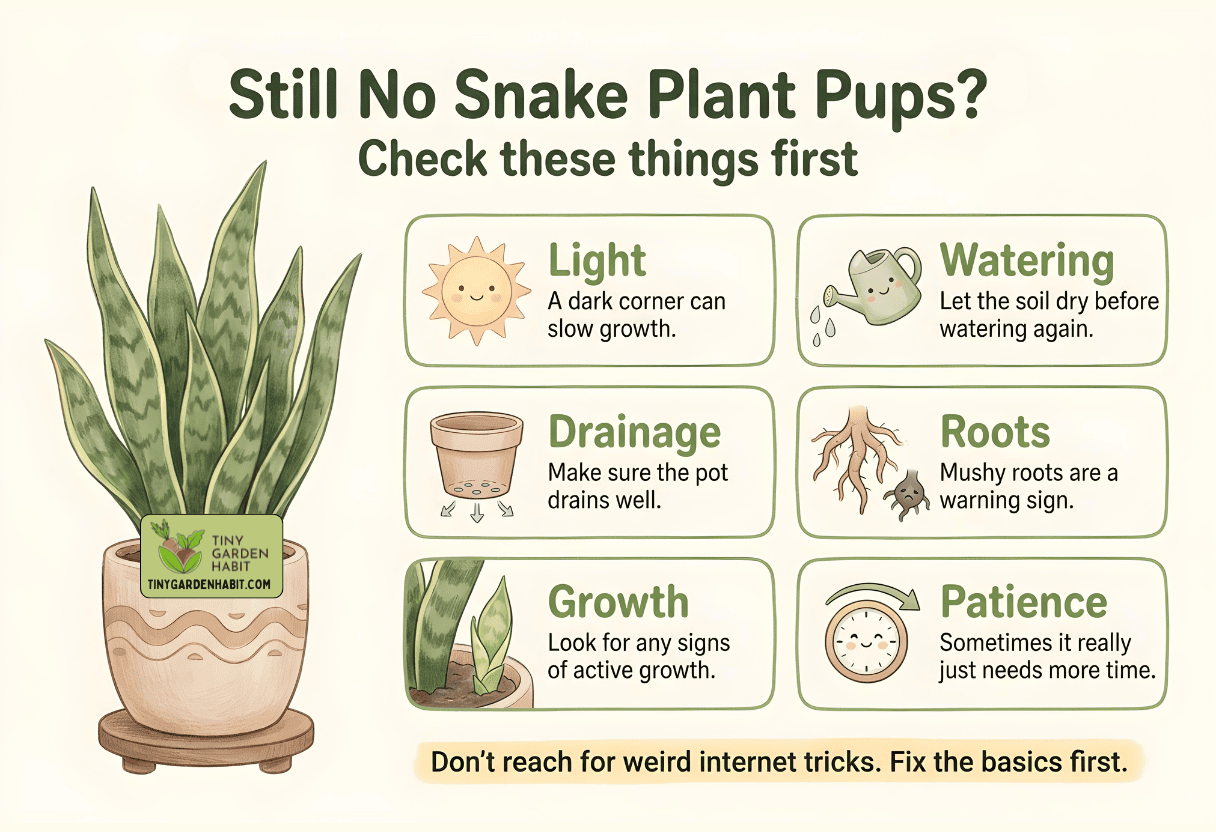
Okay, but what if you’ve done all of this and your snake plant is still just sitting there? Don’t panic and don’t assume you’re doing something wrong.
Snake plants can be slow, and unfortunately, they do not care about our preferred timeline.
When mine refuses to cooperate, I run through a quick checklist:
If something looks off, I fix that first. I’m definitely not reaching for some strange internet trick involving stress, root cutting, or whatever else is supposed to magically produce a pup by Tuesday.
Sometimes, the most annoying answer is also the right one: it just needs more time.
Patience Is Key!
I know getting a snake plant to produce pups can feel complicated when you’re waiting and absolutely nothing seems to be happening. But most of the time, good light, sensible watering, healthy roots, and a little patience are enough.
Give your snake plant what it needs, then let it get on with the underground work. Nature will do the rest